Standing in front of a wall of welders can get confusing fast — especially when every machine claims to be “heavy-duty” or “professional.” I learned that the hard way after buying a cheap MIG welder that struggled the moment I plugged it into 220V and tried welding thicker steel.
The arc kept cutting out, penetration was inconsistent, and I spent more time fixing ugly beads than actually finishing the project. Finding the 5 best budget 220v MIG welder options changed everything in my home shop.
A good 220V MIG welder makes a huge difference when you start working on trailer frames, fabrication projects, automotive repairs, or thicker material that smaller 110V machines can’t handle well.
The right machine gives you smoother arc control, cleaner welds, better penetration, and less frustration grinding down spatter afterward. And when you’re working on real projects, reliability matters just as much as price.
I’ve tested budget welders that overheated halfway through a job, fought with wire feed problems, and produced weak welds that looked decent until they cracked under stress.
I’ve also found a few affordable 220V machines that genuinely perform far above their price range — especially for hobby welders, garage fabricators, and beginners trying to get solid results without spending thousands.
Community welders on Reddit also consistently recommend brands like YESWELDER and ARCCAPTAIN for affordable home-shop setups.
I’ll break down the machines actually worth your money, what they weld best, where budget models usually fail, and which one fits your type of work best. Here’s what most beginners wish they knew before buying their first 220V MIG welder.
Why 220V MIG Makes Sense for Most Welders
220V (or 230V) input gives you more power and higher duty cycles than household 110V outlets. You get stronger penetration on 1/4-inch and thicker steel, faster travel speeds, and the ability to run larger wire diameters like 0.035″ without the machine struggling.
For repairs on farm equipment, trailer frames, or gate fabrication, this matters. You avoid weak, cold welds that crack later. Gas-shielded MIG also produces less spatter and cleanup than flux-core on 110V setups, which means less grinding and more productive time.
Safety note upfront: Always match your circuit breaker (typically 30-50A for these machines), use proper grounding, and wear quality PPE. A 220V welder pulls serious current—don’t cheap out on your electrical setup.
What to Look for in a Budget 220V MIG Welder
Focus on these factors from real use:
- Duty Cycle: How long it runs before overheating at a given amperage.
- Wire Feed System: Cast aluminum drive systems beat plastic for smooth feeding.
- Voltage and Wire Speed Controls: Infinite or stepped adjustments for fine-tuning.
- Dual Voltage Capability: Bonus for flexibility in different shops.
- Build and Support: US brands like Hobart and Lincoln often have better parts availability.
- Material Thickness Range: Aim for at least 3/8″ mild steel single-pass capability.
Common beginner mistake: Buying solely on price and ignoring wire tension or contact tip quality. Pros know prep and settings trump the machine nameplate.
1. Hobart Handler 210 MVP – Best Overall Value for Most Shops
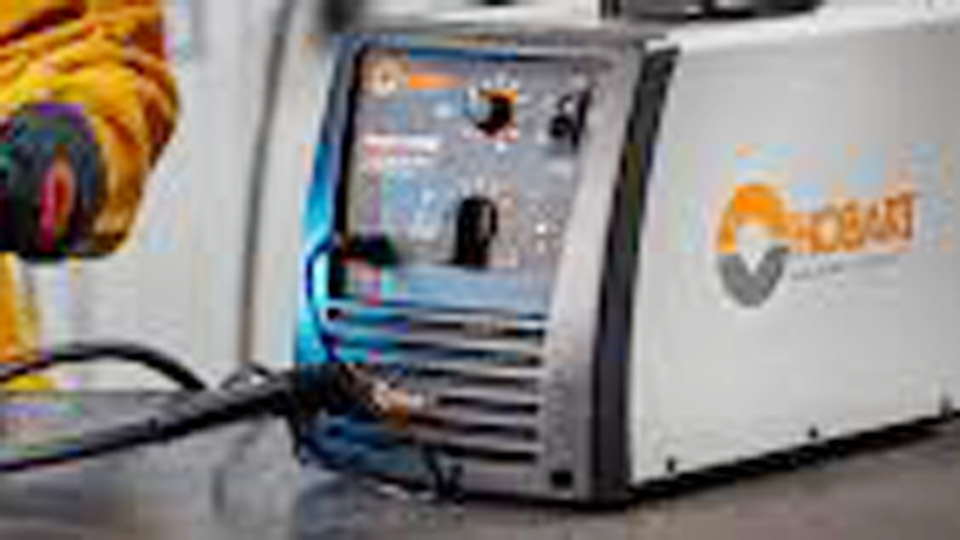
The Hobart Handler 210 MVP consistently ranks high for good reason. This dual-voltage (115/230V) machine delivers 210 amps in a portable package, welding up to 3/8″ mild steel comfortably.
It features a cast aluminum drive system with quick-release tension, seven voltage taps on 230V, and infinite wire speed control. The MVP plug lets you switch between outlets easily.
Real-World Performance: On 1/4″ plate with 0.030″ or 0.035″ ER70S-6 wire and C25 gas, it lays beautiful, flat beads with minimal spatter. Duty cycle holds up well for intermittent shop work—20% at 90A on 115V, better on 230V. I’ve used it for auto body patch panels and structural tube frames without issues.
Pros:
- Excellent portability (79 lbs)
- Reliable Hobart build quality
- Good arc starts and stability
- 3-year warranty
Cons:
- No digital display or synergic controls
- Heavier than inverter units
Best For: Automotive work, general fabrication, and hobbyists who want proven reliability without complexity. Set voltage tap based on material thickness, then dial wire speed for a steady crackle. Clean joints thoroughly—mill scale kills arc quality fast.
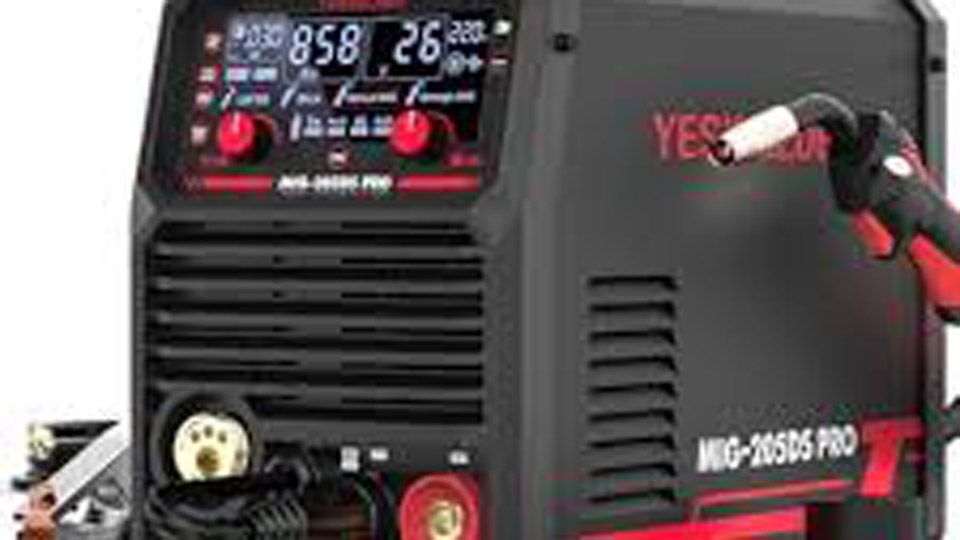
2. YESWELDER MIG-205DS PRO – Best True Budget Pick with Versatility
For under $500, the YESWELDER MIG-205DS PRO punches way above its weight. This lightweight inverter (around 23-30 lbs) offers dual voltage, 205A output, and multi-process capability: gas MIG, flux-core, stick, and lift TIG.
Synergic controls simplify setup for beginners, while manual mode gives pros full control. It supports spool guns for aluminum.
Shop Experience: On 220V it welds 1/4″ steel cleanly with 0.030″ wire. Flux-core mode works well outdoors or when gas isn’t practical. The digital display helps dial in settings quickly. Wire feeding is smooth enough for most hobby work, though not as buttery as premium drives on heavy production.
Common mistake: Over-relying on synergic mode. Learn manual settings for better results on varying joint fits.
Pros:
- Extremely affordable
- Lightweight and portable
- Multi-process flexibility
- Dual voltage standard
Cons:
- Duty cycle and longevity may not match big brands for daily heavy use
- Support and parts availability vary
Practical Tips: Use quality wire—cheap flux-core causes feeding problems. For MIG, keep stickout around 3/8-1/2″. Joint prep is critical; bevel thick plates and use clamps to control distortion.
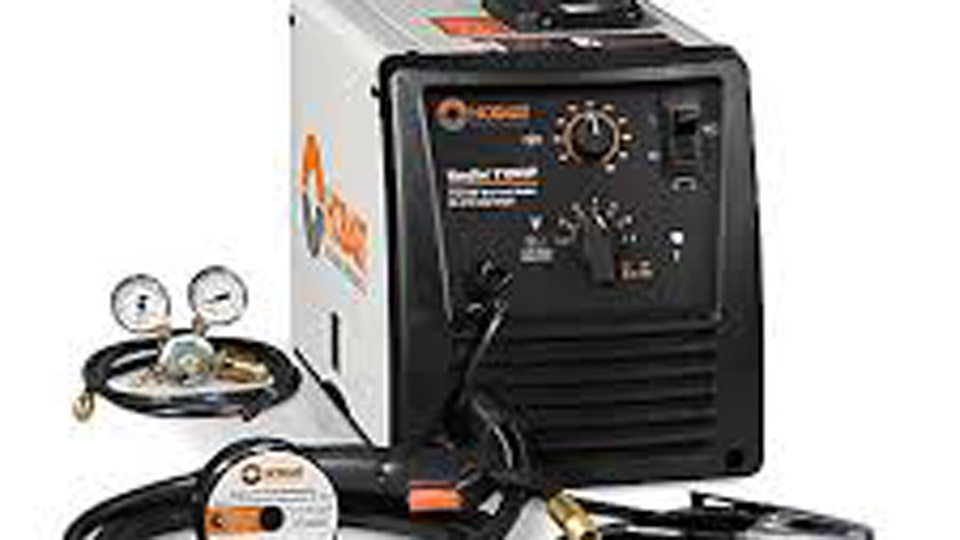
3. Hobart Ironman 240 – Best Dedicated 220V Powerhouse
If you have a dedicated 220V circuit and need more muscle, the Ironman 240 stands out. This transformer-based unit pushes up to 280A with a strong 60% duty cycle at 200A. It handles up to 1/2″ steel effectively.
Twelve voltage settings and infinite wire feed give precise control. Built-in cylinder rack and wheels make shop mobility easy despite the 186 lb weight.
When to Choose It: For heavier fabrication like trailer builds, thick repairs, or production-like work in a home shop. The arc stays hot and stable even on longer runs.
Pros:
- Serious penetration and deposition rates
- High duty cycle
- Robust construction
Cons:
- Heavy and not portable
- 220V only
- Higher price in the “budget” range
Settings Advice: For 3/8″ plate, use higher voltage taps and 0.035″ wire. Preheat thicker sections if needed to reduce cracking. Run stringer beads on heavy material to minimize heat input and distortion.
4. Lincoln Electric Power MIG 215 MPi – Best Multi-Process Option
Lincoln's Power MIG 215 MPi brings multi-process performance with strong MIG capabilities. Dual voltage, around 220A output, and features like automatic settings make it user-friendly while delivering pro-level results.
Lightweight inverter design (about 40 lbs) with excellent arc performance across MIG, flux, stick, and TIG.
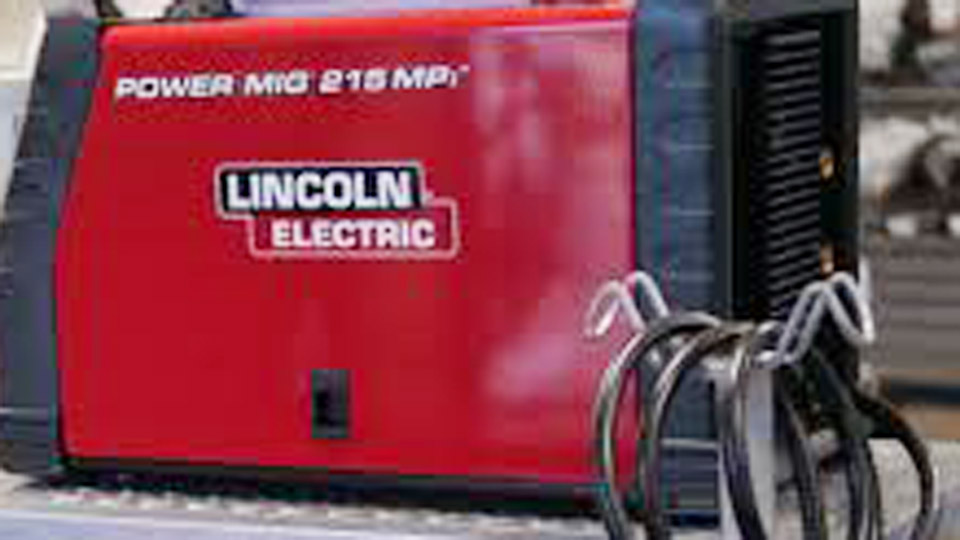
Hands-On Notes: Digital interface speeds setup. It excels on thinner materials with smooth starts and low spatter. Great for mixed jobs where you might switch to stick for root passes or TIG for finish work.
Pros:
- Versatile processes
- Easy setup with presets
- Solid Lincoln quality
Cons:
- Premium pricing within budget category
- TIG requires additional accessories
Pro Tip: Use push technique on aluminum with a spool gun. Maintain consistent travel speed—Lincoln machines forgive less on erratic movement than some inverters.
5. Eastwood MIG 180 or Similar Value Alternatives (e.g., Forney or Klutch Models)
For a solid mid-range performer, consider the Eastwood MIG 180 (dual voltage capable in some configs) or comparable units like certain Forney 190/220V models. These offer good balance for 1/4″ to 5/16″ work at accessible prices.
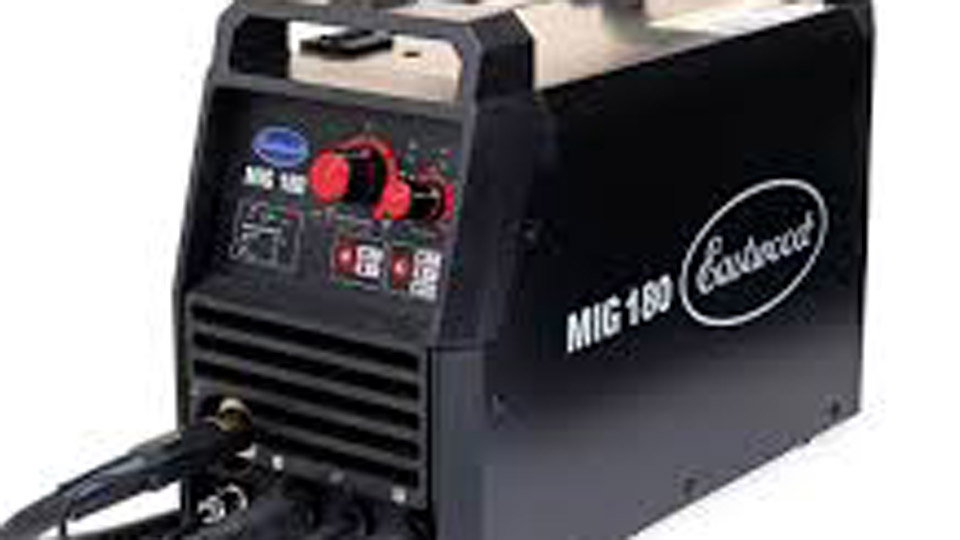
They provide reliable wire feeding and decent duty cycles for hobby/prosumer use. Many include spool gun options.
Comparison Table:
| Model | Amps | Voltage | Weight | Key Strength | Best Use Case | Approx. Price Range |
|---|---|---|---|---|---|---|
| Hobart Handler 210 MVP | 210 | Dual | 79 lbs | Reliability & portability | Auto & general fab | Mid |
| YESWELDER 205DS PRO | 205 | Dual | ~25 lbs | Versatility & value | Hobby & multi-process | Low |
| Hobart Ironman 240 | 280 | 220V | 186 lbs | Heavy-duty power | Thick material & production | Higher mid |
| Lincoln Power MIG 215 | 215+ | Dual | 40 lbs | Multi-process ease | Mixed shop jobs | Mid-premium |
| Eastwood/Forney 180-190 | 180+ | Dual/220 | Varies | Balanced performance | Entry to intermediate | Low-Mid |
MIG Welding Basics: Processes, Settings, and Materials
MIG (GMAW) uses continuous wire fed through a gun, shielded by gas (C25 or pure CO2). Flux-cored (FCAW) is self-shielded for outdoor or dirty work.
Amperage and Wire:
- 0.030″ wire: 50-150A for thinner stuff (sheet to 1/4″)
- 0.035″: 75-200+A for heavier plates
Voltage controls arc length; wire speed controls amperage/deposition. Short-circuit transfer works best for thin material and out-of-position. Spray transfer (higher settings) gives hotter, cleaner welds on thicker flat plates.
Joint Prep: Grind mill scale, rust, and paint. Use a 60-75° included angle on thicker plates. Clamp securely and use backing bars for thin metal to prevent burn-through.
Common Mistakes:
- Too much stickout (>1″) causes unstable arcs and porosity.
- Incorrect polarity (reverse for solid wire MIG).
- Dirty metal leading to inclusions.
- Pushing instead of pulling on flux-core.
Material Notes: Mild steel is forgiving. Stainless needs tri-mix gas and proper cleaning. Aluminum demands spool gun, pure argon, and fast travel to avoid burn-through.
Step-by-Step Setup Guide for a New 220V MIG
- Install on a dedicated circuit with proper breaker.
- Load wire spool, thread through drive rolls (match groove to wire size).
- Set polarity (usually DCEP for solid wire).
- Install contact tip and nozzle.
- Connect gas (15-25 CFH flow).
- Dial initial settings: Start conservative on voltage/wire speed.
- Test on scrap—adjust for steady sizzle, not popping or screeching.
Practice on flat scrap before critical joints. Watch puddle and travel angle (10-15° push for MIG).
Safety and Shop Practices That Matter
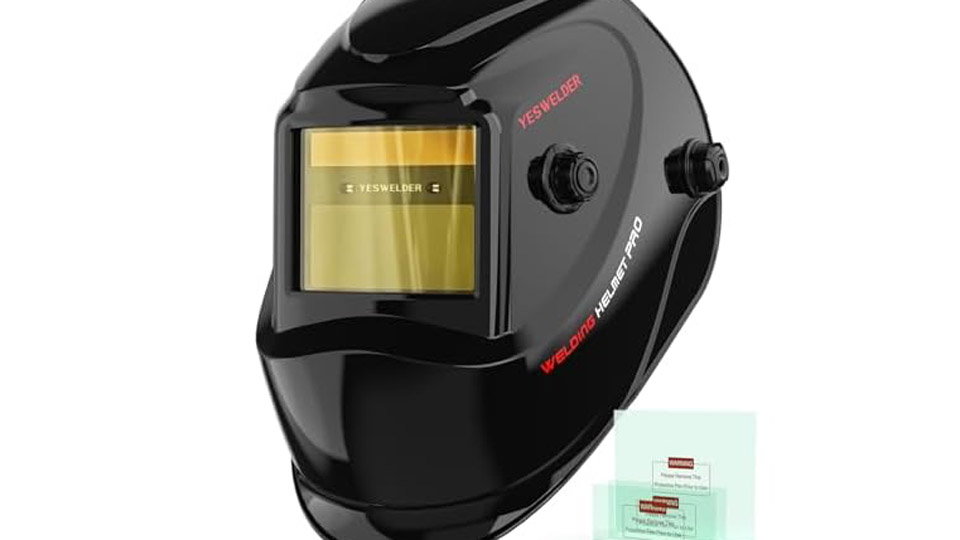
Ventilation is non-negotiable—fumes kill. Use a fume extractor or fan setup. Wear flame-resistant clothing, welding helmet with proper shade (11-13), gloves, and boots.
Ground clamps must make solid contact. Inspect cables regularly for damage. Store cylinders upright and chained.
For distortion control on thin panels: Tack frequently, weld short segments, alternate sides, or use heat sinks.
Key Takeaways for Smarter Welding
After testing these machines across real projects, the Hobart Handler 210 MVP offers the best all-around balance for most USA shops—reliable power without excess complexity. Budget buyers get surprising capability from the YESWELDER, while heavier work demands the Ironman 240’s output.
Match the machine to your power availability, typical material thickness, and how often you’ll use it. Invest in good wire, gas, and consumables—they affect results more than you think.
The strongest pro tip I can share: Slow down. A slightly slower travel speed with correct settings beats rushing and fixing defects later. Clean metal, right settings, steady hand—that’s what separates okay welds from ones that pass inspection or last decades.
FAQ
How thick can a budget 220V MIG welder handle?
Most good ones like the Handler 210 or YESWELDER 205 manage 3/8″ mild steel in a single pass and 1/2″ with multiple passes. Focus on technique and prep over raw amps.
Do I need pure 220V or is dual voltage better?
Dual voltage adds flexibility for job sites or different outlets. Dedicated 220V units often deliver higher duty cycles for shop-only use.
Flux core or gas MIG—which is better for beginners?
Start with gas MIG (C25) for cleaner results and easier learning. Flux core shines for outdoor or quick dirty repairs but produces more spatter.
What wire size and gas for general use?
0.030″ ER70S-6 with 75/25 argon/CO2 covers most mild steel from 18 gauge to 3/8″. It’s forgiving and produces nice beads.
Are cheap Chinese inverters reliable long-term?
Many, like YESWELDER, perform well for hobby and light pro use if you buy quality models and maintain them. Big brands edge out on heavy daily abuse and support. Test on scrap and keep spares.