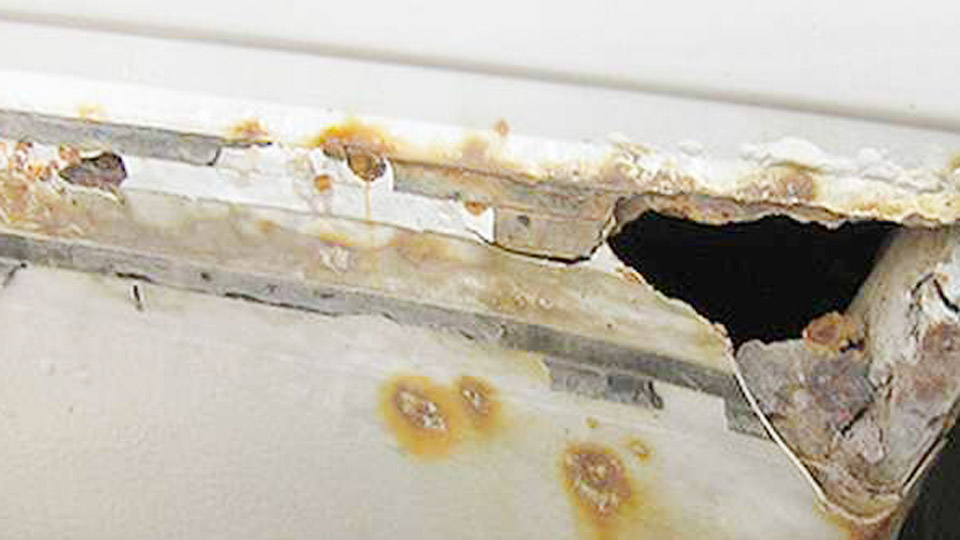
A small hole in metal can turn into a bigger headache than it looks. Maybe it’s rust damage on a car panel, an extra drilled hole in a bracket, or a thin sheet that burned through while welding. Not every job calls for firing up the welder, though.
Knowing How To Fill Holes In Metal Without Welding can save time, avoid heat distortion, and sometimes be the better repair option altogether.
In the shop, I’ve had plenty of situations where welding just wasn’t practical. Thin automotive panels can warp easily from heat, painted parts might be too risky to weld on, and sometimes you simply don’t have welding gear nearby.
That’s where alternative repair methods come in — and some of them hold up surprisingly well when done right. The trick is choosing the right approach for the size of the hole and the type of metal. From metal epoxy and body filler to riveted patches and brazing alternatives, each method has its place depending on the job.
If you’re dealing with small rust holes, burn-through spots, or unwanted drill holes, I’ll walk you through the practical fixes that actually work in real workshop conditions.

Image by reddit
When Welding Isn’t the Right Option
Holes appear for many reasons: rust-through in rocker panels or floor pans, drilled mounting points you no longer need, or accidental damage. Welding works when you need full base-metal strength and can control distortion. Skip it when:
- Material is thinner than 18 gauge (risk of burn-through)
- Heat will warp visible panels or affect nearby electronics/paint
- You lack welding equipment or certification
- Repair must be done vertically or overhead without backing gas
- Joint involves aluminum-to-steel or other dissimilar metals
In these cases, epoxy, body filler with reinforcement, structural adhesives, soldering, or mechanical fastening restore function and appearance without compromising the surrounding metal.
Steel-Reinforced Epoxy for Small to Medium Holes
Two-part steel-reinforced epoxies like J-B Weld Twin Tube create a permanent, machinable repair rated at 6220 PSI tensile strength—strong enough for brackets, exhaust patches, and non-load-bearing structural fills. Once cured, the repair handles up to 550°F continuous and resists oil, water, and chemicals.
Choosing the Right Epoxy
- Standard twin-tube (original cold weld): 6220 PSI, 15–24 hour full cure, dark gray color
- Putty stick versions (SteelStik): sets in 5–10 minutes, ideal for vertical or overhead holes
- High-heat variants: up to 2400°F for exhaust manifolds (different chemistry, lower adhesion for pure filling)
Match the product to temperature and load. For most shop and DIY holes under 1 inch, the original formula excels.
Surface Preparation
Degrease with acetone or brake cleaner until a clean rag stays white. Abrade to 60–80 grit for mechanical bite—epoxy bonds through surface roughness, not chemical fusion.
On painted panels, remove paint 1 inch beyond the hole. For rust, grind to bright metal and treat with rust converter if pitting remains.
Step-by-Step Application
- Mix equal parts resin and hardener on a disposable palette for 60 seconds until uniform (no streaks).
- For through-holes, apply masking tape or Kapton tape on the back side as temporary backing.
- Press the mixed epoxy into the hole, overfilling slightly to account for shrinkage.
- Smooth with a gloved finger or plastic spreader for a flush profile.
- Allow 4–6 hours before handling; full cure at 15–24 hours (faster at 70–80°F).
After curing, the repair sands like mild steel, drills cleanly, and accepts primer and paint. Vertical holes benefit from the putty stick version—it stays put without sagging.
Performance and Limitations
This method delivers shear strength comparable to many factory adhesives but lacks the ductility of a welded joint under impact. Use it for static loads under 4000 PSI or cosmetic/functional fills. On aluminum, results are excellent; on galvanized steel, remove the zinc coating first for maximum adhesion.
Body Filler with Mesh Backing for Larger Rust Holes
Polyester body filler (Bondo, Rage, Evercoat) reinforced with fiberglass mesh or window screen handles holes up to several inches when welding would distort thin panels. It’s fast, inexpensive, and the standard in collision repair for cosmetic restoration.
Materials and Tools
- Body filler + hardener (cream or liquid)
- Fiberglass cloth or metal window screen cut 1 inch larger than the hole
- 80-grit and 180-grit sanding discs
- Mixing board and spreader
- Optional: self-etching primer for bare metal
Application Process
- Cut the hole to clean edges and flange the perimeter slightly inward with a hammer and dolly for better backing support.
- Cut mesh or screen to overlap the hole by 1 inch all around.
- Mix filler with hardener (typically 2–3% by volume—golf-ball size filler gets 5–8 drops).
- Apply a thin layer of filler to the back side, press the mesh into it, then fill from the front, working the material through the mesh for full encapsulation.
- Build in thin layers; allow 20–30 minutes between coats. Overfill by 1/8 inch.
- Sand with 80-grit to level, then 180-grit for featheredge blending.
Prime immediately with epoxy or self-etching primer to seal against moisture. The repair sands feather-smooth and holds paint indefinitely when done right.
When This Method Excels
Use it on auto body panels, truck beds, and non-structural sheet metal. Strength is lower than epoxy (primarily cosmetic), but the mesh reinforcement prevents cracking under vibration. Avoid high-heat areas or load-bearing spots.
Structural Panel Adhesive with Metal Patch
Two-part epoxy panel adhesives (Evercoat, 3M, Lord) plus a formed steel or aluminum patch create a sandwich stronger than many welds for thin metal. This method eliminates burn-through and produces a rust-resistant seam.
Process
- Cut out the damaged area to clean metal.
- Flange the edges 1/8 inch with a panel flanger.
- Fabricate a patch that nests into the flange.
- Apply adhesive to both the flange and patch back.
- Clamp heavily (Vise-Grips every 2 inches) and let cure 6–8 hours.
- Grind flush, skim with body filler, prime, and paint.
This is the go-to for door skins, quarter panels, and floor pans where appearance and long-term corrosion resistance matter more than absolute tensile strength.
Soldering for Small Holes in Thin Sheet Metal
Soldering fills bullet holes, trim holes, and pin holes in 18–24 gauge steel or aluminum without base-metal melting or distortion. The filler flows at 350–450°F—far below welding temperatures.
Steps
- Clean and flux the area (rosin or acid flux for steel).
- Back the hole with copper or aluminum tape if accessible.
- Heat the surrounding metal with a 250-watt soldering gun until solder flows freely into the hole.
- Feed solder until the hole is filled and slightly proud.
- Cool, then file or sand flush.
Use 60/40 rosin-core or lead-free plumber’s solder. The joint conducts electricity and resists vibration but offers lower mechanical strength than epoxy or welding—ideal for non-structural cosmetic fixes.
Mechanical Patches with Rivets or Self-Tapping Screws
For removable or ultra-strong repairs, cut a patch, drill matching holes, and secure with blind rivets or sheet-metal screws plus sealant.
Quick Procedure
- Cut patch 1 inch larger than hole.
- Drill #30 holes every 1 inch around perimeter.
- Apply seam sealer or silicone to the back.
- Rivet or screw in place (use stainless hardware on steel to prevent corrosion).
- Fill rivet heads with epoxy or filler and sand smooth.
1/8-inch aluminum rivets provide roughly 250–350 lb shear each. A six-rivet patch easily exceeds 1500 lb total holding power—more than enough for most body panels.
Comparing the Methods: Decision Framework
| Method | Tensile/Shear Strength | Max Temp | Cure/Working Time | Cost per Repair | Best Applications | Limitations |
|---|---|---|---|---|---|---|
| Steel-Reinforced Epoxy | 6220 PSI | 550°F | 15–24 hrs | Low | Small holes, brackets, exhaust | Brittle under impact |
| Body Filler + Mesh | Cosmetic (reinforced) | 200°F | 30 min per layer | Lowest | Auto body rust, large cosmetic | Not structural |
| Panel Adhesive + Patch | 3000–5000 PSI bond | 250°F | 6–8 hrs | Medium | Panel replacement, floor pans | Requires clamping |
| Soldering | 1000–2000 PSI | 400°F | Minutes | Very Low | Bullet/trim holes in sheet metal | Lowest strength, heat sensitive |
| Mechanical Rivet/Screw | 250+ lb per fastener | Unlimited | Immediate | Low | Removable panels, heavy vibration | Visible fasteners unless filled |
Choose based on load, temperature, accessibility, and whether the repair must be permanent or serviceable. For anything carrying dynamic loads above 4000 PSI or critical safety components, revert to proper welding.
Finishing and Painting Any Repair
Regardless of method:
- Sand to 180-grit for paint adhesion.
- Apply 2K epoxy primer within 24 hours of final sanding.
- Block-sand with 220-grit, then 400-grit.
- Basecoat and clearcoat per manufacturer specs.
Sealing edges with seam sealer prevents moisture wicking under the repair.
Final Thoughts
Filling holes in metal without welding gives you options that welding simply cannot match in speed, cost, or minimal distortion. Master these five approaches and you’ll handle 90% of shop and field repairs with confidence.
The real advanced insight: even the best non-weld repair is still a composite joint. When the repair zone will see repeated flexing or loads approaching the base metal’s yield strength, nothing replaces a properly prepared, multi-pass fusion weld with matching filler and full penetration.
Use these techniques to keep projects moving—then bring out the welder when permanence is non-negotiable.
These techniques keep your projects rolling without a welder on every job. Choose the method that matches your material, load, and timeline—and the repair will look factory and hold for years.
FAQs
Is JB Weld as strong as a weld?
No. A 6220 PSI epoxy repair is strong for most non-structural uses but lacks the ductility and full base-metal fusion of a weld. It excels where heat distortion must be avoided.
Can I use regular household epoxy instead of metal-filled formulas?
Household epoxy lacks metal reinforcement and temperature resistance. It will crack or soften under load or moderate heat. Always use products rated for metal repair.
How long will a body filler repair last on outdoor metal?
With proper surface prep, mesh reinforcement, and quality primer/paint, 10–15 years or more. Moisture intrusion is the only real failure mode—seal edges aggressively.
Does soldering work on aluminum sheet metal?
Yes, with aluminum-specific solder and flux. Clean thoroughly and avoid overheating to prevent warping. Strength is lower than on steel but sufficient for cosmetic holes.
When should I switch from these methods to actual welding?
Anytime the repair carries structural loads, experiences high vibration, or exceeds 500°F. Critical chassis components, pressure vessels, and safety-related parts demand welded integrity.