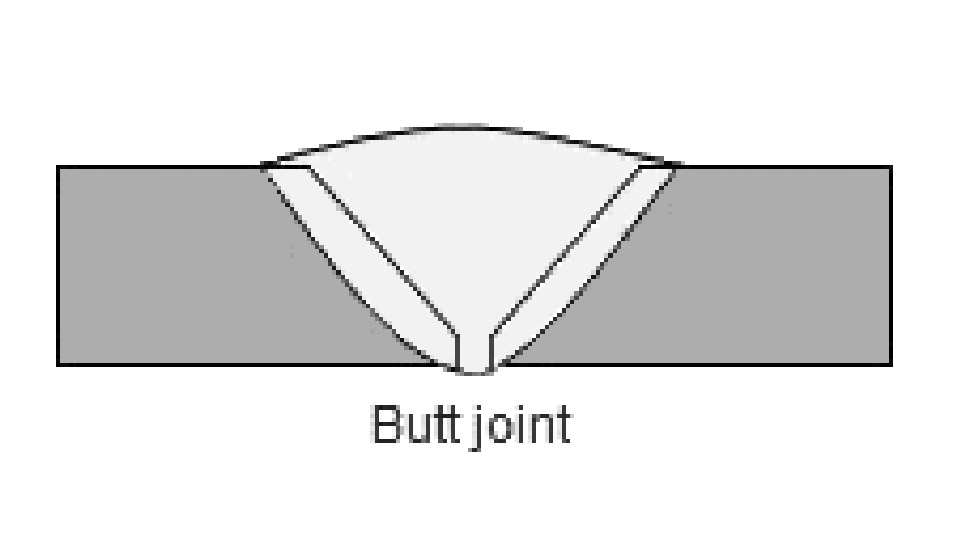
A groove weld deposits filler metal into a prepared channel or recess between workpiece edges or surfaces, enabling deep fusion and high joint efficiency in butt, corner, or edge configurations.
This joint type achieves complete or partial joint penetration, delivering tensile and shear strengths that match or approach base metal properties when properly executed.
In structural fabrication, pressure vessels, and heavy equipment repair, groove welds carry primary loads where fillet welds fall short due to limited penetration depth.
Understanding groove weld geometry, preparation tolerances, and penetration behavior prevents undercutting, lack of fusion, and distortion while optimizing filler consumption and arc time.

Image reddit
Groove Weld Definition and Fundamental Purpose
A groove weld fills a machined or ground recess—termed the groove—created on one or both faying surfaces. AWS A3.0 defines it as a weld made in a groove on a workpiece surface, between edges, between surfaces, or between edges and surfaces.
The groove provides space for weld metal to penetrate fully or partially through the joint thickness, contrasting with surface-deposited fillet welds.
Groove welds primarily serve butt joints but also apply to T-joints, corner joints, and edge joints when full-strength fusion is mandated. They enable complete joint penetration (CJP), where weld metal fuses entirely through the material thickness, or partial joint penetration (PJP), where fusion stops short of full depth.
CJP groove welds develop full base metal strength in tension and shear per AWS D1.1 requirements when no weld size is specified on the symbol.
Standard Groove Weld Types and Configurations
AWS recognizes nine single-groove and seven double-groove configurations, each selected based on material thickness, access, welding position, and process.
Square groove
Flat edges with minimal or no preparation. Root opening typically 0–1/16 in. Suitable for material up to 1/4 in thick with backing or back gouging for CJP; up to 3/8 in max for prequalified GMAW/FCAW in AWS D1.1 without backing.
Single-V groove
Both plates beveled at 30–35°, yielding 60–70° included angle. Common for 1/4–1 in thick plate. Depth of preparation equals plate thickness for CJP.
Double-V groove
Bevels on both sides, reducing filler volume by 40–50% compared to single-V on thick sections. Preferred for 1 in and thicker material when both sides are accessible.
Single-bevel groove
One plate beveled at 40–50°, other square. Used in T-joints or when one side access is restricted.
Double-bevel groove
Bevels on both plates, alternating sides. Minimizes distortion on heavy sections.
Single-U and double-U grooves
Radiused bottom (typically 1/4–3/8 in radius) with 8–12° bevel angle. Reduces weld metal volume and stress concentration; ideal for thick plate (>1-1/2 in) in high-fatigue applications.
Single-J and double-J grooves
Asymmetric radiused preparation. Used where one plate remains square.
Flare-bevel and flare-V apply to curved surfaces like pipe or HSS.
Joint Preparation Dimensions and Tolerances
Precise preparation controls penetration, fusion quality, and filler consumption.
- Bevel angle: 25–35° per side for V-grooves (included 50–70°); 40–50° for single bevel.
- Root face (land): 1/16–3/32 in typical for carbon steel SMAW/GMAW to prevent burn-through while aiding root pass fusion.
- Root opening (gap): 0–1/8 in, commonly 1/16–3/32 in to allow electrode access and accommodate shrinkage.
- Depth of preparation: Full thickness minus root face for CJP; specified depth for PJP.
For AWS D1.1 prequalified joints:
- Single-V (B-U3a): 60° included, 0–1/8 in root opening, 0 root face max for SMAW.
- Double-V (B-U4a): 60° included, balanced bevels.
Tighter tolerances (±1/16 in on gap, ±2.5° on angle) prevent defects like incomplete fusion or excessive reinforcement.
Penetration Characteristics: CJP vs PJP
Complete joint penetration (CJP) fuses weld metal through the entire thickness, eliminating the root as a stress riser. Required for cyclically loaded structures, full-strength butt joints, and code-critical applications. Achieved via multi-pass techniques, back gouging, or backing bars.
Partial joint penetration (PJP) limits fusion to a designed depth, specified by effective throat on the symbol. Acceptable for lower-stress members but yields 50–80% of base metal capacity depending on depth. PJP uses less filler and time but demands careful sizing to match calculated loads.
Groove welds outperform fillets in penetration: fillets average 20–30% depth, while grooves reach 100% with proper technique.
Comparison: Groove Weld vs Fillet Weld Performance
Groove welds excel where tensile strength, fatigue resistance, and full load transfer matter.
- Strength: CJP groove achieves >80 ksi tensile in carbon steel; fillet limited to shear (60–70 ksi effective).
- Penetration depth: Groove 0.5–1+ in multi-pass; fillet 0.125–0.25 in single pass.
- Fatigue life: Groove 20–30% higher endurance limit due to reduced notch effect.
- Preparation cost: Groove requires beveling/grinding; fillet none.
- Filler consumption: Groove higher volume but double-sided reduces by 40%.
- Application: Groove for butt joints in beams, columns, pressure piping; fillet for T-joints, lap splices.
Select groove when joint must develop full base metal strength; fillet when shear loads dominate and preparation time must minimize.
Welding Parameters and Technique Influence
Process selection affects groove weld success.
SMAW: E7018 electrode, DCEP, 90–200 A depending on diameter (1/8 in: 90–150 A; 5/32 in: 130–200 A). Stringer beads for root, weave for fill.
GMAW: ER70S-6 wire, 18–28 V, 150–350 ipm wire feed. Spray transfer for thick plate.
FCAW: E71T-1, DCEP or DCEN, gas-shielded for better penetration.
Travel speed 6–12 in/min; slower speeds increase heat input and penetration but risk burn-through.
Polarity: DCEP for most processes to maximize arc force and penetration.
Position: Flat easiest; overhead requires smaller beads, faster travel to control puddle.
Common Failure Modes and Prevention
Lack of fusion at groove face stems from excessive root face or insufficient amperage—reduce land to 1/16 in max, increase current 10–15%.
Incomplete root penetration results from tight gap or high travel speed—maintain 3/32 in gap, use back-step technique on root pass.
Undercut along bevel edge arises from arc too far from face—direct arc into joint center.
Distortion control: Use balanced double-V on thick plate, alternate sides, employ strongbacks.
Groove Weld Applications in Shop and Field Practice
Structural steel: CJP single-V or double-V in moment connections, column splices.
Pipe fabrication: Single-U for thick-wall piping to minimize filler and distortion.
Heavy plate repair: Double-bevel for crane booms, excavator frames.
Aluminum and stainless: Similar preparations but wider included angles (70–90°) to combat oxide layers.
Groove welds dominate code work under AWS D1.1, ASME Section IX, and API 1104 where joint efficiency ≥95% is required.
Wrapping Up
Groove welds form the backbone of high-integrity joints by enabling controlled, full-depth fusion unavailable with surface welds. Proper preparation—bevel angle, root face, and gap—combined with process-matched parameters delivers joints that match base metal performance under static and cyclic loads.
Shops that standardize prequalified joint details from AWS D1.1 reduce qualification time and defects while ensuring compliance.
Advanced insight: On thick sections (>2 in), transition to narrow-gap groove preparations (20–30° included angle) with automated GTAW root and multi-wire SAW fill to cut filler consumption 30–50% and heat input, minimizing residual stress and improving fatigue performance in critical load paths.
FAQs
What is the main difference between a groove weld and a fillet weld?
Groove welds deposit metal into a prepared recess for deep penetration and full joint strength, typically in butt configurations. Fillet welds form a triangular bead along intersecting surfaces without preparation, suited to T- and lap joints where shear dominates.
When should I use a groove weld instead of a fillet weld?
Use groove welds when the joint must develop full base metal tensile strength, resist cyclic loading, or transfer loads through the thickness, such as in structural butt splices or pressure boundaries. Fillet welds suffice for non-full-strength connections with lower preparation cost.
What are the common types of groove weld preparations?
Standard types include square, single-V, double-V, single-bevel, double-bevel, single-U, double-U, single-J, and double-J. Selection depends on thickness, access, and filler efficiency—double configurations reduce volume on thick material.
How do I achieve complete joint penetration in a groove weld?
Prepare the joint with appropriate bevel, root face, and gap; use multi-pass technique with back gouging if single-sided; match amperage and travel speed to ensure root fusion and fill without voids. Verify with bend or radiographic testing per code.
Does AWS D1.1 require specific dimensions for groove welds?
Yes, prequalified joints list exact bevel angles, root openings, and root faces (e.g., 60° included for single-V). Unspecified groove symbols default to CJP developing full base metal strength in tension and shear.