The weld looked solid — nice bead, good tie-in, no visible defects. But once the load hit, the joint failed right where it mattered most. That’s a hard lesson to learn, and it usually comes down to one thing: not understanding how to calculate the strength of welded joints before putting them into service.
In real fabrication work, guessing isn’t enough. Every weld you lay down has to handle a certain amount of stress — whether it’s tension, shear, or a mix of both.
If you don’t know how to calculate that strength, you’re either overbuilding and wasting material… or worse, underbuilding and risking failure.
I’ve had jobs where a small miscalculation meant redoing entire sections, burning extra rods, and losing hours of work. Once you understand the basics — throat size, weld length, load direction — everything starts to make more sense, and your welds become more reliable and efficient.
I’ll break it down step by step, without overcomplicating the math, so you can actually apply it in the shop. Here’s how to make sure your welds hold when it really counts.
Image weldersanonymous
Selecting Joint Configurations That Match Load Requirements
Weld strength starts with joint geometry because each type distributes stress differently. Choosing incorrectly forces conservative oversizing or leads to eccentric loading failures.
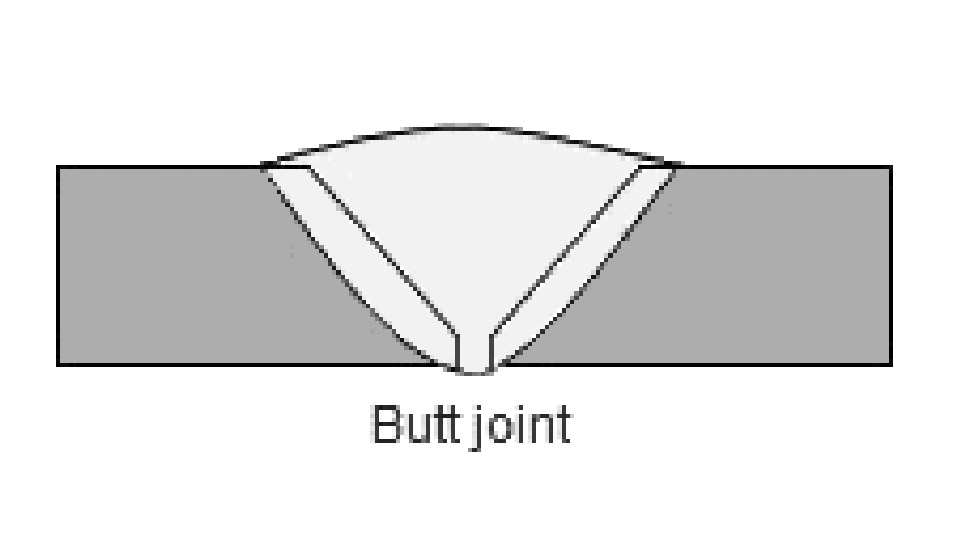
Butt Joints: When Full Penetration Matches Base Metal Capacity
Full-penetration groove welds in butt joints transfer load across the entire cross-section. For matching filler metal, the weld strength equals the base metal strength. Effective area equals plate thickness times weld length. No throat reduction applies.
Partial-penetration butt welds use effective throat depth (groove depth minus root face or Z-loss per process). Strength equals effective throat × length × allowable stress. Use these for lower loads or when full access is impossible.
In A36 steel (Fy = 36 ksi, Fu = 58 ksi) with E70 filler, a full-penetration butt weld carries the full plate capacity in tension: (ASD) or LRFD equivalents.
Fillet Welds: Shear Dominates Lap and T-Joints
Fillet welds fail along the throat plane at 45°. Effective throat = ( 0.707 times ) leg size (for equal-leg fillets). Load direction matters: transverse fillets gain up to 50% strength increase via the directional factor , where θ is the angle between load and weld axis. Parallel-loaded fillets stay at baseline shear capacity.
Lap Joints: Managing Eccentricity and Overlap Rules
Lap joints introduce eccentricity that creates secondary bending. Minimum overlap is five times the thinner plate thickness. Double-fillet laps balance forces better than single.
Strength calculation treats each fillet independently but checks combined eccentricity effects. Always verify base metal shear capacity alongside weld metal: the smaller value governs.
Understanding Stress Types That Control Welded Joint Strength
Every calculation reduces to comparing applied stress against allowable limits. Ignore secondary effects and the joint fails prematurely.
Axial Tension, Compression, and Shear in Groove Welds
Groove welds see direct axial stress . Full-penetration butt welds under tension use . Allowable tensile stress equals base metal values (0.6 Fy ASD). Shear in grooves follows , with allowable 0.4 Fy or per electrode.
Shear Stress Variations in Fillet Welds: Parallel vs. Transverse
Parallel shear (longitudinal load) uses the conservative throat area. Formula for single fillet capacity (LRFD):
For E70XX (FEXX = 70 ksi), this yields ~3.71 kips per inch of ¼-inch leg length. Transverse fillets multiply by the directional increase, reaching ~5.56 kips/inch. Always compare to base metal shear: (yield) or 0.75 × 0.6 Fu × effective area (rupture).
Combined Bending and Torsion in Weld Groups
Eccentric loads create vector sums. Treat the weld group as a line with unit polar moment of inertia. Maximum stress occurs at the farthest point from the instantaneous center of rotation. For simple cases, resolve into horizontal/vertical shear components plus torsional shear , then take vector resultant and compare to allowable.
Material and Electrode Properties That Set Weld Capacity Limits
Strength calculations hinge on matching properties. Mismatched filler reduces capacity to the weaker link.
Matching Base Metal to Filler Metal Strength
For A36 or A572 Gr. 50, E70XX electrodes are standard. E70XX gives nominal weld metal strength of 70 ksi. Use E80XX or higher only when base metal yield exceeds 65 ksi. Over-matching wastes money; under-matching voids code compliance.
Allowable Stresses per AWS D1.1 and AISC Specifications
AWS D1.1 and AISC use LRFD/ASD. Fillet weld nominal shear stress Fnw = 0.60 FEXX (baseline). Directional increase applies only to the weld metal term. Partial joint penetration (PJP) groove welds in tension normal to the axis use 0.60 FEXX to account for root notch effects. Base metal checks always apply.
| Electrode | FEXX (ksi) | LRFD Design Strength per Inch (¼” Fillet, Parallel Shear) | ASD Allowable per Inch (¼” Fillet) |
|---|---|---|---|
| E60XX | 60 | 3.18 kips | 2.12 kips |
| E70XX | 70 | 3.71 kips | 2.48 kips |
| E80XX | 80 | 4.24 kips | 2.83 kips |
Values assume 0.707 throat factor and governing weld metal. Adjust length for end-loaded reductions when l > 100w.
Calculating Fillet Weld Strength: Step-by-Step with Real Values
Fillet calculations are the most common for fabricators. Follow this sequence for any lap or T-joint.
- Identify leg size w (minimum per AWS Table 7.7 based on thicker plate).
- Compute effective throat .
- Determine effective length l l (subtract starts/stops if < 4w).
- Calculate area number of fillets.
- Apply load direction: baseline Fnw = 0.60 FEXX; multiply by kds if transverse.
- Compare to base metal shear capacity.
- Apply φ = 0.75 (LRFD) or divide by Ω = 2.00 (ASD).
Example: Double ¼-inch fillet (E70XX) on A36 plate, 10-inch length, parallel shear load.
Throat = 0.177 in. Area = 2 × 0.177 × 10 = 3.54 in².
φRn = 0.75 × 0.60 × 70 × 3.54 ≈ 111.5 kips. Base metal shear (⅜” plate) exceeds this, so weld governs.
For transverse, multiply weld term by 1.5: capacity rises to ~167 kips.
Groove Weld Calculations for Butt and Corner Joints
Groove welds simplify when full penetration is achieved. Strength = effective area × allowable stress. Full penetration equals plate capacity. Partial penetration uses measured throat from groove depth.
Combined loading adds vector checks: normal stress , shear τ=VQ/It. Resultant must stay below 0.60 FEXX (weld) or base limits.
Adjusting Calculations for Real-World Factors and Code Compliance
Heat-affected zone (HAZ) softening in high-strength steels requires base metal checks. Distortion from uneven heating reduces effective length—use balanced welding sequences. Imperfections (undercut, porosity) trigger effective area reductions or rejection per AWS D1.1.
Safety factors are built into φ/Ω. For dynamic loads, fatigue category governs (AISC Table 2-3 or AWS). Long end-loaded fillets reduce effective length by up to 20% when l > 100w.
Verify complex groups with instantaneous center of rotation tables in AISC Manual Part 8 or free online tools that implement the same vector method.
Code Compliance and Verification Tools
AWS D1.1 mandates prequalified procedures for common joints. AISC 360 covers allowable stresses. When calculations show marginal capacity, perform qualification tests or use software like IDEA StatiCa or custom Excel sheets with the exact AISC equations. Professionals always cross-check base metal shear yielding/rupture.
Real-world takeaway: a ⅜-inch fillet on A36 with E70XX carries roughly 5.57 kips per inch parallel—enough for most shop brackets but insufficient for crane lifts without doubling length or switching to groove.
Final Thoughts
Calculating welded joint strength is not optional for structural integrity. Apply these formulas at the design stage, select joint and electrode to match the dominant stress, and verify against both weld metal and base metal limits.
The advanced insight pros rely on: directional strength increase in fillet welds is real but ductility drops—reserve transverse loading for static applications only, and always run the full vector analysis on eccentric groups to avoid hidden torsion failures that static checks miss. Use this approach and your welds will carry exactly the load intended, every time.
Frequently Asked Questions About Welded Joint Strength
What is the basic formula for fillet weld strength?
For a single transverse fillet: ( P = 0.707 times s times sigma_t times l ). Parallel shear substitutes shear allowable τ. Double the value for opposing fillets.
How does load direction affect fillet weld capacity?
Transverse loading (90° to weld axis) allows a 1.5× multiplier on the weld term per AISC. Parallel loading stays at baseline shear. Always confirm with directional factor ( 1.0 + 0.5 sin^{1.5} theta ).
When does base metal govern over weld metal strength?
In thin plates or high-strength base with standard electrodes, base metal shear yielding or rupture often limits first. Compare both values and use the lower.
Do I need to recalculate for partial-penetration groove welds?
Yes—effective throat replaces full thickness. Use 0.60 FEXX allowable in tension normal to the axis to account for root notch effects. Full penetration eliminates this reduction.