

Flux core welding offers an accessible entry point for beginners tackling metal fabrication projects at home or in a small shop. This process, also known as FCAW (Flux-Cored Arc Welding), uses a tubular wire filled with flux to create strong welds without needing external shielding gas in many cases.
If you’re a DIY welder, hobbyist, or student starting out, mastering flux core welding tips for beginners can help you produce reliable joints on mild steel and other common materials.
It matters because improper technique leads to weak welds, porosity, or excessive spatter, compromising structural integrity in everything from automotive repairs to custom gates.
By focusing on fundamentals like wire feed speed, voltage settings, and gun angle, you’ll build confidence and efficiency right from your first bead.
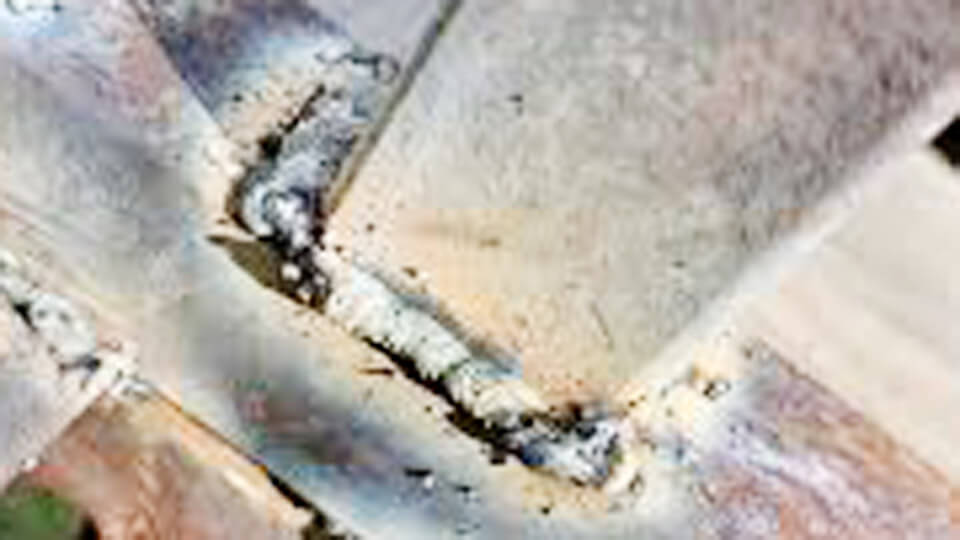
Image reddit
Flux Core Welding Basics
Flux core welding creates an arc between a continuously fed wire electrode and the workpiece, melting both to form a weld pool. The flux inside the wire generates a shielding gas and slag that protects the molten metal from atmospheric contamination like oxygen and nitrogen. This makes it ideal for outdoor work or windy conditions where gas-shielded processes might fail.
For beginners, start by recognizing two main types: self-shielded and gas-shielded flux core. Self-shielded wires rely solely on the flux for protection, producing more smoke and slag but requiring no gas cylinder.
Gas-shielded versions use an external gas like CO2 or argon-CO2 mix for cleaner welds with less spatter. Choose based on your environment—self-shielded for portability, gas-shielded for indoor precision.
Key advantages include high deposition rates, allowing faster welding than stick processes, and deep penetration on thicker materials up to 1/2 inch without multiple passes. However, it demands steady hand control to avoid burn-through on thin sheets.
Beginners should practice on scrap metal to observe how the arc behaves: a smooth, crackling sound indicates proper settings, while popping suggests issues like incorrect voltage.
Selecting the Right Equipment
Your setup directly impacts weld quality, so prioritize reliable tools suited to beginner needs. A basic flux core welder, often a MIG machine with flux core capability, should handle 110-220V input for versatility in garages or shops.
Choosing a Welder
Look for machines with adjustable wire feed speed (WFS) and voltage, typically ranging from 10-30 volts and 30-200 inches per minute (IPM) for WFS. Entry-level models like the Lincoln Electric Handy MIG or similar provide synergic controls that automatically match settings, simplifying the learning curve.
Ensure the duty cycle suits your projects—aim for at least 20% at 90 amps for intermittent use without overheating.
Power source matters: DC electrode negative (DCEN) is standard for flux core, providing deeper penetration than DC electrode positive (DCEP). Avoid AC machines, as they lack the stability needed for consistent arcs.
Wire Selection and Handling
Flux core wires come in diameters like 0.030″, 0.035″, and 0.045″. For beginners working on 1/8-1/4 inch mild steel, 0.030″ E71T-11 self-shielded wire offers good control and minimal cleanup.
Electrode classification follows AWS standards: E71T indicates electrode (E), tensile strength (7 for 70,000 psi), position (1 for all positions), and tubular flux (T).
Store wire in a dry environment to prevent moisture absorption, which causes hydrogen cracking. Install it correctly by aligning the spool with the drive rolls, and set tension just enough to avoid bird-nesting—test by pulling wire manually; it should feed smoothly without slipping.
Essential Safety Gear
Protective equipment prevents burns and fume inhalation. Wear ANSI-approved welding helmets with shade 10-13 lenses for clear arc viewing.
Flame-resistant jackets, leather gloves, and safety glasses under the helmet are non-negotiable. Use respirators in confined spaces to filter welding fumes, which contain manganese and other particulates.
Setting Up Your Machine Properly
Proper calibration ensures consistent welds. Begin with the manufacturer’s chart for your wire and material thickness. For 0.035″ wire on 3/16″ steel, set voltage to 18-20V and WFS to 250-300 IPM, yielding about 120-140 amps.
Polarity setup is crucial: connect the gun to the negative terminal and workpiece to positive for DCEN. This concentrates heat on the workpiece for better penetration.
Test on scrap: adjust voltage higher for flatter beads, lower for more convex ones. WFS controls amperage—faster feed increases current for thicker metals.
Incorporate a contact tip-to-work distance (CTWD) of 1/2-3/4 inch. Shorter distances increase voltage for hotter arcs, while longer ones cool it down. Beginners often overlook this, leading to erratic arcs; maintain consistency for stable performance.
Mastering Basic Welding Techniques
Technique separates clean welds from messy ones. Focus on posture: stand comfortably with both hands on the gun for stability, elbows tucked in.
Gun Angle and Travel Direction
Use a 10-15 degree drag angle, pulling the gun toward you like dragging a pencil. This allows slag to form behind the pool, protecting it as it cools. For vertical welds, a slight push angle helps control gravity-induced drip.
Travel speed influences bead shape: too slow causes excessive buildup and potential undercut; too fast leads to shallow penetration. Aim for 8-12 inches per minute on flat joints, observing the pool— it should be oval, about 1/4 inch wide.
Weave Patterns for Wider Joints
For fillets or laps, employ a slight side-to-side weave, no wider than the wire diameter, to ensure fusion on both sides. Straight stringer beads work for butts; avoid excessive weaving, as it reduces penetration.
Practice multi-pass welds on thicker stock: first pass for root penetration, subsequent for fill and cap. Each layer should overlap 50% to prevent inclusions.
Managing Heat Input
Heat affects distortion—weld intermittently on long seams to allow cooling. For thin gauge (under 16), reduce amps by 20% and increase speed to prevent warping.
Preparing Joints and Materials
Cleanliness is key; remove rust, paint, or oil with a wire brush or grinder to avoid porosity. Bevel edges on plates over 1/4 inch for better penetration— a 30-degree single V-groove suffices.
Material compatibility: flux core excels on carbon steels, but check wire specs for alloys. Avoid aluminum without specialized equipment. Joint types like T-joints require 45-degree fillets; ensure fit-up with minimal gaps, as flux core bridges up to 1/16 inch effectively.
Troubleshooting Weld Defects
If porosity appears—small holes in the bead— it’s often from contaminated wire or dirty base metal. Clean thoroughly and reduce moisture exposure. Solution: preheat material to 100°F if humid.
Excessive spatter indicates high voltage or incorrect CTWD; dial voltage down 1-2V and shorten stickout. For lack of fusion, increase amperage or slow travel speed to allow better sidewall melting.
Undercut, grooves along the toe, stems from fast travel or high heat; correct by pausing slightly at edges. Always inspect post-weld: chip slag completely before evaluating.
Practice Drills for Skill Building
Start with flat position beads on 1/4 inch plate, aiming for uniform ripple patterns. Progress to horizontal fillets, then vertical up for position versatility.
Track progress: measure penetration depth with a cut-and-etch test—use ferric chloride solution to reveal fusion zones. Aim for at least 1/8 inch depth on initial passes.
One practical insight: in real shop scenarios, marking travel lines with soapstone helps maintain straight beads, reducing rework time.
Another: test settings on identical scrap before the actual piece to match expansion rates and minimize distortion.
Advanced Considerations for Growth
As skills improve, experiment with gas-shielded wires like E71T-1 using 100% CO2 for smoother arcs and less slag. This boosts deposition rates to 8-12 lbs/hour versus 5-8 for self-shielded.
Monitor arc stability: voltage fluctuations signal feed issues; clean liner regularly. For efficiency, calculate wire consumption—0.035″ wire at 300 IPM uses about 0.5 lbs per hour.
Final Thoughts
Flux core welding equips beginners with a versatile skill for robust repairs and builds, emphasizing control over power and preparation over haste. By applying these tips, you’ll achieve sound welds that hold under load, whether fabricating brackets or fixing equipment.
Reinforce your understanding through consistent practice, focusing on how settings interplay with material response.
Optimize for low-hydrogen applications by selecting rutile-based fluxes, which minimize diffusible hydrogen to under 8 ml/100g, enhancing crack resistance in high-strength steels.
FAQ’s
Can I use flux core welding on thin metal without burning through?
Yes, by lowering amperage to 80-100 amps for 18-gauge sheets and increasing travel speed to 15 IPM. Use a push technique for better control and intermittent pulsing to manage heat.
What wire diameter is best for beginner flux core welding?
Start with 0.030″ for its forgiveness on settings and lower spatter. It suits materials up to 3/16 inch; scale to 0.035″ for thicker stock requiring higher deposition.
How do I reduce smoke and fumes in flux core welding?
Opt for gas-shielded wires with argon-CO2 blends, which produce less smoke than self-shielded. Position exhaust fans 12-18 inches from the arc and wear N95-rated respirators.
Is flux core welding suitable for outdoor projects?
Absolutely, self-shielded types resist wind disruption better than MIG. Maintain a 1/2 inch CTWD to ensure flux protection, and shield the work area if gusts exceed 5 mph.
What’s the difference between flux core and stick welding for beginners?
Flux core offers continuous feeding for longer beads without restarts, ideal for efficiency. Stick requires electrode changes but handles dirtier metals; flux core needs cleaner prep for optimal results.


