

You line up a piece of 1/4-inch steel, strike an arc, and the bead just sits on top like it doesn’t belong there. No real penetration, just a cold-looking weld that won’t hold under stress.
I’ve watched plenty of setups struggle like that, and most of the time it comes down to one thing — the machine simply doesn’t have enough power. That’s why understanding What Size Welder Do I Need for 1/4 Steel is critical before you even clamp your workpiece.
In real shop conditions, 1/4-inch steel isn’t forgiving. It needs enough amperage to drive heat deep into the joint, not just melt the surface. Undersized welders lead to weak fusion, multiple frustrating passes, and wasted time trying to “make it work.”
Choosing the right welder affects everything — penetration, weld strength, efficiency, and even your confidence while working. Get it right, and the arc feels steady, the puddle ties in clean, and your welds hold up without question.
I’ll walk you through exactly what power range you need, which welding processes work best, and how to avoid the common mistakes that leave welds looking strong but failing underneath. Here’s what actually works in the real world.
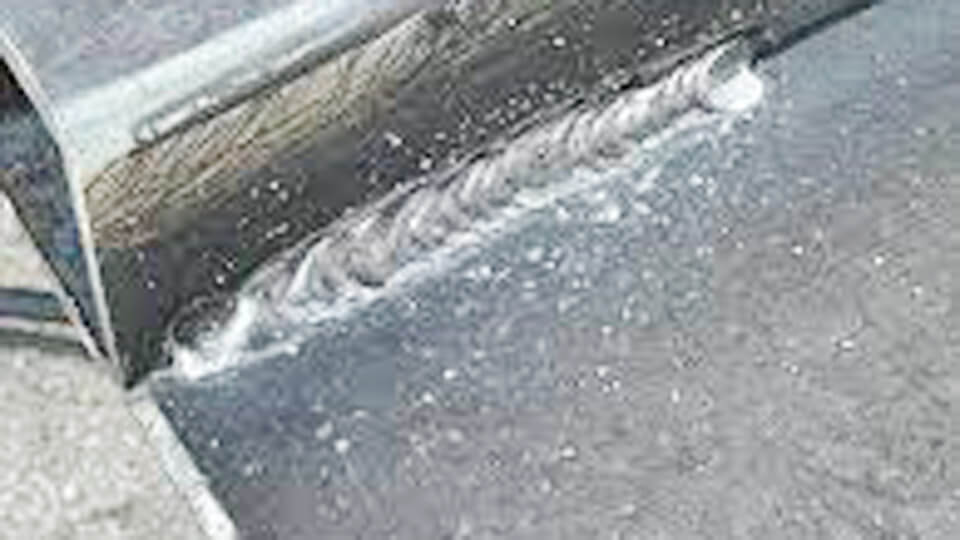
Image by reddit
Material Thickness and Amperage Baseline
Mild steel at 1/4 inch (0.250 in) requires sufficient heat to melt through the cross-section without excessive burn-through on thinner adjacent sections.
MillerWelds and ESAB guidelines align on 1 amp per 0.001 inch, yielding 250 amps as the target for reliable single-pass welds. Lower outputs succeed with technique adjustments but compromise efficiency.
- Single-pass full penetration: 200–250 amps minimum, depending on process.
- Multi-pass acceptable: 140–180 amps viable with beveling and interpass cleaning.
- Out-of-position or stainless: Reduce 10–15 % due to lower heat input needs.
Process-Specific Amperage Requirements
Different processes deliver heat and penetration differently, altering the required machine capacity.
MIG (GMAW) on mild steel
Short-circuit transfer with 0.035-inch ER70S-6 wire and C25 gas typically runs 180–220 amps at 20–23 volts for 1/4-inch material. Spray transfer pushes 200–250 amps for deeper penetration. Flux-cored (self-shielded) demands similar or slightly higher settings due to slag coverage.
240V machines rated 200+ amps handle single-pass fillets reliably; 120V units cap at 140–160 amps and require multiple passes.
Stick (SMAW)
E7018 1/8-inch rods operate 140–180 amps DCEN for flat positions, delivering deep penetration. E6010 or E6011 rods run 100–150 amps for root passes. A 200-amp machine provides headroom for vertical-up or overhead work without arc instability.
TIG (GTAW)
DCEN with 3/32-inch tungsten and ER70S-2 filler requires 200–250 amps for full penetration on butt joints. Fillets drop to 180–220 amps. Inverter machines excel here due to precise control; transformer units need higher rated output to maintain arc stability at these levels.
Welder Output Ratings and Real-World Capability
Machine nameplate ratings reflect maximum output, but duty cycle limits continuous use. A 200-amp welder at 60 % duty cycle sustains 200 amps for 6 minutes out of 10; lower-rated units overheat faster on thick material.
- 140–160 amp (often 120V): Multi-pass only on 1/4 inch; bevel edges 30–45 degrees, preheat to 100–150 °F if cold ambient. Suitable for light repairs but inefficient for production.
- 180–200 amp (240V): Single-pass capability on flat fillets; good for hobbyists and small shops.
- 225–250 amp+: Single-pass full penetration on most joints; preferred for structural work with consistent results.
Duty cycle proves critical: 20–30 % cycle units force frequent cooling breaks during extended 1/4-inch jobs.
Joint Preparation and Technique Adjustments for Lower Output
When machine capacity falls short, preparation compensates.
- Bevel edges to 30–45 degrees for V-groove joints, root face 1/16–1/8 inch.
- Multi-pass sequence: Root at 140–160 amps, fill and cap at 160–180 amps.
- Preheat mild steel to 100 °F minimum in cold conditions to slow cooling and prevent cracking.
- Travel speed 8–12 ipm maintains puddle control; faster speeds reduce penetration.
These steps allow 140-amp machines to produce acceptable welds, though bead appearance and fusion suffer compared to higher-output units.
Power Supply Considerations: 120V vs 240V
120V welders limit output due to input current constraints (typically 20–30 A breakers). Voltage drop over long cords further reduces effective amps. 240V units deliver full rated output with less restriction, making them essential for consistent 1/4-inch performance.
| Power Supply | Typical Max Output | 1/4″ Capability | Best Use Case |
|---|---|---|---|
| 120V | 140–160 A | Multi-pass, beveled | Occasional repairs, portability |
| 240V | 180–250+ A | Single-pass viable | Frequent structural work |
Electrode and Wire Selection Impact
- MIG: 0.035-inch wire balances deposition and control at 180–220 amps; 0.045-inch requires 220+ amps for optimal spray.
- Stick: 1/8-inch 7018 at 140–180 amps provides excellent mechanical properties; 3/32-inch limits to thinner material.
- TIG: 3/32-inch filler at 200+ amps matches base metal dilution needs.
Polarity remains DCEP for MIG and stick (except some flux-cored), DCEN for TIG on steel.
Duty Cycle and Heat Management
Extended welding on 1/4 inch generates significant heat. Machines with 40–60 % duty cycle at rated amps sustain longer runs without shutdown. Monitor fan noise and transformer temperature; forced pauses extend machine life and maintain arc quality.
Cost vs Performance Trade-offs
Entry-level 140-amp 120V MIG units cost $300–600 but limit 1/4-inch work to occasional use. Mid-range 200–250 amp 240V machines ($800–1500) offer versatility for thicker material and higher duty cycles.
Professional-grade 250+ amp units justify the investment for daily fabrication through reduced rework and faster completion.
Decision Framework for Your Shop
Match welder size to workload frequency and joint demands. Occasional 1/4-inch repairs suit 180-amp units with multi-pass technique.
Regular structural welding requires 225–250 amps for single-pass efficiency and reliable fusion. Test settings on scrap coupons matching your material and position before committing to production.
Shops standardize on 240V, 200+ amp machines for 1/4-inch capability because they eliminate compromises in penetration and productivity.
Advanced insight: Monitor heat-affected zone width during qualification—excessive widening beyond 0.10–0.15 inch signals over-amperage or insufficient travel speed, directly correlating to reduced toughness in load-bearing applications.
FAQs
Can a 140-amp welder handle 1/4 inch steel?
Yes, but only with multiple passes, beveled joints, and slower travel. Expect shallower penetration and higher distortion risk compared to higher-output machines.
What amps for MIG welding 1/4 inch steel?
180–220 amps with 0.035-inch wire and 20–23 volts typically achieves good fusion in flat positions; adjust voltage for stable arc and desired bead profile.
Is 200 amps enough for single-pass on 1/4 inch mild steel?
Yes for most fillet and groove joints in flat or horizontal; vertical-up may require slight reduction and stringer beads to control puddle.
Do I need 250 amps for 1/4 inch stick welding?
Not necessarily—140–180 amps with 1/8-inch 7018 provides full penetration in flat positions. Higher amps add speed but increase burn-through risk on poor fit-up.
Should I buy 120V or 240V for welding 1/4 inch steel?
240V for reliable single-pass results and higher duty cycle; 120V works for infrequent use but forces multi-pass and circuit upgrades to maximize output.


