When high-wear components like valve seats, mud motor stabilizers, or turbine blades crack or erode under abrasive loads, standard GTAW overlays often introduce 10–15% dilution that weakens the deposit and shortens service life.
Plasma Transferred Arc Welding solves this by delivering a constricted, high-energy plasma column that fuses powder or wire overlays with dilution rates as low as 2–5%. This process creates dense, metallurgically bonded layers that resist corrosion, abrasion, and heat far better than conventional arc methods while minimizing heat input to the base metal.
For professional welders and shops evaluating hardfacing upgrades, understanding PTAW parameters and decisions directly impacts overlay performance, material costs, and component longevity.
Image haldencn
The Mechanics Behind Plasma Transferred Arc Welding
Dual Arc Configuration: Pilot and Main Transferred Arcs
PTAW relies on two distinct arcs managed independently. The pilot arc burns between the tungsten cathode and the copper anode nozzle at low current (typically 20–50 A), ionizing the plasma gas and providing reliable ignition without high-frequency starts.
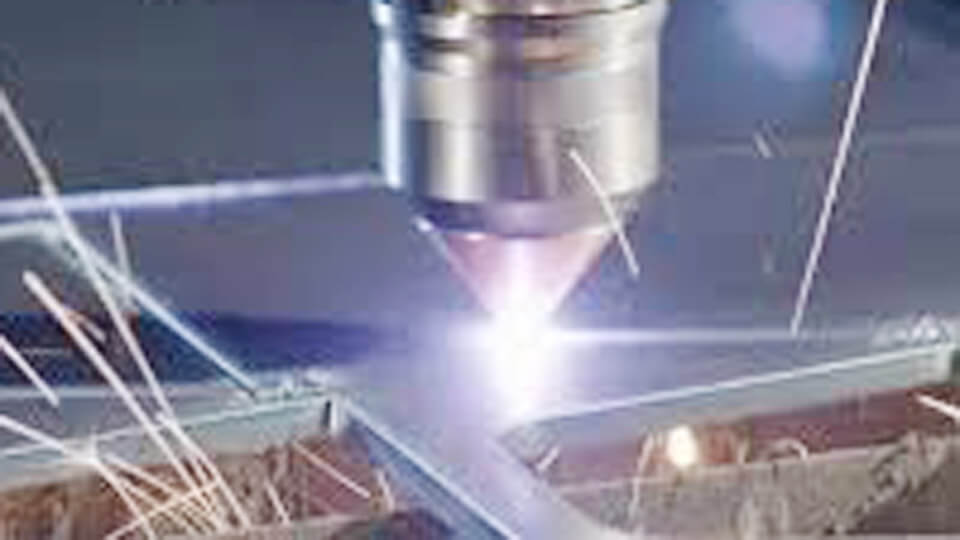
Once established, the main transferred arc jumps from the same electrode through the nozzle orifice directly to the workpiece, reaching temperatures up to 23,000 °F.
This configuration keeps the electrode shielded from filler contamination while concentrating energy density in a columnar beam 2–3 times stiffer than a GTAW arc. Welders adjust pilot current for arc stability and transferred current (100–400 A range) for penetration depth.
Powder Delivery and Weld Pool Formation
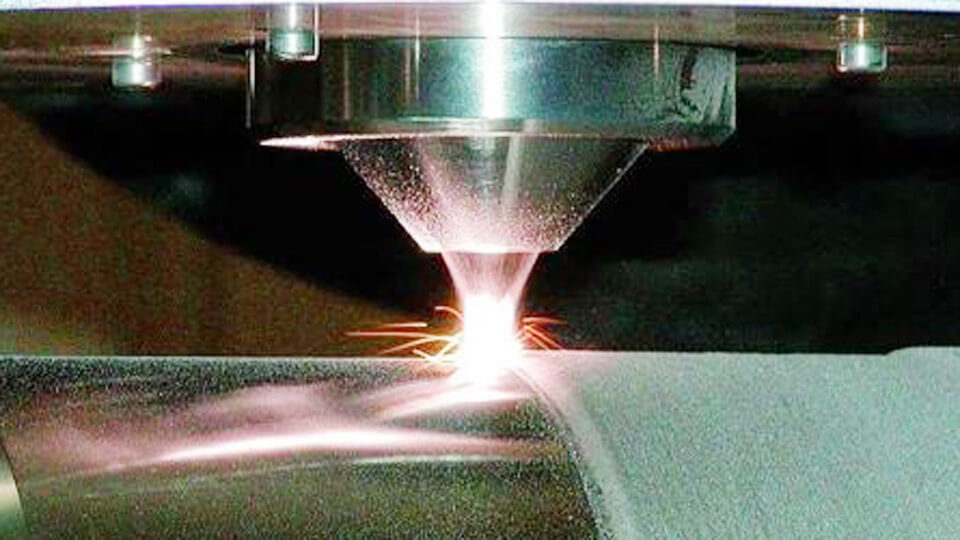
Filler enters the process as atomized powder (45–250 μm particle size) carried by argon through dedicated ports in the anode nozzle. The powder melts in the plasma column before reaching the weld pool, ensuring full fusion with minimal oxidation.
Wire feed is possible but less common for hardfacing because powders allow carbide composites and alloys too brittle for wire drawing.
The resulting pool solidifies with a narrow heat-affected zone, producing bead widths of 8–16 mm and heights of 1–6 mm per pass depending on oscillation and travel speed. Precise standoff (3–8 mm) maintains consistent powder capture efficiency above 95%.
Arc Constriction and Energy Density
The copper nozzle orifice (typically 2.4–4.8 mm diameter) constricts the plasma, increasing velocity and energy density while reducing total heat input compared to GTAW. Plasma gas flow (1.2–3.0 L/min argon) directly controls constriction; higher flows tighten the column for deeper, narrower penetration.
Shield gas (10–15 L/min argon or argon-hydrogen mixes) protects the pool. This setup achieves deposition rates of 4–26 lb/hr while keeping dilution under 10%, a critical edge when rebuilding exotic substrates like Nitronic 50 or Inconel.
Why PTAW Outperforms GTAW and Other Arc Processes in Hardfacing
Dilution Control and Metallurgical Bonding
Dilution in PTAW stays between 2–10% because the constricted arc melts only a shallow substrate layer while fully fusing the overlay. GTAW often exceeds 8–13% on the same Stellite 6 deposits, diluting wear-resistant carbides and reducing hot hardness at 725 °F from 275 HV (PTAW) to 235 HV (GTAW).
The result is a true metallurgical bond with bond strengths exceeding 65,000 psi—ten times stronger than thermal spray mechanical bonds.
Heat Input and Heat-Affected Zone Reduction
Localized plasma energy allows full fusion at lower overall amperage: a 30 A PTAW deposit matches the fusion of 100 A GTAW while cutting heat input by roughly 70%.
This shrinks the HAZ, prevents distortion on thin sections, and enables single-layer overlays as thin as 0.05 in. where GTAW requires multiple passes and post-machining. Shops report 20% material savings and faster cycle times when switching from cored-wire GMAW.
Deposition Efficiency and Material Versatility
PTAW handles powders that GTAW or MIG cannot—Stellite 190, tungsten carbide in nickel matrices, or Colmonoy 88—without electrode contamination. Deposition reaches 10+ kg/hr when combining powder and wire feeders. Automated systems maintain repeatability within ±0.1 mm bead height, eliminating the variability that plagues manual processes on complex geometries like valve bores or auger flights.
Equipment Essentials for Reliable PTAW Operation
Torch Anatomy and Consumables
The torch integrates a tungsten cathode, water-cooled copper anode nozzle, and shielding nozzle. Orifice size and setback (electrode position inside the nozzle) are the two most critical consumables; a 4.8 mm orifice with 2.4 mm setback balances constriction and powder flow for most hardfacing.
Nozzles last hundreds of hours when plasma gas remains pure argon; contamination from moisture or oxygen accelerates erosion. Handheld torches top out at 100 A, while automated torches handle 400 A with robotic integration.
Power Supply and Control Systems
Modern supplies feature separate pilot and transferred arc circuits plus closed-loop feedback for current, voltage, and gas flow. Open-circuit voltage sits around 80–95 V DC; actual arc voltage stays 20–35 V depending on standoff.
Pulse modes (available on advanced units) reduce average heat input another 15–20% for crack-sensitive alloys. Automation interfaces accept CNC or robot signals for synchronized travel speed, oscillation, and powder feed.
Gas Management and Feed Systems
Argon serves all three roles—plasma, carrier (1–3 L/min), and shield (10–20 L/min). Precise flow meters and pressure regulators prevent porosity; hydrogen additions (5–10%) to shield gas improve wetting on stainless substrates.
Powder feeders deliver 5–40 g/min with ±2% accuracy via vibratory or rotary mechanisms. Closed-loop carrier gas pressure maintains consistent delivery even during torch orientation changes in robotic setups.
Parameter Selection for Optimal PTAW Deposits
Welders control five interdependent variables: transferred current, travel speed, powder feed rate, plasma gas flow, and standoff distance. The table below shows proven starting points for common hardfacing alloys on carbon or stainless steel substrates.
| Alloy | Current (A) | Travel Speed (mm/min) | Powder Feed (g/min) | Plasma Gas (L/min) | Target Dilution (%) | Bead Height (mm) |
|---|---|---|---|---|---|---|
| Stellite 6 | 120–160 | 300–500 | 8–15 | 2.2–3.0 | 3–6 | 2–4 |
| Colmonoy 88 | 140–180 | 250–400 | 10–18 | 2.4–3.2 | 4–8 | 2.5–5 |
| WC-NiCrBSi composite | 100–140 | 400–600 | 6–12 | 1.8–2.5 | 2–5 | 1.5–3 |
| Nickel 625 | 110–150 | 350–450 | 12–20 | 2.0–2.8 | 5–10 | 3–6 |
These values assume 10–14 mm standoff and argon shielding at 12–15 L/min. Increase current 10–15% for thicker substrates; reduce feed rate if dilution exceeds target. Oscillation at 1–3 Hz widens beads without raising heat input.
Adjusting for Substrate and Overlay Thickness
On low-carbon steel, 120 A at 400 mm/min keeps dilution below 5% for a 3 mm Stellite layer. Austenitic stainless requires 10% lower current to avoid sensitization.
Multi-layer builds (up to 50–60 mm total) use the first layer at reduced feed to establish bonding, then ramp parameters for subsequent passes. Preheating to 150–300 °C on thick castings further stabilizes the pool and eliminates cracking.
Calculating Deposition Rates and Travel Speeds
Deposition rate (kg/hr) ≈ powder feed rate × capture efficiency (0.92–0.97) × 60. At 15 g/min and 95% efficiency the system deposits roughly 0.855 kg/hr per torch.
Travel speed then sets bead cross-section: slower speeds build thicker layers but risk higher dilution. Real-time monitoring of arc voltage (proxy for standoff) lets operators hold geometry within 0.2 mm across long runs.
Alloy Choices and Their Performance in PTAW Applications
Cobalt-Based Alloys for High-Temperature Wear
Stellite 6 and 12 deliver excellent galling and erosion resistance up to 800 °C because PTAW preserves their carbide distribution better than GTAW. Hot hardness remains 200+ HV at 800 °F versus rapid drop-off in diluted deposits. Shops use these on valve seats and turbine blades where impact plus heat dominate.
Nickel-Based and Carbide Composites for Corrosion Resistance
Colmonoy 88 and WC-NiCrBSi matrices excel in sour gas or acidic environments. The low-dilution PTAW process retains boron and silicon for self-fluxing behavior, producing porosity-free layers with corrosion rates under 0.1 mm/year in seawater.
Tungsten carbide loadings up to 60 wt% survive because the plasma fully melts the matrix without degrading carbides.
Matching Base Metals to Prevent Cracking
Preheat and interpass temperature charts are alloy-specific: P550 non-magnetic steel needs 200 °C minimum to avoid martensite in the HAZ when overlaying with Stellite 190.
Inconel 625 substrates tolerate room-temperature starts but require 5% maximum iron dilution to meet NACE specs. Post-weld stress relief at 600–650 °C restores toughness in carbon-steel bases.
Industrial Applications and Decision Criteria for PTAW
Critical Components in Oil & Gas and Power Generation
Downhole stabilizers, valve gates, and riser pins see PTAW tungsten-carbide overlays that extend life 3–5× versus untreated parts. Power-gen turbine blades gain erosion resistance from thin Colmonoy layers without distorting airfoil geometry. Automated PTAW systems coat internal diameters as small as 50 mm or external surfaces up to 360 mm on cylinders.
When to Opt for PTAW Over Laser Cladding or Thermal Spray
Choose PTAW when metallurgical bonding, deposition rates above 10 lb/hr, or thick single-pass builds (>0.1 in.) are required. Laser cladding offers lower dilution on ultra-thin layers but costs 20% more in equipment and operates slower for large areas.
Thermal spray lacks fusion strength for impact-loaded parts. PTAW wins on cost-per-pound of deposited alloy for most oilfield and mining hardware.
Fine-Tuning Parameters to Eliminate Defects in PTAW Overlays
Managing Porosity Through Gas Flow Optimization
Porosity traces to moisture in powder or insufficient shield flow. Raising carrier gas to 2.5 L/min and shield to 15 L/min while maintaining plasma at 2.4 L/min eliminates 99% of gas pores on hygroscopic nickel alloys. Drying powder at 120 °C for 2 hours before use is standard practice.
Controlling Bead Geometry and Dilution with Current and Speed
Convexity index (reinforcement/width × 100) should stay near 30% for machinability. If beads crown excessively, drop current 10 A and increase speed 50 mm/min. Dilution above target signals excessive standoff—reduce by 1–2 mm or tighten plasma flow.
Real-time voltage feedback (±1 V) correlates directly to geometry, allowing closed-loop correction during robotic runs.
Performance-based Takeaway
PTAW lets you hit sub-5% dilution and 4–26 lb/hr deposition on the first pass when parameters are dialed to the substrate and alloy. This combination routinely doubles or triples component life in abrasive service while cutting filler costs 15–30% versus GTAW.
For shops chasing tighter tolerances on complex geometries, the next leap is pulsed-current PTAW paired with 6-axis robotics—delivering consistent overlays on contoured surfaces with dilution held under 3% across multi-layer builds.
Frequently Asked Questions
What is the typical dilution rate achievable with Plasma Transferred Arc Welding?
PTAW routinely achieves 2–5% dilution on most hardfacing alloys and substrates, versus 8–15% common in GTAW. Single-layer deposits meeting NACE or API specs (under 5% Fe) are standard when current, standoff, and powder feed are optimized.
Which materials work best as PTAW powders versus wire?
Cobalt-based Stellite grades, nickel Colmonoy alloys, and tungsten-carbide composites perform best as powders because many are too hard or brittle for wire. Wire feed suits softer nickel or stainless rebuilds when higher deposition rates are needed beyond powder capacity.
How does PTAW compare to laser cladding for hardfacing cost and speed?
PTAW matches laser quality at 15–20% lower operating cost and higher deposition rates (up to 26 lb/hr versus laser’s 2–6 lb/hr). Laser excels only on ultra-thin (<0.5 mm) or heat-sensitive parts; PTAW wins for industrial-scale overlays on valves, stabilizers, and augers.
Can PTAW be used manually or is automation required?
Manual torches up to 100 A handle repair work and small runs effectively. Automation becomes essential above 150 A or for repeatability on production parts because it synchronizes travel speed, oscillation, and powder feed to maintain consistent bead geometry and dilution.