
Setting up a welder in a garage sounds simple until you trip a breaker halfway through a weld or realize sparks are landing way too close to something flammable.
A lot of beginners focus only on the machine itself, but the workspace setup is what really determines how safe, comfortable, and efficient your welding sessions will be. That’s why learning How to Setup a Welder in My Garage is just as important as learning how to strike an arc.
In real garage workshops, small setup mistakes can lead to poor weld performance, ventilation problems, or serious safety risks. I’ve seen welders struggle with unstable power, cramped work areas, and bad grounding simply because the garage wasn’t prepared properly before the machine was plugged in.
The good news is you don’t need a massive professional shop to build a solid welding space at home. With the right layout, electrical setup, ventilation, and safety planning, a regular garage can become a reliable place to practice and complete real projects. In this guide, I’ll walk through the practical steps that make garage welding safer, smoother, and far less frustrating.
Why Proper Garage Welder Setup Matters
A badly set-up welder in a confined space creates real problems. Inadequate power causes voltage drop, leading to unstable arcs and lack of fusion. Poor ventilation exposes you to harmful fumes. Cluttered workspaces increase fire risks from sparks and hot metal.
I’ve seen beginners burn through thin material or fail to penetrate thicker stock because they skipped joint prep or guessed amperage. Proper setup controls heat input, minimizes distortion, ensures good penetration, and keeps your machine running efficiently without constant rework. It also complies with basic safety practices that protect you, your home, and your projects.
Choosing the Right Welder for Garage Use
Start by matching the machine to your power supply and typical work. Most home garages have 120V or 240V service, often limited by a 100-200A panel.
120V machines suit light-duty work—sheet metal up to about 1/8 inch. They draw 15-20A input and deliver 90-140A output. Great for portability and occasional repairs, but duty cycle drops quickly on thicker material.
240V welders handle serious fabrication. They reach 180-300A with better duty cycles. Dual-voltage inverters offer flexibility; plug into 120V for small jobs and switch to 240V for heavier work without buying a second machine.
For most DIYers and hobbyists, a 200-250A inverter MIG or multi-process machine strikes the best balance. Stick welders remain reliable for dirty or outdoor-adjacent jobs since they’re more forgiving of surface conditions.
Pro tip from experience: Buy based on real needs. If you mostly repair thin auto body panels, a 120V flux-core capable unit works fine. Structural or thicker fabrication demands 240V.
Electrical Requirements and Safe Power Setup
This is where many garage setups fail. Never run a welder on a shared household circuit.
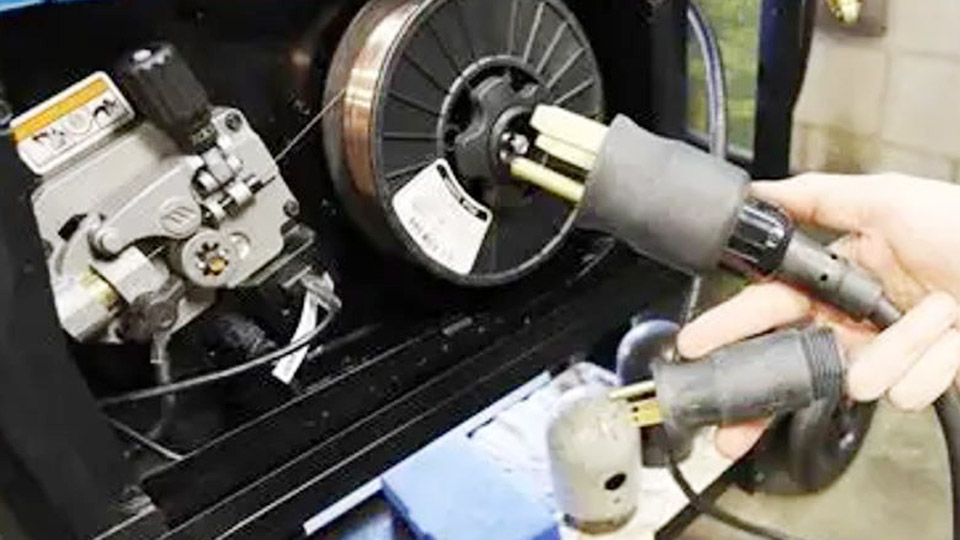
For a typical 120V welder (20A input), install a dedicated 25-30A breaker with NEMA 5-30R receptacle on 10 AWG copper wire. For 240V machines drawing 40-50A, use a 50A double-pole breaker, NEMA 6-50R outlet, and 6 AWG conductors. Follow NEC guidelines with 125% headroom.
Keep cable runs short—under 25 feet—to minimize voltage drop. Longer runs with undersized wire cause arc instability. Use heavy-duty extension cords only as a last resort, and size them appropriately.
Position the welder near the power source and work area. A mobile cart lets you roll everything to the center of the garage, keeping leads short (ideally under 12-15 feet). Ground properly: clean metal-to-metal contact for the work clamp, close to the weld zone.
Common mistake: Ignoring inrush current. Welders draw a surge when striking an arc. Undersized circuits trip immediately.
Creating a Safe and Efficient Garage Welding Space
Clear a dedicated zone away from flammables like gasoline, oil rags, or paint. Keep the area flat, dry, and well-lit. A steel welding table (at least 3/8-inch thick, 4×6 feet minimum) on sturdy legs resists warping and provides a good grounding point.
Use C-clamps or magnetic clamps for fixturing. Chain gas cylinders securely at two-thirds height. Store rods in a dry cabinet—moisture ruins coatings, especially low-hydrogen 7018s.
Organize tools: grinder, wire brush, chipping hammer, pliers, and safety gear within easy reach. Minimize trip hazards from cables and hoses.
Ventilation: Protecting Your Lungs in a Confined Space
Garage welding without proper airflow is a fast way to respiratory issues. Fumes rise into your breathing zone if not managed.
For occasional welding, open the garage door and a window, use a box fan to pull fumes away from you. For regular work, consider a portable fume extractor. Local exhaust ventilation beats general dilution every time.
Position fans so air moves across the arc and exhausts outside, never across your face. Never weld in fully enclosed spaces without mechanical ventilation. I’ve learned the hard way—headaches and fatigue disappear when you get serious about fume control.
Essential Safety Gear and Fire Prevention
PPE isn’t optional. Wear flame-resistant clothing covering skin, button cuffs, no pant cuffs. High-top leather boots. Quality welding gloves. Auto-darkening helmet with proper shade. Safety glasses underneath.
Keep a fire extinguisher rated for electrical and metal fires nearby. Have a bucket of water or sand for hot metal. Check for hidden flammables behind walls or in cracks—sparks travel far.
Read your machine’s manual. Every welder behaves slightly differently.
Setting Up for SMAW (Stick) Welding
Stick remains popular in garages for its simplicity and tolerance of less-than-perfect conditions.
Polarity and basics: Most electrodes run DCEP (electrode positive). Check your machine.
Electrode selection and amperage:
- 3/32″ 6010/6011: 40-90A, good for root passes, deep penetration.
- 1/8″ 6010/6011: 75-125A.
- 1/8″ 7018: 90-140A, low hydrogen for stronger welds, needs dry storage.
- Adjust for position: vertical and overhead often need 5-10% less amperage for puddle control.
Joint prep: Grind or wire brush to bare metal. Remove rust, paint, oil. Bevel thick plates for better penetration. Clean within an inch of the joint on both sides.
Technique tips: Maintain a short arc (about electrode diameter). Use a whipping or circular motion for 6010. Drag technique for 7018. Travel speed matters—too slow overheats and causes undercut; too fast lacks penetration.
Common mistakes: Dirty metal, wrong amperage (too hot burns through or causes porosity; too cold sticks the rod), long arc length creating spatter and weak welds.
MIG Welding Setup in the Garage
MIG (GMAW) offers speed and ease for beginners once dialed in.
Gas and wire: 75/25 Ar/CO2 for mild steel. 0.030″ wire for most garage work up to 1/4″. 0.035″ for thicker material.
Typical settings (approximate for mild steel):
| Thickness | Wire Size | Voltage | Wire Speed (IPM) | Approx. Amps |
|---|---|---|---|---|
| 16-18 ga | 0.030″ | 16-19V | 150-250 | 80-130 |
| 1/8″ | 0.030″ | 18-21V | 220-320 | 130-180 |
| 1/4″ | 0.035″ | 20-24V | 250-400 | 180-250 |
Start mid-range, run test beads on scrap. Listen for a steady “bacon frying” sound. Adjust voltage for arc length and wire speed for deposition/penetration. Short stick-out (3/8-1/2″) improves control.
Flux-core (gasless) works well outdoors or in drafty garages. Use DCEN polarity usually. Settings similar but expect more spatter and slag.
Common issues: Burn-through on thin stuff (lower voltage/speed), lack of fusion (higher settings or better prep), porosity (dirty metal or wind).
TIG Welding Setup for Precision Work
TIG (GTAW) demands cleaner setup but delivers beautiful results on thin material, stainless, or aluminum.
Use pure argon. DCEN for steel/stainless, AC for aluminum. Tungsten size: 1/16″ for low amps, 3/32″ for medium.
Amperage roughly 1A per 0.001″ thickness as a starting point. Balance control on AC for aluminum cleaning vs. penetration.
Prep is critical: clean metal, sharp tungsten (grind longitudinally). Gas flow 15-20 CFH.
Garage challenge: Drafts ruin shielding. Shield the area or weld in calmer moments.
Joint Preparation and Material Compatibility
Always clean: degrease with acetone or similar, then grind or brush to bright metal. Remove mill scale, paint, rust.
Fit-up matters. Gaps cause burn-through or weak joints. Bevel edges on thicker material for multi-pass welds. Use clamps to control distortion—tack, check alignment, then weld in short segments alternating sides.
Match filler to base metal. ER70S-6 wire for mild steel. 7018 rods for structural. Know your alloys—wrong filler leads to cracking.
Step-by-Step Welder Setup Process
- Position machine and cart securely.
- Connect power per electrical specs.
- Install ground clamp and work leads.
- Set polarity and process.
- Load wire/electrode or gas (if applicable).
- Dial initial settings based on material and thickness.
- Run test beads on scrap of same material.
- Fine-tune: adjust one variable at a time.
- Check ventilation and PPE.
- Weld, inspect, clean between passes.
Troubleshooting Common Garage Welding Problems
- Unstable arc: Check voltage drop, loose connections, dirty clamp.
- Excessive spatter: Wrong voltage, long stick-out, dirty metal.
- Porosity: Contamination, poor gas coverage, damp electrodes.
- Distortion: Poor fixturing, too much heat (weld slower, smaller beads, alternate sides).
- Machine overheating: Exceeding duty cycle—take breaks.
Comparison of Processes for Garage Use
Stick: Versatile, portable, forgiving on dirty metal. Slower, more cleanup, skill-intensive.
MIG: Fast, easy for beginners, minimal cleanup with gas. Needs clean metal and gas shielding.
Flux-core: Good in wind, no gas needed. More spatter, slag.
TIG: Best appearance and control. Slowest, highest skill and prep demand.
Choose based on your projects. Many multi-process machines let you switch easily.
Maintaining Your Garage Welder Setup
Clean the machine regularly—dust kills electronics. Check cables for wear. Store consumables properly. Inspect gas regulators and hoses. Test ground connections.
After sessions, grind off slag, clean the table, and put tools away. A tidy shop encourages consistent, safe welding.
Final Thoughts
I’ve learned that patience with setup and test welds saves hours of grinding out bad joints later. Start simple, practice on scrap, and gradually tackle bigger jobs.
With solid electrical, ventilation, prep, and dialed settings, your garage becomes a capable welding shop. The biggest pro tip I can share: always run a couple test beads on identical scrap material before touching your actual project.
It reveals issues with settings, technique, or material before they become expensive mistakes. Weld smart, stay safe, and enjoy the process.


