
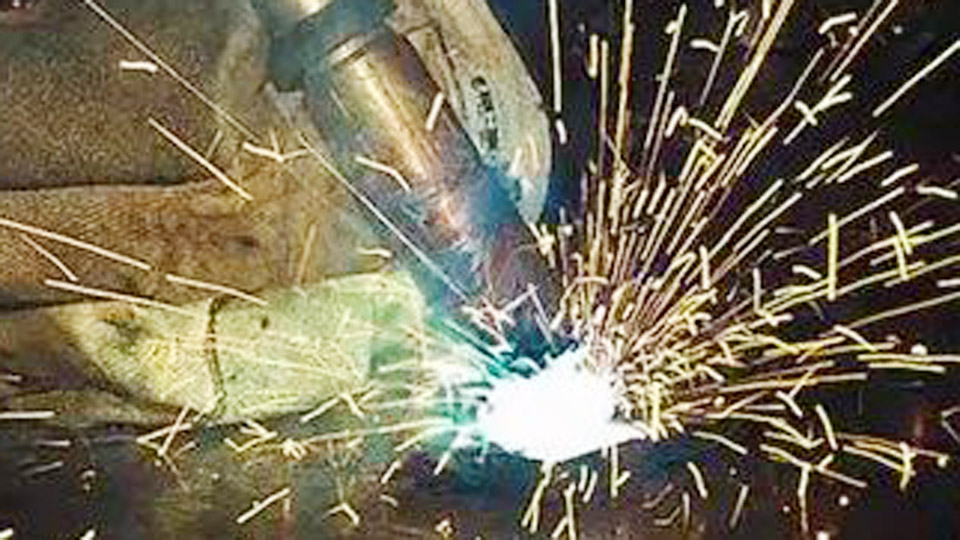
Welding outside on a windy day can turn a normal MIG setup into a frustrating mess fast. Shielding gas gets blown away, the arc becomes unstable, and suddenly you’re dealing with porosity and spatter instead of a clean bead.
That’s usually when people start asking How Does Gasless MIG Welding Work and whether it’s a better option for outdoor repairs and DIY fabrication.
Unlike standard MIG welding, gasless MIG uses flux-cored wire that creates its own shielding as it burns. That means fewer worries about wind affecting the weld and no gas bottle to drag around the shop or job site.
I’ve used it for everything from quick farm repairs to thicker steel projects where portability mattered more than having the prettiest weld.
But while gasless MIG welding is convenient, it also comes with trade-offs in cleanup, smoke, and weld appearance. Understanding how the process actually works makes a big difference in getting stronger welds and avoiding beginner mistakes.
I’ll break down the basics in a practical way so you can see where gasless MIG performs well—and where it can give you trouble.
Image by
What Exactly Is Gasless MIG Welding?
Gasless MIG welding is a variant of flux-cored arc welding where the filler wire contains its own shielding compounds. Traditional MIG (GMAW) relies on a cylinder of CO2 or argon mix to protect the molten pool from oxygen and nitrogen. Gasless skips the bottle entirely.
The wire looks like regular MIG wire from the outside—usually 0.030″ or 0.035″ diameter for home and light industrial machines—but it’s hollow. Inside is a mix of flux powders, deoxidizers, and alloying elements.
When the arc melts the wire, the flux vaporizes, creating a shielding gas right at the weld pool and forming a layer of slag on top.
This process is technically FCAW-S (self-shielded). There’s also gas-shielded flux-cored (FCAW-G), but most “gasless” talk in the USA refers to the self-shielded version popular on 110V and 220V machines like the Lincoln 140 or Hobart Handler series.
How the Process Works Step by Step
Pull the trigger on your MIG gun. The wire feeds out, touches the workpiece, and creates a short circuit or spray transfer depending on your settings. The arc jumps, melting both the wire and the base metal.
As the flux core burns, it releases gases that push away atmospheric contamination. Simultaneously, slag-forming ingredients float to the top of the puddle, protecting the cooling weld and adding alloying elements for better mechanical properties.
The result? A weld with good penetration on thicker material and the ability to handle some rust or mill scale better than solid wire without gas. But you’ll see more spatter and a distinct slag layer that needs chipping and brushing afterward.
I always tell trainees: watch the puddle, not the sparks. The arc in gasless runs a bit hotter and “rougher” than gas MIG, with a crackling sound instead of a steady hiss.
Why Gasless MIG Matters in Real Welding Situations
On outdoor jobs—trailer repairs, agricultural equipment, structural steel in breezy conditions—gas MIG struggles because wind blows the shielding away, causing porosity. Gasless keeps working.
It shines for portability. No bottle means you can throw the welder in the truck and go. For hobbyists and mobile repair guys, that convenience saves hours.
Penetration is typically deeper than solid wire MIG at similar settings, which helps on thicker sections or when you need to burn through light rust. Distortion can be higher if you’re not careful with heat input, though.
Cost-wise, the wire is more expensive per pound than solid wire, but you eliminate gas rental and refill fees. In my experience, it pays off quickly for occasional users or field work.
Gasless MIG vs. Traditional Gas MIG: When to Choose Each
I run both in the shop depending on the job. Here’s the practical breakdown:
Gas MIG (Solid Wire):
- Cleaner welds with minimal spatter and slag
- Better for thin sheet metal and automotive bodywork
- Requires clean material and no wind
- Smoother arc, easier to learn beautiful beads
Gasless Flux-Cored:
- Excellent in wind or outdoors
- More tolerant of dirty or rusty steel
- Deeper penetration on thicker material
- More spatter, slag, and fumes
For farm repairs or structural work over 1/8″, I often grab the gasless spool. For clean indoor fabrication on 16-gauge or thinner, gas MIG wins.
Gasless MIG vs. Stick Welding (SMAW)
Many beginners debate stick versus gasless MIG. Both are flux-based and portable.
Stick is cheaper to start, incredibly versatile with different rods for different jobs, and very tolerant of dirty metal. But it’s slower, produces more cleanup, and demands more skill to maintain arc length.
Gasless MIG offers continuous wire feed, so you can lay down longer beads without stopping to change rods. It’s faster for production-style repairs and easier on vertical and overhead once you dial it in. However, stick still rules for very thick material or root passes in critical structural work.
Best Materials and Thicknesses for Gasless MIG
Gasless works best on mild steel. Common wires like E71T-GS or Lincoln NR-211-MP handle rusty or galvanized material decently.
Thickness range: 0.030″ wire excels on 20-gauge to about 1/4″. Move to 0.035″ for heavier stuff up to 1/2″ or more with multiple passes. It’s not ideal for very thin sheet (under 20-gauge) because of higher heat and burn-through risk.
Avoid aluminum or stainless with standard gasless wires—they require specialized wires and often gas anyway. For those, switch processes.
Machine Setup and Polarity: The Details Most Guides Miss
This is where many people go wrong. For self-shielded flux-cored wire, you need reverse polarity (electrode positive, DCEP). Most small MIG machines have a polarity switch inside or on the drive assembly—flip it.
Remove or extend the gas nozzle so the contact tip sticks out more. Typical stick-out for gasless is 3/4″ to 1-1/4″. Too short and you’ll get porosity; too long and feeding suffers.
Drive rolls: Use knurled or serrated rolls designed for flux-cored wire. Smooth rolls can crush the tubular wire.
Contact tips: Size them right—0.035″ wire usually needs a 0.045″ tip for smoother feeding because of the flux.
Recommended Settings and Amperage Ranges
Settings depend on your machine, wire diameter, and material thickness. Always start with manufacturer charts, then fine-tune while welding.
For a typical 0.035″ self-shielded wire on mild steel:
- 1/8″ material: 140-180 amps, 18-21V, wire speed around 200-300 ipm
- 1/4″ material: 180-250 amps, 20-24V
- 3/8″+: Higher end, multiple passes, slower travel
On my 220V machine, for 1/4″ plate I might run 22-23 volts and enough wire speed to get a steady crackle without stubbing. Listen to the arc—if it’s popping and sputtering, increase wire speed or drop voltage slightly.
Travel speed: Drag the gun at a speed that keeps the puddle controlled. Too slow builds excessive heat and slag; too fast causes lack of fusion.
Step-by-Step: How to Run a Gasless MIG Bead
- Prep the joint: Grind or wire-wheel rust, mill scale, and paint. Gasless tolerates more dirt than gas MIG, but clean is still better.
- Tack it up: Use short tacks and chip slag between them.
- Gun angle: Drag technique—point the gun back toward the finished weld at 10-15° from perpendicular. Push technique usually causes porosity.
- Strike the arc: Touch and go or use a scratch start if needed.
- Maintain consistent stick-out: Watch it as you move.
- Travel: Steady speed with a slight weave if needed for wider beads.
- Post-weld: Let it cool slightly, then chip slag with a hammer and brush. Inspect for defects.
Joint Preparation and Technique Tips from the Booth
For butt joints on thicker plate, bevel edges to 30-35° for better penetration and fusion. Leave a small root gap.
On lap joints, I like a slight push-pull motion to wash the toes nicely. For fillet welds, keep the gun at 45° to both plates.
Common mistake: Running too short a stick-out. The extra length helps the flux do its job. Another: Treating it exactly like gas MIG with short stick-out and push technique—guaranteed porosity.
Common Beginner and Pro Mistakes
- Too much voltage: Creates excessive spatter, porosity, and a concave bead.
- Wrong polarity: Weak arc, poor penetration, lots of spatter.
- Inadequate cleaning between passes: Slag inclusions kill strength.
- Pushing instead of dragging: Flux doesn’t shield properly.
- Ignoring ventilation: Flux-cored produces more fumes—use a good exhaust fan or weld outside.
Pros sometimes get lazy on prep and pay for it with undercut or lack of fusion on critical repairs.
Safety Considerations You Can’t Skip
Flux-cored welding throws more spatter and produces heavier fumes. Wear proper leathers, a good helmet with auto-darkening, and gloves. Respiratory protection matters—especially indoors.
The slag can pop off hot, so eye protection even after the arc is off. Keep fire extinguishers handy; the flux makes more sparks than gas MIG.
Pros and Cons Summary
Pros:
- No gas bottle hassle or wind issues
- Good penetration and speed
- Portable and versatile for field work
- Tolerates imperfect material better
Cons:
- More cleanup (slag and spatter)
- Higher fume levels
- Can be harder to get beautiful beads
- Not ideal for very thin metal
- Wire costs more per pound
Real-World Applications I Use It For
Farm equipment repairs in open fields, trailer hitch installations, heavy gate fabrication, and quick fixes on rusty exhaust systems or chassis work. It saved me hours on a recent project rebuilding a loader bucket where wind would have ruined gas MIG attempts.
Advanced Tips for Stronger, Cleaner Welds
Experiment with forehand vs. backhand travel on different positions. Vertical-up usually requires a slight weave and faster settings to control the puddle.
For multi-pass welds, thoroughly remove slag each time. On thick material, I run stringer beads rather than wide weaves for better properties.
If your machine has inductance control, tweaking it can soften the arc and reduce spatter.
When Gasless Isn’t the Best Choice
Skip it for food-grade stainless, aluminum, or cosmetic auto body panels. In a climate-controlled shop with easy gas access, solid wire MIG often produces better-looking results with less post-work.
Taking Your Gasless Skills to the Next Level
Practice on scrap of the same thickness as your real project. Run beads in all positions until the settings feel natural. Record what works—voltage, wire speed, travel speed—for future reference.
The more you weld with it, the better you’ll read the puddle and anticipate issues.
After running gasless MIG on hundreds of repairs, I can tell you it’s a legitimate, powerful process when you respect its characteristics. It won’t replace every other method, but it will make many jobs faster and more practical.
Always drag the gun, maintain generous stick-out, and never skip slag removal between passes. Do that consistently, and your gasless welds will hold up as well as any other process in the right applications. Grab some scrap, dial in your machine, and burn some wire—you’ll quickly see why so many of us keep a spool of flux-cored handy.
FAQ: Gasless MIG Welding Questions Answered
How thick can you weld with gasless MIG?
With 0.035″ wire on a 200+ amp machine, you can handle up to 1/2″ or thicker with multiple passes. For single-pass work, stay under 1/4″ for best results. Thicker material needs proper joint prep and technique.
Does gasless MIG produce stronger welds than regular MIG?
Strength is comparable when done correctly. Gasless often gives deeper penetration, but proper fusion and cleanliness matter more than the process. Always match filler to base metal and follow good practices.
Why is my gasless weld so porous?
Common causes: wrong polarity, too much voltage, too short stick-out, pushing instead of dragging, or contaminated material. Increase stick-out to 1″, drag the gun, and lower voltage slightly.
Can I use gasless wire in a regular gas MIG welder?
Yes, with polarity reversed and proper drive rolls/tip. Many small flux-cored machines are designed exactly for this.
Is gasless MIG good for beginners?
It’s very forgiving for outdoor and repair work. The continuous feed makes it easier than stick in many ways but expect a learning curve with settings and cleanup. Start on thicker scrap.


