Welding stainless steel with an arc welder is a skill that opens many doors for DIYers, hobbyists, and professionals. Stainless steel is found everywhere: in kitchen equipment, construction, automotive parts, and art projects. But welding stainless steel is not as easy as welding mild steel.
It needs a careful approach, special techniques, and the right settings. If you want strong, clean welds without ruining the metal’s look or strength, you need to understand the full process.
This article gives you a clear, step-by-step guide to welding stainless steel with an arc welder (also called stick welder or SMAW). You will learn about the tools, settings, preparation steps, welding techniques, and safety measures.
There are also important tips that many beginners miss, plus solutions to common problems. Even if English is not your first language, this guide uses simple words and easy sentences. By the end, you will feel confident to start your own stainless steel welding project.

Image kongfangmetal
What Makes Stainless Steel Different?
Before you pick up your arc welder, it is good to know why stainless steel acts differently from regular steel. Stainless steel is made by mixing iron with chromium (at least 10.5%), sometimes with nickel and other elements. This mix makes the steel resist rust and stains, but it also changes how it reacts to heat.
When welding, stainless steel can:
- Warp or distort easily
- Lose its shiny surface (become discolored)
- Crack if cooled too fast
- Lose corrosion resistance if overheated
If you treat it like mild steel, you might end up with weak, ugly welds. That’s why you need the right tools, materials, and methods.
Choosing The Right Arc Welder And Equipment
The first step for a good weld is using the right equipment. Not every arc welder is suitable for stainless steel.
Types Of Arc Welders
There are two main types of arc welders for stick welding:
- AC (Alternating Current) welders
- DC (Direct Current) welders
Most experts prefer DC welders for stainless steel because they give a more stable arc, less spatter, and better control. However, if you only have an AC welder, you can still weld stainless steel, but you may need special electrodes and more practice.
Essential Equipment Checklist
- Arc (Stick) Welder – Preferably DC output, 100–200 amps range.
- Welding Rods (Electrodes) – Use rods made for stainless steel, like E308L, E309L, or E316L. These match the type of stainless steel you are welding.
- Personal Protective Equipment (PPE)
- Welding helmet (auto-darkening is best)
- Flame-resistant gloves
- Long-sleeve cotton shirt or welding jacket
- Welding apron
- Safety glasses
- Closed-toe leather boots
- Angle Grinder – For cleaning metal before welding and smoothing welds after.
- Wire Brush (stainless steel) – Do not use a carbon steel brush, as it can contaminate the surface.
- Clamps or Magnets – Hold pieces in place.
- Measuring Tools – Tape measure, square, marker.
- Fire Extinguisher – For safety.
Welding Electrode Comparison
The electrode (rod) you choose matters a lot. Here’s a comparison of common types:
| Electrode | Best For | Main Alloy | Notes |
|---|---|---|---|
| E308L | 304 stainless steel | Cr-Ni (18/8) | Most common, easy to use |
| E309L | Joining stainless to mild steel | Cr-Ni (23/13) | Good for dissimilar metals |
| E316L | 316 stainless steel | Cr-Ni-Mo | For marine/chemical use |
Pro tip: Always match the electrode to your base metal for the best results.
Preparing Stainless Steel For Welding
Preparation is one of the most important steps. If you skip or rush this part, your welds can be weak, dirty, or even fail.
Cleaning The Metal
Stainless steel must be very clean before welding. Any dirt, oil, paint, or rust can cause problems. Use these steps:
- Degrease the surface: Wipe with acetone or a special degreaser.
- Remove paint/rust: Use an angle grinder with a flap disc, but avoid grinding too much.
- Brush the joint: Use a dedicated stainless steel wire brush to remove tiny particles.
- Avoid touching: Oils from your fingers can cause weld problems. Wear gloves.
Non-obvious insight: Using a carbon steel brush (even once) can leave iron particles that cause rust spots later, ruining the look and corrosion resistance.
Fit-up And Joint Design
How you arrange the pieces before welding matters:
- Butt joints: Two flat pieces edge-to-edge. Good for sheet or plate.
- T-joints: One piece joins another at 90 degrees.
- Lap joints: One piece overlaps another.
Make sure:
- Edges are tight and even.
- There’s a small gap (1–2 mm) for full weld penetration.
- Clamps or magnets hold parts steady.
Tack Welding
Before the main weld, use small “tacks” (short welds) every 50–100 mm to keep pieces in place. This prevents movement from heat.
Setting Up Your Arc Welder
Getting the right settings is key for a good stainless steel weld.
Choosing Amperage
The amp setting depends on:
- Electrode size (thicker rods need more amps)
- Metal thickness
Typical starting points:
- 2.5 mm (3/32″) rod: 60–90 amps
- 3.2 mm (1/8″) rod: 80–120 amps
Always check the electrode box for the recommended range.
Polarity
- DCEN (Direct Current Electrode Negative): Usually gives less penetration, more control.
- DCEP (Direct Current Electrode Positive): More common for stainless, gives deeper penetration.
For most stainless rods, use DCEP.
Other Settings
- Use the lowest amperage that makes a stable arc.
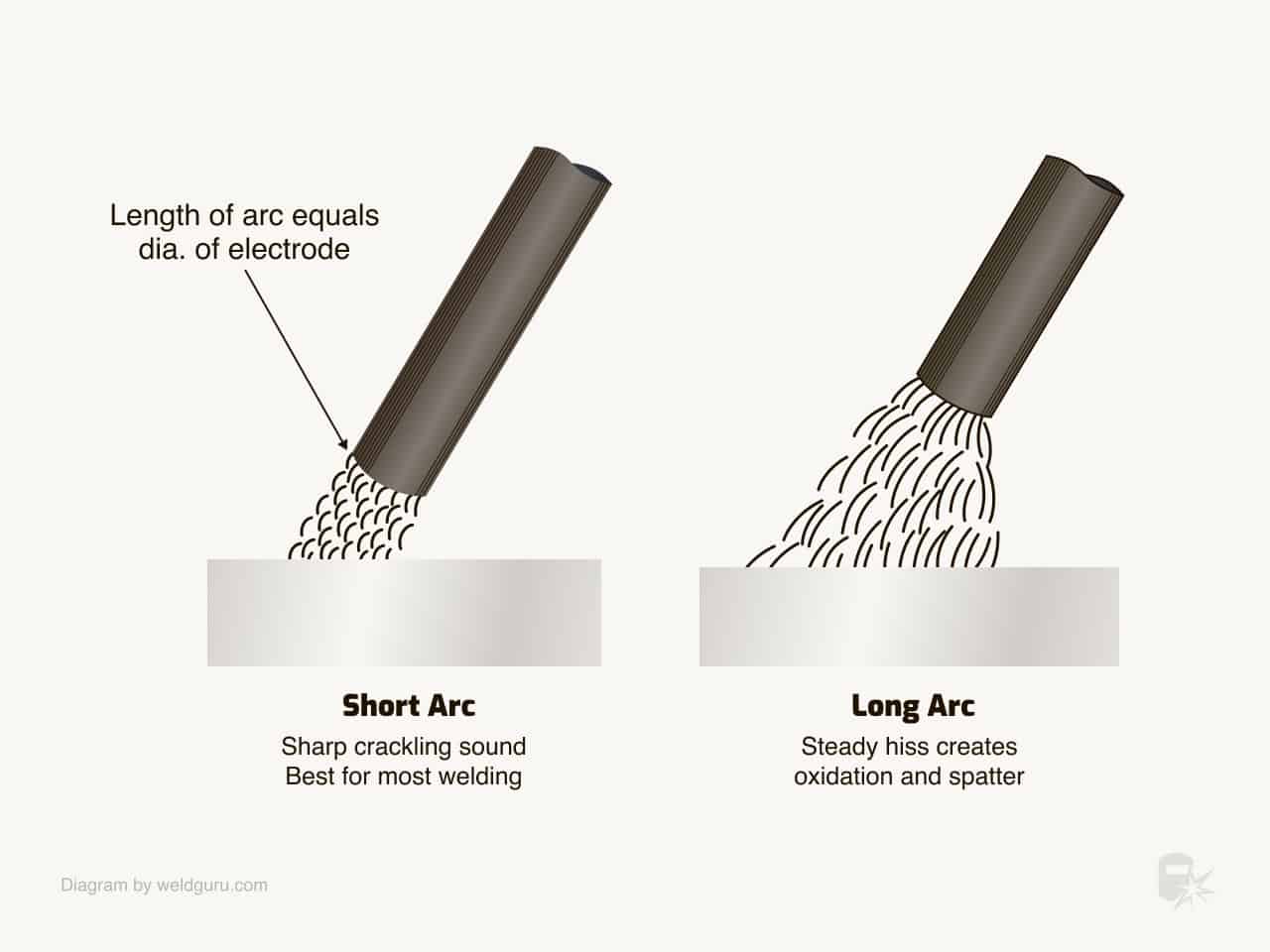
- Keep arc length short (just above the metal).
- Make sure cables are tight and connections clean.
Welding Techniques For Stainless Steel
Now you are ready to weld. Stainless steel needs a gentle approach. Here are the main steps:
Striking The Arc
- Hold the electrode at a 15–20° angle.
- Touch the rod to the metal, then lift slightly to start the arc.
- Keep the arc as short as possible.
Moving The Electrode
- Use a slow, steady hand.
- Move in a straight line or a small weaving motion.
- Keep the speed steady: Too fast and you get a weak, skinny weld; too slow and the metal overheats.
Controlling Heat
Stainless steel overheats easily. Too much heat causes:
- Warping
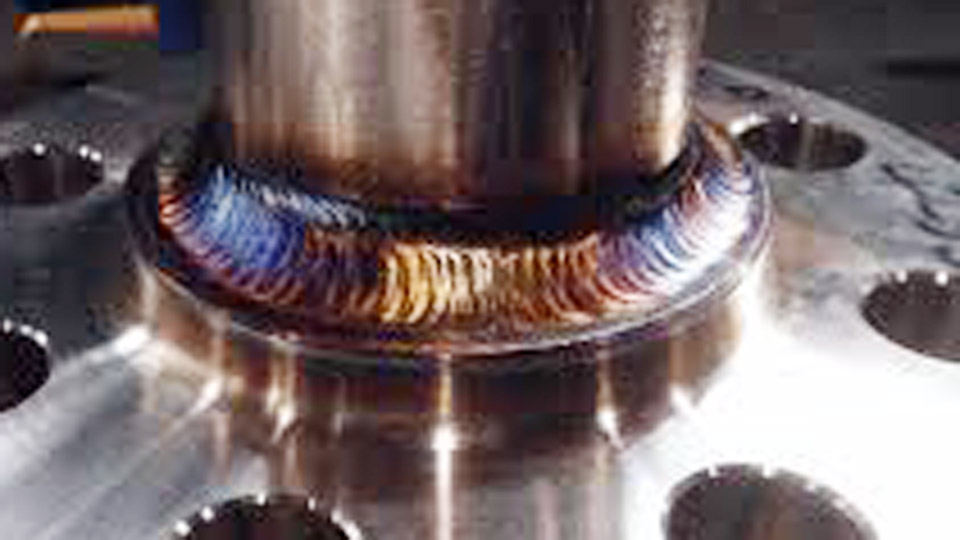
- Discoloration (blue, brown, or gold streaks)
- Loss of corrosion resistance
To avoid this:
- Use short welds (25–50 mm at a time), then let cool.
- Move to another spot to avoid building up heat.
- Use a damp cloth or copper backing to draw away heat (but never quench with water).
Multi-pass Welding
For thick metal or big joints, you may need several layers:
- Weld the first pass, clean the slag with a stainless brush.
- Weld the next pass, overlapping slightly.
Non-obvious insight: Always clean between passes. Leftover slag or spatter can cause weld defects.
Finishing The Weld
- Let the weld cool slowly in air.
- Clean off slag with a chipping hammer and stainless brush.
- Grind or polish if needed, but avoid overheating.
Common Problems And How To Fix Them
Welding stainless steel with an arc welder is not always smooth. Here are some common issues and solutions:
Warping
Problem: Metal bends or twists from heat.
Fix: Use clamps, weld in short sections, and let cool often. For large pieces, try welding on opposite sides in sequence.
Porosity (holes In Weld)
Problem: Little holes or bubbles in the weld bead.
Fix: Clean metal better, use fresh electrodes, and keep arc length short.
Spatter
Problem: Tiny balls of metal stick around the weld.
Fix: Lower amperage, use the right polarity, and keep a steady hand.
Cracking
Problem: Weld splits open, especially at the ends.
Fix: Preheat thick metal (not too hot), avoid rapid cooling, and use low-hydrogen rods.
Discoloration
Problem: Weld bead turns blue, brown, or gold.
Fix: Reduce heat, weld in short bursts, and clean with a stainless brush after.
Arc Welding Stainless Steel Vs. Other Methods
Stainless steel can be welded with TIG, MIG, or arc (stick) welding. Here’s a quick comparison:
| Method | Ease of Use | Weld Quality | Cost | Best For |
|---|---|---|---|---|
| Arc (Stick) | Medium | Good (with practice) | Low | Repairs, outdoor work |
| TIG | Difficult | Excellent | High | Thin sheet, precise work |
| MIG | Easy | Very Good | Medium | Production, speed |
Arc welding is best for repair jobs, thick metal, and outdoor projects, where wind may blow away shielding gas used in TIG and MIG.
Post-weld Cleaning And Finishing
A good weld is not finished until it is clean and protected.
Removing Slag
Stick welding leaves a layer of slag. Remove it with:
- Chipping hammer
- Stainless steel wire brush
Polishing
If you want a shiny finish:
- Use flap discs or sanding wheels (fine grit)
- Buff with polishing paste
Passivation
Passivation is a chemical process that removes iron particles and helps restore the stainless steel’s protective layer.
- Use a passivating gel or solution (read the label carefully).
- Rinse well after treatment.
Preventing Contamination
Never use tools (brushes, grinders) that have touched carbon steel on stainless steel. This avoids rust spots later.
Insight: Even small steel particles can ruin the “stainless” nature of your weld. Dedicate brushes and grinders for stainless only.
Credit: weldguru.com
Safety Measures For Welding Stainless Steel
Welding is dangerous if you do not follow safety rules.
Protect Yourself
- Always wear a welding helmet with the correct shade (usually shade 10–13).
- Use welding gloves and a long-sleeve jacket.
- Work in a well-ventilated area: Stainless steel fumes can be toxic.
- Keep a fire extinguisher nearby.
Protect Your Workspace
- Remove flammable items from the area.
- Cover windows and mirrors to prevent UV reflection.
- Keep cords and hoses out of the walking path.
Fume Extraction
Welding stainless steel produces fumes that can cause lung problems. Use:
- Local exhaust (fume extractor)
- Open doors/windows
- A respirator if needed
Pro tip: Never weld in a small, closed space without fume control.
Expert Tips For Better Stainless Steel Arc Welds
Many beginners make small mistakes that hurt weld quality. Here are some advanced tips:
- Preheat thick sections: For metals over 8 mm, preheat to 50–150°C to avoid cracking.
- Avoid over-grinding: Too much grinding can thin the metal and weaken the joint.
- Store electrodes dry: Moisture can cause hydrogen cracking.
- Keep arc as short as possible: This gives a stable weld and less spatter.
- Practice on scrap: Try your settings on leftover stainless before starting the real project.
- Watch for “sugaring”: This is a rough, grainy look on the backside of thin stainless. Reduce heat and use copper backing to avoid it.

Credit: www.youtube.com
Real-world Example: Repairing A Stainless Steel Railing
Suppose you have a broken 304 stainless steel railing. Here’s how you would repair it:
- Clean both broken ends with a flap disc and stainless wire brush.
- Clamp the parts together, leaving a 1–2 mm gap.
- Tack weld in three spots to hold.
- Set welder to 80 amps with a 2.5 mm E308L rod, DCEP polarity.
- Weld in 30 mm sections, letting cool between passes.
- Clean slag after each pass.
- Polish the weld with a fine flap disc.
- Passivate the area to restore corrosion resistance.
The result is a strong, smooth weld that matches the rest of the railing.
Costs And Project Planning
Welding stainless steel is not expensive if you already have an arc welder. Here’s an idea of what you might spend:
| Item | Average Cost (USD) | Notes |
|---|---|---|
| Arc welder | 150–400 | Entry-level to mid-range |
| Stainless rods (2kg) | 25–40 | Enough for several projects |
| Safety gear | 50–150 | Helmet, gloves, jacket |
| Angle grinder | 40–100 | For prepping and finishing |
Many community colleges and makerspaces offer welding classes. This is a great way to practice before buying your own gear.
Wrapping Up
Welding stainless steel with an arc welder is a skill worth learning. With the right preparation, careful technique, and a focus on safety, you can achieve strong, clean welds that last.
Whether you are repairing, building, or creating art, this guide gives you the confidence to start your next stainless steel project the right way.
Frequently Asked Questions
What Is The Best Electrode For Welding Stainless Steel With An Arc Welder?
The best electrode depends on the type of stainless steel. For most 304 stainless, use E308L rods. For joining stainless to mild steel, choose E309L. For 316 stainless (common in marine settings), use E316L. Always check the electrode label to match your base metal.
Can I Weld Stainless Steel With A Regular Arc Welder?
Yes, you can use a regular arc welder (stick/SMAW), but a DC output is better for stainless steel. Make sure you use the right stainless steel electrodes and set the correct polarity (usually DCEP).
Why Is My Stainless Steel Weld Turning Blue Or Brown?
This is called heat discoloration. Stainless steel changes color if overheated. To prevent it, use lower amps, weld in short bursts, and let the metal cool between passes. Clean the weld after to restore shine.
How Do I Avoid Warping When Welding Stainless Steel?
Warping happens from too much heat. To avoid it, clamp your work, weld in short sections, let it cool between welds, and move around the joint instead of welding all in one go.
Is Welding Stainless Steel Dangerous?
Welding stainless steel can be hazardous due to toxic fumes (like hexavalent chromium). Always work in a well-ventilated area, use a fume extractor if possible, and wear proper PPE.