

Welding stainless steel pipe is a skill that opens doors in construction, manufacturing, and plumbing. Stick welding, also known as Shielded Metal Arc Welding (SMAW), is widely used for stainless steel pipe because it’s simple, portable, and cost-effective. But achieving strong, clean welds on stainless steel pipe is not easy.
You need to know the right settings, materials, and steps—plus tricks that even many experienced welders miss.
If you’re new to stick welding stainless steel pipe or want to improve your results, this guide walks you through everything. You’ll learn how to select electrodes, set up your workspace, prepare pipe, weld joints, avoid common mistakes, and finish your work with confidence.
With each step, you’ll get practical advice, real-world examples, and clear explanations. Let’s get started and make your next stainless steel pipe welding project a success.
Image I See You Don’t Know Shit About Welding
What Makes Stainless Steel Pipe Welding Unique?
Stainless steel pipes are used because they resist corrosion and handle heat well. But welding them is different from welding mild steel or carbon steel. Stainless steel is sensitive to heat, and improper welding can cause warping, cracking, or loss of corrosion resistance.
Stainless steel pipes often need to meet strict standards for industries like food, medical, and chemical processing. Welds must be smooth, strong, and clean to keep pipes from leaking or corroding.
Here are some unique challenges:
- Heat control: Stainless steel expands and contracts more than other metals. Too much heat can make the pipe warp or change color.
- Contamination: Even small amounts of dirt, oil, or carbon steel can ruin a weld and cause rust.
- Weld quality: Porosity, cracks, and rough welds are more common if you don’t follow best practices.
Understanding these challenges helps you take the right steps from the start.
Choosing The Right Stick Welding Electrode
The electrode is the most important part of stick welding. For stainless steel pipe, you need a special electrode that matches the pipe’s grade and thickness.
Most common stainless steel pipes are 304 or 316 grade. The two main electrode types for stick welding these are:
- E308L: This is best for 304 stainless steel. It gives a weld that matches the pipe’s properties.
- E316L: Use this for 316 stainless steel, which is more resistant to chemicals and salt.
The “L” means low carbon, which prevents cracking and keeps the weld ductile.
Electrode diameter is important, too. For pipe welding, choose:
- 2.5mm (3/32”) for thin pipes or root passes
- 3.2mm (1/8”) for thicker pipes or fill passes
Larger electrodes are harder to control, so beginners should start small.
Here’s a quick comparison:
| Electrode Type | Pipe Grade | Diameter | Best Use |
|---|---|---|---|
| E308L | 304 | 2.5mm / 3.2mm | General welding |
| E316L | 316 | 2.5mm / 3.2mm | Chemical, salt environments |
One insight many beginners miss: electrodes must be stored dry. If they absorb moisture, you’ll get porosity and weak welds. Always keep them in a dry box and use fresh electrodes for critical welds.

Credit: www.youtube.com
Preparing Stainless Steel Pipe For Stick Welding
Preparation is where many welders fail. If you skip cleaning or don’t align pipes properly, your weld will be weak or ugly.
Cleaning The Pipe
Stainless steel is sensitive to contamination, so clean both the pipe and electrode area:
- Use a stainless wire brush (not carbon steel) to scrub the area where you’ll weld. Carbon steel brushes can leave particles that cause rust.
- Wipe the area with acetone or alcohol to remove oil and grease.
- If the pipe has paint or coatings, grind them off with a flap wheel.
Even fingerprints can cause trouble, so don’t touch the cleaned area with bare hands.
Cutting And Fitting The Pipe
The joint must be tight and uniform. Use a pipe cutter or angle grinder to make a straight, smooth edge. Test fit the pipes—there should be a small gap (about 1-2mm) for penetration, but not too wide.
For butt joints (end-to-end), bevel the pipe ends to a 30-37.5 degree angle. This lets the weld fill the gap and form a strong joint.
For socket welds (one pipe fits inside another), clean the inside and outside surfaces thoroughly.
Tack Welding
Before welding the full joint, use tack welds to hold pipes in place. Place at least 4 tack welds around the pipe. This keeps the pipes from shifting and reduces warping.
Many beginners skip tack welds, but it’s essential. Tack welds also let you check alignment before committing to the full weld.
Setting Up Your Stick Welding Machine
Getting your machine settings right is key to making good welds. Stick welding machines are simple, but stainless steel needs careful setup.
Polarity
Use DC electrode positive (DCEP), sometimes called “reverse polarity”. This gives better penetration and a smoother bead. AC can be used, but it’s not recommended for stainless steel pipe.
Amperage
Amperage depends on electrode size and pipe thickness. Too little amperage leads to poor penetration; too much causes overheating.
Here’s a simple guide:
| Electrode Diameter | Recommended Amperage | Pipe Thickness |
|---|---|---|
| 2.5mm (3/32″) | 70–90 amps | 2–4mm |
| 3.2mm (1/8″) | 90–120 amps | 4–7mm |
Always start at the lower end and test on scrap pipe. Adjust until you get a stable arc and smooth weld.
Arc Length
Keep the arc length at about 2–3mm (about the thickness of the electrode). Too long causes spatter and weak welds; too short makes the arc unstable.
Ground Clamp
Attach the ground clamp to a clean, bare part of the pipe or workbench. If the ground is poor, you’ll get arc problems and porosity.
Step-by-step Guide To Stick Welding Stainless Steel Pipe
Now let’s walk through the actual welding process. Follow these steps for a strong, clean weld.
1. Start With The Root Pass
The root pass is the first weld that joins the pipes. It’s the most important layer; if the root fails, the whole joint is weak.
- Position the electrode at a slight angle (about 10–15 degrees) toward the direction of travel.
- Strike the arc and hold it steady.
- Move the electrode slowly, using a whipping or oscillating motion for better penetration.
- Keep the weld bead narrow and consistent.
If you’re welding a vertical pipe, use the vertical up technique for better control.
2. Inspect The Root Pass
After the root pass, inspect for holes, cracks, or incomplete fusion. Use a flashlight or mirror if needed.
- If there are gaps, grind them out and re-weld.
- Clean the weld bead with a stainless wire brush.
3. Apply Fill Passes
Fill passes build up the weld and add strength. For thick pipes, you’ll need several passes.
- Use the same electrode and settings as before.
- Overlap each pass slightly (about 50%).
- Keep the weld bead smooth and avoid excessive buildup.
4. Cap Pass
The cap pass is the final layer. It covers the weld and gives a smooth, finished look.
- Use a weaving motion, but don’t weave too wide (no more than 2–3 times the electrode width).
- Keep the bead uniform and avoid undercutting (grooves along the weld edge).
A good cap pass is slightly convex and smooth. If it’s rough, grind and re-weld.
5. Clean Up
After welding, remove slag from the weld with a chipping hammer and wire brush. Stainless steel slag is harder than mild steel, so take your time.
Check for spatter and grind away rough spots if needed.
Common Mistakes And How To Avoid Them
Even experienced welders can make mistakes when welding stainless steel pipe. Here are some of the most common errors:
- Using the wrong electrode: Always match the electrode to the pipe grade.
- Skipping cleaning: Dirty pipes cause porosity and rust.
- Wrong machine settings: Low amperage = poor penetration; high amperage = overheating.
- Long arc length: Causes spatter, weak welds, and rough beads.
- No tack welds: Pipes shift, causing misalignment and leaks.
- Overheating the pipe: Leads to warping and loss of corrosion resistance.
- Too much weaving: Makes the bead wide and weak.
One advanced tip: Let the pipe cool between passes. Stainless steel holds heat, so pause after each weld to avoid distortion.
Weld Position Techniques
Welding pipe is harder than welding flat plates because the position changes as you work around the pipe.
Horizontal Pipe
Most common in plumbing and construction. Keep the electrode angle steady and use a slow, controlled motion.
Vertical Pipe
For vertical pipes, use the vertical up technique. Move the electrode upward, overlapping each bead.
Overhead Pipe
Overhead welding is tricky. Use a shorter arc and fast travel speed to prevent slag from falling into the weld.
Here’s a comparison of weld positions:
| Position | Electrode Angle | Travel Speed | Difficulty |
|---|---|---|---|
| Horizontal | 10–15° forward | Medium | Easy |
| Vertical Up | 10–15° upward | Slow | Medium |
| Overhead | 10–15° downward | Fast | Hard |
Many welders struggle with overhead and vertical positions. Practice on scrap pipes before welding real projects.
Safety Tips For Stick Welding Stainless Steel Pipe
Welding stainless steel pipes produces heat, sparks, and fumes. Always follow safety guidelines to protect yourself.
- Wear a welding helmet with the right shade (10–12 for stick welding).
- Use welding gloves and flame-resistant clothing.
- Ventilate your workspace. Stainless steel fumes can be harmful.
- Protect others with welding curtains.
- Keep a fire extinguisher nearby.
Never weld in wet or damp areas. Electric shock is a real danger.
Finishing And Inspecting Welds
A good weld is not just strong—it looks clean and passes inspection.
Cleaning
After welding, remove all slag and spatter. Use a stainless wire brush and, if needed, a grinder.
For food or medical pipes, you may need to passivate the weld. Passivation uses chemicals to restore the corrosion resistance of stainless steel.
Inspection
Check the weld visually for:
- Cracks
- Porosity
- Undercutting
- Incomplete fusion
For critical jobs, use dye penetrant or X-ray inspection.
Testing
Pressure test the pipe if it will carry liquids. Seal one end and fill with water or air to check for leaks.
Advanced Tips: Getting Professional Results
If you want your welds to stand out, use these advanced tricks:
- Preheat thick pipes: For pipes thicker than 10mm, preheat to 100–150°C to reduce cracking.
- Use purge gas: For pipes used in food or chemical industries, flow argon gas through the pipe during welding. This protects the inside from oxidation.
- Multi-pass technique: For thick pipes, use multiple passes with smaller electrodes for better control.
- Control cooling: Let the pipe cool slowly after welding. Fast cooling can cause stress and cracks.
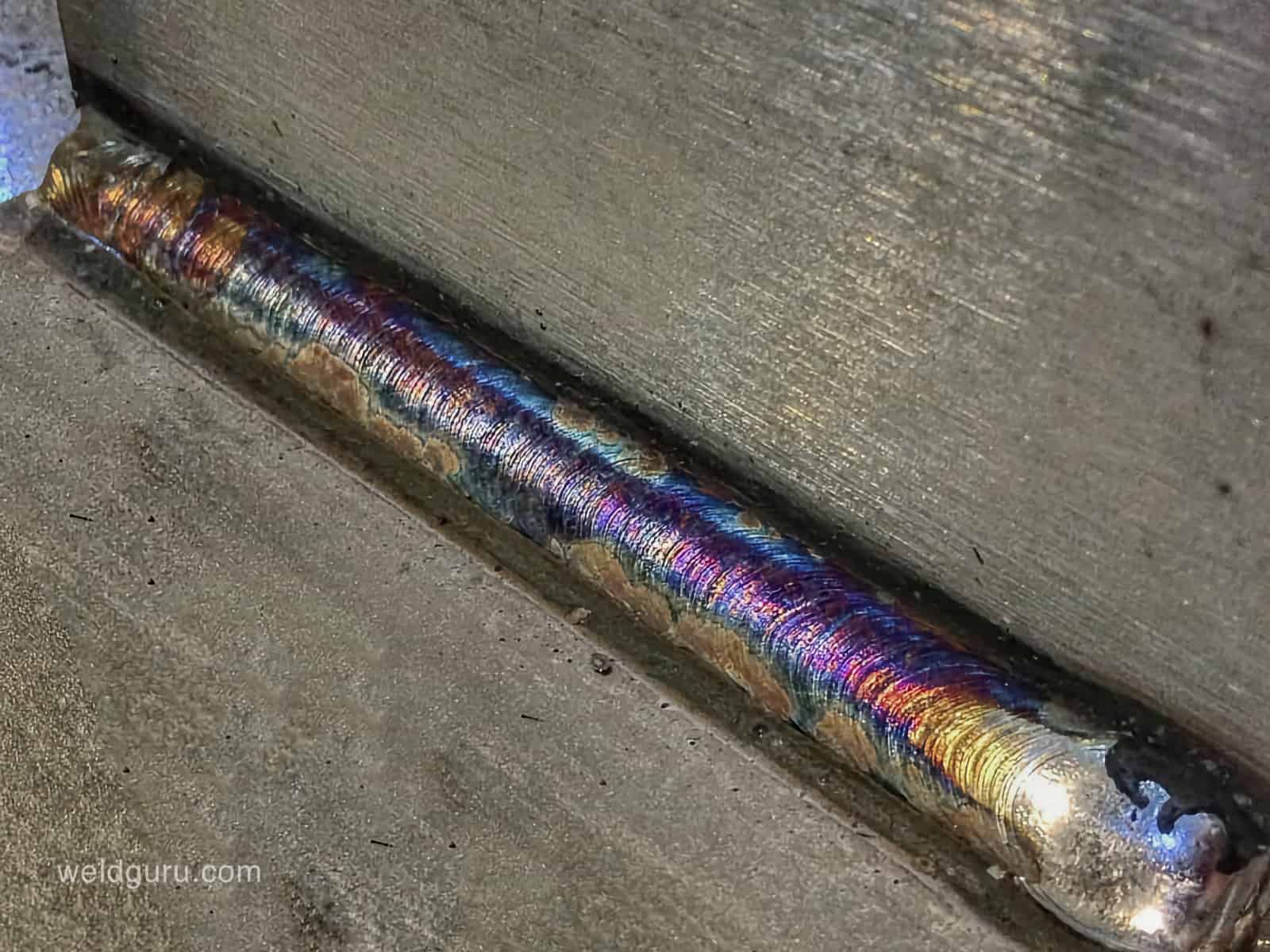
One insight many miss: Don’t weld too fast. Rushing causes defects. Take your time for each pass, and check your work often.
Credit: weldguru.com
Stainless Steel Pipe Weld Quality: What Inspectors Look For
If your welds must pass inspection, here’s what inspectors check:
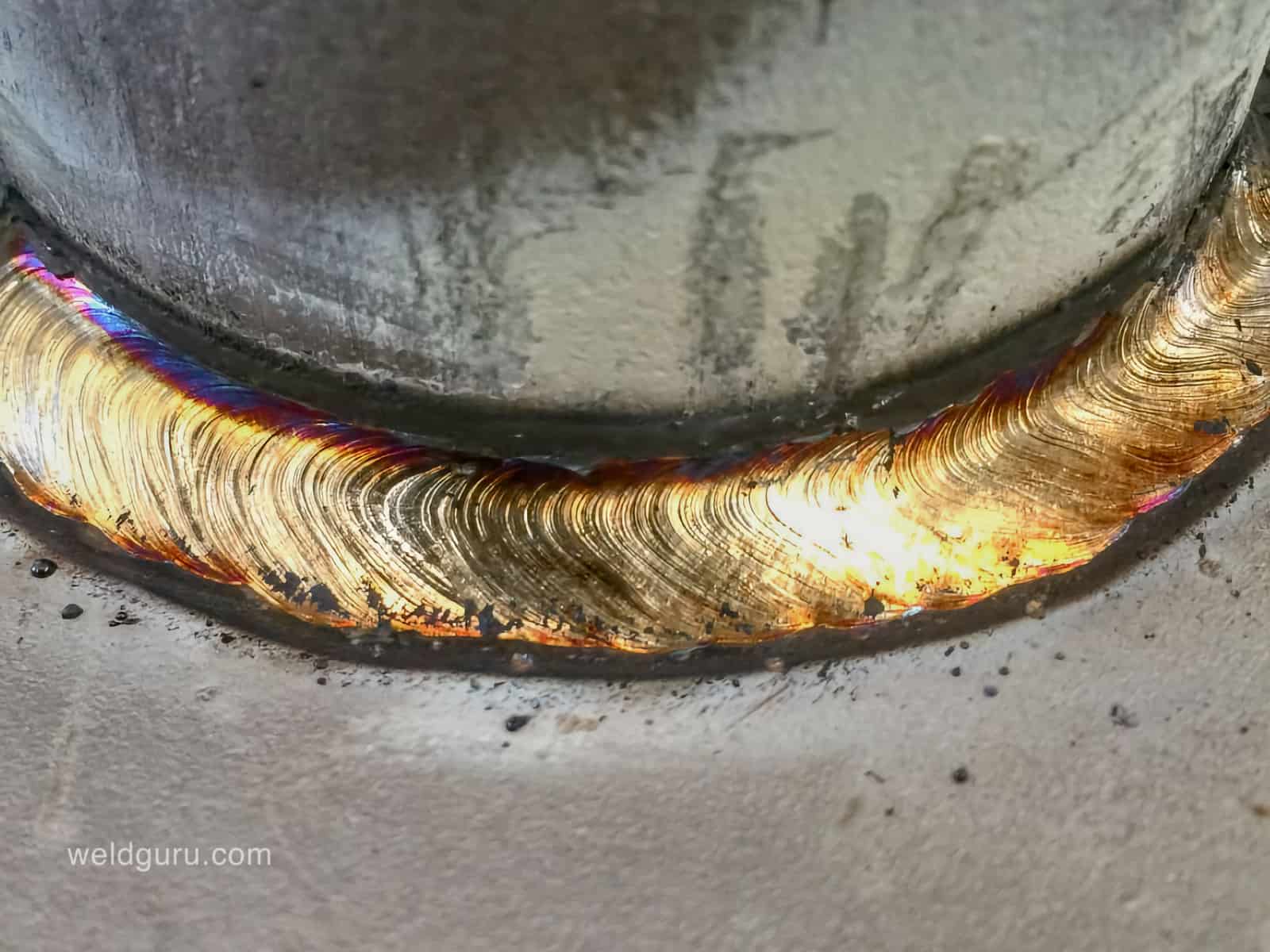
- Appearance: Smooth, uniform bead. No rough spots.
- Penetration: Weld must join the full thickness of the pipe.
- No defects: No cracks, holes, or undercutting.
- Corrosion resistance: Weld must match the pipe’s properties.
- Dimensional accuracy: Pipes must stay round and aligned.
Even experienced welders sometimes miss dimensional accuracy. Pipes can warp during welding. Use clamps and check alignment often.
Stick Welding Stainless Steel Pipe Vs. Other Welding Methods
Stick welding is popular, but there are other ways to weld stainless steel pipes: TIG (GTAW), MIG (GMAW), and flux-cored. Each has pros and cons.
Here’s a quick comparison:
| Method | Quality | Speed | Cost | Skill Needed |
|---|---|---|---|---|
| Stick Welding | Good | Medium | Low | Medium |
| TIG Welding | Excellent | Slow | High | High |
| MIG Welding | Good | Fast | Medium | Medium |
| Flux-Cored | Fair | Fast | Low | Low |
Stick welding is best for outdoor jobs, repairs, and places where you can’t bring expensive equipment. TIG is best for high-quality, clean welds.
Credit: weldguru.com
Practical Examples And Real-world Applications
Stick welding stainless steel pipe is used in many industries:
- Construction: Water and gas pipes in buildings.
- Food processing: Pipes for milk, juice, and other products.
- Chemical plants: Pipes for acids, chemicals, and solvents.
- Plumbing: Repairing or installing stainless pipes.
For example, a food factory must weld stainless steel pipes with smooth, clean welds to prevent bacteria. Welders use E308L electrodes and purge gas for best results.
Wrapping Up
Sticking to these guidelines will help you produce strong, clean, and reliable welds on stainless steel pipes. Whether you’re working on a repair or a new installation, skillful stick welding gives you results that last.
With practice and attention to detail, you can master stainless steel pipe welding and become a trusted expert in your field.
Frequently Asked Questions
What Is The Best Electrode For Stick Welding Stainless Steel Pipe?
For most 304 stainless steel pipes, E308L electrode is best. For 316 pipes, use E316L. Always match the electrode to the pipe grade for best results.
How Do I Prevent Warping When Welding Stainless Steel Pipe?
Control heat input by using the correct amperage and letting the pipe cool between passes. Use tack welds to hold pipes in place. For thick pipes, preheat to 100–150°C.
Can I Use A Regular Wire Brush To Clean Stainless Steel Pipe Before Welding?
No. Always use a stainless wire brush. Carbon steel brushes leave particles that cause rust. Clean with acetone or alcohol after brushing.
Is It Safe To Stick Weld Stainless Steel Pipes Indoors?
Yes, but you must have good ventilation. Stainless steel welding produces fumes that can be harmful. Use fans, open windows, and wear a mask if needed.
What Are Common Defects In Stainless Steel Pipe Stick Welding?
Common defects include porosity, cracks, undercutting, and rough beads. Most come from improper cleaning, wrong settings, or rushing the job. Inspect each weld and fix problems before finishing.


