
Butt welding is when you join two pieces of metal edge to edge in the same plane, instead of overlapping them. The goal is to fuse the edges together so the finished joint is flat, strong, and looks like a single piece of metal once it’s welded and ground.
In real shop work, butt welds show up everywhere — sheet metal panels, frames, pipes, and structural repairs. They matter because there’s no extra material to hide mistakes. If your heat is off or your fit-up is sloppy, you’ll see burn-through, weak penetration, or distortion right away.
A proper butt weld starts with clean edges, tight alignment, and the right gap for the metal thickness. When done correctly, it gives you a strong joint without adding bulk, which is why it’s preferred for thin metal, visible surfaces, and precision work.
Photos by yaang
Getting the Basics: What Exactly Is Butt Welding?
Butt welding involves placing two metal workpieces edge-to-edge, with their faces flush, and melting them together using heat, pressure, or both.
The weld stays within the plane of the surfaces, creating a seamless bond. Unlike a lap joint where one piece sits on top of the other, or a fillet where things meet at 90 degrees, butt welds keep everything inline for maximum load-bearing potential.
How does it work? You heat the edges until they’re molten, add filler metal if needed, and let it cool into a unified piece. The magic happens in the heat-affected zone (HAZ), where the base metal softens just enough to fuse without weakening the whole structure.
In my experience, the key is controlling that heat—too much, and you warp the metal; too little, and you get poor fusion.
When do you pull this out of your toolkit? Anytime you need a straight, strong connection without bulk. I’ve used it on everything from repairing farm equipment frames to building custom railings. It’s ideal for pipes, plates, and bars where alignment matters, like in structural steel or automotive chassis work.
Why use it? Because it distributes stress evenly, reducing failure points. For instance, in high-pressure lines, a butt weld ensures no weak spots for leaks, saving you from costly downtime.
Shop tip: Always start with clean edges. Dirt or rust can cause porosity, those pesky holes that weaken your weld. I once rushed a job on oily steel and spent hours fixing bubbles—lesson learned. Grab a grinder or wire brush, and make those surfaces shine.
Why Choose Butt Welding Over Other Joints?
Ever wondered if a butt weld is worth the setup over something simpler like a fillet? Absolutely, when strength and aesthetics are on the line.
Butt welds shine in scenarios where you need full penetration without adding extra material weight. For example, in pipeline fabrication, they’re non-negotiable for handling fluids under pressure.
Compared to lap joints, butt welds avoid overlaps that can trap corrosion or create stress risers. Fillets are great for corners, but they don’t match the shear strength of a well-done butt. I’ve switched to butt welds on trailer frames after seeing fillets crack under load— the inline fusion just holds better.
When to skip it? If access is tight or pieces aren’t aligned easily, a fillet might be quicker. But for pros, butt welding’s versatility wins out. It works across materials like mild steel, stainless, or aluminum, as long as you match your filler and settings.
Practical insight: In my shop, I factor in material thickness early. For thin gauge stuff under 1/8 inch, butt welds can be finicky with burn-through risks. Thicker stock? It’s a breeze with proper grooving. Always test on scrap—saves you from scrapping the real deal.
The Different Types of Butt Weld Joints You Need to Know
Not all butt welds are created equal. The type you choose depends on thickness, position, and load requirements. Let’s dive into the main ones I use regularly.
Square Butt Joints: Simple and Effective for Thin Materials
This is your entry-level butt weld—no bevels, just square edges butted together. For materials up to 3/16 inch thick, it’s quick and low-heat.
How it works: Align the pieces with a small root gap, say 1/16 to 1/8 inch, and weld straight through. No filler for super-thin sheets; just fuse the edges autogenously.
When and why: Perfect for sheet metal repairs or light fab, like patching a toolbox. It minimizes distortion since you’re not adding tons of heat.
Shop-floor tips: Keep amperage low—around 70-90 amps for 1/8-inch mild steel with SMAW. Use a 1/16-inch electrode to avoid puddling. I remember burning through aluminum once by cranking it too high; now I always back it with a chill bar to draw heat away.
Groove Butt Joints: Handling Thicker Metals Like a Pro
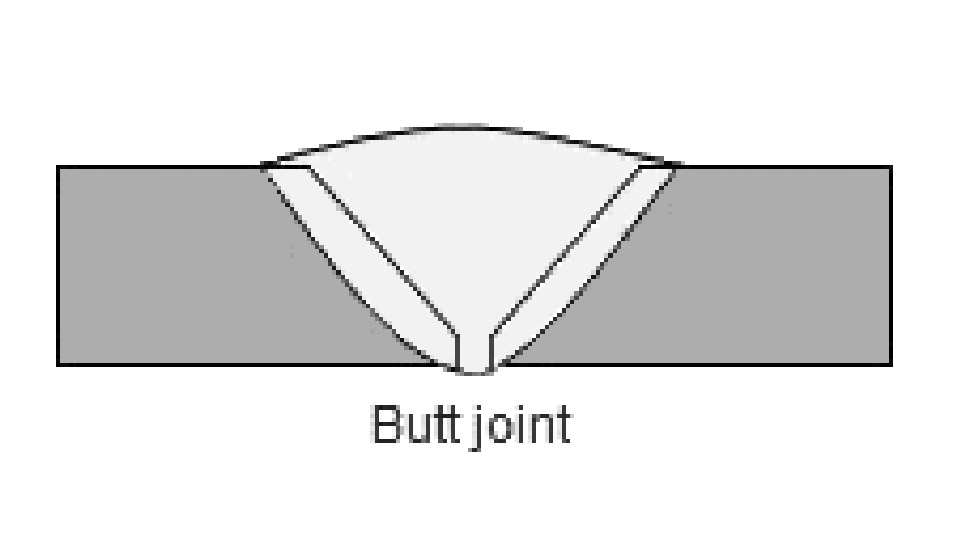
For anything over 3/16 inch, grooves are your friend. Bevel the edges to create a V, U, or J shape, allowing deeper penetration.
Types include single V (bevel one side), double V (both sides for even stress), single bevel, double bevel, single J/U, and double J/U. Double grooves reduce distortion by balancing heat input.
How it works: Prep the groove, tack weld to hold, then fill with multiple passes: root, fill, and cap.
When and why: Essential for heavy-duty stuff like beams or pipes. A single V gives good fusion on 1/4-inch plate; double for thicker to avoid warping.
Real advice: Angle your bevel at 30-37 degrees for V grooves. Electrode size? 1/8-inch for root passes, stepping up to 5/32 for fills. On a recent bridge repair job, I used double U for thick steel—less filler needed, and it held under vibration tests.
Here’s a quick comparison table to help you pick:
| Groove Type | Best For Thickness | Pros | Cons | Typical Amperage Range (MIG on Mild Steel) |
|---|---|---|---|---|
| Square | Up to 3/16″ | Quick setup, low heat | Limited penetration | 80-120 amps |
| Single V | 1/4″ to 1/2″ | Good fusion, affordable | One-sided access needed | 120-180 amps |
| Double V | Over 1/2″ | Balanced distortion, strong | More prep time | 150-220 amps |
| Single J | 3/8″ to 3/4″ | Less filler, deep pen | Complex machining | 130-190 amps |
| Double U | Over 3/4″ | Minimal material use, even heat | High skill required | 160-240 amps |
Preparing Your Workpiece: The Key to a Flawless Butt Weld
Prep work isn’t glamorous, but it’s 80% of a good weld. Start by cleaning—remove scale, paint, or oil with a grinder. For grooves, use a beveling tool or plasma cutter for clean angles.
Joint fit-up: Aim for a 1/16 to 1/8-inch root gap. Too tight, and you get incomplete fusion; too wide, and the puddle sags.
Tack welds: Place them every few inches to hold alignment. I like short, low-heat tacks to avoid pulling.
Material handling: Preheat thicker steels to 200-300°F to prevent cracking. For aluminum, keep it room temp to avoid softening.
Lesson from the shop: On a stainless pipe job, poor prep led to inclusions. Now I always inspect edges under light—saves rework.
Selecting the Right Welding Process for Your Butt Weld
The process dictates your settings, speed, and finish. Here’s what I reach for.
SMAW (Stick Welding) for Butt Joints
Stick is my go-to for outdoor or dirty jobs. Use E6010 for root passes (good dig), E7018 for fills (low hydrogen).
Settings: 90-140 amps for 1/8-inch rod on mild steel. Drag technique for penetration.
When: Portable setups, like field repairs.
Tip: Dry rods in an oven to avoid porosity. I’ve fixed many a fence post this way—reliable every time.
MIG Welding: Fast and Versatile
MIG’s speed makes it ideal for production. Use ER70S-6 wire for steel, 0.030-0.035 diameter.
Amperage: 120-200 for 1/4-inch plate. Short-circuit transfer for thin, spray for thick.
Why: Clean beads, less spatter. Great for auto bodies.
Anecdote: Wired up a trailer frame in half the time with MIG—smooth and strong.
TIG Welding: Precision Where It Counts
For critical welds like aerospace or food-grade pipes, TIG rules. Use ER70S-2 filler, 1/16-inch tungsten.
Ranges: 80-150 amps DC for steel, AC for aluminum.
When: Need control over heat. Slow but flawless.
Pro move: Pedal control for varying heat—prevents burn-through on thin stuff.
Step-by-Step: How to Execute a Perfect Butt Weld
Ready to weld? Here’s my routine for a single V groove on 1/4-inch mild steel with MIG.
- Clean and bevel edges to 30 degrees, creating a 60-degree included angle.
- Set root gap at 1/8 inch, tack every 4 inches.
- Preheat if needed (over 1/2 inch thick).
- Root pass: 140 amps, slow travel for full pen. Weave slightly.
- Fill passes: 160 amps, wider weave to build up.
- Cap pass: 150 amps, smooth for cosmetics.
- Cool slowly, grind flush if required.
Test it: Bend or cut a sample to check fusion. I’ve caught weak roots this way early.
Common Pitfalls in Butt Welding and How to Dodge Them
Beginners often crank heat too high, causing undercut or distortion. Fix: Dial back 10-20 amps and increase travel speed.
Pros might skip preheats, leading to cracks in high-carbon steels. Solution: Use a temp stick—aim for 250°F.
Incomplete penetration? Wrong electrode size—go smaller for roots.
My mistake: Rushed tacks once, joint shifted mid-weld. Now I double-check alignment with a square.
Safety note: Always wear full PPE—helmet, gloves, respirator. Fumes from galvanized steel are nasty; ventilate well.
Pros and Cons: Is Butt Welding Right for Your Project?
Pros: Unmatched strength for load-bearing, seamless look, versatile across processes. Cuts costs on fillers for thin joints.
Cons: Prep time eats hours, distortion risks on long runs, harder in awkward positions.
For most shop jobs, pros outweigh. I’ve built entire gates with butt welds—durable and clean.
Wrapping Up
Remember the satisfaction of a bead that ties in perfectly, no undercuts, full pen. Mastering this joint has turned my sloppy early work into pro-level fab that clients rave about. You’re now armed with the know-how to pick the right groove, dial in amps, and avoid common traps.
Next time you’re in the shop, you’ll weld with confidence, knowing your joints will hold. Always run a stringer bead on test scrap before the real thing—it tunes your settings and saves material.
Can You Butt Weld Thin Sheet Metal Without Filler?
Absolutely, for gauges under 20, use autogenous fusion. Keep amps low, around 60-80 for TIG, and travel fast to avoid warping. Back with argon if possible.
What’s the Best Amperage for Butt Welding Mild Steel Pipes?
For 1/4-inch wall, start at 120-160 amps with MIG. Adjust based on position—drop 20 for vertical to control the puddle. Test on a coupon first.
How Do You Fix Distortion in a Butt Weld?
Pre-bend the pieces opposite the expected warp, or use clamps. Post-weld, peen the bead while hot to relieve stress. For long runs, stagger welds.
Is Butt Welding Stronger Than Fillet for Structural Work?
Yes, for inline loads—it offers better shear strength. But fillets win for corners. Match to your design; I’ve reinforced frames with butt for longevity.
Why Does My Butt Weld Have Porosity and How to Stop It?
Usually from contamination or moisture. Clean thoroughly, use dry rods, and shield gas properly. If it’s hydrogen cracking, switch to low-hydrogen electrodes like E7018.


