
The tungsten kept dipping into the puddle, the filler rod stuck at the worst moments, and every mistake showed up immediately in the weld bead. With MIG welding, I could usually recover and keep moving. TIG was different.
One shaky hand movement or bad angle, and the whole weld told on me. That frustration is exactly why so many beginners ask, Why Is TIG Welding So Hard compared to other welding processes.
TIG welding demands more control than most people expect. You’re managing torch angle, filler rod movement, heat control, travel speed, and foot pedal pressure all at the same time — often while trying not to contaminate the tungsten. It can feel overwhelming at first, especially when the welds look inconsistent no matter how much you slow down.
But the challenge is also what makes TIG so valuable. Once your coordination improves, TIG produces some of the cleanest, strongest, and most precise welds possible. That matters on stainless steel, aluminum, thin metal, and any job where appearance and strength both count.
I’ll break down the real reasons TIG feels difficult in the beginning, the mistakes that make learning harder, and the practical techniques that finally make everything click. Here’s what actually helped me improve behind the torch.
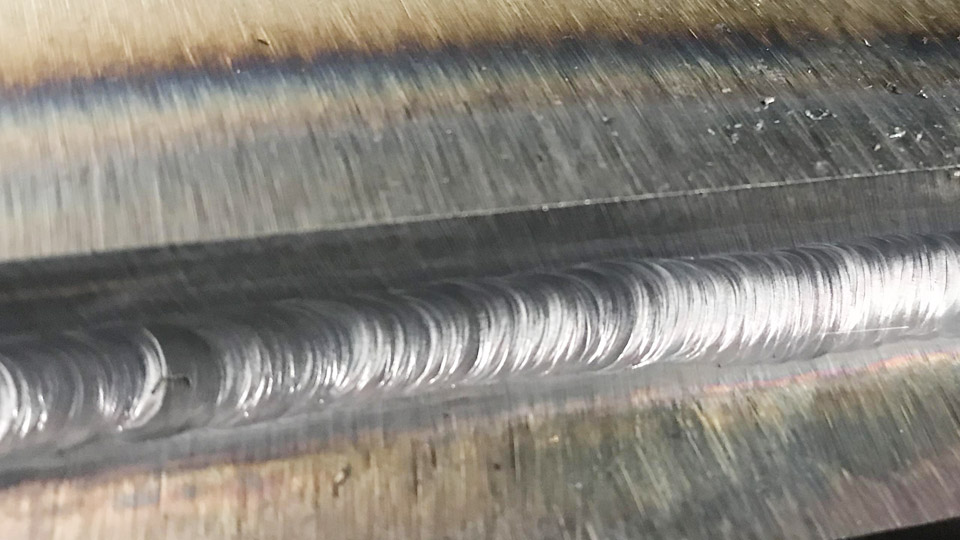
Image by reddit
What Makes TIG Welding Harder Than MIG or Stick?
TIG stands apart because you control almost everything manually. With MIG, the wire feeds itself and the gun does a lot of the work. Stick lets you drag an electrode and move on. TIG puts a non-consumable tungsten electrode in one hand, filler rod in the other, and often a foot pedal under your boot.
You’re balancing arc length, travel speed, filler addition, and amperage all at once while keeping the tungsten from touching the puddle. One small mistake—dipping the tungsten, letting the arc get too long, or poor gas coverage—and the weld turns ugly fast.
Real shop comparison:
MIG: Fast, forgiving on dirty metal, great for production or thicker stuff. Less precision on thin materials or visible repairs.
Stick (SMAW): Excellent for outdoor, dirty, or thick structural work. Slag cleanup required, but very portable.
TIG: Cleanest welds, best for thin metals, aluminum, stainless, and anything that needs to look perfect or hold pressure. Slower and less forgiving.
TIG shines on exhaust systems, bike frames, aluminum tanks, food-grade stainless, or aerospace repairs. It produces beautiful, strong, low-distortion welds with minimal cleanup. But it punishes inattention more than the other processes.
The Coordination Challenge: Two Hands, One Foot, and Perfect Timing
Most beginners underestimate the physical and mental multitasking. Your torch hand maintains a consistent 1/8″ to 3/16″ arc length at the right angle (usually 10-20 degrees push).
Your filler hand adds rod at the perfect moment and rate without touching the tungsten. If you have a pedal, your foot modulates amperage as the metal heats up.
This is why TIG feels impossible at first. Your brain has to orchestrate movements that feel unnatural until muscle memory kicks in. Many new welders start with scratch-start or lift-arc machines without a pedal just to simplify things, then add the foot control later.
Practical tip from the bench: Practice dry runs first. Hold the torch and rod, move along a joint without striking an arc. Get comfortable with your body position—elbows supported, relaxed shoulders. Leaning your torso weight on your arms kills fluidity.
Why Cleanliness Matters More in TIG Than Any Other Process
TIG is extremely sensitive to contamination. Dirty metal, oily fingers, or a contaminated tungsten will ruin your weld instantly. Unlike MIG or stick, there’s no flux to protect the puddle or burn away impurities.
Always degrease with acetone or brake cleaner, then stainless steel wire brush or dedicated aluminum brush right before welding. For aluminum, many shops use a dedicated stainless brush and avoid flapper discs that embed contaminants.
Tungsten contamination is the #1 frustration for beginners. Touch the puddle or filler with the tungsten and you’ll see black smoke and a ball on the end. Stop, grind it back to a clean point (or ball for AC aluminum), and start over. Keep spare tungstens sharpened and ready.
Choosing the Right Tungsten, Filler, and Gas
Tungsten selection:
- 2% Thoriated (red): Great all-around for DC steel and stainless (though availability varies due to regulations).
- 2% Lanthanated (blue) or Cerium (gray): Excellent alternatives, versatile for AC/DC.
- Pure (green) or Zirconiated (white): Preferred for AC aluminum.
Diameter: 1/16″ for low amps (<100), 3/32″ for most shop work (50-200 amps), 1/8″ for higher heat.
Shielding gas: Pure argon for most work. Helium mixes for thicker aluminum or copper to increase heat input. Flow rate 15-20 CFH typically—too low causes porosity, too high causes turbulence.
Filler rod: Match the base metal. ER70S-6 for mild steel, 4043 or 5356 for aluminum, 308/316 for stainless. Keep rods clean and in their packaging until use.
Amperage Settings and Machine Basics for US Shops
Rule of thumb for DC steel: about 1 amp per 0.001" of thickness. A 1/8″ (0.125″) plate needs roughly 90-130 amps depending on joint type and position.
Typical starting ranges (DCEN for steel/stainless):
- 0.040″ – 0.060″: 20-60 amps
- 1/16″ (0.0625″): 50-80 amps
- 1/8″ (0.125″): 90-130 amps
- 3/16″: 140-190 amps
Aluminum needs more heat input—often 20-50% higher—and AC balance. Start with 65-85 amps on 1/16″ aluminum and adjust. Use a foot pedal to ramp down at the end and avoid craters.
US machines like Miller, Lincoln, or Everlast inverters with high-frequency start make life easier. Set pre-flow, post-flow, and upslope/downslope for better results.
Joint Preparation and Technique Basics
Clean, fit-up, and bevel properly. For thicker material, a 60-70° V-groove helps penetration. Tack welds should be strong and cleaned before filling.
Basic TIG technique:
- Position torch ~15° push angle, tungsten pointed at the joint.
- Strike arc and form a small puddle.
- Add filler rod to the leading edge of the puddle (not directly in the arc column).
- Move forward with consistent speed—watch the puddle, not the arc.
- Keep filler rod in the gas envelope when not dipping.
For aluminum, watch for the puddle to “wet out” and the oxide layer to break. Stainless requires careful heat control to prevent distortion and sugaring—back purge when possible.
Common Beginner and Even Pro Mistakes (And How to Fix Them)
- Too long an arc: Causes wide, weak beads and tungsten contamination. Keep it tight.
- Adding filler too late or too early: Wait for a puddle, then dip rhythmically like “dabbing.”
- Poor gas coverage: Leads to porosity and oxidation. Check torch cup size, gas flow, and drafts.
- Wrong balance on AC aluminum: Too much cleaning and the tungsten balls excessively; too much penetration and oxides stay.
- Rushing travel speed: Results in lack of fusion or burn-through on thin stuff.
- Bad body position: Causes shaky hands and inconsistent movement.
Pros sometimes get lazy with cleaning on quick repairs and pay for it with rework. Always take the extra minute to prep.
Material-Specific Challenges
Mild Steel and Stainless: Easier entry point. DCEN, sharp tungsten. Stainless needs slower speeds and careful heat to avoid warping.
Aluminum: The real test. High thermal conductivity means it heats fast then collapses. AC process, balled or slightly pointed tungsten, 4043 filler for most general work. Practice on scrap 1/8″ plate first.
Other metals: Titanium needs excellent gas coverage (trailing shield often). Copper sucks heat like crazy—higher amps or preheat.
Step-by-Step Practice Plan to Get Good Fast
Start on flat mild steel scrap. Run beads without filler to master torch control. Then add filler. Progress to butt joints, fillets, then aluminum.
Record yourself or have an experienced welder watch. Focus on one variable at a time—arc length one session, filler addition the next.
Invest in a good setup: comfortable torch, pedal if possible, quality gas, and decent PPE. A $1,500-$3,000 inverter TIG machine from a reputable brand will serve hobbyists and pros well.
Pros and Cons of TIG Welding
Pros:
- Highest quality, cleanest welds
- Excellent for thin materials and precision
- No spatter or slag
- Full control over heat input
- Versatile across metals
Cons:
- Steep learning curve
- Slower than MIG or stick
- Requires very clean metal
- Higher equipment cost and gas usage
- Physically demanding coordination
When to Choose TIG Over Other Processes
Use TIG when appearance matters, on thin gauge, for critical pressure vessels, food/pharma stainless, aluminum fabrication, or repairs where distortion must be minimized. For heavy structural, dirty field work, or high-volume production, MIG or stick often wins on speed and cost.
Many fabricators run MIG for the bulk and TIG for the pretty final passes or critical sections.
Building Real Skill: Shop-Tested Advice
Practice consistently. Ten minutes a day beats two hours once a month. Focus on comfort before speed. Good TIG welders make it look effortless because they’ve burned through miles of rod developing feel.
Pay attention to heat management. On thin stuff, pulse settings on modern machines help a lot. Learn to read the puddle color and surface tension.
Safety remains critical: proper ventilation for argon (it’s heavier than air), UV protection (shade 9-13 typically), leather gloves, and fire-resistant clothing. Tungsten dust from grinding needs care too.
After years of doing this, the biggest shift happens when you stop fighting the process and start working with it. You develop a rhythm—torch, rod, pedal, eyes on the puddle edge.
TIG rewards the patient welder. Those frustrating early sessions build the foundation for welds that pass X-ray, look like jewelry, and hold up for decades. Your hands will shake less, your beads will stack like dimes, and you’ll reach for the TIG machine confidently when the job demands the best.
The single best pro tip I can leave you with: slow down and watch the puddle. Everything else—amperage, travel speed, filler—serves that molten pool. Master the puddle and TIG stops being hard and starts being satisfying.
Keep your metal clean, your tungsten sharp, and your gas flowing. The rest comes with time on the torch.
FAQ
How long does it take to learn TIG welding?
Most people need 20-50 hours of deliberate practice to get decent, and months to feel proficient. It depends on your coordination, previous welding experience, and practice quality. MIG or stick background helps with arc sense but the hand coordination is unique.
Is TIG welding harder than MIG?
Yes, for most people. MIG is more forgiving and faster to learn. TIG requires more skill but delivers superior results on the right applications. Many welders run both depending on the job.
What amperage should I use for TIG on 1/8″ aluminum?
Start around 90-130 amps AC with a foot pedal, adjusting balance toward more penetration as needed. Exact settings vary by alloy, joint, and machine—test on scrap. Use 3/32″ or 1/8″ tungsten.
Why does my TIG tungsten keep getting contaminated?
Usually from touching the puddle, too long an arc, poor gas coverage, or dirty metal/filler. Stop immediately, re-grind, clean everything, and adjust technique. It’s the most common early frustration.
Can I TIG weld without a foot pedal?
Yes. Many machines have a torch switch or panel amperage control. It’s a good way to start learning torch and filler control before adding pedal modulation. Pedal gives better heat control once you’re ready.


