
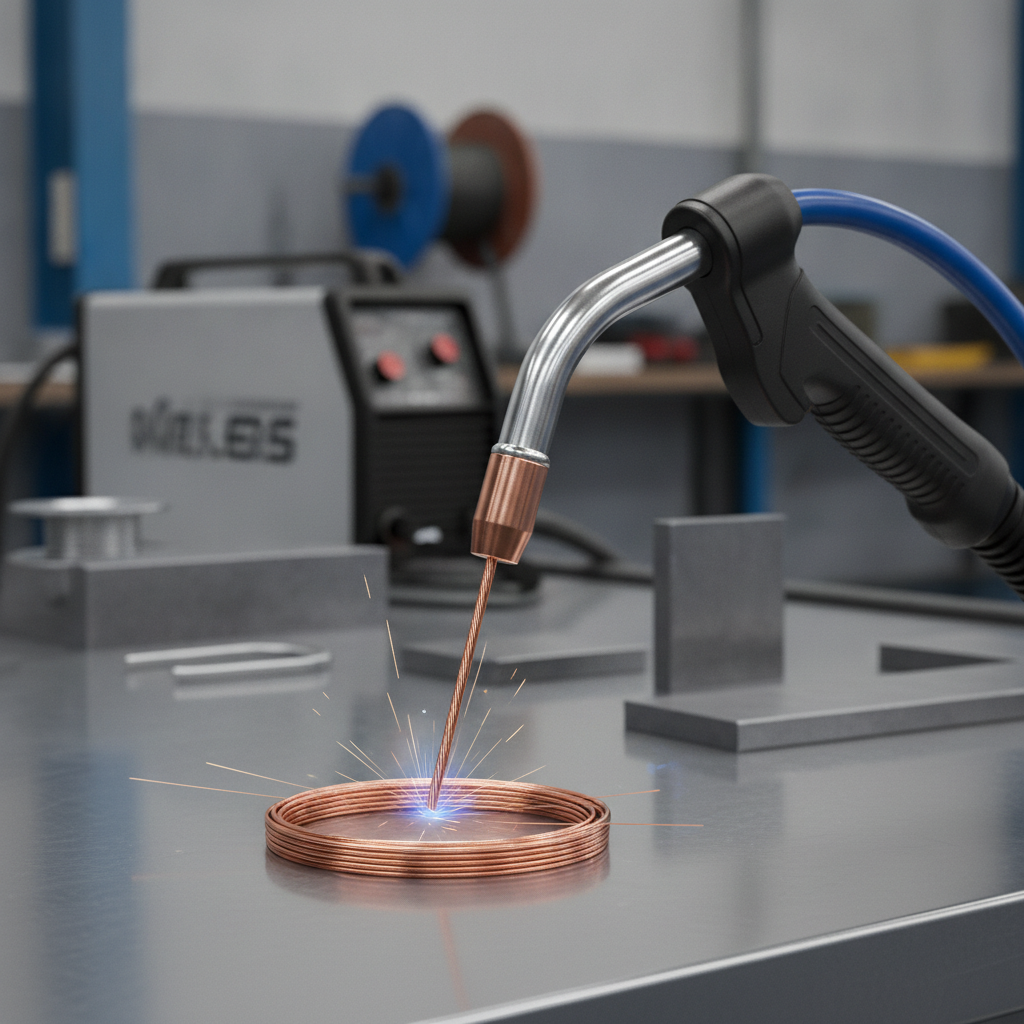
If you’re new to MIG welding or just trying to understand the equipment better, the electrode question comes up fast. Unlike stick welding, where you hold a separate rod, MIG welding works differently — and that difference trips up a lot of beginners. Understanding what acts as the electrode in MIG welding, how it works, and how to choose the right one will directly affect your weld quality, your equipment settings, and how much you spend on consumables. This article covers everything you need to know, from the basic concept to wire selection and polarity.
Quick Answer
In MIG welding, the wire electrode is a continuously fed, consumable metal wire that acts as both the electrode and the filler material. It’s fed automatically through the welding gun from a spool. The most common type for mild steel is ER70S-6, a solid copper-coated wire available in diameters from 0.023″ to 0.045″.
How the MIG Electrode Actually Works
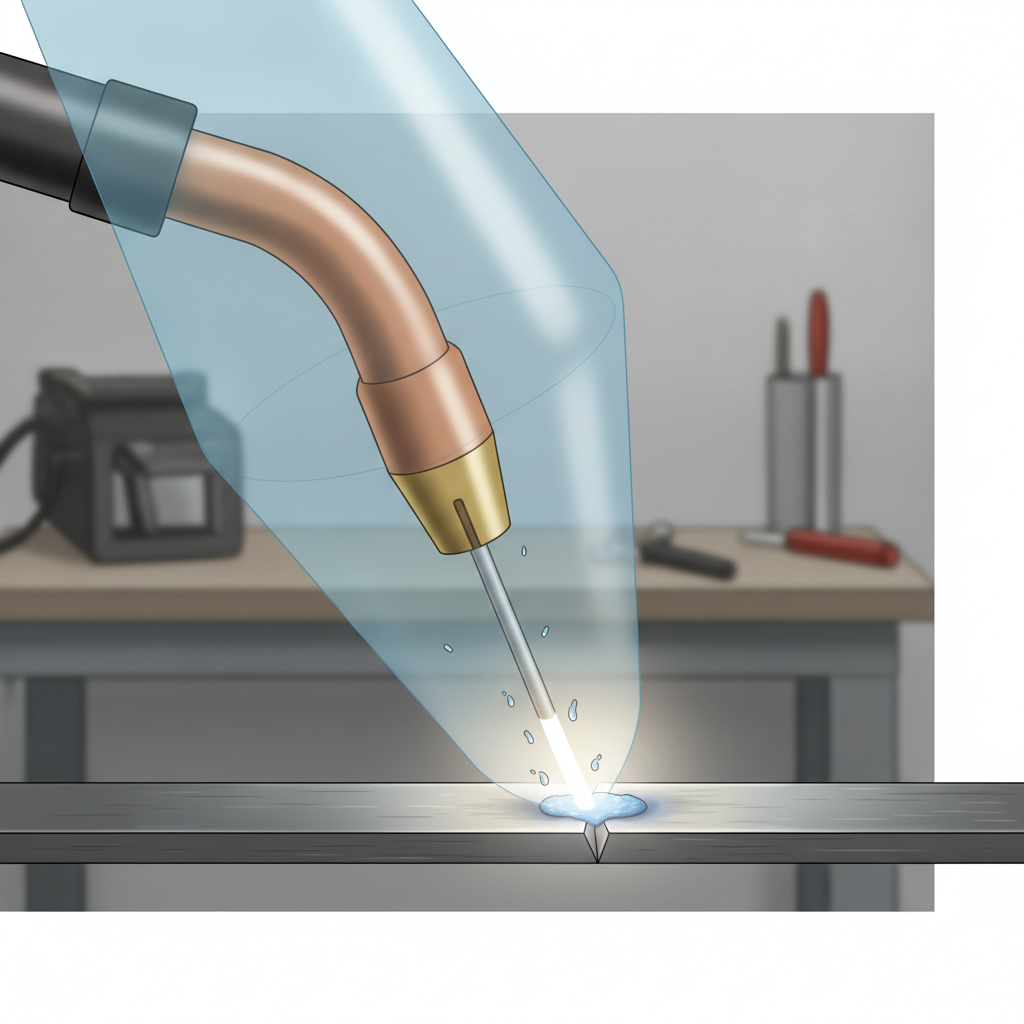
MIG stands for Metal Inert Gas, though the process is technically called GMAW — Gas Metal Arc Welding. The electrode isn’t a separate stick you hold. It’s a spool of wire inside the welder that feeds continuously through a liner and out the gun tip as you weld.
When you pull the trigger, the wire feeds forward, an arc forms between the wire tip and the base metal, and the wire melts into the weld pool. The shielding gas flowing from the nozzle protects the molten metal from atmospheric contamination.
This means the wire serves two functions simultaneously: it conducts electricity to create the arc, and it melts to fill the joint. That’s what makes MIG welding faster and easier to learn than most other processes.
The Standard Wire Electrode: ER70S-6 Explained
The most widely used MIG wire for mild steel is ER70S-6. That designation tells you a lot:
– E — Electrode
– R — Rod (can also be used as a filler rod in TIG)
– 70 — Minimum tensile strength of 70,000 PSI
– S — Solid wire
– 6 — Deoxidizer content level (higher number = more silicon and manganese)
The higher deoxidizer content in S-6 wire makes it more tolerant of mill scale, rust, and surface contamination than S-3 wire. In practice, this means cleaner welds on real-world metal that isn’t perfectly prepped.
ER70S-3 is also available and works well on clean, properly prepared steel. It produces a flatter bead profile and slightly less spatter, but it’s less forgiving on dirty base metal.
Wire Diameter: Choosing the Right Size
Wire diameter affects heat input, deposition rate, and the type of work the wire suits best. Choosing wrong leads to burn-through on thin material or lack of fusion on thick plate.
| Wire Diameter | Best For | Typical Amperage Range |
|---|---|---|
| 0.023″ (0.6mm) | Sheet metal, thin gauge (24–18 ga) | 30–90A |
| 0.030″ (0.8mm) | General purpose, 18 ga to 3/16″ | 40–145A |
| 0.035″ (0.9mm) | Medium to heavy plate, structural | 50–180A |
| 0.045″ (1.2mm) | Heavy fabrication, thick plate | 75–260A |
For most hobbyists and light fabricators, 0.030″ is the go-to starting point. It handles a wide range of material thicknesses and works well on machines in the 140–200 amp range.
Solid Wire vs. Flux-Core Wire: Which Is the Electrode?
This is where confusion often sets in. MIG welders can run two types of wire, and they behave differently.
Solid wire requires external shielding gas. The wire itself is just metal — the gas does the shielding work. This produces cleaner welds with less spatter and is the standard choice for indoor shop work.
Flux-core wire (FCAW) contains a flux compound inside the wire. When it burns, the flux generates its own shielding gas and slag layer. No external gas bottle is needed, which makes it practical for outdoor or windy conditions where shielding gas would blow away.
Both types are technically electrodes — they both carry current and melt into the weld. The key differences:
| Feature | Solid Wire (GMAW) | Flux-Core Wire (FCAW) |
|---|---|---|
| Shielding gas required | Yes | No (self-shielded) |
| Spatter level | Low | Higher |
| Slag | None | Yes — must be chipped |
| Best environment | Indoors, clean conditions | Outdoors, windy, field work |
| Weld appearance | Cleaner, smoother | Rougher, more buildup |
| Polarity | DCEP | DCEN (self-shielded) |
A common mistake beginners make is running flux-core wire with the wrong polarity. Self-shielded flux-core typically requires DCEN (electrode negative), while solid wire runs on DCEP (electrode positive). Swapping polarity causes erratic arcs, excessive spatter, and poor fusion.
Polarity in MIG Welding: Why It Matters
MIG welding with solid wire uses DCEP — Direct Current Electrode Positive, also called reverse polarity. The electrode (wire) is connected to the positive terminal, and the workpiece connects to negative.
This configuration concentrates more heat at the base metal, producing deeper penetration and a stable arc. It’s the correct setup for solid wire with shielding gas.
Running DCEP with self-shielded flux-core wire is one of the most common setup errors. The weld will look wet, spatter excessively, and lack proper fusion. Always check the wire manufacturer’s data sheet for polarity requirements before striking an arc.
Specialty Wire Electrodes for Other Materials
Mild steel ER70S-6 is the default, but MIG welding covers a wide range of base metals. Each requires a matched wire electrode.
Stainless Steel:
– Common wire: ER308L, ER309L, ER316L
– Requires tri-mix shielding gas (typically 90% He / 7.5% Ar / 2.5% CO₂) or 98% Ar / 2% CO₂
– ER308L suits 304 and 308 stainless; ER316L suits 316 grade
Aluminum:
– Common wire: ER4043, ER5356
– Requires 100% argon shielding gas
– Aluminum wire is softer and more prone to birdnesting in the liner — a spool gun or push-pull gun is strongly recommended
– ER4043 flows better and is more forgiving; ER5356 is stronger and better for structural work
Silicon Bronze (for dissimilar metals or thin gauge):
– Wire: ERCuSi-A
– Used for brazing-style joins on thin steel, galvanized, or copper alloys
– Lower heat input reduces distortion
Hardfacing and Build-Up:
– Specialty flux-core wires designed to deposit wear-resistant alloys on worn tooling or equipment parts
Common Wire and Electrode Problems in MIG Welding
Even with the right wire selected, setup and handling errors cause most weld quality issues.
Birdnesting — Wire tangles inside the drive mechanism, usually caused by a worn liner, incorrect drive roll tension, or too-soft wire (common with aluminum). Check liner condition regularly and match drive rolls to wire type.
Porosity — Gas pockets in the weld, typically from contaminated wire, inadequate shielding gas flow, or drafts blowing gas away. Wire stored improperly absorbs moisture. Keep spools sealed when not in use.
Erratic arc / spatter — Often caused by incorrect polarity, wrong shielding gas, or contact tip wear. Replace contact tips regularly; a worn tip causes the wire to arc inconsistently.
Burn-through on thin material — Usually wire diameter too large, voltage too high, or travel speed too slow. Drop to 0.023″ wire and reduce heat settings.
Lack of fusion — Opposite problem. Wire too small, travel speed too fast, or voltage too low. The bead sits on top of the base metal rather than fusing into it.
FAQ
What type of electrode is used in MIG welding?
MIG welding uses a continuously fed consumable wire electrode that serves as both the electrical conductor and the filler material. The wire feeds automatically from a spool through the welding gun. The most common wire for mild steel is ER70S-6, a solid copper-coated wire available in diameters from 0.023″ to 0.045″ depending on material thickness and application.
Is MIG welding wire the same as an electrode?
Yes. In MIG welding, the wire is the electrode. It carries the electrical current that creates the arc and simultaneously melts into the joint as filler metal. This is different from TIG welding, where the electrode (tungsten) doesn’t melt, and filler is added separately. In MIG, the electrode and filler are the same component.
What is the difference between ER70S-3 and ER70S-6 wire?
Both are solid mild steel wires with 70,000 PSI tensile strength, but ER70S-6 contains more silicon and manganese deoxidizers. This makes it more tolerant of rust, mill scale, and surface contamination. ER70S-3 works better on clean, well-prepared steel and produces a slightly flatter bead. For general shop use on real-world metal, ER70S-6 is the more practical choice.
Can you MIG weld without shielding gas?
Yes, using self-shielded flux-core wire (FCAW-S). The flux inside the wire generates its own shielding when it burns, eliminating the need for an external gas bottle. This makes it useful for outdoor or field welding where wind would disrupt gas coverage. However, it produces more spatter, requires slag removal, and typically needs the welder set to DCEN polarity rather than DCEP.
What wire do you use to MIG weld aluminum?
Aluminum MIG welding uses ER4043 or ER5356 wire with 100% argon shielding gas. ER4043 is softer, flows more easily, and is better for general fabrication. ER5356 is stronger and preferred for structural or marine applications. Because aluminum wire is soft and prone to feeding problems, most welders use a spool gun or push-pull gun rather than a standard torch setup.
What polarity does MIG welding use?
Standard MIG welding with solid wire uses DCEP — Direct Current Electrode Positive (reverse polarity). The wire connects to the positive terminal and the workpiece to negative. Self-shielded flux-core wire typically requires DCEN — Direct Current Electrode Negative. Using the wrong polarity causes poor arc stability, excessive spatter, and inadequate fusion regardless of other settings being correct.
How often should MIG contact tips be replaced?
Contact tips wear with use and should be inspected regularly. A worn tip develops an oval or enlarged hole that causes the wire to arc inconsistently, increasing spatter and reducing weld quality. In production environments, tips may need replacing every few hours of arc time. For hobbyist use, inspect after each session and replace when the tip hole shows visible wear or the arc becomes erratic.
Final Thoughts
The wire electrode is the heart of MIG welding — get it right and the process is fast, clean, and forgiving. For most mild steel work, ER70S-6 in 0.030″ diameter is the reliable starting point. Match your wire to the base metal, confirm your polarity before welding, and store spools properly to avoid moisture contamination. Those three habits alone will eliminate the majority of weld quality problems most MIG welders encounter.
Meta Description:
Wondering which electrode MIG welding uses? Learn how wire electrodes work, how to choose the right type and diameter, and avoid common setup mistakes.


