

The bead looked big and strong, but when the part was put under load, it cracked right along the joint. On the next job, I went too small and the weld didn’t even hold through basic testing. That’s when I learned that weld size isn’t about looks — it’s about strength, balance, and doing the job right the first time.
In real shop work, the proper weld size affects everything: load capacity, fatigue life, distortion, and even how much filler and time you burn on a job.
I learned through hands-on mistakes that oversize welds waste material and warp parts, while undersized welds fail when it matters most. Getting it right saves money and keeps your work safe.
If you want welds that are strong, efficient, and code-ready, keep reading. I’ll show you how to determine proper weld size the practical way, step by step, using real-world examples.
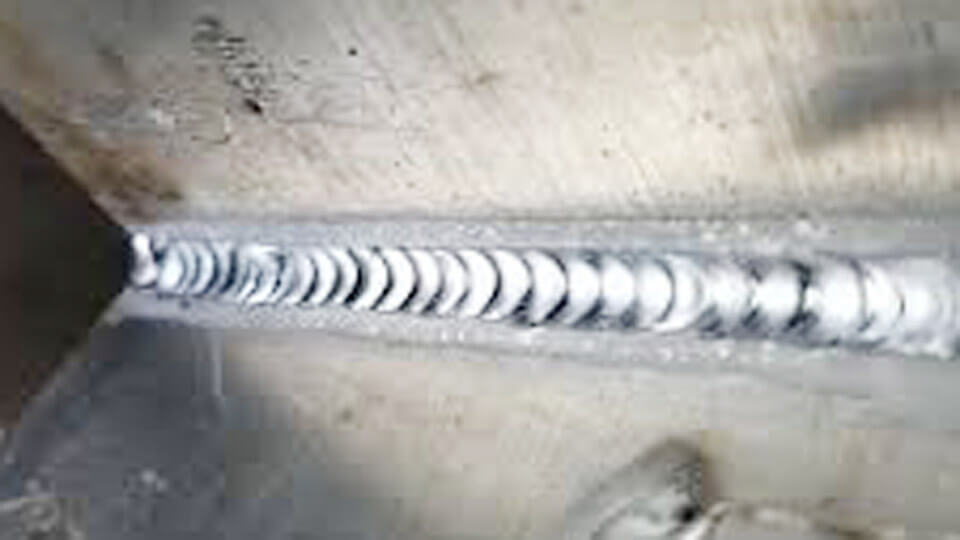
Photo reddit
Why Proper Weld Size Actually Matters in Real Welding
Weld size directly controls how much load the joint can carry. In a fillet weld, strength comes mostly from the throat—the shortest distance through the weld from root to face. A bigger leg doesn’t give you a linear increase in strength because the cross-section grows with the square of the size in some ways, but heat input and distortion grow fast too.
Over-welding is one of the biggest hidden costs in fabrication. I’ve watched guys lay down 5/16-inch fillets on 1/4-inch plate “just to be safe.”
That extra metal costs more in rods or wire, takes longer to run, creates more spatter and slag to clean, and often distorts the part so badly you spend hours straightening it. Under-welding is worse—it looks fine until the customer’s gate swings open under wind load and the weld tears.
Heat input ties straight into size. Larger welds mean more amperage or slower travel, which means more heat into the base metal.
On thin material or high-strength steels, that can cause warping, loss of properties in the heat-affected zone, or cracking. On thick stuff, too little heat from an undersized weld can trap hydrogen and cause delayed cracking.
Safety is non-negotiable. Structural welds on trailers, railings, machinery guards, or anything load-bearing need to meet minimum sizes for a reason. I always tell folks: if it’s holding up something that could hurt someone if it fails, treat it like code work even if it’s not officially stamped.
Fillet Welds vs. Groove Welds: Understanding What “Size” Means
Most of the welds hobbyists and small shops run are fillet welds—those triangular beads in T-joints, lap joints, and corners. The size is almost always called out as leg length—the length of the two sides of the right triangle you could fit inside the weld cross-section. The theoretical throat is roughly 0.707 times the leg size for a 45-degree isosceles fillet.
In practice, I measure leg size with a fillet weld gauge. You slide the gauge until it touches the toe and read the leg. Good fillet gauges have both convex and concave edges because real welds rarely sit at perfect 45 degrees.
The effective throat—the part that actually carries load—can be less than theoretical if the profile is convex or if there’s undercut.
Groove welds (butt joints, V-grooves, J-grooves) are sized differently. For complete joint penetration (CJP) welds, the weld size is essentially the thickness of the thinner part joined. Partial joint penetration (PJP) welds get sized by the depth of the groove preparation plus any reinforcement, but the effective throat is what the engineer calculates.
Groove welds usually require more joint prep—beveling, root openings, backing bars—but they give full-strength joints when done right.
I reach for fillets on 80% of my work because they’re faster and need less prep. Grooves come out when the joint has to match the base metal strength or when aesthetics and fatigue life matter.
How Material Thickness Drives Your Weld Size Decisions
The single biggest factor in determining proper weld size is the thickness of the pieces you’re joining. Thicker material needs more weld metal to develop full strength and enough heat to avoid cracking.
AWS D1.1 gives clear minimum fillet weld sizes based on the thicker part joined. These minima exist mostly to ensure enough heat input to drive off hydrogen and prevent cracking in the heat-affected zone.
Here’s the practical table I keep taped inside my welding cart:
| Base Metal Thickness (T) | Minimum Fillet Weld Size (leg) |
|---|---|
| Less than 1/4″ | 1/8″ |
| 1/4″ to 1/2″ | 3/16″ |
| Over 1/2″ to 3/4″ | 1/4″ |
| Over 3/4″ | 5/16″ |
For general fabrication and repair work that isn’t code-stamped, a common shop rule of thumb is to make the fillet leg size roughly equal to the thickness of the thinner member, up to about 3/8″ or so. Beyond that, multiple passes or switching to a groove becomes more practical.
On 1/8-inch sheet, I rarely go bigger than 1/8-inch leg because the heat will warp or burn through. On 3/8-inch plate for a bracket, a 1/4- to 5/16-inch leg usually gives plenty of strength without excessive distortion.
Always consider the thinner piece when deciding maximum size too. You don’t want a fillet larger than the thinner member in most cases, or you risk melting away the edge.
Choosing the Right Electrode Diameter
Electrode diameter controls how much metal you can deposit per pass and how much amperage the rod can handle without overheating or undercutting.
My general rule: pick a rod diameter about equal to (or just under) the thickness of the thinner material you’re welding, but never larger than the material or you’ll struggle with control.
Common sizes I stock and when I use them:
- 3/32″ (2.4 mm): Thin material (up to 3/16″), root passes, vertical and overhead where puddle control is critical. Runs at lower amps, less heat.
- 1/8″ (3.2 mm): The sweet spot for most shop work on 1/8″ to 1/4″ plate. Versatile, easy to run in all positions.
- 5/32″ (4.0 mm): 1/4″ and thicker material, flat and horizontal positions, higher deposition when you need to fill fast.
- 3/16″ and up: Heavy plate, multiple-pass work, downhand only for most of us.
Larger rods deposit more metal per inch of travel, so you can maintain size with faster travel speeds and less overall heat input per pass—great for thick material. But they demand higher amperage and a steadier hand. Smaller rods give finer control and are more forgiving on thin stuff or when you need to stack small beads.
I learned the hard way not to force a 5/32″ rod on 3/16″ plate in vertical-up. The puddle got away from me, undercut the toe, and I had to grind it out and start over. Stick with the size that lets you keep a tight, controllable puddle.
Dialing In Amperage for the Right Bead Size and Profile
Amperage is the main knob you turn to control penetration, bead width, and travel speed—all of which determine final weld size.
Here are the ranges I use on common rods (DC+ unless noted, on a typical US inverter machine like a Miller or Lincoln):
E6010 / E6011 (deep penetration, root passes, rusty metal):
- 3/32″: 40–80 A
- 1/8″: 75–125 A
- 5/32″: 110–170 A
E6013 (easy, light duty, thin material):
- 3/32″: 45–90 A
- 1/8″: 80–130 A
E7018 (low-hydrogen, structural, high strength):
- 3/32″: 70–100 A
- 1/8″: 110–150 A (my go-to range)
- 5/32″: 140–200 A
Start in the middle of the range for flat/horizontal. For vertical-up, drop 10–15%. Overhead, drop another 5–10%. Hot metal or preheat? You can run a bit higher.
The goal is a bead that’s slightly convex, with good tie-in at the toes and no undercut. If the bead is too narrow and ropey, amperage is too low. If it’s wide, flat, with undercut or spatter, you’re too hot. Travel speed matters just as much—too slow and the bead piles up; too fast and you get lack of fusion and a skinny weld.
I always run a test bead on scrap of the same thickness and joint type. Measure the leg immediately, then break the coupon or bend it to check fusion.
My Step-by-Step Process for Determining and Running Proper Weld Size
- Measure and identify the material. Thickness, type (mild steel, stainless, etc.), and condition (rust, paint, mill scale).
- Decide joint type and service. Lap, T, corner? Structural or cosmetic? Single-sided or double?
- Check code or design requirements. If it’s load-bearing, use the AWS minimum table or engineer specs.
- Choose electrode type and diameter. Match to material and position.
- Set machine amperage and polarity. Start mid-range.
- Prep the joint properly. Clean to bright metal, remove all contaminants, bevel if needed, maintain consistent root opening.
- Tack it up square and strong. Tacks should be the same size as your final weld or slightly smaller.
- Run the bead with good technique. Short arc, consistent travel, slight weave if needed for wider beads. Watch the puddle edges for tie-in.
- Measure and inspect. Use your fillet gauge right after slag cools. Look for uniform leg size along the entire length.
- Adjust and run the next pass or coupon. Note what worked.
This process takes longer to describe than to do once it’s habit. After a few hundred hours it becomes second nature.
Joint Preparation That Makes Size Control Easy
Clean metal is non-negotiable. Mill scale, rust, oil, or paint will cause porosity and poor fusion, making your weld effectively smaller where it counts.
For fillet welds on plate thicker than 1/4″, I often grind a small bevel or at least knock the corner off. It helps the rod get to the root without having to fight the 90-degree corner.
Maintain fit-up. Gaps larger than 1/16″ usually require bigger welds to compensate, which means more heat and distortion. Good fit-up lets you run smaller, more efficient welds.
How Welding Position Changes Everything
Flat and horizontal are easiest—higher amperage, faster travel, bigger rods possible.
Vertical-up demands smaller rods or lower amperage and a tighter weave or stack of dimes technique to build the leg size without the puddle sagging. I often drop one rod size or 10–15 amps compared to flat.
Overhead is the toughest for size control. Gravity wants to drop the puddle, so smaller diameter rods, lower amps, and very short arc length are your friends. Expect to run slower and build the bead in layers.
I’ve had students fight overhead fillets for an hour trying to use the same settings as flat. Switch to 3/32″ 7018 at 70–85 amps and the puddle behaves.
Common Mistakes That Wreck Weld Size (and Quick Fixes)
Running amperage too high: Wide, flat beads with undercut. The measured leg looks big but the throat is shallow. Fix: drop 10–20 amps and increase travel speed slightly.
Electrode too large for the job: Uncontrollable puddle, burn-through on edges, poor root fusion. Fix: drop to next smaller size.
Poor travel speed: Too slow creates excessive convexity and trapped slag; too fast gives skinny, lack-of-fusion beads. Fix: practice consistent speed on scrap.
Dirty joint: Porosity and inclusions weaken the weld even if the outside size looks good. Fix: grind or wire-wheel to bright metal.
Ignoring preheat on thicker or high-carbon steel: Cracks appear days later. Fix: follow minimum preheat tables or at least warm the part with a rosebud.
I made most of these mistakes myself early on. The best cure is running test coupons and breaking them—nothing teaches faster than seeing the fracture surface.
Real Shop Examples That Illustrate the Point
Repairing a cracked 1/4-inch frame rail on a skid steer: Thinner member was 1/4″, so I used 1/8″ 7018 at 115–130 amps, double-sided 3/16″ fillets. Cleaned the crack out to a V, back-gouged the root, and built it up. Those welds are still holding years later.
Building a heavy-duty work table from 3/8″ plate: 1/4″ fillets all around the legs using 5/32″ 7018 at 160–180 amps flat. Multiple passes to control heat and keep distortion under 1/16″.
Thin 14-gauge sheet metal box for a custom exhaust heat shield: 3/32″ 6013 at 50–60 amps, tiny 1/16″ to 3/32″ fillets. Anything bigger would have burned holes.
Inspecting and Verifying Your Work
Visual inspection first: uniform leg size, smooth transition at toes, no undercut deeper than 1/32″, proper convexity.
Use a fillet weld gauge for every critical weld. Measure at multiple points along the length—size can vary if your technique drifts.
For important jobs, I break test coupons or do a simple bend test. If the weld tears through the throat instead of the base metal pulling, you’re good.
On structural work, magnetic particle or dye penetrant can reveal surface cracks.
Wrapping It Up: Welds That Last
After thousands of hours and countless projects, the biggest takeaway is this: determining proper weld size isn’t about memorizing charts—it’s about understanding the relationship between material, heat, technique, and the actual service the joint will see.
Once you start thinking in terms of effective throat, heat input, and real load paths instead of just “bigger is better,” your welds improve dramatically.
FAQ
What electrode size should I use for 1/4-inch mild steel?
For most 1/4-inch plate in T or lap joints, 1/8-inch diameter 7018 or 6011 works great. Run it around 110–140 amps depending on position. That usually gives you a solid 3/16-inch leg fillet without burning through or excessive distortion.
How can I tell if my fillet weld is too small?
Measure the leg with a gauge—if it’s below the AWS minimum for the thickness, it’s too small for code work. Visually, look for a concave profile, undercut, or if the weld doesn’t fully tie into both toes. When in doubt, break a test piece. The fracture should show good penetration and fusion.
Does higher amperage always give a bigger weld?
Not necessarily. Higher amperage increases penetration and lets you travel faster, but if you go too fast the bead can actually get narrower. The sweet spot balances amperage, travel speed, and rod angle to deposit the right amount of metal exactly where you need it.
Is it okay to overweld “just to be safe”?
On non-critical fab, a little extra is usually fine, but on anything structural or thin material it causes more problems than it solves—warpage, extra cost, and potential toe cracking from stress risers. Follow the minimums and design requirements instead of guessing bigger.
What’s the difference between measuring leg size and throat?
Leg size is what you measure with the gauge and what’s usually specified on drawings. Throat is the load-carrying dimension (about 70% of leg size on a standard fillet). A convex weld can have a big leg measurement but a smaller effective throat, which is why profile matters as much as size.


