

The arc flared, the edge sagged, and suddenly there was a hole where solid metal was supposed to be. I hadn’t changed my technique — just a small bump in amperage and a split second too long on the joint. That’s how fast burn-through happens with stick welding, especially on thin or worn metal.
Burn-through isn’t just frustrating — it weakens the joint, wastes electrodes, and turns simple repairs into patch jobs. I learned the hard way that controlling heat is everything: amperage, travel speed, rod size, and even where you place the arc all matter. When you get those right, the metal holds its shape and the weld actually penetrates instead of blowing away.
If you’re tired of chasing holes and reworking the same joint, keep reading. I’ll show you the real-world techniques that prevent burn-through when stick welding, so you can keep your welds clean, strong, and under control.
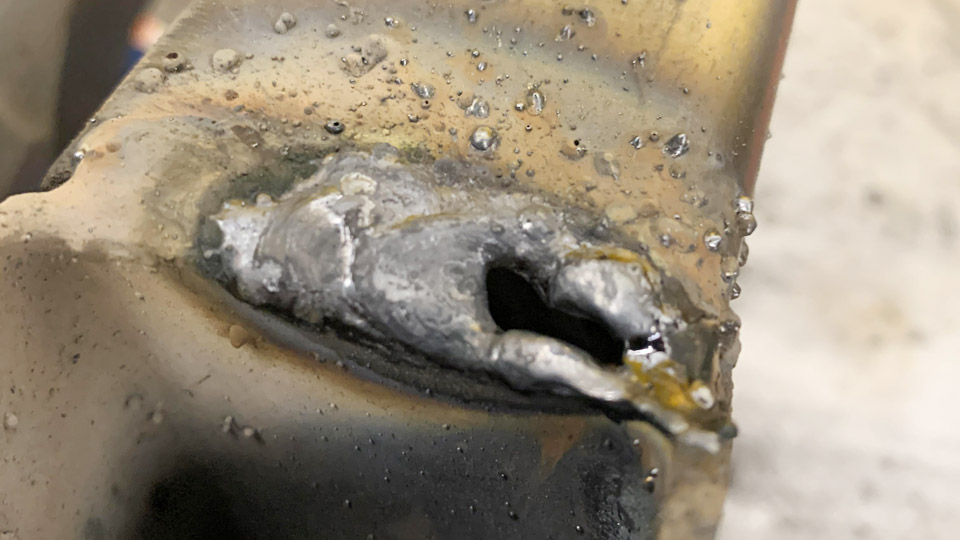
Photo by reddit
What Causes Burn Through in Stick Welding?
Burn through isn’t random; it’s usually a mix of heat input gone wrong and material mismatches. In stick welding, you’re dealing with an electric arc that generates intense heat—up to 6,500°F at the tip—to melt the electrode and base metal. When that heat overwhelms the metal’s thickness or composition, it blows right through, leaving a crater or hole.
How does it work? The arc transfers energy from the electrode to the workpiece, creating a weld pool. If the pool gets too hot or lingers too long, the metal thins out and fails. Factors like high amperage, slow travel speed, or poor joint fit-up amplify this.
I’ve seen it happen on mild steel sheets under 1/8 inch thick when someone’s cranked the machine too high, thinking more power means better penetration.
Use prevention strategies when working on thin-gauge metals, automotive repairs, or any job where precision matters over brute force.
Because burn through leads to weak spots that crack under load, increases distortion that throws off alignments, and burns through electrodes faster, jacking up your supply costs. In my experience, it’s often the culprit behind failed inspections on structural jobs.
On the shop floor, watch for signs like excessive spatter, a hissing sound instead of a steady crackle, or the weld bead sagging.
A quick tip: If you’re welding galvanized steel, the zinc coating can exacerbate burn through by lowering the melting point—strip it off first with a grinder to avoid headaches.
Choosing the Right Electrode to Avoid Holes in Your Welds
The electrode is your first line of defense against burn through. Stick welding rods come in various types, like E6010 for deep penetration on dirty metal or E7018 for clean, low-hydrogen welds on structural steel. Picking the wrong one is like using a sledgehammer for a finishing nail—it overdoes the heat and melts through.
Here’s how it plays out: Electrodes have coatings that shield the arc, add alloys to the weld, and control slag formation. A rod with aggressive flux, like E6011, digs deep but can burn through thin stock if you’re not careful. Opt for milder ones like E6013 on sheet metal for smoother, lower-heat arcs.
Choose based on your material and position—overhead welding might need a fast-freeze rod to prevent drips, while flat positions allow for more forgiving options. Why does it matter? The right rod ensures proper fusion without excessive heat buildup, reducing distortion and improving bead appearance. In fabrication shops, mismatched rods lead to rework, which eats into profits.
I once had a trainee use E6010 on 16-gauge tubing for a bike frame, and it punched holes everywhere. Lesson learned—switch to E6013, and the job went smooth.
Practical tip: Store rods in a dry oven to prevent moisture pickup, which causes porosity and uneven heat.
Let’s compare some common electrodes in a table for clarity:
| Electrode Type | Best For | Amperage Range (Typical) | Pros | Cons |
|---|---|---|---|---|
| E6010 | Pipe welding, rusty metal | 75-125A for 1/8″ rod | Deep penetration, works on contaminated surfaces | High spatter, risk of burn through on thin metal |
| E6013 | General fabrication, sheet metal | 80-140A for 1/8″ rod | Easy to use, smooth arc, low spatter | Shallow penetration, not ideal for thick sections |
| E7018 | Structural steel, clean welds | 90-160A for 1/8″ rod | Strong, ductile welds, low hydrogen | Requires clean metal, sensitive to moisture |
| E7024 | High-speed flat welding | 140-225A for 1/8″ rod | Fast deposition, minimal cleanup | Limited positions, higher heat input potential |
This table shows how electrode choice ties into heat control—stick with lower-amperage-friendly rods for thin work to prevent issues.
Dialing in Amperage Settings Without Melting Your Workpiece
Amperage is the throttle on your welding machine; too high, and you’re racing toward burn through. In stick welding, it controls the arc’s intensity—higher amps mean hotter arcs, faster melting, but also more risk on thin materials.
It works by adjusting the current flow through the electrode. For a 1/8-inch rod, a good starting range is 90-140 amps on mild steel, but drop it to 70-100 for thinner stuff. Test on scrap first to find the sweet spot where the bead penetrates without holing out.
Apply this when welding auto panels, exhaust systems, or any repair where metal is under 3/16 inch. Why? Proper amps ensure good penetration for strength while avoiding heat-affected zones that weaken the metal. Overamping causes warping, which I’ve fixed countless times on trailer frames.
Shop tip: Use your machine’s dial or digital readout—US brands like Lincoln or Miller often have charts on the side. If your arc is too long (over 1/8 inch), it scatters heat and increases burn through risk; keep it tight.
Step-by-step for setting amps:
- Identify material thickness—measure with calipers for accuracy.
- Select electrode diameter—smaller rods (3/32 inch) run cooler, ideal for thin metal.
- Consult rod box for recommended range—E6013 might say 50-90A for 3/32″.
- Start low on scrap—weld a bead, check for penetration.
- Adjust up in 10A increments until the bead fuses well without burning through.
- Note voltage if your machine shows it—around 18-22V keeps things stable.
This method has saved me from scrapping parts on custom jobs.
Prepping Joints to Stop Heat from Running Wild
Joint preparation is where many welders drop the ball, leading to burn through from poor fit-up or contaminants. It’s about creating a clean, tight interface for the arc to work efficiently without excess heat.
How? Grind bevels on thicker edges for better penetration, but on thin metal, a square butt joint suffices to minimize heat concentration. Clean off rust, paint, or oil with a wire brush or solvent—dirt resists the arc, forcing higher amps.
Do this for every job, especially field repairs on machinery or structural beams. Why? Good prep reduces arc wander, which spreads heat unevenly and causes holes. It also cuts down on spatter and improves overall weld quality.
In my workshop, I’ve learned the hard way: Skipping prep on a rusted gate led to burn through and a full redo. Tip: For lap joints on thin sheet, clamp tightly to dissipate heat—loose fits concentrate it.
Pros of thorough prep: Stronger bonds, less distortion. Cons: Takes time upfront, but saves more later.
Mastering Welding Techniques That Keep Heat in Check
Technique is your hands-on control over burn through. It’s not just striking the arc; it’s how you move, angle, and pause.
The process: Maintain a consistent travel speed—too slow lets heat build up. Use a slight weave on wider joints to distribute heat, but straight stringers on thin stuff to avoid lingering.
Employ when precision counts, like ornamental ironwork or tank repairs. Why? Controlled technique ensures even fusion, preventing weak spots and reducing rod consumption.
Common mistake: Dragging the rod too far back, creating a long arc that heats excessively. Fix by practicing on scrap—aim for a 15-20 degree angle.
On a boat trailer repair, weaving too wide burned through the frame; switching to short, quick passes fixed it.
Handling Different Material Thicknesses to Prevent Disasters
Material thickness dictates everything in preventing burn through. Thin metal (under 1/8 inch) absorbs heat fast, while thicker stuff dissipates it.
Understand: Heat conductivity varies—aluminum sucks heat away quicker than steel, so adjust accordingly.
Use strategies on varied jobs, from sheet metal art to heavy plate fabrication. Why? Mismatching leads to incomplete fusion or holes, compromising safety.
Tip: For 20-gauge steel, pulse the arc—weld for 2-3 seconds, pause to cool. I’ve used this on exhaust mods without issues.
Comparison table for thicknesses:
| Thickness | Recommended Rod Size | Amperage Range | Technique Tip |
|---|---|---|---|
| 20-16 gauge (thin) | 1/16″ or 3/32″ | 40-80A | Fast travel, skip welding |
| 1/8-1/4 inch (medium) | 3/32″ or 1/8″ | 70-140A | Steady stringer beads |
| Over 1/4 inch (thick) | 1/8″ or 5/32″ | 120-200A | Weave for fill, preheat if needed |
This guides you to match setup to metal.
Spotting and Fixing Common Mistakes That Lead to Burn Through
Even pros slip up. Beginners often overamp, thinking it speeds things; vets might rush prep.
What happens: High amps melt thin edges; dirty joints cause erratic arcs.
Fix: For a burned-through weld, grind out the hole, clamp a backing bar, and reweld at lower amps.
When: On any botched bead—catch early to avoid full tear-outs.
Why: Repairs build skills and prevent repeat errors.
Story: A hobbyist friend burned through a mower deck; we fixed it by backing with copper plate, which doesn’t stick to the weld.
Prioritizing Safety to Avoid Burns and Worse
Safety isn’t optional—burn through can spit hot metal, start fires, or expose you to fumes.
How: Wear full PPE—leather gloves, helmet with proper shade (10-13 for stick), and flame-resistant clothes.
Always: Ventilate your space; use respirators for galvanized work.
Why: Prevents injuries that sideline you. In shops, OSHA rules mandate this.
Tip: Keep a fire extinguisher handy; I’ve doused sparks from burn through spatter.
Conclusions
Now, it’s clear that preventing burn through boils down to respecting the heat and planning your attack. You’ve got the tools now—right from electrode picks to amp tweaks—to tackle jobs with confidence, whether it’s a quick garage fix or a pro fabrication run.
You’ll spot issues before they hole out your work, saving time and frustration. Always weld a test coupon on scrap matching your project; it’s the quickest way to dial in settings and avoid surprises on the real thing.
What amperage should I use for stick welding thin metal?
For thin metal like 16-20 gauge steel, stick to 40-80 amps with a small rod like 1/16 inch E6013. Start low, test on scrap, and increase gradually until you get good fusion without penetration issues. Keep travel speed up to dissipate heat.
Why does my weld burn through on one side but not the other?
This often stems from uneven joint fit-up or inconsistent technique. Check for gaps—clamp tighter. Also, angle your rod toward the thicker side if materials vary. Practice even arcs to balance heat.
Can I prevent burn through on aluminum with stick welding?
Stick welding aluminum is tricky and not ideal—use TIG or MIG for better control. If stuck with stick, use DC electrode negative with specialized rods like 4043, low amps (60-100), and preheat to 200°F to spread heat.
How do I choose the right electrode diameter to avoid burn through?
Match diameter to thickness—smaller rods (3/32 inch) for thin work run cooler. For 1/8 inch metal, 1/8 inch rod works, but drop size for anything thinner. Always check rod specs for amp ranges.
Is preheating metal helpful in preventing burn through?
On thicker metals, yes—preheating to 100-200°F evens heat distribution, reducing localized melting. But on thin stock, skip it; it can make burn through worse by raising overall temperature. Test based on your material.


