

Setting up your own home welding space is a dream for many DIYers, hobbyists, and even professionals. The freedom to repair, build, and create metalwork projects without leaving your garage is both practical and empowering.
But turning that dream into reality takes more than just buying a welder. You need the right equipment, a safe workspace, good organization, and, most importantly, a clear understanding of what you’re doing.
If you’re thinking about a home welding setup, this guide will help you avoid wasted money, common mistakes, and even dangerous situations.
Many people jump in without knowing what matters most. They might buy the wrong type of welder, forget essential safety gear, or ignore ventilation needs. The truth is, a successful home welding setup balances functionality, safety, and efficiency.
In this article, you’ll find practical advice, clear comparisons, and insights that beginners rarely consider. Whether you want to fix tools, craft furniture, or start a side business, you’ll learn exactly how to set up your own welding space at home.
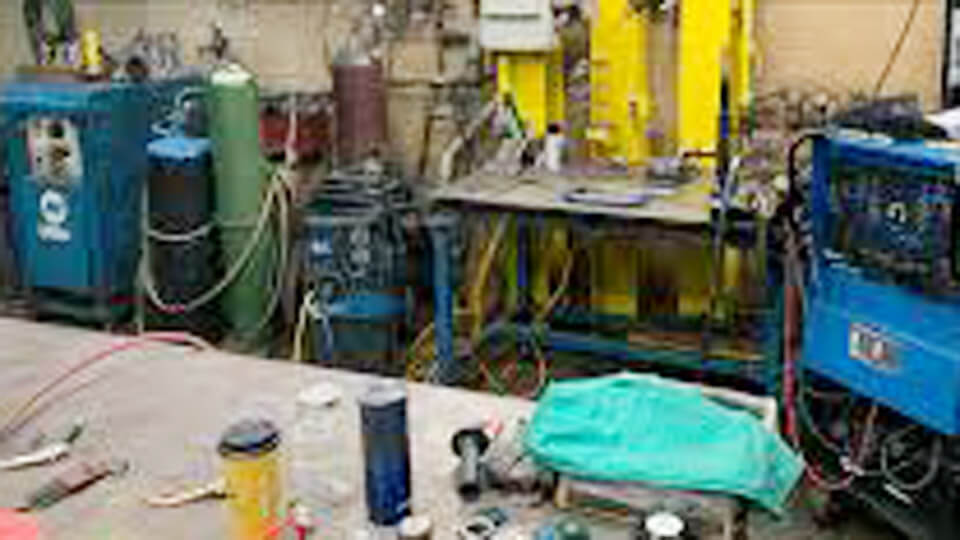
Image by reddit
Planning Your Home Welding Setup
Before you buy anything, think about what you want to weld and where you’ll do it. Many beginners skip this step, but planning now will save you money and frustration later.
What Will You Weld?
Ask yourself: Do you plan to work on small repairs, car parts, art projects, or heavy-duty constructions? Your answer affects the type of welder, the power supply, and even the workspace size.
- For small repairs and light fabrication, a basic MIG welder often works best.
- If you want to weld thicker steel or aluminum, you might need a more powerful stick or TIG welder.
- For automotive work, flexibility and portability are key.
Choosing The Right Space
A dedicated garage, shed, or even a corner in your basement can work. Consider these points:
- Ventilation: Welding creates fumes. You need good airflow to stay safe.
- Fire safety: Keep flammable materials far from your welding area.
- Power supply: Most welders need 120V or 240V. Check your outlets first.
- Lighting: You need bright, even light to see your work clearly.
Common Beginner Mistakes
- Underestimating space needs: Welding projects often take more room than you expect.
- Ignoring ventilation: Poor airflow can lead to health problems.
- Overlooking storage: Tools and consumables pile up fast.
Choosing Welding Equipment
The right equipment makes your work easier, safer, and more enjoyable. But not all welders or accessories are equal.
Types Of Welders
There are three main types for home use: MIG, TIG, and Stick. Each has pros and cons.
| Type | Best For | Difficulty Level | Materials | Cost |
|---|---|---|---|---|
| MIG | Beginners, General Repair | Easy | Steel, Stainless, Aluminum (with gas) | $$ |
| TIG | Precision, Thin Metals | Hard | Steel, Stainless, Aluminum | $$$ |
| Stick (SMAW) | Thick Metal, Outdoor Work | Medium | Steel, Cast Iron | $ |
- MIG welders are user-friendly. They’re great for beginners and most home projects.
- TIG welders make clean, precise welds, but they’re harder to learn and cost more.
- Stick welders are tough and cheap, but produce more splatter and need practice.
Key Features To Consider
- Power input: Choose a machine that matches your home’s electrical supply.
- Duty cycle: Tells you how long you can weld before the machine needs a break.
- Portability: Lighter welders are easier to move if you don’t have a fixed space.
- Accessories included: Some welders come with basic safety gear, others don’t.
Additional Essential Tools
Don’t forget these must-haves:
- Angle grinder: For cleaning and preparing metal.
- Wire brush and chipping hammer: To remove slag and keep welds clean.
- Clamps and magnets: To hold pieces in place while you weld.
- Measuring tools: Tape measure, square, and marking tools for accuracy.
Non-obvious Insight
Many new welders don’t realize that buying a multi-process welder (MIG/Stick/TIG in one) can save money and space. But these machines sometimes sacrifice performance in one process, so check reviews carefully.

Credit: www.youtube.com
Safety Essentials For Home Welding
Welding is dangerous if you’re not careful. Good safety habits protect you from burns, eye damage, fumes, and fire.
Personal Protective Equipment (ppe)
You need more than just a helmet. Here’s what every home welder should own:
- Auto-darkening welding helmet: Protects your eyes from bright light and UV rays. Auto-darkening models make work easier and safer.
- Welding gloves: Special leather gloves resist heat and sparks.
- Fire-resistant jacket or apron: Regular clothes burn easily. Wear something made for welding.
- Safety glasses: Use them under your helmet and when grinding.
- Respirator: Protects your lungs from welding fumes, especially in small spaces.
- Hearing protection: Angle grinders and chipping hammers get loud.
Workshop Safety Setup
- Fire extinguisher: Keep a Class ABC extinguisher nearby.
- Clear floor area: Remove sawdust, oily rags, and flammable items.
- Emergency exit: Make sure you can get out quickly if there’s a fire.
- First-aid kit: Burns and cuts happen—be ready.
Overlooked Hazards
Many DIY welders forget about UV exposure on their skin. Even if you’re just tacking, exposed skin can burn. Always cover up, even for quick jobs.
Organizing Your Welding Workspace
A well-organized space is safer and more efficient. Your workflow will improve, and you’ll make fewer mistakes.
Workbench And Welding Table
- Sturdy metal table: Welding on wood is a fire hazard. Use a steel or thick aluminum table.
- Grounding clamp connection: Good electrical contact improves weld quality.
- Locking casters: Wheels let you move your table but keep it stable while working.
Storage Solutions
- Tool racks or pegboards: Keep tools off the bench and within reach.
- Small parts bins: Store tips, nozzles, wire, and other consumables.
- Cylinder stands: If you use shielding gas, secure cylinders upright to prevent accidents.
Fume Extraction And Ventilation
Welding fumes are hazardous. Even in a garage, you need to manage air quality.
- Open windows/doors: Simple but effective for occasional welding.
- Exhaust fans: Pulls fumes out of your workspace.
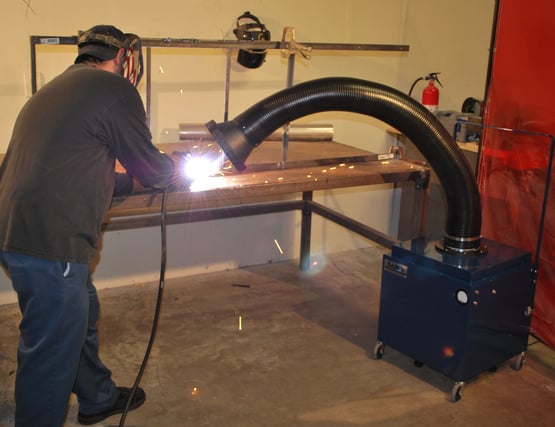
- Portable fume extractor: Filters air and protects your lungs. Worth the investment if you weld often.
Lighting
Bright, shadow-free lighting is a must. Overhead LED shop lights work well, but a moveable task light can help for detailed work.
Electrical Setup
- Dedicated circuit: Heavy welders can trip breakers. Consider hiring an electrician to install a 240V outlet if needed.
- Extension cords: Use only heavy-duty cords rated for your welder’s amps.
Practical Tip
Marking the “safe zone” on your floor with tape helps remind you where sparks might fly and keeps family members or pets clear.
Setting Up For Different Welding Processes
Not all welders work the same way. Your setup should match the process you’ll use most.
Mig Welding
- Use a wire spool holder and keep spare tips and nozzles nearby.
- Shielding gas (like Argon/CO2 mix) is needed for clean welds. Secure the cylinder and check for leaks.
- Use a smooth, dedicated ground clamp.
Tig Welding
- Needs a cleaner environment: Any dust or oil can ruin a TIG weld.
- Keep tungsten electrodes organized by size and type.
- Foot pedals or thumb controls should be within easy reach.
Stick Welding
- Store rods in a dry, sealed container. Moisture ruins them quickly.
- Have a chipping hammer and wire brush ready to remove slag after each weld.
Switching Processes
If you own a multi-process welder, keep all accessories labeled and stored close to your workstation. This reduces setup time and confusion.
Welding Consumables And Their Storage
Welding uses up wire, rods, gas, and more. Managing these supplies saves money and reduces waste.
Common Consumables
- MIG wire spools
- TIG tungsten electrodes
- Stick welding rods
- Contact tips, nozzles, and liners
- Shielding gas
Storage Tips
- Keep wire and rods dry to prevent rust and moisture absorption.
- Label containers with type, size, and purchase date.
- Store gas cylinders upright, chained to a wall or stand.
- Use airtight containers for rods and electrodes, especially if you live in a humid area.
Non-obvious Insight
Many beginners forget that old or damp rods can cause weak, porous welds. Always check the condition of your consumables before starting a project.
Credit: blog.cetrain.isu.edu
Setting Up For Safety And Fire Prevention
Fire is the biggest risk in home welding. One small spark can ignite sawdust, gasoline, or household clutter.
Fire-safe Practices
- Sweep floors before welding.
- Avoid welding near paint cans, fuel, or aerosols.
- Use welding blankets to cover anything flammable nearby.
- Never weld on cars with the fuel tank inside the workspace.
Fire Extinguishers And Emergency Planning
- Place a fire extinguisher near the door, not buried behind tools.
- Know how to use it: Pull, Aim, Squeeze, Sweep (PASS).
- Have a clear path to an exit at all times.
Local Regulations
Some cities require fire permits for home welding. Check with your local fire department before you start. Insurance companies may also have rules about home workshops.
Power And Electrical Considerations
Welders use a lot of electricity. Getting this wrong can damage your equipment or cause a fire.
Understanding Power Needs
Most small MIG and stick welders run on 120V household power. Larger TIG welders and professional models often need 240V.
Electrical Comparison
| Welder Type | Voltage | Amps Needed | Typical Circuit |
|---|---|---|---|
| Entry-level MIG/Stick | 120V | 20-25A | Standard 20A outlet |
| Mid-range TIG | 240V | 30-50A | Dedicated 240V |
| Multi-process Pro | 120V/240V | Varies | Switchable input |
Extension Cord Safety
- Only use cords rated for welding amps.
- Shorter cords are safer; long cords can overheat and drop voltage.
Surge Protection
A power surge can ruin sensitive electronics in new welders. Consider a surge protector, especially if your area has unstable power.
Non-obvious Insight
If you’re using a shared garage or basement, check what else is plugged into the same circuit. Running a welder and an air compressor together can trip breakers or cause brownouts.
Building Welding Skills At Home
A home welding setup is only as good as your skills. Practice and learning make a big difference.
Learning The Basics
- Start with scrap metal. Practice making straight beads before tackling real projects.
- Watch for common mistakes: Undercutting, porosity, and cold joints.
- Use online resources, community college classes, or books to improve your technique.
Keeping A Welding Log
Write down settings, materials, and results. This helps you remember what works (and what doesn’t) as you try new projects.
Common Beginner Errors
- Trying to weld dirty or painted metal: Always clean your workpieces first.
- Using the wrong settings: Each metal and thickness needs different power and wire speed.
- Rushing the job: Good welds take patience and control.
Example: First Project
A simple welding cart or a set of metal brackets is a great way to get started. These projects teach you measuring, cutting, fitting, and welding basics in a useful way.
Maintenance And Upkeep
Looking after your tools and workspace keeps everything running smoothly and safely.
Welder Maintenance
- Clean vents and fans to prevent overheating.
- Check cables and connections for wear or damage.
- Replace tips, nozzles, and liners as needed.
Workspace Upkeep
- Sweep up metal dust and slag after each session.
- Wipe down tools to prevent rust.
- Restock consumables before you run out.
Tool Longevity
Quality tools last longer if you care for them. Storing your welder and accessories in a dry place extends their lifespan.
Budgeting Your Home Welding Setup
Costs can add up quickly. Planning your spending avoids surprises.
Typical Startup Costs
Here’s a realistic budget breakdown for a basic home welding setup:
| Item | Estimated Cost (USD) |
|---|---|
| MIG Welder (entry-level) | 300 – 600 |
| Auto-darkening helmet | 50 – 150 |
| Gloves & jacket | 40 – 100 |
| Angle grinder | 40 – 80 |
| Basic tools (clamps, brush) | 30 – 70 |
| Workbench/table | 100 – 300 |
| Consumables (wire, tips, gas) | 50 – 100 |
| Ventilation fan | 60 – 150 |
| Fire extinguisher | 20 – 40 |
A basic home welding setup usually costs between $700 and $1,500. You can spend less by buying used tools or skipping advanced features, but never cut corners on safety gear.
Saving Money
- Start small. Upgrade as your skills improve.
- Buy quality used equipment from trusted sellers.
- Look for combo kits that include helmet, gloves, and grinder.
Where Not To Cut Costs
- Never buy the cheapest helmet or gloves. Eye and hand injuries are expensive to treat.
- Don’t ignore ventilation; your lungs are worth the investment.
Real-world Examples Of Home Welding Setups
Seeing how others organize their spaces can inspire your own setup.
Example 1: The Compact Garage
- Uses a small MIG welder on a mobile cart.
- Folding steel table doubles as a workbench.
- Overhead LED lights and a basic exhaust fan.
- All tools hang on a pegboard.
- Fire extinguisher near the door.
Example 2: The Basement Corner
- Stick welder for heavy repairs.
- Metal sheet on floor protects concrete.
- Portable fume extractor with filter.
- Earplugs and face shield kept in a wall-mounted bin.
- Extension cord rated for 30A.
Example 3: Outdoor Shed
- Multi-process welder for MIG, TIG, and Stick.
- Large steel workbench with locking casters.
- Gas cylinders chained to wall.
- Sealed rod containers due to high humidity.
- Welding blankets hang from hooks for quick fire protection.
What Can You Learn?
- Every space can become safe and efficient with good planning.
- Small upgrades like better lighting or tool racks make a big difference.
- Think about future projects so your setup can grow with your skills.
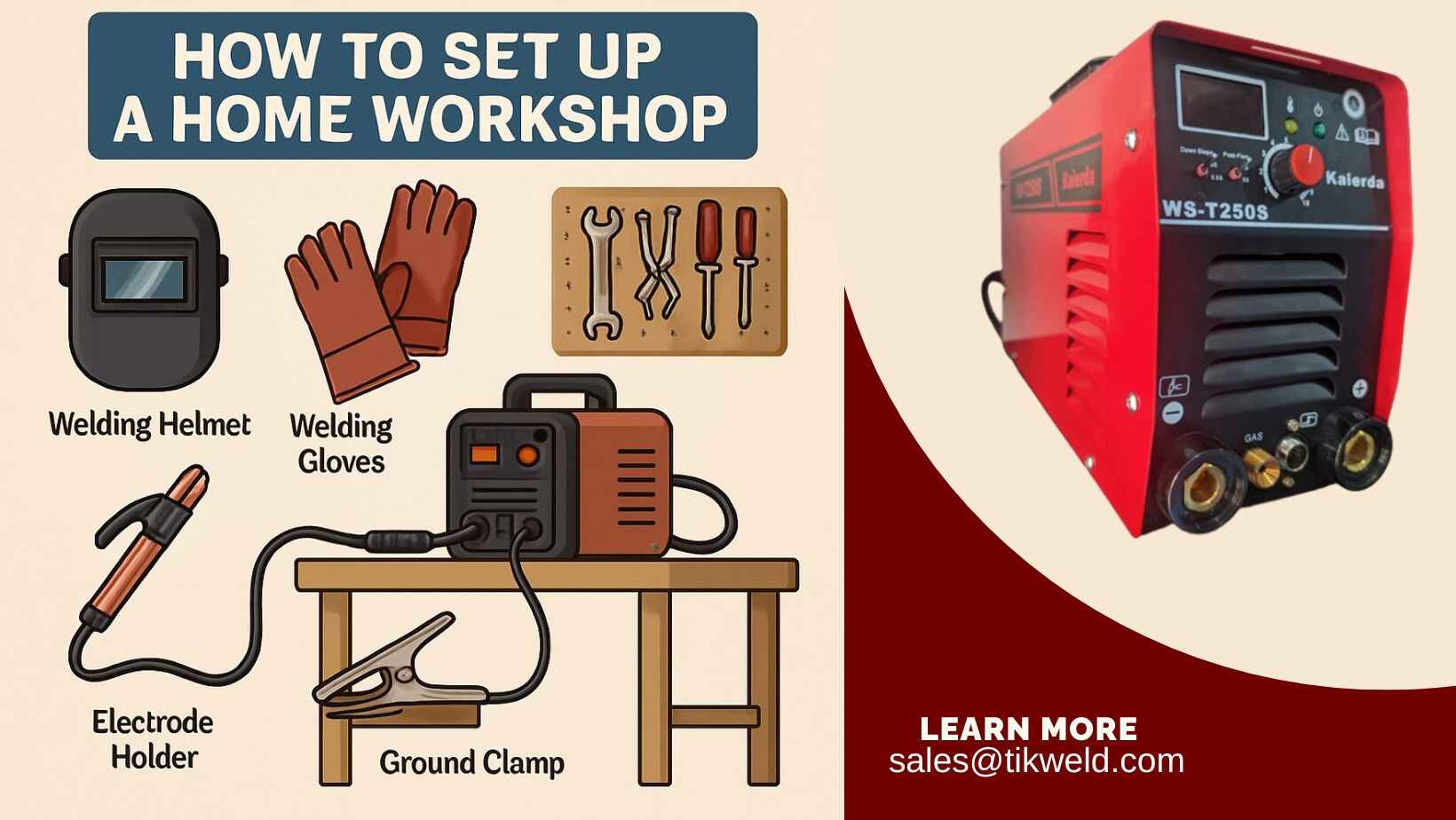
Credit: tikweld.com
Final Thoughts
Setting up a home welding space is an investment in your skills and creativity. With the right planning, equipment, and safety habits, you’ll enjoy years of productive, safe, and satisfying metalwork. Take your time, learn as you go, and always put safety first.
Frequently Asked Questions
What Is The Safest Place To Set Up Home Welding?
The safest location is a well-ventilated garage or detached shed with a concrete floor. Keep flammable materials far away and ensure you have a fire extinguisher and a clear exit.
Can I Weld At Home With Only 120v Power?
Yes, many entry-level MIG and stick welders work on standard 120V outlets. However, you’re limited to thinner materials and shorter weld times. For thicker metal or longer projects, 240V is better.
How Important Is Ventilation In A Home Welding Setup?
Ventilation is critical. Welding produces toxic fumes that can harm your lungs. Always open windows, use fans, or invest in a fume extractor, especially in small or enclosed spaces.
What’s The Best Welder For Beginners?
A MIG welder is usually the best choice for most beginners. It’s easy to learn, versatile, and works well for most home projects. Look for models with adjustable settings and good reviews.
Do I Need Special Insurance For Welding At Home?
It depends on your area and your insurance provider. Some require you to report a workshop or get special coverage for fire risks. Check with your local authorities and insurer before starting.


