

Mig welding square tubing is a skill every metalworker should learn. Whether you’re building furniture, gates, or frames, square tubing gives strength and a clean look. Using a MIG welder makes the process faster and more forgiving, even for beginners.
But getting strong, neat welds on square tubing needs more than just turning on the machine. There are key steps, safety rules, and practical tricks to make sure your welds last and look good.
Let’s break down everything you need to know about MIG welding square tubing—from choosing materials and prepping joints to finishing touches and common mistakes. If you want to build something solid, this guide will help you weld square tubing confidently.
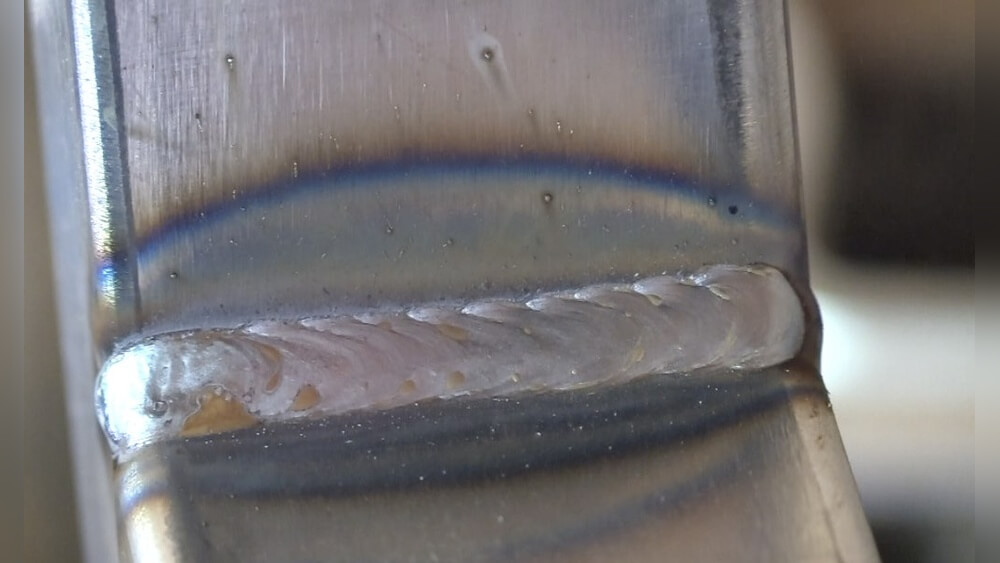
Image reddit
Understanding Square Tubing
Square tubing is a hollow, square-shaped metal tube. It’s common in construction, furniture, and DIY projects. Most square tubing is made from steel or aluminum. Sizes range from small (½ inch) to large (over 4 inches), with wall thicknesses between 16 gauge and ¼ inch.
Why use square tubing?
- Strong and resists bending
- Easy to join with other pieces
- Looks neat and professional
- Good for both indoor and outdoor projects
Common uses:
- Table frames
- Metal fences
- Vehicle parts
- Shelving and racks
Before starting, measure your tubing. Check the thickness, because it affects how you set your MIG welder. Thin tubing needs less heat, thick tubing needs more.
Choosing The Right Mig Welder
Not all MIG welders are equal. The right welder depends on your tubing size and material.
Key Factors For Mig Welder Selection
- Power output (Amps): For thin tubing (16-18 gauge), a 90-120 amp welder works. For thick tubing (¼ inch), you need at least 180-200 amps.
- Voltage: Higher voltage gives better penetration for thick tubing.
- Wire feed speed: Adjustable speed helps control the weld bead.
- Shielding gas: Most MIG welders use a mix of argon and CO₂. For steel, 75% argon/25% CO₂ is common.
- Duty cycle: This is how long the welder can run before overheating. For big projects, pick a welder with a higher duty cycle.
Example: If you’re welding 1-inch, 16-gauge steel tubing, a 120-140 amp MIG welder is enough. For 2-inch, ¼ inch thick tubing, choose a 200 amp machine.
Comparison Of Mig Welders For Square Tubing
| Welder Model | Amps Range | Best For | Duty Cycle | Price (USD) |
|---|---|---|---|---|
| Lincoln Handy MIG | 35-88 | Thin tubing | 20% @ 70A | $320 |
| Millermatic 211 | 30-230 | Thick tubing | 40% @ 150A | $1,250 |
| Hobart Handler 140 | 25-140 | Medium tubing | 20% @ 90A | $550 |
Preparing Square Tubing For Welding
Preparation is half the job. Proper prep stops weak welds, rust, and mistakes.
Steps For Prepping Square Tubing
- Measure and mark: Double-check your lengths and angles. Use a marker or soapstone.
- Cut cleanly: Use a saw or angle grinder. Cuts should be straight and smooth.
- Deburr edges: Grind or file off sharp edges and burrs. This helps the weld flow.
- Clean surfaces: Remove oil, paint, and rust. Use a wire brush or grinder. Clean metal gives better welds.
- Fit up joints: Make sure pieces fit tightly. Gaps cause weak welds.
Tip: For square tubing, a small gap (about 1/16 inch) can help penetration, but too big a gap leads to ugly welds.
Joint Types And Fit-up
Square tubing can be joined in several ways. The joint type affects strength and looks.
Common Joint Types For Square Tubing
- Butt joint: Two tubes end to end. Easy, but not as strong as other types.
- Corner joint: Tubes meet at 90 degrees. Used for frames and boxes.
- T-joint: One tube joins the side of another. Common for shelves.
- Lap joint: One tube overlaps another. Good for thin tubing.
Fit-up Tips
- Use clamps or magnets to hold tubes steady.
- Check joints with a square tool.
- Tack weld before fully welding. Tack welds are small dots that hold pieces in place.
Non-obvious insight: Many beginners skip tack welds, causing pieces to move during welding. Always tack first.

Credit: www.youtube.com
Setting Up Your Mig Welder
The right setup makes welding easier and safer.
Steps For Welder Setup
- Select wire type and size: For steel, use ER70S-6 wire. 0.030-inch wire suits most square tubing.
- Set gas flow: 20-30 cubic feet per hour (CFH) is standard.
- Adjust voltage and amperage: Start low for thin tubing, higher for thick. Always check your welder’s chart.
- Check polarity: For MIG, use DC electrode positive.
- Check wire tension: Wire should feed smoothly, not slip.
Recommended Settings For Common Tubing Sizes
| Tubing Size | Wire Diameter | Voltage | Amperage | Gas Flow |
|---|---|---|---|---|
| 16 gauge | 0.030″ | 16-18V | 90-120A | 20 CFH |
| 1/8″ thick | 0.035″ | 18-20V | 130-160A | 25 CFH |
| 1/4″ thick | 0.035″ | 20-22V | 180-200A | 30 CFH |
Practical tip: Always test your settings on scrap tubing before welding the real piece.
Welding Techniques For Square Tubing
Technique matters more than speed. Good welds are strong and look neat.
Basic Mig Welding Technique
- Hold the gun at a 10-15 degree angle, pushing the weld pool.
- Keep the nozzle ¼ inch from the metal.
- Move steadily, don’t rush.
- Watch the weld pool, not the gun tip.
Welding Thin Vs Thick Tubing
- Thin tubing (16-18 gauge): Use short bursts (“stitch welding”) to avoid burn-through.
- Thick tubing (1/8 inch+): Continuous weld is okay. Move slower for deeper penetration.
Welding Vertical And Overhead Joints
Vertical and overhead joints are harder. For vertical, weld upward (“vertical up” gives better control). For overhead, keep your movements tight and check for drips.
Non-obvious insight: For square tubing, corners are weaker. Always weld corners fully, not just tack. This stops cracks later.
Safety Tips For Mig Welding Square Tubing
Welding comes with risks—burns, fumes, and shocks. Stay safe with these basics:
- Wear a welding helmet (auto-darkening is best).
- Use gloves and long sleeves to avoid burns.
- Work in a well-ventilated area. MIG welding produces fumes.
- Keep a fire extinguisher nearby.
- Check cables and connections before starting.
- Don’t weld on painted or oily tubing—fumes can be toxic.
- Always ground your workpiece.
Practical tip: Many beginners forget to check for fire hazards. Remove flammable items before welding.
Common Mistakes And How To Avoid Them
Even experienced welders make mistakes. Here are the most frequent ones, and how to fix them:
- Wrong settings: Too much heat burns through tubing, too little gives weak welds. Use your welder’s chart.
- Poor fit-up: Gaps or misaligned joints cause ugly welds. Use clamps and tack welds.
- Dirty metal: Oil, paint, or rust stop the weld from bonding. Always clean your tubing.
- Moving too fast: Fast welding creates weak, thin beads. Go steady.
- Incorrect gun angle: If the gun is too flat or too steep, the weld won’t penetrate well.
- Not checking for warping: Welding heats metal, making it bend. Clamp tubing or weld in small sections.
Expert tip: If you see holes or “blow-through,” lower your heat or use stitch welding.

Credit: www.youtube.com
Finishing Welds On Square Tubing
A strong weld is good, but a neat weld is better. Finishing makes your project look professional.
Steps For Finishing Welds
- Cool welds slowly: Fast cooling can crack welds. Let them cool at room temperature.
- Grind welds: Use an angle grinder to smooth welds. Wear eye protection.
- Clean up splatter: Remove small bits of metal with a chisel or wire brush.
- Check for gaps: Fill holes or cracks with more weld.
- Paint or coat: Prevent rust by painting, powder coating, or spraying with a rust inhibitor.
Non-obvious insight: For outdoor projects, always seal the inside of the tubing ends. Moisture inside square tubing causes rust from within.
Advanced Tips For Stronger Mig Welds
Once you master basic welding, there are tricks to make your welds even better.
- Preheat thick tubing: If welding thick steel, warm it with a torch first. This helps penetration.
- Use backing bars: Place a copper bar behind thin tubing. It absorbs heat and stops burn-through.
- Weld in sections: For big frames, weld opposite corners first. This prevents warping.
- Pulse welding: If your MIG welder supports pulse mode, use it for thin tubing. This controls heat.
- Double pass: For extra strength, do a second weld pass over the first.
Practical tip: Keep your wire clean. Dust and rust on welding wire cause bad welds.
Project Examples Using Mig Welded Square Tubing
It helps to see real examples. Here are common projects where MIG welding square tubing is ideal:
Metal Table Frame
- Use 1-inch, 16-gauge tubing.
- Cut four legs (28 inches), four sides (24 inches).
- Weld corner joints, then add cross braces.
- Grind smooth and paint.
Garden Gate
- Use 2-inch, ¼ inch thick tubing.
- Weld top and bottom rails to vertical sides.
- Add a diagonal brace for strength.
- Finish with powder coating.
Vehicle Roof Rack
- Use 1.5-inch, 1/8 inch tubing.
- Weld side rails, crossbars, and mounting feet.
- Tack weld first, then fully weld.
- Paint with rust-proof spray.
Comparing Mig Welding With Other Methods
MIG welding isn’t the only way to join square tubing. Let’s compare with other methods.
| Method | Strength | Speed | Skill Level | Cost |
|---|---|---|---|---|
| MIG Welding | High | Fast | Beginner to Expert | Medium |
| TIG Welding | Very High | Slow | Expert | High |
| Stick Welding | Medium | Medium | Intermediate | Low |
| Brazing | Low | Fast | Beginner | Low |
MIG welding is fast, easy to learn, and gives strong joints. TIG welding is stronger but much slower and harder. Stick welding works for thick tubing but is messier. Brazing is only for light-duty projects.
Troubleshooting Common Weld Problems
Sometimes welds go wrong. Here’s how to fix common issues:
Porosity (holes In Weld)
- Causes: Dirty metal, wrong gas flow, moisture.
- Fix: Clean tubing, check gas, dry wire.
Incomplete Fusion
- Causes: Low heat, fast movement.
- Fix: Increase voltage, slow down.
Undercut (groove At Weld Edge)
- Causes: Too much heat, wrong angle.
- Fix: Lower voltage, adjust gun angle.
Excessive Spatter
- Causes: Wrong settings, dirty wire.
- Fix: Clean wire, adjust amperage.
Practical tip: If you see cracks after cooling, grind out the crack and re-weld. Don’t leave cracks—they spread.
Essential Equipment For Mig Welding Square Tubing
You need more than just a welder. Here’s what to gather:
- MIG welder
- Shielding gas (argon/CO₂)
- Welding wire (ER70S-6 for steel)
- Angle grinder (for prep and finishing)
- Clamps (for fit-up)
- Welding helmet
- Gloves and jacket
- Wire brush
- Measuring tools (square, tape)
- Fire extinguisher
Expert tip: Buy quality wire and gas. Cheap supplies cause more problems.
How To Mig Weld Square Tubing: Step-by-step
Let’s put it all together in a step-by-step process:
- Measure and cut tubing: Use a saw or grinder. Deburr edges.
- Clean tubing: Remove rust, oil, paint.
- Fit up and clamp: Align joints, clamp securely.
- Tack weld: Place small welds at corners.
- Set welder: Adjust wire, gas, voltage, and amperage.
- Test weld: Practice on scrap tubing.
- Weld joints: Move steadily, keep gun angle right.
- Finish welds: Grind, clean, check for gaps.
- Paint or coat: Protect from rust.
Non-obvious insight: Always weld in a well-lit area. Shadows hide mistakes.
Final Thoughts
MIG welding square tubing is a practical skill that opens doors for many projects. With careful prep, the right settings, and steady technique, you can build strong, professional-looking frames, gates, and more. Remember, good welds come from patience and attention to detail.
For more detailed guidance, check out Wikipedia’s welding page. Practice on scrap pieces, learn from your mistakes, and soon you’ll weld square tubing with confidence and skill.
Frequently Asked Questions
What Size Mig Welder Do I Need For Square Tubing?
For thin tubing (16-18 gauge), a 120 amp MIG welder works. For thick tubing (¼ inch), choose 200 amps. Check your welder’s chart for exact settings.
Can You Mig Weld Aluminum Square Tubing?
Yes, but you need special wire and pure argon gas. Aluminum melts quickly, so use short bursts and clean the tubing with a stainless brush before welding.
Why Does My Weld Bead Look Rough On Square Tubing?
This happens if the tubing is dirty, the wire feed is too fast, or your gun angle is wrong. Clean the tubing, slow the wire feed, and keep the gun at a 10-15 degree angle.
How Do I Prevent Burn-through When Welding Thin Square Tubing?
Use lower voltage and amperage. Try “stitch welding” (short bursts) instead of continuous welds. A copper backing bar helps absorb heat.
Is Mig Welding Strong Enough For Structural Square Tubing?
Yes, if you follow the right technique and settings. MIG welding gives strong joints that can handle heavy loads. Always weld all sides of the joint for maximum strength.


