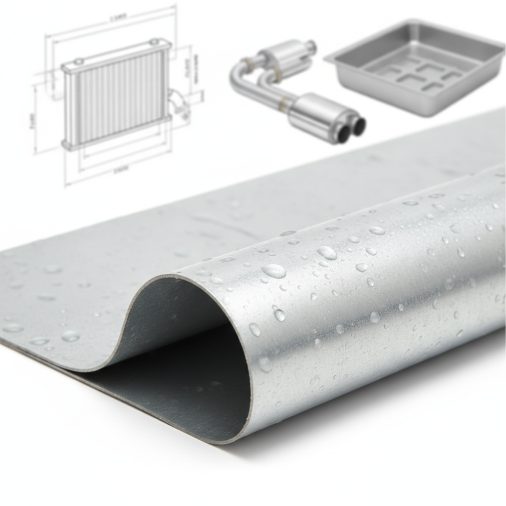
Aluminized steel shows up everywhere — exhaust systems, ovens, furnaces, agricultural equipment — yet most people have never heard of it by name. If you’re trying to understand what makes it different from regular steel or galvanized alternatives, this breaks it down clearly.
Aluminized steel is carbon steel that has been hot-dip coated with an aluminum-silicon alloy, typically containing 5–11% silicon. The coating bonds metallurgically to the steel substrate, creating a material that resists heat, corrosion, and oxidation far better than bare steel — without the weight or cost of stainless steel.
How the Coating Is Applied
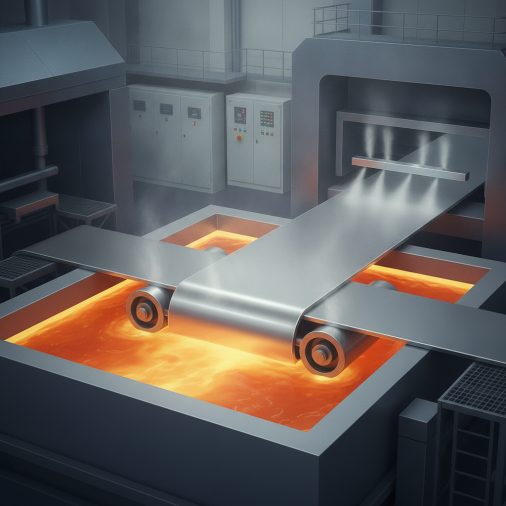
The process uses continuous hot-dip coating, where steel strip is passed through a molten bath of aluminum-silicon alloy at temperatures around 680°C (1256°F). As the steel exits the bath, the coating solidifies and forms two distinct layers:
– Outer layer: Pure aluminum-silicon alloy, which provides the heat reflectivity and corrosion resistance
– Inner intermetallic layer: An iron-aluminum compound that creates the metallurgical bond between the coating and the steel core
This bonded structure is what separates aluminized steel from simply painting or spraying aluminum onto steel. The intermetallic layer locks the coating in place physically and chemically, making it far more durable under thermal cycling and mechanical stress.
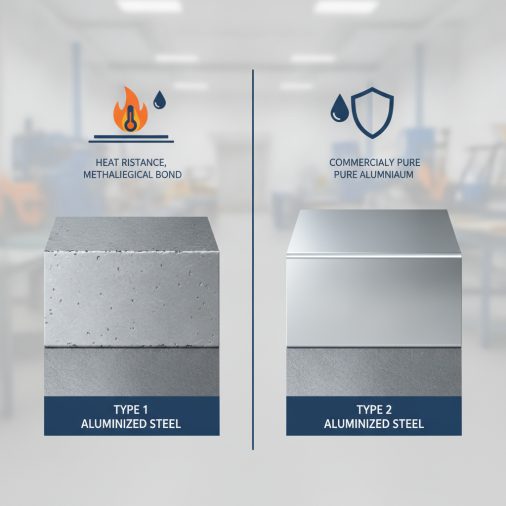
Type 1 vs. Type 2 Aluminized Steel
There are two distinct grades, and choosing the wrong one is a common sourcing mistake.
Property
Type 1 (Al-Si)
Type 2 (Pure Al)
Coating composition
Aluminum + 5–11% silicon
Commercially pure aluminum
Heat resistance
Up to ~677°C (1250°F)
Moderate heat resistance
Corrosion resistance
Excellent
Very good
Primary use
Exhaust systems, furnaces, ovens
Roofing, siding, building panels
Coating thickness
Thinner, tighter bond
Thicker, slightly softer
Formability
Good
Better
Type 1 is by far the most common in industrial and automotive applications. The silicon addition lowers the melting point of the bath and refines the intermetallic layer, which significantly improves the coating’s resistance to high temperatures and thermal fatigue.
Type 2 is used primarily in construction and architectural applications where the thermal demands are lower but corrosion resistance and formability matter more.
Why Silicon Is Added to the Coating
The 5–11% silicon content in Type 1 isn’t incidental — it does two specific things. First, it reduces the thickness of the brittle iron-aluminum intermetallic layer during the coating process. A thinner intermetallic layer means the finished material bends and forms without cracking. Second, silicon allows the bath temperature to be controlled at a lower, more manageable level, improving production consistency.
Without silicon, the intermetallic layer grows thick and brittle, making the coated product prone to flaking during fabrication — essentially defeating the purpose of the coating.
Heat and Corrosion Performance in Practice
Bare carbon steel begins scaling noticeably above about 480°C (900°F). Aluminized steel Type 1 maintains its integrity and corrosion resistance at continuous service temperatures up to approximately 677°C (1250°F), with short-term tolerance approaching 815°C (1500°F) in some formulations.
The mechanism behind this heat resistance is straightforward. Aluminum oxidizes rapidly when exposed to high temperatures, forming a thin, dense aluminum oxide (Al₂O₃) layer on the surface. This oxide layer is thermally stable and acts as a barrier, preventing further oxidation of both the coating and the underlying steel.
In corrosive environments, aluminized steel also benefits from galvanic protection. Aluminum is anodic relative to steel, meaning it sacrificially corrodes to protect exposed steel at cut edges or scratches — similar to how zinc behaves on galvanized steel, though aluminum offers better performance at elevated temperatures.
Common Applications
The material shows up across industries in places where thermal and corrosion resistance both matter.
Automotive:
– Exhaust pipes, mufflers, catalytic converter heat shields
– Underbody panels exposed to heat and road salt
HVAC and appliances:
– Furnace heat exchangers
– Gas water heater flues and vents
– Oven cavities and burner components
– Dryer drums
Agricultural and outdoor equipment:
– Grain dryers
– Storage tank linings
– Outdoor enclosures exposed to moisture and temperature swings
Construction:
– Roofing panels and siding (Type 2)
– Culverts and drainage structures
The automotive exhaust market is particularly dependent on Type 1 aluminized steel. A typical exhaust system runs at temperatures that would destroy plain carbon steel in a single season. Aluminized steel extends service life dramatically while keeping costs below stainless steel alternatives.
Aluminized Steel vs. Galvanized Steel vs. Stainless Steel
These three materials often compete for the same applications, and the differences matter significantly depending on operating conditions.
Property
Aluminized Steel (Type 1)
Galvanized Steel
Stainless Steel (304)
Heat resistance
Up to ~677°C
~260°C before zinc fumes
870°C+
Corrosion resistance
Excellent
Good to very good
Excellent
Galvanic protection
Yes (aluminum)
Yes (zinc)
None
Weldability
Moderate
Moderate (fume risk)
Good
Cost
Moderate
Lower
Higher
Weight
Same as steel
Same as steel
Same as steel
Best environment
High heat + corrosion
Ambient corrosion
Extreme corrosion or heat
Galvanized steel uses zinc, which is highly effective at ambient temperatures but loses protection rapidly above 260°C as the zinc coating begins to degrade and off-gas. In exhaust applications or furnace components, galvanized steel is simply not suitable. This is why the processes for removing zinc coating from galvanized steel before high-heat use is even a known practice — the zinc has to come off before the part goes anywhere near serious heat.
Stainless steel outperforms aluminized steel in extreme or highly aggressive environments, but the cost premium is significant. For applications where temperatures stay below 677°C and the corrosive load is manageable, aluminized steel delivers most of the performance at a fraction of the price.
Welding Aluminized Steel
Welding aluminized steel introduces a few complications worth understanding before starting a project.
The aluminum-silicon coating burns off in the heat-affected zone, leaving bare steel exposed around the weld. That exposed area loses its corrosion and heat protection unless treated afterward. In exhaust repair work, this is a common problem — the base repair holds, but the weld zone degrades faster than the surrounding material.
The coating also generates fumes during welding. Aluminum oxide fumes are significantly less hazardous than the zinc oxide fumes produced when welding galvanized steel, but adequate ventilation is still required.
Practically speaking, aluminized steel welds reasonably well with MIG or TIG processes using standard mild steel filler wire. Many technicians apply a high-temperature aluminum-based paint or coating to the weld area post-completion to restore some protection. For heavier fabrication or production welding on aluminized components, sourcing bare steel and applying the coating after fabrication is the more reliable approach.
Limitations to Keep in Mind
Aluminized steel is not the right choice for every situation.
– Cut edges and drilled holes are unprotected and will corrode in aggressive environments
– Forming after coating can crack the intermetallic layer if bend radii are too tight
– Temperatures above 815°C will cause the aluminum coating to diffuse into the steel, reducing protection
– Saltwater immersion is not a strong application — the coating performs well in salt spray but struggles under prolonged direct immersion
– Paint adhesion requires proper surface preparation, as the smooth aluminum surface needs chemical treatment or mechanical roughening for coatings to bond reliably
FAQ
What is the difference between aluminized steel and aluminum?
Aluminized steel is carbon steel with a thin aluminum-silicon coating applied by hot-dipping. Solid aluminum is a completely different material — softer, much lighter, non-magnetic, and with very different structural properties. Aluminized steel retains the strength, rigidity, and magnetic properties of carbon steel while gaining aluminum’s surface characteristics.
Is aluminized steel the same as galvanized steel?
No. Galvanized steel uses a zinc coating, while aluminized steel uses an aluminum-silicon alloy. Both rely on hot-dip processing, but zinc begins to degrade above 260°C, making galvanized unsuitable for high-heat applications. Aluminized steel tolerates temperatures up to approximately 677°C, making it the better choice for exhaust systems, furnaces, and ovens.
How long does aluminized steel last outdoors?
In typical outdoor environments exposed to rain, humidity, and moderate industrial pollution, aluminized steel typically lasts significantly longer than bare steel — often two to four times longer depending on the environment. Performance drops near saltwater coastal areas or in industrial zones with high chemical exposure, where stainless or heavily coated alternatives may outperform it over the long term.
Can aluminized steel rust?
The coated surface itself resists rust effectively because aluminum doesn’t form iron oxide (rust). However, cut edges, drilled holes, scratches, and areas where the coating is damaged expose the underlying carbon steel, which will rust normally. In practice, this is why tight bend radii and sharp impacts should be avoided — they crack the coating and accelerate edge corrosion.
Why is aluminized steel used in car exhaust systems?
Car exhaust gases reach temperatures between 300°C and 900°C depending on location in the system, and the exterior surface faces road salt, moisture, and debris. Aluminized steel handles the heat, resists oxidation, and costs far less than a full stainless steel exhaust. For most production vehicle exhaust systems, it’s the practical balance between durability and manufacturing cost.
Is aluminized steel magnetic?
Yes. Because the core material is carbon steel, aluminized steel remains ferromagnetic. The thin aluminum coating doesn’t affect the magnetic properties of the steel substrate, which is relevant when the material needs to be used in applications involving magnetic clamping, sensors, or detection equipment.
How does aluminized steel handle acidic condensation in exhaust systems?
Cold-start condensation in exhaust systems produces acidic moisture that attacks metal from the inside. This is actually one area where aluminized steel performs better than expected — the aluminum oxide layer resists mild acid attack better than bare steel. However, in very frequent short-trip driving where the system never fully heats up, even aluminized steel will eventually degrade from the inside due to prolonged acid condensate exposure.
Aluminized steel occupies a practical middle ground that most buyers don’t consider until they’ve either over-specified with stainless steel or under-specified with plain galvanized. For high-heat, corrosive environments where budget matters, it’s genuinely hard to beat. The key is matching the right type — Type 1 for thermal applications, Type 2 for construction — and accounting for cut-edge vulnerability wherever the material is fabricated.