
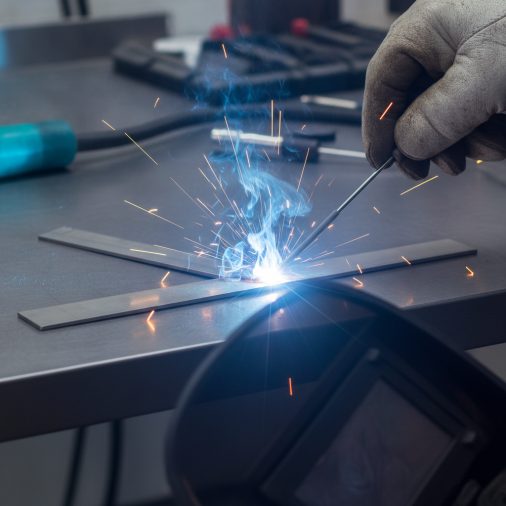
Why Rod Diameter Matters More Than Most Beginners Expect
The Right Electrodes for Thin Material
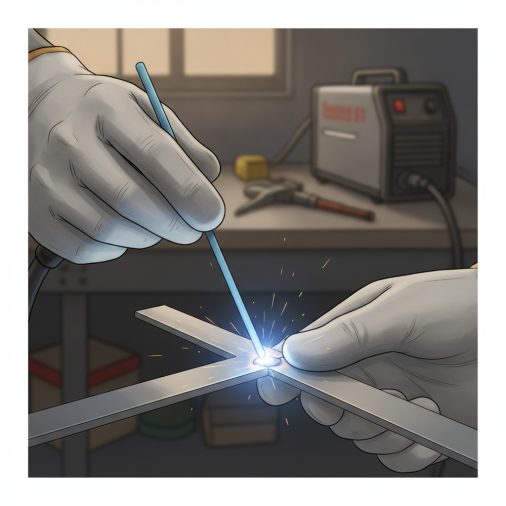
Amperage Settings for Thin Rod Welding
Running the correct amperage is where thin metal welding is won or lost. Too low and the rod sticks constantly. Too high and you’re punching holes.| Rod Diameter | Electrode Type | Typical Amperage Range (Thin Material) |
|---|---|---|
| 1/16" (1.6mm) | E6013 | 20–45 A |
| 1/16" (1.6mm) | E6011 | 25–50 A |
| 3/32" (2.4mm) | E6013 | 40–75 A |
| 3/32" (2.4mm) | E6011 | 45–85 A |
| 3/32" (2.4mm) | E7018 | 65–100 A |
Polarity and Its Effect on Thin Material
Polarity affects heat distribution, arc stability, and penetration depth — all of which matter significantly when margins are tight. – DCEP (DC Electrode Positive / Reverse Polarity) — More heat at the electrode tip, deeper penetration. Standard for most stick electrodes including E6013 and E6011. Works well when clean surface contact is important. – DCEN (DC Electrode Negative / Straight Polarity) — More heat at the base metal, shallower penetration. Some welders switch to DCEN intentionally when welding very thin stock to reduce burn-through risk. – AC — Both E6013 and E6011 run on AC, which is useful when a DC machine isn’t available. Arc stability on AC with 1/16″ rods is acceptable but slightly less smooth. In practice, experimenting with DCEN on borderline-thin material can make a noticeable difference. The arc feels slightly softer and the puddle is easier to move before the base metal overheats.Technique Adjustments That Make or Break Thin Welds
Equipment settings matter, but technique carries a lot of the weight at thin gauges. Several adjustments separate clean beads from blown-through scrap. Arc length — Keep it tight. A long arc with thin rods increases heat and creates a wandering, unstable puddle. The arc gap should be roughly equal to the rod diameter — about 1/16″ for a 1/16″ rod. Travel speed — Move faster than you think you need to. The puddle on thin material fills quickly, and a slow pass deposits too much heat in one spot. A slightly faster travel speed keeps the bead thinner and reduces warping. Work angle — Hold the electrode at approximately 10–15 degrees from vertical (drag angle). A steeper angle increases penetration, which is the opposite of what you want on thin stock. Stringer beads over weave — On thin material, stringer beads are the only sensible approach. Weaving magnifies heat input and increases the risk of melt-through significantly. Backstep technique — For longer seams, welding in short backstep segments helps manage cumulative heat buildup. Weld 1–2 inches, let the metal cool briefly, then continue. If burn-through is a persistent problem, the full guidance on preventing burn-through when stick welding thin metal covers both technique and setup in detail.Setting Up the Joint for Success
The joint itself has a significant effect on how forgiving the weld will be. Thin metal gives you almost no margin for error, so preparation matters. – Fit-up gaps — Even a small gap between parts on thin sheet can cause the arc to drop straight through. Tight fit-up with zero or minimal root gap is essential. – Copper backing bar — A copper bar clamped behind the joint absorbs excess heat and prevents blow-through. Copper doesn’t fuse to steel, so it can be removed cleanly after welding. – Clamping and tacking — Tack weld at close intervals before running a full bead. This prevents thermal distortion and keeps fit-up tight as heat builds. – Edge preparation — Thin material doesn’t need a V-groove. A clean, square butt joint or an overlap joint gives the most metal-to-metal contact and reduces the risk of edge burn-through.Common Problems and How to Fix Them
Even with the right setup, thin rod welding produces predictable issues. Here’s what you’re likely to encounter and why it’s happening. Rod sticking constantly The amperage is too low, or the rod is damp. Increase amperage by 5–10 amps. If sticking persists across different rods, try drying E6013 in a rod oven at 225°F (107°C) for one hour. Burn-through on edges Heat is concentrating at edges because there’s nowhere for it to go. Reposition the arc slightly toward the thicker section. Increase travel speed and use a copper backing bar. Arc going out mid-pass Usually caused by arc length creeping too long as the rod shortens. Beginners naturally pull back as the stub shrinks. Consciously maintain the same arc gap throughout the pass. Excessive spatter Arc length is too long, or amperage is slightly high for the rod size. Bring the arc closer and reduce amperage by 5 amps. E6013 produces less spatter than E6011 in comparable conditions. Undercutting along the bead edge Amperage is too high or travel speed too slow, creating a groove along the fusion line. Reduce amperage and speed up the pass. For a full breakdown of settings including rod selection, amperage, and technique across different scenarios, the stick welder settings reference chart is a practical companion.When to Consider a Different Process
Stick welding thin material is workable, but it sits at the edge of what SMAW is designed to do well. There are genuine situations where switching processes is the smarter call. Below 16 gauge (1.5mm), arc welding with even the smallest rods becomes increasingly difficult to control. MIG welding in short-circuit transfer mode or TIG welding are both significantly better suited to very light gauge material. The full guide to welding thin metal with an arc welder compares these approaches and helps identify which method fits the situation. In field repair scenarios where a MIG or TIG setup isn’t available, stick welding with 1/16″ E6013 on 16–18 gauge material remains a practical option. The Lincoln Electric Invertec V155-S is one machine that handles low-amperage stick work well, producing a stable arc at 25–30 amps where some budget inverters start to flutter.FAQ
What is the thinnest metal you can stick weld? In practice, 18 gauge (approximately 1.2mm) is roughly the lower limit for SMAW using 1/16″ electrodes. Below that, maintaining arc stability without burning through becomes extremely difficult even with ideal technique. Most experienced welders switch to TIG or short-circuit MIG below 16 gauge for consistent results. Can you stick weld sheet metal on a car body? Technically yes, but it’s rarely the right choice. Auto body sheet metal is typically 18–20 gauge, which sits at the extreme edge of what SMAW can handle. Distortion, burn-through, and HAZ discoloration are all significant concerns. MIG or TIG welding is strongly preferred for bodywork. What’s the difference between 1/16″ and 3/32″ rods on thin material? The 1/16″ rod requires significantly less amperage (as low as 20–25A) compared to 3/32″ rods (minimum ~40–45A for E6013). On metal thinner than 3/16″, the 1/16″ rod offers much greater heat control. The 3/32″ rod is better suited to 1/8″ to 3/16″ stock where slightly higher amperage helps fusion without burn risk. Do thin welding rods require special storage? E6013 and E6011 electrodes are less moisture-sensitive than low-hydrogen rods like E7018, but storing them in a sealed container or rod oven still extends shelf life and prevents arc instability from absorbed moisture. Rods left open in humid environments can cause porosity and erratic arc behavior. Why does my 1/16″ rod keep burning out too fast? This usually points to amperage being set too high for the rod diameter. A 1/16″ rod running at 70+ amps will burn down to a stub very quickly and overheat. Stay within the manufacturer’s specified range — typically 20–45A for 1/16″ E6013 — and the rod burn rate will feel much more controlled. Is it better to use AC or DC for thin rod welding? DC (DCEP or DCEN) generally produces a more stable, consistent arc with 1/16″ rods, which matters on thin material where arc stability directly affects heat control. AC is workable with E6013 and E6011 if that’s all that’s available, but DC gives cleaner starts and steadier travel. How do I prevent warping when stick welding thin panels? Tack frequently at short intervals — every 1–2 inches — before running full beads. Use backstep welding to distribute heat away from completed sections. Allow the metal to cool between passes, and clamp or fixture the workpiece to resist distortion. Heat sinks clamped alongside the weld line also help.Thin rod stick welding rewards patience and precision over speed. The combination of a 1/16″ E6013, low amperage, tight arc length, and fast travel speed handles most situations where thin material and a stick welder share the same job. When conditions push below 16 gauge regularly, that’s the natural signal to move toward a process better suited to light-gauge work.


