
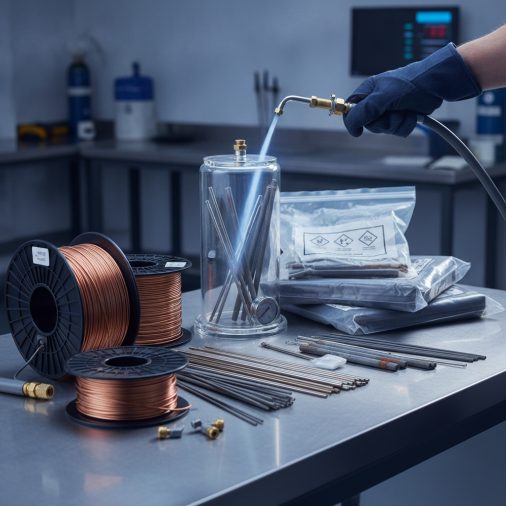
Why Argon Is Used for This — Not Just Any Gas
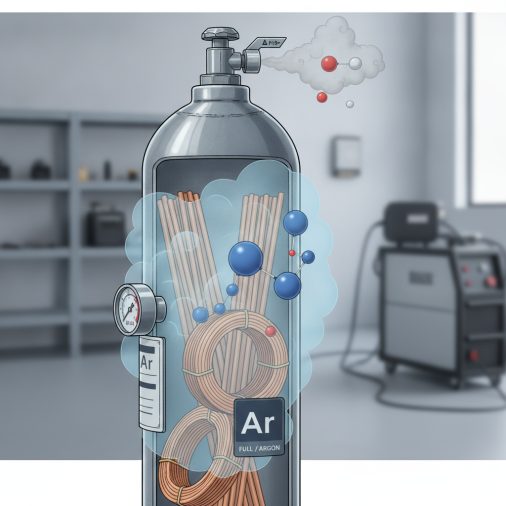
What You’ll Need Before Starting
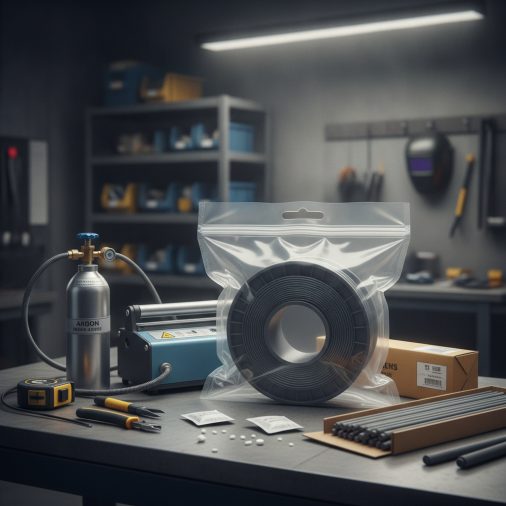
Step-by-Step: Packing Welding Wires and Rods with Argon
This process works for MIG wire spools, TIG filler rods, and flux-coated stick electrodes. The approach is the same regardless of the consumable type. Step 1 — Inspect the consumables first Before packing, check the wires or rods for existing surface rust, moisture, or damaged flux coating. Sealing already-compromised consumables doesn’t restore them — it just preserves the damage. If rods have visible moisture absorption, dry them in a rod oven at the manufacturer’s recommended temperature before packing. Step 2 — Place consumables in the container Lay MIG spools flat or upright depending on the container. Bundle TIG rods together neatly, keeping them in their original tube if available. Stack stick electrodes in their original box or bundle them. Don’t pack too tightly — you need space for gas to flow around the consumables. Step 3 — Add desiccant packs Drop one or two silica gel packets inside the container before sealing. Even with argon purging, a desiccant provides a secondary layer of moisture control — especially useful in humid workshop environments. Step 4 — Insert the purge hose into the container Attach a short, flexible hose to the regulator outlet. Insert it into the bottom of the container or bag. Since argon is heavier than air, introducing it at the bottom allows it to rise and push the lighter air out from the top. Step 5 — Open the regulator and purge slowly Set flow to 2–5 CFH. Allow argon to flow gently into the container for 30–60 seconds, depending on container volume. Avoid high flow rates — blasting argon in too fast creates turbulence that mixes the gases instead of displacing them cleanly. Step 6 — Seal the container while gas is still flowing This is the critical step most people miss. While argon is still flowing, begin sealing the bag or container. Close it partially, withdraw the hose, then complete the seal immediately. This prevents air from re-entering before closure is complete. Step 7 — Label and store correctly Mark the package with the consumable type, diameter, classification (e.g., ER70S-6, E6013), and the date packed. Store in a cool, dry location away from direct sunlight and temperature extremes.Choosing the Right Container
The container you use determines how long the argon atmosphere holds.| Container Type | Effectiveness | Best For |
|---|---|---|
| Heavy-duty zip-lock bag (double-sealed) | Good — holds for weeks to months | TIG rods, stick electrodes |
| Vacuum storage bag (argon-purged instead of vacuum) | Very good — longer hold | MIG wire spools, rod bundles |
| Rigid airtight plastic bin with gasket lid | Excellent — months to years | Long-term storage, bulk consumables |
| Original manufacturer tube (resealed) | Moderate | TIG rods, short-term storage |
How Long Does Argon Packaging Actually Preserve Consumables?
In practice, a properly purged and sealed rigid container keeps consumables in near-pristine condition for 12–24 months under normal workshop storage conditions. Zip-lock approaches tend to hold for 4–8 weeks before enough atmospheric diffusion occurs to compromise the protective atmosphere. The desiccant pack extends this window regardless of container type, because it handles any residual moisture that either entered before sealing or diffused in slowly over time. Understanding how much argon your cylinder contains helps you plan how many packing sessions you can run before needing a refill. At 2–5 CFH, the gas used for purging storage containers is minimal — a standard 40 or 80 cubic foot cylinder will handle hundreds of individual packaging sessions.Specific Considerations by Consumable Type
MIG Wire Spools MIG wire is vulnerable to surface oxidation, especially ER70S-6 and other carbon steel alloys. A full spool is bulky, so a rigid airtight bin works better than a bag. For wire selection context, mild steel MIG wire paired with the correct shielding gas produces the cleanest results — but that only holds if the wire itself was stored correctly. TIG Filler Rods TIG rods stored in their original cardboard-and-plastic tubes can be re-purged and resealed relatively easily. If the original tube is gone, a rigid PVC pipe with end caps makes an effective custom storage tube. The choice of TIG filler rod is already a precision decision — it makes sense to protect that investment with proper argon packaging. Stick Electrodes (SMAW Rods) Flux-coated electrodes are the most moisture-sensitive of all common consumables. Low-hydrogen rods like E7018 must be stored below 50°F dewpoint humidity after removal from their original hermetically sealed container. Argon purging the storage container after opening is a legitimate field practice. Some professional fabrication shops use a combination of rod ovens for active use and argon-purged sealed bins for backup stock.Common Mistakes That Defeat the Purpose
– Purging too fast — High flow creates turbulence, mixing air back into the argon stream. Keep it slow and steady. – Sealing after removing the hose — Even a few seconds of open exposure lets air rush back in. Always seal while gas is still flowing. – Using a leaky container — A bag with a faulty seal or a bin with a worn gasket won’t hold the atmosphere. Test the seal by pressing gently and checking for air escape. – Skipping the desiccant — Argon purging removes oxygen but doesn’t eliminate moisture already adsorbed onto the consumable surface. Desiccant handles residual humidity. – Packing wet or rusty consumables — Argon won’t reverse existing damage. Start with dry, clean consumables.FAQ
Can you use nitrogen instead of argon to pack welding consumables? Nitrogen is sometimes used as a lower-cost alternative and works reasonably well for carbon steel consumables. However, argon is preferred because it’s completely inert and denser, making purging more effective. For stainless steel and aluminum consumables, argon is strongly recommended since nitrogen can cause subtle surface reactions over extended storage periods. How do you know if the argon purge was successful? There’s no reliable way to visually confirm a complete purge without an oxygen analyzer. In practice, the key indicators are correct flow rate, sufficient purge duration, and proper sealing technique. Following the steps consistently produces reliable results without needing measurement equipment. Is argon purging welding consumables a common industry practice? It’s more common in aerospace, nuclear, and precision fabrication environments where consumable quality is critical and traceability matters. In general fabrication shops, rod ovens and sealed manufacturer containers are the standard. However, argon purging becomes practical and cost-effective when a cylinder is already on-hand and consumables are being stored for extended periods outside of a rod oven. Can you vacuum-seal welding rods instead of using argon? Vacuum sealing removes air and moisture effectively but creates negative pressure inside the container, which can damage flux coatings on stick electrodes. Argon purging maintains ambient pressure while replacing the atmosphere, making it safer for flux-coated consumables. For bare wire, vacuum sealing is generally acceptable. How much argon gas does purging storage containers actually use? Very little. At 2–5 CFH for 30–60 seconds per container, you’re using roughly 0.03 to 0.08 cubic feet per purge session. A standard 40 CF argon cylinder contains enough gas for well over 500 individual purging sessions before running low — making this one of the least expensive protective measures available. Do aluminum MIG and TIG wires need argon packaging more urgently than steel wires? Yes. Aluminum wire oxidizes faster than carbon steel wire and is more sensitive to surface contamination. Even a thin oxide layer on aluminum filler wire increases the chance of porosity and fusion issues. Argon purging is particularly worthwhile for aluminum consumables that won’t be used for several weeks or more. Can opened TIG rod tubes be re-purged and resealed multiple times? Yes, provided the tube and end caps form a reliable seal each time. In practice, resealing two or three times works well. After multiple openings, check the seal integrity carefully — a slightly warped cap or worn O-ring lets the argon atmosphere escape faster than expected.Argon purging welding consumables is a straightforward process that requires minimal equipment and very little gas. The payoff — consumables that perform like new months after opening — is well worth the few extra minutes per storage session. Get the sealing technique right, add a desiccant, and use a quality container, and your wires and rods will be ready whenever the next job comes around.


