
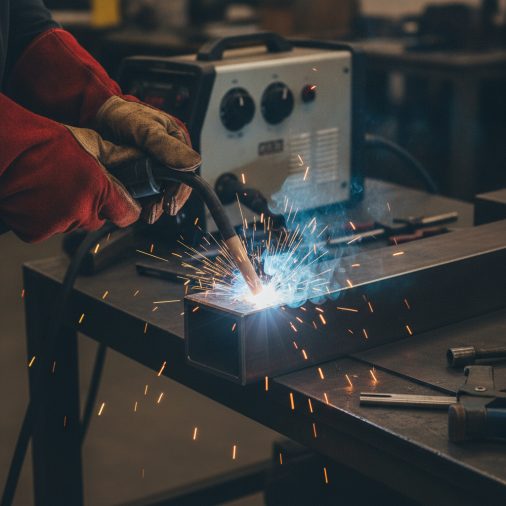
You’re setting up for a project and your machine tops out at 200 amps. Before you strike an arc, it’s worth knowing exactly how much metal that output can realistically handle — and where it starts to fall short.
At 200 amps, most welders can handle mild steel up to approximately 1/2 inch (12.7 mm) thick in a single pass with stick welding, and roughly 3/8 inch (9.5 mm) with MIG. TIG welding at 200 amps typically suits steel up to about 1/4 inch (6.4 mm) in a single pass. These are starting estimates — actual penetration depends on the process, electrode or wire type, joint design, welding position, and material.
Why Amperage Alone Doesn’t Tell the Full Story
Amperage controls how much heat enters the base metal, but it’s only one variable in the equation. The welding process, electrode diameter, shielding gas, polarity, travel speed, joint type, and even the position you’re welding in all affect how deep that heat actually penetrates.
A 200-amp stick welder running a 5/32 inch (4.0 mm) E6011 rod on a flat butt joint will perform very differently from a 200-amp TIG torch running a 3/32 inch tungsten on the same material in an overhead position.
Think of amperage as a budget. How efficiently you spend it depends on every other variable around it.
Thickness Capacity by Welding Process
Stick Welding (SMAW)
Stick welding is the most forgiving process at 200 amps in terms of raw penetration. A 5/32 inch E6010 or E6011 electrode running near 200 amps on DCEP can penetrate well into 3/8 to 1/2 inch mild steel in a single pass on a properly prepared joint.
For material at or near 1/2 inch, a multi-pass technique — using multiple weld beads to build up the joint — is the more reliable approach. Single-pass welds on thicker stock risk incomplete fusion at the root.
Stainless steel and low-hydrogen electrodes such as E7018 may require slightly higher amperage per rod diameter, so maximum thickness capacity can be a bit lower for those applications at the same 200-amp ceiling.
For a detailed amperage-to-thickness reference across common electrode sizes, the stick welding amps to metal thickness chart covers the most common rod and material combinations.
MIG Welding (GMAW)
MIG welding at 200 amps typically handles mild steel up to about 3/8 inch (9.5 mm) in a single pass with solid wire and a shielding gas such as 75/25 Argon/CO₂. With proper joint preparation, multi-pass welds can reach 1/2 inch on some machines.
Wire diameter matters significantly here. A 0.035 inch wire running near its upper amperage range gives decent penetration, while stepping up to 0.045 inch wire — if your machine supports the wire feed speed — pushes that capacity slightly further.
Welding position also limits effective thickness. A flat or horizontal weld at 200 amps will penetrate more reliably than the same settings in a vertical or overhead position, where gravity pulls the puddle away from the joint.
Flux-Core Welding (FCAW)
Self-shielded and gas-shielded flux-core wire tends to run hotter and penetrate deeper than solid MIG wire at equivalent wire feed speeds. At 200 amps, flux-core on mild steel can realistically handle 1/2 inch in a single pass under favorable conditions, and thicker material with multiple passes.
The trade-off is increased spatter and slag removal, plus stricter ventilation requirements since flux-core generates more fume than solid wire with shielding gas.
TIG Welding (GTAW)
TIG is the most heat-precise of the common processes, but it puts all that heat control in your hands. At 200 amps on mild steel, a single pass can fuse material around 1/4 inch (6.4 mm) effectively. Thicker sections require multiple passes and careful interpass temperature management.
Aluminum requires AC current and generally needs more amperage per thickness than steel. A 200-amp AC TIG machine can handle aluminum plate up to roughly 3/16 to 1/4 inch before penetration becomes marginal in a single pass.
For a breakdown of TIG-specific amperage settings by tungsten size and material thickness, the TIG welding amps to metal thickness chart is a useful starting reference.
Process Comparison at 200 Amps
| Process | Max Single-Pass (Mild Steel) | Multi-Pass Potential | Notes |
|---|---|---|---|
| Stick (SMAW) | ~3/8–1/2 in (9.5–12.7 mm) | Good | Depends on electrode type and diameter |
| MIG (GMAW) | ~3/8 in (9.5 mm) | Moderate | Wire size and gas mix matter |
| Flux-Core (FCAW) | ~1/2 in (12.7 mm) | Good | Higher fume output; good outdoor penetration |
| TIG (GTAW) | ~1/4 in (6.4 mm) | Moderate | Precise control; slower deposition rate |
These figures apply to mild steel in the flat position under reasonable conditions. Stainless steel, aluminum, and other alloys will shift these numbers. Always treat them as a starting point rather than a hard specification.
How Material Type Affects the Limit
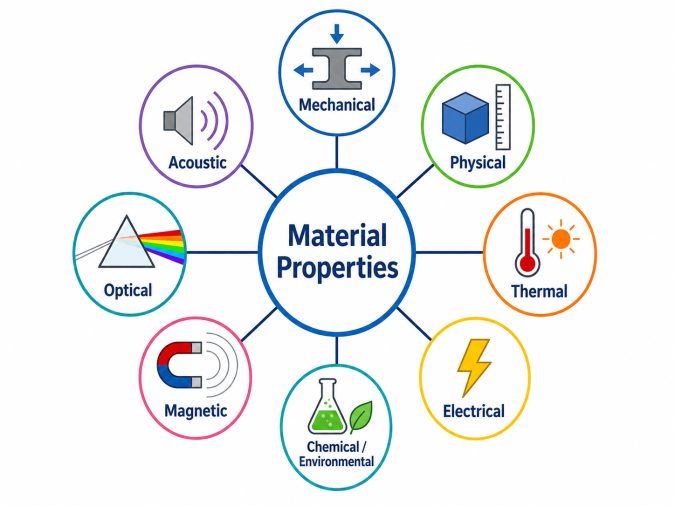
Mild steel is the most forgiving material at 200 amps. Its thermal conductivity and melting point make it well-suited to the amperage ranges that typical 200-amp machines produce.
Aluminum conducts heat away from the weld zone much faster than steel, which means you need more amperage to achieve the same fusion depth. A 200-amp TIG or MIG machine begins to feel underpowered on aluminum plate thicker than 3/16 inch, particularly in a single pass.
Stainless steel is more sensitive to heat input. Excessive heat causes distortion and can reduce corrosion resistance near the weld. At 200 amps, the effective thickness limit for stainless is generally lower than for mild steel, and slower travel speeds should be avoided to reduce heat buildup.
Cast iron, high-carbon steel, and tool steels introduce preheat and interpass temperature requirements that further limit what 200 amps can comfortably achieve without cracking or distortion.
The Role of Joint Design and Preparation
A square butt joint on 1/2 inch plate is difficult to fuse completely at 200 amps. Beveling the joint edges to 30–37.5 degrees per side to create a V-groove allows the arc to reach the root and deposit filler where it matters most.
Poor fit-up, gaps that are too large or too tight, and mill scale or contamination on the joint face all reduce effective penetration regardless of amperage. Clean, well-fitted joints consistently outperform high amperage on poorly prepared material.
For thicker sections beyond 1/2 inch, a double-V or J-groove joint distributes the work over multiple passes and reduces distortion compared to trying to burn through with one high-heat pass.
Multi-Pass Welding: Pushing Beyond Single-Pass Limits
Multi-pass welding is the practical answer when base metal thickness exceeds what a single 200-amp pass can fully fuse. Each pass deposits a layer of weld metal, and successive passes add both fill and fusion into the sidewalls and previous bead.
Between passes, allow the weld to cool to a manageable interpass temperature — typically below 250–300°F (121–149°C) for most carbon steels, though the exact limit depends on the material and any applicable welding procedure. For stainless and heat-sensitive alloys, interpass temperature control is critical.
Always clean slag, spatter, and oxide between passes. Trapped slag between passes is one of the most common defects in multi-pass welds and reduces joint integrity.
When 200 Amps Is Not Enough
For plate thicker than 3/4 inch (19 mm), a 200-amp machine — regardless of process — is working at or beyond its practical limit even with good joint preparation and multiple passes. The deposition rate is low, welding time increases significantly, and the risk of incomplete fusion rises.
Structural fabrication, pressure vessels, heavy equipment repair, and load-bearing connections on thick material typically require higher amperage machines, qualified welding procedures, and often independent inspection. A visually clean bead on thick plate does not confirm adequate fusion or structural soundness.
If your project falls into one of these categories, consult a certified welding inspector or welding engineer before proceeding with undersized equipment.
Practical Settings as a Starting Reference
These are general starting points only. Always consult your machine’s output chart, electrode manufacturer data sheet, or welding procedure specification for the actual application.
- Stick / 3/16 in steel / E6013 1/8 in rod: roughly 90–130 A
- Stick / 3/8 in steel / E6010 5/32 in rod: roughly 140–175 A
- Stick / 1/2 in steel / E7018 5/32 in rod: roughly 150–200 A (multi-pass recommended)
- MIG / 1/4 in steel / 0.035 in wire / 75/25 gas: roughly 160–185 A
- MIG / 3/8 in steel / 0.035–0.045 in wire: near 200 A with multiple passes
- TIG / 1/8 in steel / 3/32 in tungsten: roughly 100–140 A
- TIG / 1/4 in steel: roughly 175–200 A depending on joint and position
Safety Considerations at Higher Amperage
Running a machine near its maximum output generates more heat — in the arc, in the torch or gun, and in the work itself. Check your machine’s duty cycle at 200 amps before sustained welding. Exceeding the duty cycle risks overheating the machine and can damage internal components.
Thicker material retains heat longer. Use insulated clamps, work-holding tools, and appropriate leather welding gloves when repositioning hot metal. Burns from residual heat in thick plate are common and preventable.
Ensure adequate ventilation. Welding thicker plate often means longer arc-on time and more fume exposure. A proper welding respirator or local exhaust ventilation is important, especially in enclosed spaces.
Wear a welding helmet rated for the process. Stick and flux-core arcs at 200 amps typically call for a shade 10–12 lens. TIG at lower amperages may use shade 9–11. Check the manufacturer’s shade recommendation for your machine and process.
Frequently Asked Questions
Can a 200-amp welder handle 1/2 inch steel?
Yes, but with limitations. Stick and flux-core processes at 200 amps can fuse 1/2 inch mild steel, but a single pass is unlikely to produce complete root fusion on a square-cut joint. Beveling the edges, using a proper root pass, and adding fill and cap passes gives the best result. Multi-pass technique is strongly recommended at this thickness.
Is 200 amps enough for welding structural steel?
For lighter structural applications — such as 1/4 to 3/8 inch angle iron, flat bar, or tube — 200 amps is generally workable. For heavier structural sections or any load-bearing fabrication subject to code, the project likely requires a qualified welding procedure, higher amperage capability, and inspection. Machine amperage alone does not determine code compliance or structural adequacy.
What is the thickest aluminum a 200-amp TIG can weld?
On AC TIG, 200 amps can manage aluminum plate up to roughly 3/16 to 1/4 inch in a single pass under good conditions. Aluminum’s high thermal conductivity pulls heat away quickly, so penetration is shallower than on steel at the same amperage. Preheating thicker aluminum slightly can help, but anything beyond 1/4 inch typically benefits from a higher-amperage machine.
Does welding position affect maximum thickness at 200 amps?
Yes, noticeably. Flat and horizontal positions allow the puddle to stay in the joint and maximize penetration. In vertical and overhead positions, gravity works against puddle control, and effective penetration decreases. You may need to reduce amperage slightly in out-of-position welds to prevent sag, which also reduces the thickness you can reliably fuse in a single pass.
Can I weld thicker metal by slowing my travel speed?
Slowing travel speed increases heat input per unit length, which can slightly improve fusion on borderline thickness. However, too slow a travel speed causes excessive heat buildup, distortion, burn-through on thinner areas, and wide, convex beads with poor mechanical properties. The better approach for genuinely thick material is correct joint preparation and multiple passes rather than an extremely slow single pass.
What electrode size should I use for maximum penetration at 200 amps with stick welding?
A 5/32 inch (4.0 mm) rod is typically the right match for amperage in the 140–200 amp range. Larger diameter rods such as 3/16 inch require more current than most 200-amp machines can sustain reliably. Smaller rods such as 1/8 inch run at lower amperage and produce a narrower bead with less deposition, which means more passes on thick material. Consult the electrode manufacturer’s recommended amperage range for the specific rod classification.
Knowing Your Machine’s Real Limit
A 200-amp output gives solid capability across stick, MIG, flux-core, and TIG processes, but the realistic thickness ceiling depends on the process, material, joint preparation, and welding position — not the amperage rating alone. For mild steel in practical shop conditions, plan on 3/8 to 1/2 inch as a reasonable working limit, with beveled joints and multiple passes on anything near that upper range. For structural, pressure-containing, or safety-critical work on thick plate, verify that your procedure, equipment, and qualification level match the job before you weld.


