A cracked cast iron part doesn’t always mean it’s ready for the scrap pile — but it does mean you need to be careful. I’ve seen engine housings, old machine bases, and plumbing fittings fail right at the worst moment, and rushing the repair only made things worse. That’s where knowing How to JB Weld Cast Iron becomes genuinely useful in a workshop or repair job.
Cast iron is tricky because it’s brittle, porous, and sensitive to heat. One wrong move with welding or heating, and the crack spreads instead of sealing. That’s why epoxy repair methods like JB Weld often become the smarter option when you need a strong, low-heat fix that doesn’t risk warping or further damage.
The real value here isn’t just sticking two broken pieces together — it’s restoring function in a way that holds up under pressure, vibration, and time. Done right, it can save expensive parts, prevent downtime, and get equipment back in service without a full replacement.
I’ll walk through how to prep the surface properly, how to apply JB Weld for maximum strength, and the common mistakes that cause repairs to fail early. Here’s how to make a cast iron repair actually last.
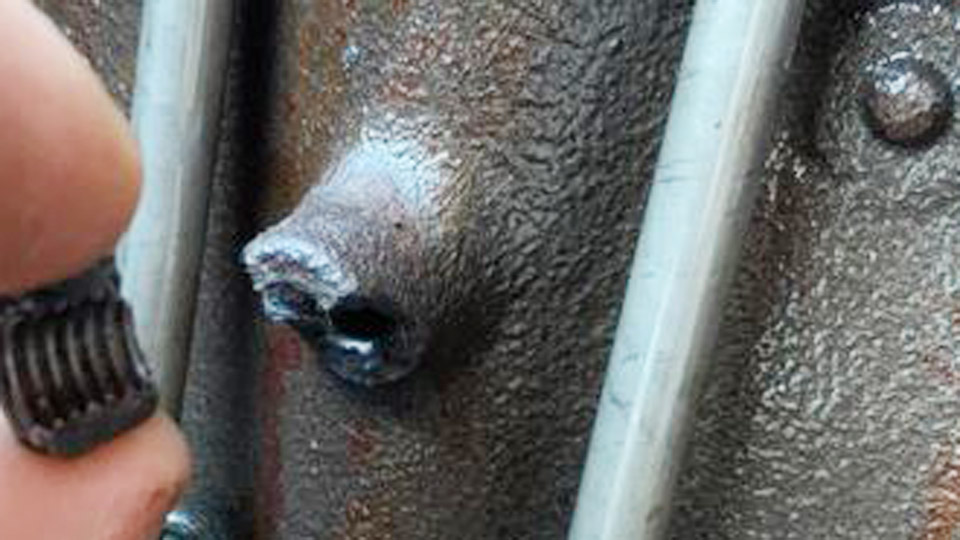
Image by reddit
Why Cast Iron Repairs Matter in the Shop
Cast iron’s high carbon content makes it brittle and prone to cracking under stress or sudden temperature changes. A small crack in a cylinder head or exhaust manifold can sideline expensive equipment. Traditional arc welding demands nickel rods, careful peening, and controlled cooling to avoid turning a small fix into a bigger fracture.
JB Weld, a two-part epoxy steel-filled compound, bonds mechanically and chemically to properly prepared surfaces. It handles temperatures up to 500°F or more with high-temp versions, fills voids, and creates a repair that’s often stronger than the surrounding cast iron in shear or compression.
I’ve used it on manifolds that see exhaust heat, on machinery bases that take vibration, and on decorative pieces where appearance counts. The key is understanding its strengths and limits.
Understanding JB Weld for Cast Iron
What it is: JB Weld Original is a steel-reinforced epoxy that cures to a metallic gray, machinable finish. Variants include JB Kwik for faster sets, SteelStik putty for easier application, and ExtremeHeat formulas for higher temperatures.
How it works: The resin and hardener mix to create a chemical reaction that hardens into a tough, heat-resistant polymer embedded with metal particles. It bonds by filling microscopic pores and irregularities in the cast iron surface.
When to use it: Non-critical or low-to-moderate stress applications, cosmetic fixes, filling porosity, or temporary repairs until a proper weld can be done. Great for hobby projects, antique restoration, or when you lack welding equipment.
When to skip it: Highly stressed structural parts under heavy tension, cyclic loading, or where failure could cause safety issues. In those cases, I’ll opt for actual welding with 99% nickel rods or brazing.
Surface Preparation: The Real Secret to Success
Every failed JB Weld story I’ve heard traces back to poor prep. Cast iron is porous and often covered in oil, carbon, or scale.
Start by grinding or sanding the area to remove rust, paint, and loose material. Create a rough profile—60-80 grit works well. I use a wire wheel or flap disc on an angle grinder, then switch to finer abrasives for smoothing.
Degrease thoroughly. Hot soapy water first, then acetone, brake cleaner, or isopropyl alcohol. Wipe multiple times with clean rags until no residue shows. For oily engine parts, I sometimes use a degreaser followed by solvent.
For cracks, drill small stop holes at each end to prevent propagation. V-groove the crack with a grinder for better epoxy penetration. On larger breaks, consider adding mechanical reinforcement like pins, screws, or fiberglass cloth embedded in the epoxy.
Pro tip from the bench: Warm the part slightly with a heat gun (around 100-120°F) before cleaning. This opens pores and drives out trapped oil or moisture.
Step-by-Step Guide: How to Apply JB Weld on Cast Iron
Gather materials: JB Weld (Original for max strength), mixing surface (cardboard or scrap), putty knife or applicator, gloves, safety glasses, sandpaper/grinder, solvents, and clamps or supports.
Prep the surfaces as described above. Ensure they’re completely dry.
Mix the epoxy. Squeeze equal parts from the syringe or tub. Mix for at least 2-3 minutes until uniform gray—no streaks. For SteelStik putty, knead until color is consistent.
Apply generously. Work it into the crack or onto the joint. For better fill, apply a thin first layer, let it tack, then build up. Press firmly to eliminate air pockets.
Reinforce if needed. For larger repairs, embed wire mesh, fiberglass, or mechanical fasteners while the epoxy is wet.
Smooth and shape. Use a putty knife or gloved finger. Remove excess before it sets.
Cure properly. Room temperature cure takes 15-24 hours for full strength, but longer is better. JB Weld gains strength over days. For faster results, cure at 100-150°F. Avoid using the part under load for at least 24 hours.
I once repaired a cracked cast iron pulley this way. After full cure and light machining, it ran smoothly for years.
Comparing JB Weld to Traditional Cast Iron Welding
JB Weld Pros:
- No heat distortion or cracking risk
- Easy for beginners
- Machinable and paintable
- Works in tight spaces without equipment
- Cost-effective for small jobs
JB Weld Cons:
- Lower tensile strength than a good weld
- Not ideal for high-vibration or high-heat continuous duty without high-temp formula
- Requires excellent surface prep
- Can fail if joint moves during cure
Welding Pros: Stronger metallurgical bond, better for structural loads.
Welding Cons: Risk of cracking, needs preheat (500-1200°F depending on method), post-weld stress relief, specialized rods (ENi-CI or nickel 99), and skill.
For many shop repairs, JB Weld handles 70-80% of what I see on non-critical castings.
Machine Settings and Process Tips (If You Combine Methods)
While JB Weld needs no settings, I sometimes tack with a quick brazing pass or use it to seal after welding. For pure epoxy work, focus on temperature control during cure.
If welding first, use low amperage (around 60-90A for 1/8" nickel rods on thin sections) with DCEN or AC depending on your machine. Always peen the weld while hot.
Common Mistakes Beginners and Pros Make
- Skipping thorough degreasing—oil prevents bonding.
- Not mixing long enough—weak spots form.
- Applying too thin a layer—build thickness for strength.
- Loading the repair too soon.
- Using quick-set versions for high-strength needs (Original is usually tougher).
- Ignoring temperature limits—standard JB Weld softens above 500°F continuous.
I ruined one repair early on by rushing the mix. Lesson learned: patience in prep and mixing pays off.
Material Compatibility and Variants
JB Weld bonds well to cast iron, steel, aluminum, and many other metals. For high-heat applications like exhausts or stoves, use JB Weld ExtremeHeat. SteelStik putty excels for vertical or overhead repairs because it stays put.
On porous cast iron, multiple thin layers often outperform one thick pour.
Real-World Shop Examples
I fixed a cracked cast iron engine mount on a vintage tractor using JB Weld plus reinforcing screws. It’s still holding after heavy use. Another time, a broken stove grate got a SteelStik repair—functional and looks original after painting.
For a water pump housing with porosity, I filled pits after cleaning, then machined flat. Perfect seal.
Safety Considerations
Wear gloves—epoxy irritates skin. Work in ventilated areas. Avoid breathing fumes during mixing or sanding cured material. Support the part so it doesn’t shift. If repairing pressure vessels or critical components, consult a professional or replace the part.
Pros and Cons Table
| Aspect | JB Weld | Traditional Welding |
|---|---|---|
| Strength | Excellent in compression/shear | Superior tensile |
| Heat Required | None | High preheat |
| Skill Level | Beginner-friendly | Experienced welder |
| Distortion Risk | None | High if not controlled |
| Machinability | Good | Depends on process |
| Cost for Small Repair | Low | Higher (rods, gas, time) |
| Temperature Limit | Up to 500-2400°F variants | Much higher |
Advanced Tips for Better Results
- Warm the casting before application to improve flow and adhesion.
- For cracks, create a “keyway” by grinding a dovetail or multiple grooves.
- Sand cured JB Weld with progressively finer grits for a factory look.
- Paint over it with high-temp engine enamel.
- Test small repairs on scrap cast iron first.
Taking Your Repairs Further
Once comfortable with basic applications, experiment with hybrids: weld where possible for strength, then use JB Weld to seal porosity or finish cosmetically. Many fabricators keep both in their toolkit.
You now have the practical knowledge to tackle cast iron repairs confidently—whether it’s a quick shop fix or a weekend restoration project. Understanding surface prep, proper mixing, and realistic expectations separates successful repairs from failures.
Never trust a repair you can’t inspect from all angles. Take the time to grind a slight bevel, clean like your paycheck depends on it, and give the epoxy every advantage to bond. A few extra minutes in preparation beats hours of rework later.
FAQ
How strong is JB Weld on cast iron compared to the original material?
It creates a bond often stronger than the surrounding cast iron in many applications, especially compression. However, it won’t match the parent metal’s tensile strength in high-load tension situations. Proper prep makes the difference.
Can JB Weld withstand engine heat or exhaust temperatures?
Standard Original handles intermittent heat well up to about 500°F. For hotter applications, use ExtremeHeat versions. I’ve seen manifold repairs last years, but monitor for softening.
Do I need to preheat cast iron before applying JB Weld?
No preheat is required, which is a major advantage. A mild warming with a heat gun helps drive out moisture and improves flow, but avoid high temperatures that could crack the casting.
How long does JB Weld last on cast iron repairs?
With good prep, repairs can last indefinitely in non-extreme conditions. Vibration, chemicals, or extreme cycling shorten life. Many shop repairs are still solid after a decade.
Is JB Weld better than welding for beginners fixing cast iron?
Absolutely for most hobby and light-duty repairs. It removes the biggest risks of welding cast iron—cracking and distortion—while delivering reliable results with minimal equipment.