

A fillet weld can look big, solid, and perfectly fine on the surface — and still fail under load. I’ve seen it happen on brackets and frames where everything looked strong, but the joint cracked right along the root.
That’s when understanding What Is Throat Thickness in Welding stopped being just a textbook term and started being something I paid close attention to on every fillet weld I laid down.
In the shop, most beginners focus on leg size because it’s easy to see and measure. But the real strength of a fillet weld comes from the throat — the shortest distance from the root to the face of the weld. If that measurement isn’t right, your weld might not carry the load it’s supposed to, no matter how pretty it looks.
Getting throat thickness right matters for structural safety, inspection approval, and long-term durability. Too small, and you risk failure. Too large, and you waste filler metal, time, and heat input — sometimes even causing distortion.
I’ll break it down in simple, practical terms — how to measure it, how to calculate it, and how to make sure your welds are actually as strong as they look. Here’s what you really need to know before striking your next arc.
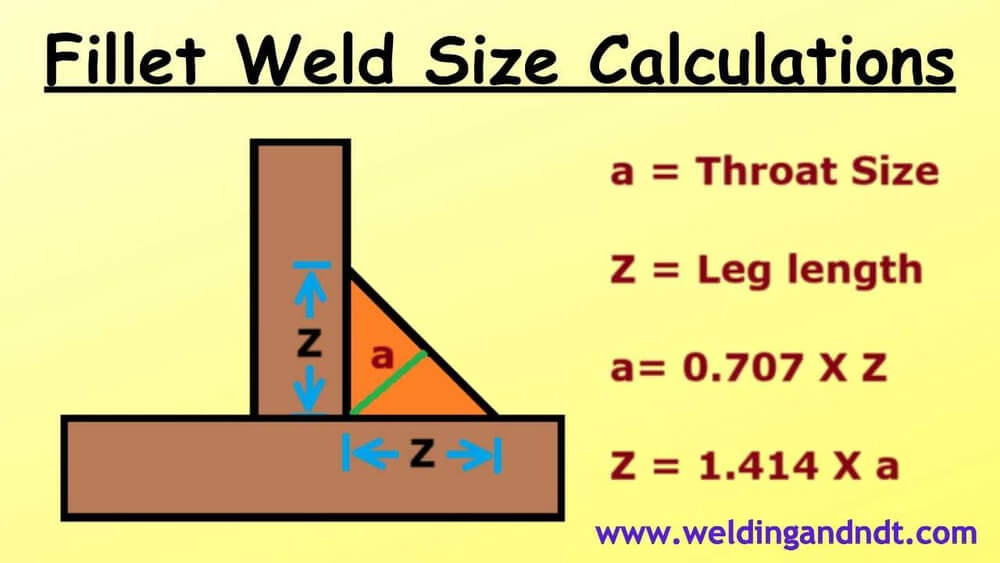
The Meaning Of Throat Thickness In Welding
Throat thickness is a specific measurement in welding that tells us the shortest distance from the root of a weld to its face. In simple terms, it’s the “deepest part” of the weld that actually resists the force trying to pull the joint apart.
In fillet welds, which are among the most common types, throat thickness is measured as the straight line from the weld root (where the two metal pieces meet) to the opposite point on the weld face.
This measurement is critical because it represents the smallest cross-section that will bear the load. If the throat is too thin, the joint may fail even if the weld looks large from the outside.
For groove welds, the concept is similar, but the throat thickness often refers to the effective thickness of the weld that contributes to the joint’s strength. In both cases, throat thickness is not about the total amount of weld metal, but about the part of the weld that actually supports stress.
Why Throat Thickness Is So Important
Many people focus only on the size of the weld bead, but the real strength of a joint comes from its throat thickness. Here’s why:
Determines Weld Strength: The throat is the “core” of the weld. If it’s too small, the joint can break even if the weld looks good from the outside.
Controls Load Carrying Ability: The thicker the throat, the more force the weld can handle. It’s the main factor in resisting tension, compression, and shear forces.
Safety and Standards: Building codes and engineering standards often specify a minimum required throat thickness for different applications. Ignoring this can lead to unsafe structures.
Material Efficiency: Making the weld throat too thick wastes material and time. If it’s too thin, the weld is weak. Correct throat thickness saves resources and ensures safety.
An easy way to understand this is to imagine a chain link. The link is only as strong as its narrowest part. The throat thickness is like that—if it’s too narrow, the whole chain (or weld) is weak.
Key Terms Related To Throat Thickness
Understanding throat thickness also means knowing how it fits with other welding terms. Here’s a quick guide:
Actual Throat Thickness: The real, measured depth of the weld from root to face.
Theoretical Throat Thickness: The depth that should exist according to the design or drawing. This is what engineers specify.
Effective Throat Thickness: The part of the throat that actually resists force, considering any joint preparation or backing.
Each of these terms matters in different situations. For instance, a drawing might show a theoretical throat thickness, but poor welding technique could lead to a smaller actual throat thickness. In the field, inspectors often measure the actual throat to see if it meets the design.
How Throat Thickness Is Measured
Welders and inspectors use different methods to measure throat thickness, depending on the type of weld. Here’s how it’s typically done:
Measuring In Fillet Welds
The most common method is using a fillet weld gauge. This simple tool is designed to measure both the leg length and the throat thickness of a fillet weld. The gauge is placed against the weld, and the scale shows if the throat meets the required size.
Direct Measurement: Place the gauge at the weld root and read the shortest distance to the face.
Calculation: For a symmetrical fillet weld, throat thickness (t) can be calculated as t = leg length × 0.707. This is because the throat forms a right triangle with the legs.
Measuring In Groove Welds
For groove welds, the process is a bit more complex:
Weld Cross Section: Sometimes, a sample weld is cut and polished to show the cross-section, and the throat is measured directly.
Nondestructive Testing (NDT): Tools like ultrasonic thickness gauges can measure throat thickness without cutting the weld.
Example: Measuring A Fillet Weld
Suppose you have a fillet weld with a leg length of 10 mm. The theoretical throat thickness would be:
10 Mm × 0.707 = 7.07 Mm
If your actual measurement is less than this, the weld may not be strong enough.
Types Of Welds And Throat Thickness
Throat thickness is most commonly discussed with fillet welds, but it plays a role in other joint types too.
Fillet Welds
These welds join two surfaces at a right angle. They are shaped like a triangle, and throat thickness is a key measurement. Fillet welds are used in T-joints, lap joints, and corner joints.
Groove Welds
Groove welds join two pieces edge to edge, usually with some preparation (like a V-groove or U-groove). Here, throat thickness measures the full penetration of the weld.
Slot And Plug Welds
In these joints, the concept of throat thickness is less common but still applies if the weld is designed to carry load through its thickness.
Comparison Of Throat Thickness In Different Weld Types
| Weld Type | How Throat Thickness Is Measured | Typical Range |
|---|---|---|
| Fillet Weld | Direct (gauge) or calculated (leg × 0.707) | 3–10 mm |
| Groove Weld | Cross-section or NDT | Matches base metal thickness |
| Plug/Slot Weld | Thickness of weld metal filling the hole | Depends on hole size |
How To Specify Throat Thickness In Drawings
Blueprints and welding symbols use throat thickness as a key part of design. Here’s how you’ll see it shown:
- A number placed next to the weld symbol (e.g., 6) often means a required throat thickness of 6 mm.
- Sometimes, the required leg length is shown instead, but throat thickness can be calculated from this.
It’s important to read the drawing carefully. Mistaking leg length for throat thickness can lead to under- or over-sized welds.
Real-world Example: Throat Thickness Impact
Imagine building a steel frame for a warehouse. The design calls for a fillet weld with a 10 mm throat thickness. If a welder mistakenly creates a weld with only 6 mm throat, the joint will be much weaker.
Let’s see the difference in strength:
- A 10 mm throat can handle about 67% more load than a 6 mm throat (because strength increases with the area, and area increases with the square of the thickness).
- Over a 1-meter weld, this could mean the difference between a safe building and one that fails under load.
Many welding failures in bridges, towers, and machinery happen because throat thickness was not achieved correctly—even if the weld looked fine.
Common Mistakes About Throat Thickness
Even experienced welders sometimes make errors about throat thickness. Here are mistakes you should avoid:
Confusing Leg Length and Throat Thickness: The leg length is the length of the weld along the sides, but the throat is the critical measurement for strength. Don’t mix them up.
Relying Only on Appearance: A wide weld bead does not guarantee enough throat thickness. Always measure or calculate.
Ignoring Welding Position: Overhead or vertical welding can lead to smaller throat thickness if technique is poor.
Not Allowing for Root Gaps: In groove welds, a small root gap can reduce effective throat thickness.
Skipping Inspection: Always check welds with gauges or NDT, especially for critical joints.

Credit: homework.study.com
Throat Thickness And Weld Quality
Throat thickness is not only about strength—it also affects weld quality. If the throat is too small, there may be incomplete fusion or penetration. If it’s too large, the weld may have excess metal, leading to potential cracks or distortion.
Proper throat thickness helps ensure:
- Uniform stress distribution: The weld can handle the loads it was designed for.
- Good appearance: The weld looks professional and meets code.
- Economic use of materials: No wasted filler or time.
Calculating Throat Thickness: Formulas And Examples
For Fillet Welds
As mentioned earlier, the standard calculation is:
Throat Thickness (t) = Leg Length (a) × 0.707
This value (0. 707) comes from the geometry of a right triangle, since the throat is the diagonal of a triangle with equal legs.
Example: If the drawing calls for a 12 mm leg length:
T = 12 × 0.707 = 8.484 Mm
For Unequal Leg Fillet Welds
If the legs are not equal, the calculation is more complex:
T = (leg1 × leg2) / (leg1 + leg2) × 0. 707
This formula is less common but shows up in special cases.
For Groove Welds
For full penetration groove welds, the effective throat thickness is usually the thickness of the thinner part being joined. In partial penetration welds, it’s the actual depth of weld metal.

Credit: www.colliewelding.com
Throat Thickness And Welding Codes
Welding codes and standards (like AWS D1. 1, ISO, or EN) give strict rules about throat thickness. They specify the minimum required for various structures—bridges, pipelines, pressure vessels, and more.
Key points from codes:
- Minimum throat thickness must match the design load.
- Over-welding (making the throat too thick) is discouraged due to waste and distortion.
- Inspection methods (visual, gauges, NDT) are specified for quality assurance.
Failure to meet these standards can result in failed inspections, costly rework, or even accidents.
Throat Thickness Vs. Other Weld Dimensions
It’s easy to mix up throat thickness with other weld measurements. Here’s a comparison to clarify:
| Dimension | Where Measured | Why It Matters |
|---|---|---|
| Throat Thickness | Root to face (deepest part) | Main factor for weld strength |
| Leg Length | Along each side of fillet | Used for weld size, but less direct for strength |
| Weld Width | Across the face of the bead | Affects appearance, not strength |
| Weld Length | Along the joint | Longer welds distribute load |
Practical Tips For Achieving Correct Throat Thickness
Getting the right throat thickness takes practice and attention. Here are some practical tips:
Use the Correct Settings: Adjust your welding machine for the right current, voltage, and speed based on material thickness.
Check Fit-Up: Make sure the pieces are aligned as specified. Gaps or misalignment can change the actual throat.
Use Weld Gauges: Always measure the finished weld. Don’t guess.
Watch Your Technique: Angle, speed, and bead placement affect throat thickness. Ask an experienced welder to watch and give feedback.
Record Your Results: Keep a log of welds and throat measurements, especially for critical projects.
Learn From Mistakes: If a weld fails inspection, check the throat thickness first.
Advanced Insights: What Beginners Miss
Many new welders don’t realize how much welding position affects throat thickness. For example, in overhead welding, gravity can pull molten metal away from the joint, making it harder to achieve the right throat. Always adjust technique for position.
Another overlooked point is joint preparation. If the edges are not cleaned or beveled correctly, even a thick weld won’t have good throat thickness. Spend time on prep—it pays off in stronger welds.
Finally, remember that heat input plays a role. Too much heat can cause the weld to sag, reducing throat thickness. Too little, and the weld may not penetrate fully.
How Throat Thickness Affects Welded Structures
The right throat thickness isn’t just an abstract number. It affects how bridges, buildings, machinery, and vehicles perform. For example:
- Bridges: Throat thickness helps resist the huge forces from vehicles and weather.
- Pressure Vessels: Proper throat thickness prevents leaks and ruptures under pressure.
- Cranes and Lifting Equipment: These rely on welds with the right throat to safely lift heavy loads.
In all these cases, small errors in throat thickness can lead to big problems. That’s why inspection and measurement are taken so seriously.
Throat Thickness In Different Welding Processes
Various welding processes can achieve the required throat thickness, but the technique matters.
- Shielded Metal Arc Welding (SMAW): Control the rod angle and travel speed for correct throat.
- Gas Metal Arc Welding (GMAW/MIG): Watch out for excessive reinforcement (over-welding).
- Submerged Arc Welding (SAW): Good for thick sections, but requires careful setup.
- Flux-Cored Arc Welding (FCAW): Can fill large joints quickly, but must monitor for root gaps.
Some processes are better for achieving deep throats in thick materials, while others are more suited for small, precise welds. Choose the right process for the job.

Credit: www.youtube.com
The Role Of Throat Thickness In Inspection
Inspectors use throat thickness as a key indicator of weld quality. They may use:
- Visual Inspection: For surface measurements and obvious defects.
- Gauges: For quick checks on fillet welds.
- Ultrasonic or Radiographic Testing: For internal measurements, especially in critical joints.
If the throat is too small, repairs are usually required. In severe cases, the whole component may be rejected.
Industry Standards And Throat Thickness
Organizations like the American Welding Society (AWS), International Organization for Standardization (ISO), and others set rules for weld design. Their codes specify:
- Minimum throat thickness for safety
- Inspection methods
- Tolerances and acceptable errors
Final Thoughts
Welding is a skill where details matter. By understanding and controlling throat thickness, you build safer, stronger, and more reliable structures. Always measure, check standards, and never guess—your work (and others’ safety) depends on it.
Frequently Asked Questions
What Is The Difference Between Leg Length And Throat Thickness?
Leg length measures the sides of a fillet weld, while throat thickness is the shortest distance from the weld root to the face. Throat thickness is more important for strength, while leg length is used for sizing the weld.
How Do I Measure Throat Thickness In The Field?
Use a fillet weld gauge for fillet welds. For groove welds, you might need ultrasonic testing or cross-section measurement. Always check the method required by your project or code.
Why Is Throat Thickness More Important Than Weld Size?
Even a large-looking weld can be weak if its throat thickness is small. Throat thickness is the part of the weld that actually resists the load, so it’s the main factor for strength.
Can I Make The Throat Thickness Larger Than Required?
It’s possible, but not recommended. Over-welding wastes material, increases costs, and can cause distortion or cracking. Always aim for the specified thickness.
What Happens If The Throat Thickness Is Too Small?
If the throat is too thin, the weld can fail under load—even if the bead looks good. This can lead to structural failure, failed inspections, and safety risks.


