
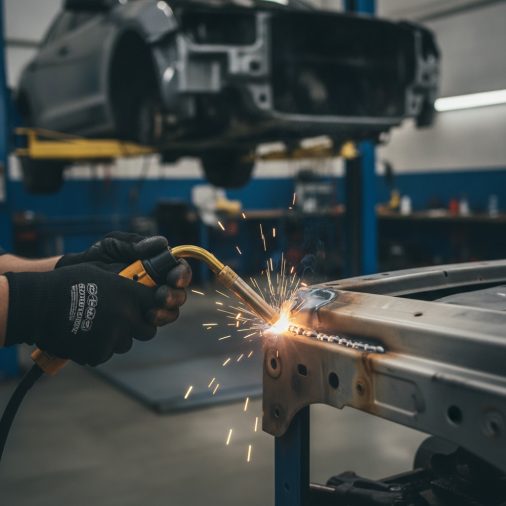
If you’re staring at a rusted floor pan, a cracked frame rail, or a dented quarter panel, the question of which welder to grab matters more than most people realize. MIG welding is one of the most common methods hobbyists and professionals reach for — but is it actually the right tool for automotive work? The answer depends on what you’re repairing, the metal thickness involved, and how much control you need. This article covers everything you need to know to use MIG welding confidently and correctly on a vehicle.
Quick Answer
Yes, MIG welding is one of the best methods for automotive repair. It works well on sheet metal, floor pans, frame sections, and body panels. With the right settings and wire, MIG produces strong, clean welds on the thin-gauge steel common in most vehicles. It’s faster and more forgiving than TIG, making it the go-to choice for most auto body and structural repair work.
Why MIG Works So Well on Cars
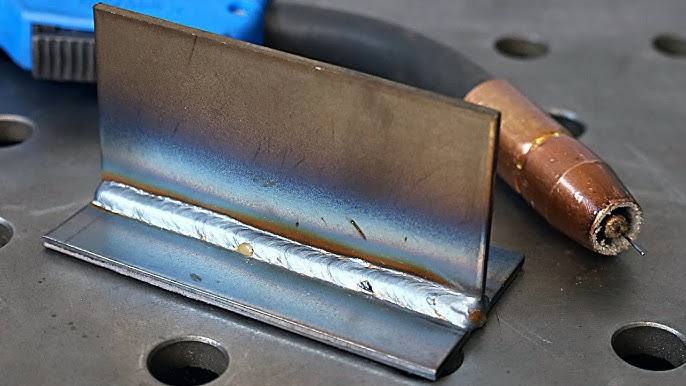
Most automotive steel falls between 18-gauge and 22-gauge — thin enough that heat management becomes critical. MIG welding, or Metal Inert Gas welding (technically GMAW — Gas Metal Arc Welding), feeds wire continuously through the gun while shielding gas protects the weld pool from contamination. That combination gives you consistent heat input and a fast travel speed, both of which reduce the risk of warping thin sheet metal.
Compared to stick welding, MIG produces far less spatter and requires less cleanup. Compared to TIG, it’s significantly faster and easier to learn. For most automotive applications — patching rust, welding in replacement panels, repairing frame damage — MIG hits the right balance of speed, strength, and accessibility.
Field experience consistently shows that a properly set MIG welder in the hands of a reasonably skilled operator produces results that meet or exceed factory weld quality on body panels.
What Types of Automotive Repairs MIG Handles Best
MIG welding covers a wide range of vehicle repair scenarios. Here’s where it performs best:
Body Panel Replacement
Cutting out damaged or rusted panels and welding in new ones is a classic MIG application. Butt welds and lap welds on door skins, quarter panels, and rockers are all manageable with MIG.
Floor Pan Repair
Floor pans are typically 18–20 gauge steel. MIG handles this thickness easily, especially when using plug welds to replicate factory spot welds.
Frame and Structural Repair
Heavier frame sections — typically 1/8″ to 3/16″ steel — are well within MIG’s capability. A properly set machine with .030″ or .035″ wire will produce solid penetration on these thicknesses.
Patch Panels
Small rust repairs using fabricated or purchased patch panels are one of the most common DIY automotive MIG jobs. Stitch welding keeps heat low and prevents warping.
Exhaust Components
MIG can weld mild steel exhaust pipes and flanges, though stainless exhaust work is better handled with TIG or a MIG setup using stainless wire and appropriate shielding gas.
MIG Settings for Automotive Sheet Metal
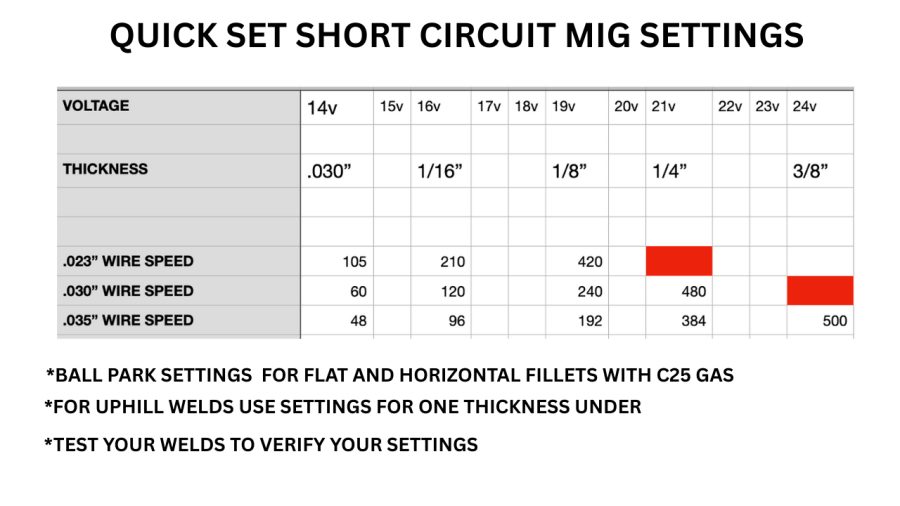
Getting the settings right is where most beginners struggle. Too much heat and you burn through; too little and you get cold welds with poor fusion.
| Material Thickness | Wire Diameter | Voltage (approx.) | Wire Speed (approx.) | Shielding Gas |
|---|---|---|---|---|
| 22 gauge (0.030″) | .023″ | 14–16V | 150–200 IPM | 75/25 Ar/CO₂ |
| 20 gauge (0.036″) | .023″–.030″ | 15–17V | 175–225 IPM | 75/25 Ar/CO₂ |
| 18 gauge (0.048″) | .030″ | 16–18V | 200–250 IPM | 75/25 Ar/CO₂ |
| 1/8″ frame steel | .030″–.035″ | 18–21V | 250–300 IPM | 75/25 Ar/CO₂ |
Note: These are starting points. Always run test welds on scrap of the same gauge before welding on the vehicle.
The 75% Argon / 25% CO₂ mix (commonly called C25) is the standard choice for automotive MIG work. Pure CO₂ is cheaper but produces more spatter and a harsher arc — not ideal for thin sheet metal.
Stitch Welding vs. Continuous Welding on Body Panels
One of the most important techniques for automotive MIG work is stitch welding, and most beginners skip it.
Continuous welding on thin sheet metal dumps too much heat into one area. The metal expands, distorts, and you end up with a wavy panel that takes hours of hammer and dolly work to correct.
Stitch welding means laying short weld segments — typically 1/2″ to 1″ long — then moving to a different section of the joint and allowing the previous area to cool. You work around the seam in a pattern rather than running straight down the line.
Basic stitch welding sequence:
1. Tack weld the panel at 4–6 inch intervals to hold alignment
2. Weld a 1/2″ stitch at one end of the seam
3. Move to the opposite end and weld another stitch
4. Work toward the middle, alternating sides
5. Allow each area to cool to room temperature before welding adjacent sections
6. Grind welds flush between passes if needed
This approach keeps cumulative heat low and dramatically reduces panel distortion.
Common MIG Mistakes on Automotive Work
A common issue technicians encounter is porosity — small holes or voids in the weld bead. On automotive panels, this usually means the surface wasn’t clean enough. Paint, rust, galvanizing, and oil all contaminate the weld pool and cause porosity.
Other frequent mistakes:
– Wrong wire diameter: Using .035″ wire on 20-gauge sheet metal makes heat control very difficult. Drop to .023″ for thin panels.
– Skipping the ground clamp placement: A poor ground causes arc instability. Clamp as close to the weld area as possible.
– Welding over primer or seam sealer: Strip everything back to bare metal in the weld zone.
– Not checking fit-up: Gaps larger than the wire diameter are hard to bridge cleanly. Tight, consistent fit-up produces better welds.
– Rushing the cooling process: Compressed air can be used to speed cooling between stitches, but don’t weld over still-hot metal.
MIG vs. TIG vs. Flux-Core for Auto Body Work
Each process has a place in automotive repair. Here’s how they compare:
| Process | Best For | Skill Level | Speed | Heat Control | Cost |
|---|---|---|---|---|---|
| MIG (GMAW) | Body panels, floor pans, frames | Beginner–Intermediate | Fast | Good | Moderate |
| TIG (GTAW) | Aluminum, stainless, precision work | Advanced | Slow | Excellent | High |
| Flux-Core (FCAW) | Thick structural steel, outdoor work | Beginner–Intermediate | Fast | Poor (thin metal) | Low |
| Spot Welding | Factory-style panel replacement | Beginner | Very Fast | Excellent | Moderate |
Flux-core wire is sometimes suggested as a budget alternative since it doesn’t require shielding gas. In practice, flux-core produces too much spatter and heat for thin automotive sheet metal. It’s better suited for structural steel 1/4″ and thicker.
TIG produces the cleanest, most precise welds and is the right choice for aluminum body panels or stainless exhaust work. But it requires significantly more skill and time, which is why most shops use MIG for the majority of steel body work.
Equipment You Actually Need
You don’t need an industrial machine to do quality automotive MIG work. A 140–180 amp MIG welder handles everything from 22-gauge sheet metal up to 3/16″ frame steel — which covers the vast majority of automotive repair scenarios.
Minimum setup for automotive MIG work:
– MIG welder rated at 140A or higher (Lincoln Electric, Miller, ESAB, and Hobart are reliable brands)
– .023″ wire for thin sheet metal; .030″ for general use
– C25 shielding gas (75/25 Ar/CO₂)
– Auto-darkening welding helmet (shade 9–11 for MIG)
– Welding gloves and jacket
– Angle grinder with flap discs and cutting wheels
– Clamps and magnets for panel alignment
– Copper backing bar (helps bridge gaps on thin metal)
A gas-less flux-core capable machine is not the same as a proper MIG setup. Make sure your machine accepts a gas line and regulator before purchasing.
FAQ
Can a beginner use MIG welding for car bodywork?
Yes, MIG is one of the most beginner-accessible welding processes, which is part of why it’s so common in automotive repair. The learning curve is steeper on thin sheet metal than on thicker steel, but with practice welds on scrap material and proper settings, most beginners can produce acceptable automotive welds within a few sessions. Start with floor pans or hidden areas before tackling visible body panels.
What gauge steel is used in car body panels?
Most modern automotive body panels are 18–22 gauge mild steel, which is approximately 0.030″–0.048″ thick. Some structural components like frame rails and subframes are heavier, typically 1/8″ to 3/16″. Knowing the gauge of what you’re welding is essential for dialing in the correct wire speed and voltage settings.
Do I need a special MIG welder for automotive work?
No specialized machine is required. A standard 140–180 amp MIG welder capable of running solid wire with shielding gas handles most automotive repairs. The key requirements are the ability to fine-tune voltage and wire speed independently, and compatibility with .023″ wire for thin sheet metal work. Machines with infinite adjustment give you more precision than those with stepped settings.
Can you MIG weld aluminum car panels?
MIG welding aluminum is possible but requires a spool gun or push-pull gun, ER4043 or ER5356 aluminum wire, and 100% Argon shielding gas. Standard MIG setups with steel wire and C25 gas cannot weld aluminum. In practice, most shops use TIG for aluminum body panels because it offers better control and cleaner results on thin aluminum.
Is MIG welding strong enough for frame repair?
Yes, when done correctly. MIG welds on frame steel can achieve tensile strength comparable to or exceeding the base metal. The critical factors are full penetration, proper joint preparation, and using the correct wire diameter and heat settings for the material thickness. Structural frame repairs on vehicles should always be verified against manufacturer specifications, and some repairs may require certified inspection.
How do I prevent warping when MIG welding body panels?
Warping is controlled through stitch welding, proper tack weld placement, and allowing adequate cooling time between weld passes. Clamping the panel firmly before welding helps maintain alignment. Some technicians use a wet rag or compressed air to cool the metal between stitches. Minimizing heat input by using the lowest effective settings also reduces distortion significantly.
What’s the difference between plug welding and spot welding in auto body repair?
Spot welding uses a specialized resistance welding tool to join two overlapping panels by clamping and passing current through them — this is how panels are joined at the factory. Plug welding with a MIG replicates this by drilling holes in the top panel and filling them with weld to fuse to the panel beneath. Plug welding is the standard DIY method for panel replacement when a factory spot welder isn’t available.
Final Thoughts
MIG welding is genuinely the right tool for the majority of automotive repair work. It handles sheet metal, floor pans, frame sections, and patch panels with a level of speed and accessibility that no other common process matches. The difference between a good result and a frustrating one almost always comes down to surface preparation, correct settings, and heat management through stitch welding. Get those three things right, and MIG will serve you well across virtually every steel repair a vehicle requires.
Meta Description: Wondering if MIG welding works for automotive repair? Learn the settings, techniques, and equipment needed for body panels, floor pans, and frame work.


