
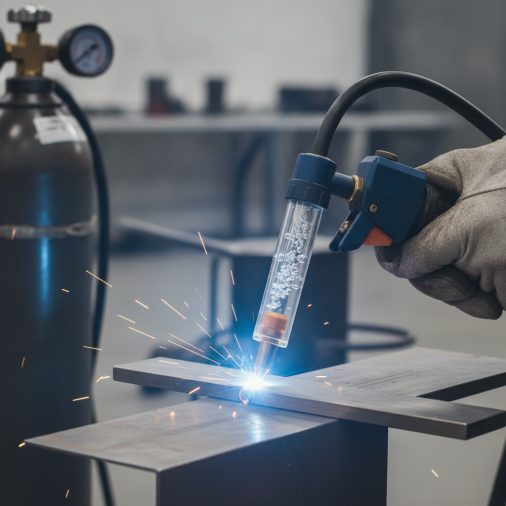
Getting your shielding gas flow rate wrong is one of the most common — and most overlooked — causes of poor MIG welds. Too little gas and you get porosity, contamination, and weak joints. Too much and you waste gas, create turbulence, and still end up with defects. Whether you’re setting up a new welder or troubleshooting an existing problem, understanding the correct litres per minute (LPM) for MIG welding is essential to producing clean, consistent results. This article covers the right flow rates for different situations, what affects them, and how to dial in your settings correctly.
Quick Answer
For most MIG welding applications, a shielding gas flow rate of 8 to 15 litres per minute (LPM) is appropriate. Indoor welding on mild steel typically runs well at 8–12 LPM. Outdoor or higher-amperage work may require 12–15 LPM or slightly more to maintain adequate shielding coverage at the weld pool.
Why Flow Rate Matters More Than Most Welders Realise
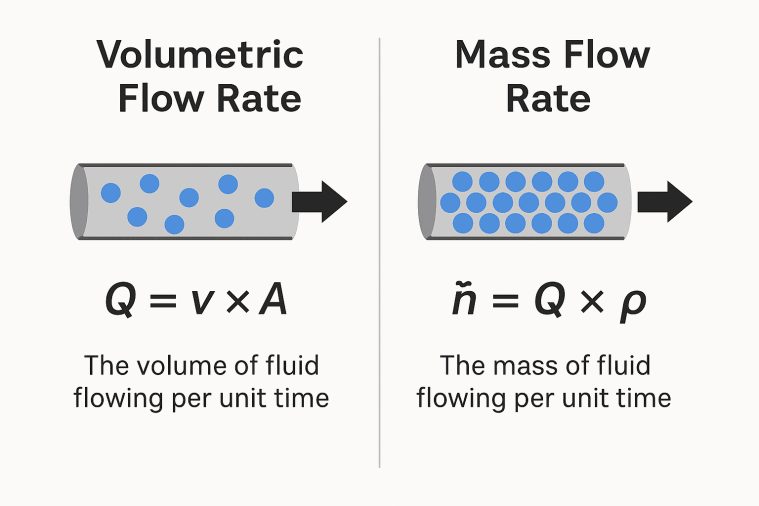
Shielding gas does one job: protect the molten weld pool from atmospheric contamination — primarily oxygen, nitrogen, and hydrogen. These gases cause porosity, spatter, and brittleness in the finished weld.
The flow rate determines how effectively that protective blanket forms and holds around the arc. It’s not simply a case of “more is better.” Excessive flow creates turbulence that actually draws atmospheric air into the shielding zone, defeating the purpose entirely.
Getting the rate right means balancing adequate coverage against laminar (smooth) gas flow. That balance point shifts depending on your environment, nozzle size, wire diameter, and amperage.
Standard Flow Rate Reference by Application
This table covers the most common MIG welding scenarios and their recommended gas flow rates.
| Application | Material | Gas Type | Recommended LPM |
|---|---|---|---|
| Light hobby welding | Mild steel (thin) | C25 (75/25 Ar/CO₂) | 8–10 LPM |
| General fabrication | Mild steel | C25 or CO₂ | 10–12 LPM |
| Structural / heavier plate | Mild steel | C25 | 12–15 LPM |
| Stainless steel welding | Stainless | Tri-mix or 98/2 Ar/CO₂ | 10–14 LPM |
| Aluminium MIG (GMAW) | Aluminium | 100% Argon | 14–18 LPM |
| Outdoor welding (light wind) | Any | C25 or CO₂ | 15–20 LPM |
| Flux-core (FCAW) — self-shielded | Mild steel | None required | N/A |
| Flux-core (FCAW) — gas-shielded | Mild steel | CO₂ or C25 | 12–16 LPM |
Aluminium requires higher flow rates because argon is less dense than CO₂-based mixes and disperses more readily. Stainless welding often uses tri-mix gases (argon, helium, CO₂) which have their own flow characteristics, but the 10–14 LPM range covers most shop applications.
The Factors That Change Your Ideal Flow Rate
No single number works for every situation. Several variables shift where your optimal LPM sits.
Nozzle diameter and standoff distance
A larger nozzle delivers a wider gas curtain, which can maintain coverage at lower flow rates. A small nozzle concentrating gas over a narrow area may need slightly higher flow to compensate. Standoff distance — how far the nozzle sits from the workpiece — also matters. Greater standoff means the gas has further to travel and disperses more before reaching the weld pool.
Amperage and wire feed speed
Higher amperage creates a more energetic arc that disturbs the gas envelope more aggressively. When running at higher heat settings, bumping flow rate up by 2–3 LPM is often necessary to maintain consistent coverage.
Wind and drafts
This is the biggest real-world variable. Even a light draft of 4–8 km/h can strip shielding gas away from the weld pool almost entirely. In outdoor conditions, flow rates of 15–20 LPM are common, though physical wind shields or welding screens are a far more effective solution than simply cranking up the gas.
Gas type and mixture
CO₂ is denser than argon and tends to settle around the weld pool more effectively at lower flow rates. Pure argon (used for aluminium) is lighter and requires higher flow to maintain the same level of coverage. Mixed gases like C25 fall between these extremes.
Joint type and position
Overhead and vertical welding positions can cause gas to drift away from the weld zone. Slightly increasing flow rate — typically by 1–3 LPM — helps compensate, though technique adjustments are equally important.
How to Set and Verify Your Flow Rate Correctly
A regulator with a flow gauge (measured in LPM or CFH) is the standard tool for setting gas flow. Here’s how to set it up properly.
1. Connect your regulator to the gas cylinder and attach the hose to your MIG welder’s gas inlet.
2. Open the cylinder valve slowly — full open for argon/mixed gas cylinders, one to one-and-a-half turns for CO₂.
3. Press the trigger (or use the purge function if your welder has one) to allow gas to flow.
4. Adjust the regulator knob while gas is flowing until the float or needle reads your target LPM.
5. Check at the nozzle — hold your hand near the nozzle and feel for a steady, gentle flow. There should be no hissing or turbulence.
6. Run a test bead on scrap material and inspect for porosity or surface contamination.
One practical check: if your welds show consistent small pinholes or a rough, porous surface, low gas flow is a likely cause. If you’re burning through gas quickly with no improvement in weld quality, you may be running too high and creating turbulence.
Signs Your Flow Rate Is Wrong
Recognising the symptoms of incorrect flow rate saves time and material. Here’s what to look for.
Too low (under-shielding):
– Porosity — small holes or pitting in the weld bead
– Dark, sooty discolouration on or around the weld
– Excessive spatter
– Rough, irregular bead surface
– Weld cracking in extreme cases
Too high (over-shielding / turbulence):
– Porosity despite high flow — this confuses many welders
– Inconsistent arc behaviour
– Gas hissing audibly at the nozzle
– Rapid gas consumption without quality improvement
– Possible contamination from atmospheric air being drawn in by turbulence
In practice, turbulence-induced porosity is often misdiagnosed as a low-flow problem. If increasing flow rate doesn’t fix porosity, try reducing it — you may already be past the optimal point.
LPM vs CFH — Converting Between Units
Some regulators and welding references use cubic feet per hour (CFH) rather than litres per minute. The conversion is straightforward.
1 LPM = approximately 2.12 CFH
| LPM | CFH (approx.) |
|---|---|
| 8 LPM | 17 CFH |
| 10 LPM | 21 CFH |
| 12 LPM | 25 CFH |
| 15 LPM | 32 CFH |
| 18 LPM | 38 CFH |
| 20 LPM | 42 CFH |
If you’re working from an American welding reference that recommends 25–30 CFH for general MIG welding, that translates to roughly 12–14 LPM — consistent with the standard recommendations above.
Common Mistakes That Waste Gas and Ruin Welds
Running maximum flow “just to be safe”
Many beginners assume higher gas flow equals better protection. It doesn’t. Turbulent flow at the nozzle actively degrades shielding quality and wastes cylinder contents.
Not checking for leaks
A small leak in the gas hose or at a fitting connection can drop your effective flow rate significantly even when the regulator reads correctly. Apply soapy water to connections and look for bubbles if you suspect a leak.
Ignoring nozzle condition
Spatter buildup inside the nozzle restricts gas flow and creates uneven distribution. Clean the nozzle regularly with nozzle dip or a wire brush. A clogged nozzle can make even a correctly set flow rate ineffective.
Setting flow rate while gas isn’t flowing
Some regulators read differently under flow versus static conditions. Always set and confirm your flow rate while the gas is actually flowing through the system.
Using the wrong gas for the material
CO₂-heavy mixes on aluminium, or pure argon on carbon steel, will cause problems that no flow rate adjustment can fix. Confirm you have the right gas type before adjusting LPM.
FAQ
What is the best LPM for MIG welding mild steel indoors?
For indoor mild steel MIG welding with C25 (75% argon / 25% CO₂), 10–12 LPM is the standard starting point for most general fabrication work. Thin sheet metal at lower amperages can run closer to 8–10 LPM. Thicker plate at higher heat settings benefits from 12–14 LPM. Adjust based on your nozzle size and any air movement in the workspace.
Why is my MIG weld still porous even with high gas flow?
Porosity at high flow rates usually indicates turbulence rather than insufficient gas. When flow exceeds what the nozzle can deliver smoothly, the gas stream becomes chaotic and draws in atmospheric air. Try reducing flow by 2–3 LPM. Also check for a blocked or spatter-clogged nozzle, gas leaks in the hose, and contamination on the base metal surface.
How many LPM does MIG welding aluminium need?
Aluminium MIG welding uses 100% argon, which is lighter than CO₂-based mixtures and disperses more easily. A flow rate of 14–18 LPM is typical for most aluminium applications. Larger nozzles help maintain coverage. Push technique (rather than drag) is standard for aluminium, which also affects how gas coverage behaves around the weld pool.
Does wind affect how much gas I need for MIG welding?
Yes, significantly. Even a light breeze can strip shielding gas away before it reaches the weld pool. Outdoors, flow rates of 15–20 LPM are common, but physical wind barriers — welding screens, temporary enclosures — are far more effective than simply increasing gas flow. In strong wind, outdoor MIG welding without shielding becomes impractical regardless of flow rate.
How do I convert my MIG welder gas flow from CFH to LPM?
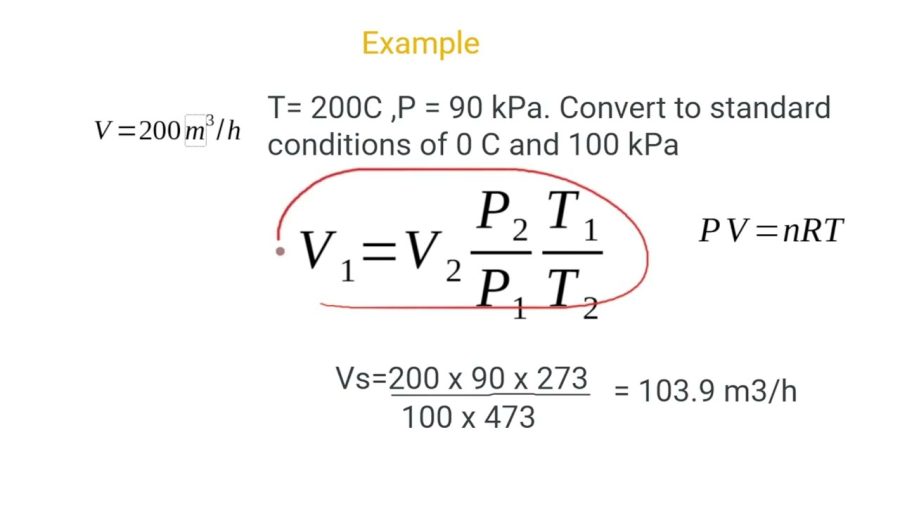
Divide the CFH value by 2.12 to get LPM. For example, 25 CFH ÷ 2.12 = approximately 11.8 LPM. Most North American welding references use CFH, while European and Australian standards typically use LPM. Both measure the same thing — volumetric gas flow rate — just in different units.
What happens if I run MIG welding with no shielding gas?
Without shielding gas (using solid wire), the weld pool is fully exposed to atmospheric oxygen and nitrogen. The result is severe porosity, excessive spatter, a rough and brittle weld bead, and significantly reduced joint strength. Self-shielded flux-core wire is designed to operate without external gas, but solid MIG wire cannot produce acceptable welds without it.
Can I use the same flow rate for different gas mixtures?
Not always. Gas density affects how well a given flow rate maintains coverage. CO₂ is denser and settles around the weld pool more effectively at lower flow rates. Pure argon is lighter and needs higher flow for equivalent coverage. Tri-mix gases for stainless behave differently again. As a general rule, increase flow by 1–2 LPM when switching from CO₂-heavy mixes to higher-argon or pure argon blends.
Final Thoughts
For most MIG welding work, 10–12 LPM is a reliable starting point — and for many welders, it’s all they’ll ever need to adjust from. The real skill is recognising when conditions demand a change: outdoor drafts, aluminium, high-amperage runs, or a nozzle that’s seen better days. Keep your nozzle clean, check your connections for leaks, and remember that more gas isn’t always better gas. A smooth, laminar flow at the right rate will consistently outperform a turbulent blast at twice the volume.
Meta Description
Wondering how many litres per minute for MIG welding? Get the correct LPM flow rates for mild steel, aluminium, stainless, and outdoor welding in this practical guide.


