
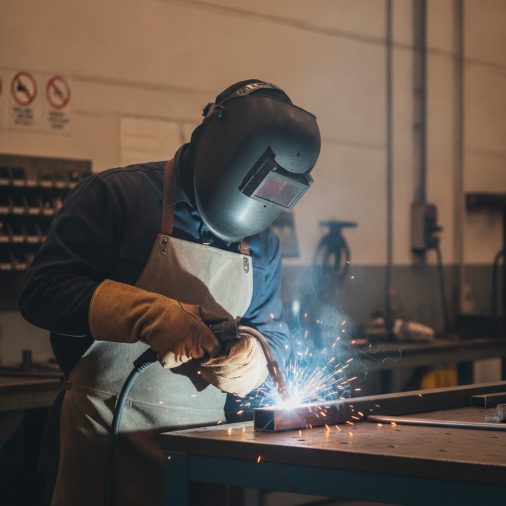
Yes, MIG welding is dangerous if proper precautions are not followed. The primary hazards include toxic fume inhalation, UV radiation burns, electrical shock, fire, and explosion risk. With the correct personal protective equipment (PPE), ventilation, and safe work practices, these risks can be managed effectively and safely.
MIG welding is one of the most accessible welding processes available, which means more beginners pick it up without fully understanding the risks involved. That accessibility can create a false sense of safety. This article breaks down the real hazards of MIG welding — from fumes and UV radiation to electrical shock and fire — and explains exactly what you can do to protect yourself. Whether you’re setting up a home workshop or working in a professional environment, knowing these risks upfront makes a significant difference.
The Real Hazards of MIG Welding — Ranked by Severity
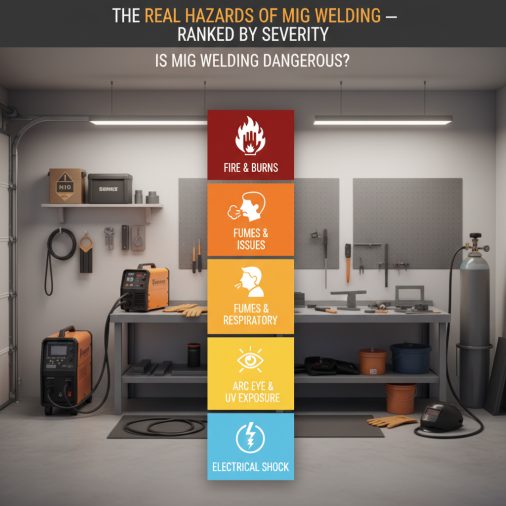
Not all welding hazards carry equal weight. Some can cause immediate, life-threatening harm. Others build up slowly over years of repeated exposure. Understanding which risks deserve the most attention helps you prioritize your safety setup.
High-severity hazards:
– Fume inhalation — Welding fumes contain metal oxides, manganese, and in some cases hexavalent chromium. Chronic exposure is linked to lung disease, neurological damage, and certain cancers. This is consistently identified as the most serious long-term risk in MIG welding.
– Electrical shock — MIG welders operate at relatively low voltages (typically 15–35V at the arc), but the open-circuit voltage from the power source can reach 80–100V. Contact with live components, especially in damp conditions, can be fatal.
– UV and IR radiation — The MIG arc produces intense ultraviolet and infrared light. Unprotected eyes can suffer arc eye (photokeratitis) within seconds of exposure. Skin burns from UV radiation are also common among welders who work with bare arms.
Moderate-severity hazards:
– Fire and explosion — Spatter from MIG welding can travel up to 35 feet and ignite flammable materials. Shielding gas cylinders, if damaged or improperly stored, present an explosion risk.
– Burns — Contact with the workpiece, wire, or spatter causes burns. Hot metal looks identical to cool metal, a fact that catches beginners off guard more often than any other single hazard.
Lower-severity but commonly overlooked:
– Noise exposure — In industrial settings, welding noise can exceed 85 dB, the threshold where hearing protection becomes necessary.
– Ergonomic strain — Awkward positions held for extended periods lead to musculoskeletal injuries, particularly in the neck, shoulders, and lower back.
Welding Fumes: The Hazard Most People Underestimate
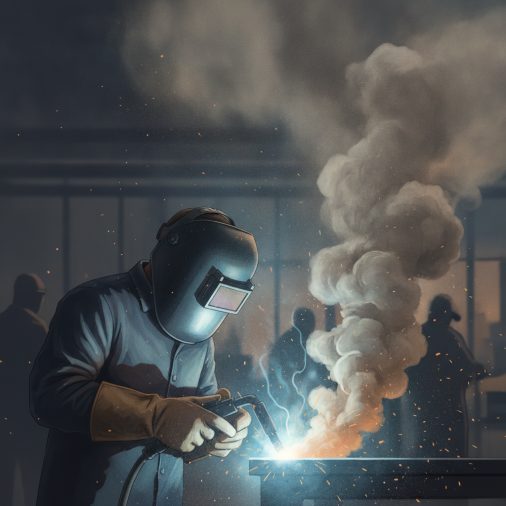
The smoke rising from a MIG weld is not just harmless vapor. It contains a complex mixture of metallic particles and gases that vary depending on the base metal, filler wire, shielding gas, and any coatings or contaminants on the workpiece.
Common fume components in MIG welding:
| Source Material | Key Fume Hazards |
|---|---|
| Mild steel | Iron oxide, manganese |
| Stainless steel | Hexavalent chromium, nickel compounds |
| Galvanized steel | Zinc oxide (causes metal fume fever) |
| Aluminum | Aluminum oxide, ozone |
| Painted or coated metals | Lead, cadmium, or other coating-specific toxins |
Manganese exposure is particularly concerning in MIG welding. Chronic exposure has been associated with manganism, a neurological condition with symptoms resembling Parkinson’s disease. OSHA’s permissible exposure limit (PEL) for manganese fumes is 5 mg/m³ as a ceiling value, but NIOSH recommends keeping exposure below 1 mg/m³ as a recommended exposure limit (REL).
Welding galvanized steel deserves special mention. The zinc coating burns off and produces zinc oxide fumes that cause metal fume fever — flu-like symptoms including chills, fever, and nausea that typically appear several hours after exposure. It’s not usually fatal, but it’s a clear warning sign that your ventilation is inadequate.
Practical ventilation approaches:
– Local exhaust ventilation (LEV) — A fume extraction arm positioned 4–6 inches from the arc captures fumes at the source before they reach your breathing zone. This is the most effective solution.
– General ventilation — Shop fans and open doors dilute fume concentration but don’t eliminate exposure. Acceptable for light occasional work, not for extended sessions.
– Respirators — A half-face respirator with P100 particulate filters and OV/P100 combination cartridges provides protection when ventilation alone is insufficient. Standard dust masks offer no meaningful protection against welding fumes.
Protecting Your Eyes and Skin from Arc Radiation
The MIG arc radiates across a broad spectrum — UV-B, UV-C, and infrared — at intensities that can cause damage faster than you’d expect. Arc eye, the welding equivalent of a sunburn on your cornea, causes intense pain, light sensitivity, and a gritty sensation that typically peaks 6–12 hours after exposure.
Lens shade selection for MIG welding:
| Welding Current | Recommended Lens Shade |
|---|---|
| Up to 60A | Shade 7 |
| 60–160A | Shade 10 |
| 160–250A | Shade 11 |
| 250–500A | Shade 12–14 |
Auto-darkening helmets have become the standard choice for most welders. A quality unit switches from a light state (typically shade 3–4) to the welding shade in 1/25,000 of a second or faster. Look for helmets that meet ANSI Z87.1 standards.
Skin protection is equally important and frequently ignored. UV radiation from the arc can burn exposed skin in minutes, similar to severe sunburn. Long sleeves made from flame-resistant (FR) material, leather gloves, and a welding jacket are not optional — they’re baseline protection.
Electrical Safety: What the Low Voltage Numbers Don’t Tell You
MIG welding operates at arc voltages that seem low compared to household current. That can create a misleading sense of safety. The actual risk comes from several factors that aren’t obvious from the voltage rating alone.
The open-circuit voltage (OCV) — the voltage present when the trigger is not pulled — typically ranges from 50–80V on most MIG machines. That’s well within the range capable of causing ventricular fibrillation under the right conditions, particularly when skin resistance is reduced by sweat or moisture.
Key electrical safety practices:
– Never weld in wet or damp conditions without proper precautions
– Inspect the welding gun, cable, and ground clamp regularly for damaged insulation
– Keep the work cable as short as practical and ensure solid ground connections
– Never wrap welding cables around your body
– Disconnect power before performing any maintenance on the machine
– Use a properly grounded machine on a dedicated circuit
In practice, electrical fatalities in MIG welding are relatively rare compared to fume-related illness, but they are entirely preventable with basic discipline.
Fire and Explosion Risks in the Welding Area
Spatter — those small molten metal droplets that scatter from the weld pool — is the primary ignition source for welding-related fires. Spatter can travel considerable distances and remain hot enough to ignite materials for several seconds after landing.
Before starting any MIG welding session:
1. Clear flammable materials from a minimum 35-foot radius, or use welding blankets to shield what can’t be moved
2. Check for flammable vapors — fuel, solvents, and aerosols can ignite from spatter even at low concentrations
3. Never weld on containers that held flammable liquids without following proper purging procedures
4. Keep a fire extinguisher rated for Class A, B, and C fires within immediate reach
5. Conduct a fire watch for at least 30 minutes after welding in areas where hidden smoldering is possible
Shielding gas cylinders — typically CO₂, argon, or a mixed gas like C25 (75% argon/25% CO₂) — must be stored upright, secured against tipping, and kept away from heat sources. A ruptured cylinder valve can turn the cylinder into a dangerous projectile.
Common Safety Mistakes Beginners Make
Field experience shows that most MIG welding injuries trace back to a small set of repeated mistakes rather than freak accidents.
– Welding without adequate ventilation — The most common and most consequential mistake. “I’ll just crack a window” is not a ventilation plan for extended welding sessions.
– Wearing the wrong gloves — Light mechanic’s gloves or latex gloves offer no protection. Use leather welding gloves rated for the process.
– Skipping the helmet for “just a quick tack” — Arc eye doesn’t care how brief the exposure was. One unprotected arc flash is enough.
– Welding on unknown or coated metals — Painted, plated, or galvanized materials produce significantly more hazardous fumes. Always identify the base material and any coatings before welding.
– Assuming cool metal is safe to touch — Hot and cold steel look identical. Use a temperature stick, wait an appropriate time, or test with a quick touch at a safe distance before handling.
– Ignoring gas hose and regulator condition — Cracked hoses or faulty regulators can leak shielding gas, creating an asphyxiation risk in enclosed spaces.
MIG Welding Safety Compared to Other Welding Processes
| Process | Fume Level | UV Radiation | Spatter | Skill Required |
|---|---|---|---|---|
| MIG (GMAW) | Moderate–High | High | Moderate | Low–Moderate |
| TIG (GTAW) | Low–Moderate | Very High | Minimal | High |
| Stick (SMAW) | High | High | High | Moderate |
| Flux-Core (FCAW) | Very High | High | High | Low–Moderate |
MIG welding sits in the middle of the risk spectrum. It produces more fumes than TIG welding due to higher deposition rates and wire feed speeds, but less than flux-core welding, which generates significant smoke from the flux compound. The UV output from a MIG arc is comparable to stick welding at similar amperages.
FAQ
Can MIG welding fumes cause cancer?
Yes, certain MIG welding fumes are classified as carcinogenic. Welding stainless steel produces hexavalent chromium, a Group 1 human carcinogen according to the International Agency for Research on Cancer (IARC). The IARC also classifies welding fumes generally as a Group 1 carcinogen based on evidence linking occupational welding exposure to lung cancer. Proper ventilation and respiratory protection significantly reduce this risk.
Is it safe to MIG weld in a garage without ventilation?
Welding in an enclosed garage without ventilation is genuinely hazardous. Fumes accumulate quickly in confined spaces, and shielding gas can displace oxygen in poorly ventilated areas. At minimum, open the garage door fully and use a fan to push fumes away from your breathing zone. For regular welding sessions, a dedicated fume extractor is strongly recommended.
How far away do you need to be from a MIG arc to avoid eye damage?
The arc flash hazard zone for unprotected eyes extends roughly 50 feet in all directions, though intensity drops with distance. Anyone within that radius without appropriate eye protection risks arc eye. Bystanders should wear at minimum shade 2–3 filter lenses. Welding screens or curtains should be used to protect others in shared workspaces.
What shielding gas is safest for MIG welding indoors?
Argon-based mixtures like C25 (75% argon/25% CO₂) produce less ozone and nitrogen oxides than pure CO₂. However, all shielding gases displace oxygen and can cause asphyxiation in enclosed spaces without adequate fresh air supply. The gas choice affects fume chemistry slightly, but ventilation quality matters far more than gas selection for indoor safety.
Can you get electrocuted by a MIG welder?
Electrocution from a MIG welder is possible but uncommon with proper precautions. The open-circuit voltage (typically 50–80V) can be lethal under specific conditions — particularly if skin is wet, if insulation is damaged, or if the welder is in contact with a conductive surface. Following basic electrical safety practices eliminates most of this risk.
Is MIG welding safe for beginners to learn at home?
MIG welding can be learned safely at home with the right setup. The essentials are: a properly ventilated workspace, a quality auto-darkening helmet, leather welding gloves, FR clothing, and a fire extinguisher nearby. Starting on clean mild steel minimizes fume hazards. Beginners who take safety seriously from the start typically develop better long-term habits than those who cut corners early.
What is the biggest long-term health risk from MIG welding?
Chronic fume inhalation is the most significant long-term health risk. Repeated exposure to manganese-containing fumes has been linked to neurological damage, and cumulative lung exposure increases the risk of pulmonary fibrosis, chronic obstructive pulmonary disease (COPD), and lung cancer. These effects develop over years, which is why consistent respiratory protection matters even when individual sessions seem low-risk.
Final Thoughts
MIG welding is genuinely dangerous when approached carelessly, but it’s a manageable risk when you treat safety as a non-negotiable baseline rather than an optional add-on. The hazards — fumes, radiation, electricity, fire — are well understood, and the protective measures are straightforward and affordable. Get the ventilation right, wear the correct PPE every time, and keep your work area clear of flammables. Those three habits alone eliminate the vast majority of MIG welding injuries and long-term health risks.


