
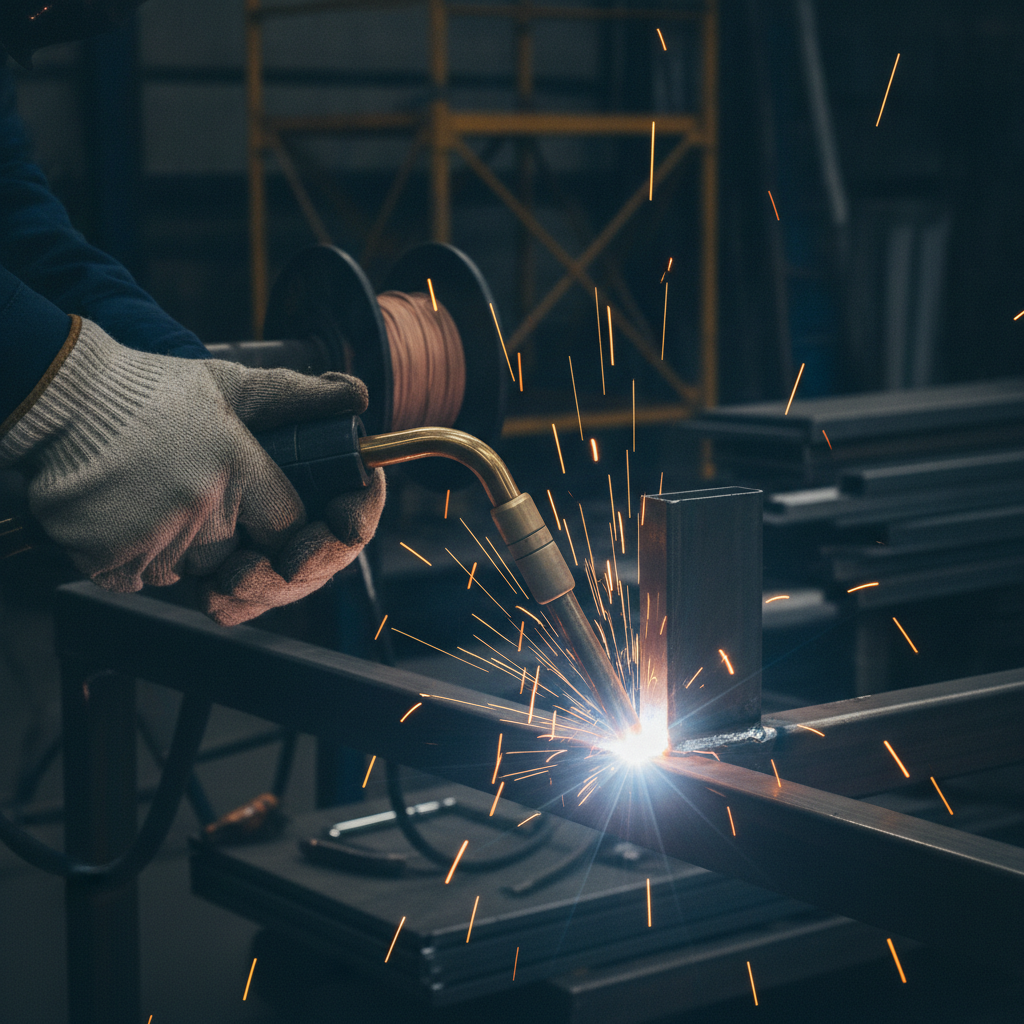
MIG welding is one of the most widely used welding processes in the world, but it is not always the right tool for every job. Knowing when MIG welding performs at its best — and when another process would serve you better — saves time, material, and money. This article covers the specific conditions, materials, positions, and applications where MIG welding truly excels, along with honest comparisons to help you make smarter decisions in the shop or on the job site.
MIG welding is most effective when welding mild steel, stainless steel, or aluminum in a production or shop environment where speed and ease of use matter. It performs best on metal between 24 gauge and 1/2 inch thick, in flat or horizontal positions, with clean base material and reliable shielding gas coverage.
The Conditions Where MIG Welding Genuinely Shines
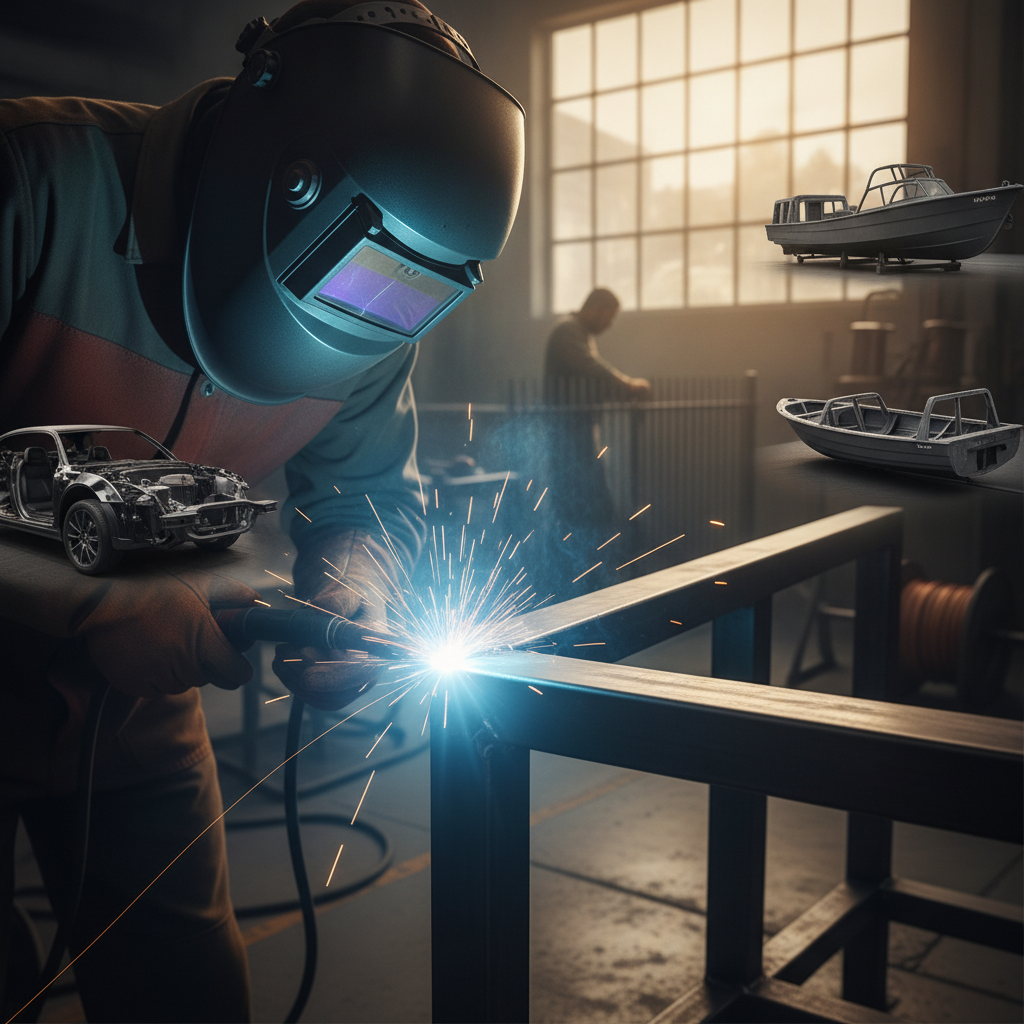
MIG welding — formally known as Gas Metal Arc Welding (GMAW) — is a semi-automatic process that feeds a continuous wire electrode through a gun while shielding gas protects the weld pool. That setup creates specific strengths.
Speed is the biggest advantage. Because the wire feeds continuously, a skilled operator can lay down weld beads significantly faster than with Stick (SMAW) or TIG (GTAW) welding. In production environments where the same joint is repeated hundreds of times, that speed translates directly into cost savings.
Ease of use makes it accessible. MIG welding has a shorter learning curve than TIG welding. A beginner can produce structurally sound welds on mild steel within a few hours of practice. That accessibility makes it the go-to process in automotive shops, fabrication facilities, and hobbyist garages alike.
Best Materials for MIG Welding
MIG welding works well across several base metals, but performance varies depending on the material.
| Material | MIG Effectiveness | Notes |
|---|---|---|
| Mild Steel | Excellent | The ideal material for MIG; fast, clean, consistent results |
| Stainless Steel | Good | Requires tri-mix shielding gas (He/Ar/CO₂) and proper wire selection |
| Aluminum | Good | Requires 100% argon gas and a spool gun or push-pull setup |
| Cast Iron | Poor | Prone to cracking; Stick or specialized processes are better |
| Thin Sheet Metal | Excellent | Short-circuit transfer mode handles 24–18 gauge well |
| Heavy Plate (>1 inch) | Moderate | Possible with flux-core or multiple passes, but Stick may be more practical |
Mild steel is where MIG welding delivers its most consistent results. The wire, gas, and process parameters are well-established, and the margin for error is forgiving compared to other materials.
Ideal Thickness Range for MIG Welding
Thickness is one of the clearest indicators of whether MIG welding is the right choice.
– 24 gauge to 3/16 inch: MIG excels here, especially in short-circuit transfer mode. Thin sheet metal that would burn through with Stick welding responds well to MIG’s controllable heat input.
– 3/16 inch to 1/2 inch: This is the sweet spot for standard MIG welding. Spray transfer or pulse MIG can handle this range efficiently with excellent penetration.
– 1/2 inch to 3/4 inch: Still achievable with MIG, but multiple passes are required. Flux-core wire (FCAW) often becomes more practical at this thickness.
– Above 3/4 inch: Stick welding or submerged arc welding typically becomes more efficient. MIG can still be used but loses its speed advantage.
In practice, most fabrication shops use MIG welding for the 18 gauge to 3/8 inch range and switch processes when jobs fall outside that window.
When the Welding Position Matters
MIG welding is position-sensitive. The molten weld pool is fluid and relatively large, which affects how well the process performs depending on joint orientation.
Flat and horizontal positions are where MIG welding is most effective. Gravity works with the welder rather than against them, and the weld pool is easier to control. Most production welding fixtures are designed to keep joints in these positions for exactly this reason.
Vertical welding is manageable with MIG but requires technique adjustments. Welding uphill (vertical up) provides better penetration; welding downhill (vertical down) is faster but shallower. Short-circuit transfer mode is typically used to keep the pool controllable.
Overhead welding is the most challenging position for MIG. It is possible, but the risk of spatter, poor fusion, and operator fatigue increases significantly. In field situations where overhead welding is unavoidable, many professionals switch to Stick welding for better control.
Shielding Gas Selection and Its Impact on Effectiveness
The shielding gas used in MIG welding directly affects weld quality, spatter levels, and penetration profile. Choosing the wrong gas is one of the most common reasons MIG welds underperform.
– 75% Argon / 25% CO₂ (C25): The most common mix for mild steel. Produces a stable arc, low spatter, and a good bead profile. This is the standard choice for most shop welding.
– 100% CO₂: Cheaper and provides deeper penetration, but produces more spatter and a rougher bead. Used when cost is a priority and appearance is secondary.
– 100% Argon: Required for aluminum. Using CO₂ on aluminum will cause porosity and poor fusion.
– Tri-mix (He/Ar/CO₂): Used for stainless steel to control heat input and prevent carbide precipitation.
Gas flow rate matters too. Most applications call for 15–25 cubic feet per hour (CFH). Too low and the weld pool loses protection; too high and turbulence can pull in atmospheric contamination.
MIG vs. Other Welding Processes — When to Choose What
Understanding where MIG welding fits relative to other processes helps clarify when it is the right choice.
| Process | Best For | Weaknesses vs. MIG |
|---|---|---|
| MIG (GMAW) | Speed, production, thin to medium steel | Less effective outdoors; needs clean metal |
| Stick (SMAW) | Outdoor work, dirty/rusty metal, thick plate | Slower; more cleanup; harder on thin metal |
| TIG (GTAW) | Precision, thin metal, exotic alloys | Much slower; high skill requirement |
| Flux-Core (FCAW) | Thick metal, outdoor use, high deposition | More spatter; less clean appearance |
MIG welding beats Stick in speed and cleanliness on clean metal in a controlled environment. TIG beats MIG in precision and appearance, especially on stainless or aluminum. Flux-core beats MIG when working outdoors or on heavy structural steel where wind disrupts shielding gas coverage.
Situations Where MIG Welding Underperforms
Honest assessment of MIG welding includes recognizing where it struggles.
Outdoor and windy conditions are a real problem. Shielding gas disperses quickly in wind, leaving the weld pool exposed to oxygen and nitrogen contamination. The result is porosity — small gas pockets trapped in the weld that weaken it. Flux-core or Stick welding handles outdoor conditions far better.
Dirty, rusty, or painted metal causes significant problems. MIG welding requires relatively clean base material. Contaminants cause porosity, spatter, and poor fusion. Grinding and cleaning the joint before welding is not optional — it is necessary for a sound weld.
Highly critical or code-governed structural work sometimes specifies processes other than MIG, particularly for root passes on pipe or pressure vessel welding where TIG is often required for the first pass.
Common MIG Welding Mistakes That Reduce Effectiveness
Even in ideal conditions, technique errors can undermine MIG welding’s advantages.
– Incorrect wire speed: Too fast causes the wire to stub into the base metal; too slow produces a high, narrow bead with poor fusion.
– Wrong contact tip-to-work distance (CTWD): Most applications call for 3/8 to 5/8 inch. Too long reduces current and penetration; too short causes spatter and tip burnback.
– Pushing vs. pulling the gun: Pulling (dragging) the gun produces better penetration and visibility of the weld pool. Pushing produces a flatter, wider bead with less penetration.
– Skipping pre-weld cleaning: Mill scale, oil, and rust all compromise weld quality. A wire brush and grinder are essential prep tools.
– Ignoring shielding gas leaks: A loose fitting or cracked hose can allow air into the gas line without obvious signs. Porosity in the finished weld is often the first indicator.
FAQ
What thickness of metal is MIG welding best suited for?
MIG welding performs best on metal ranging from 24 gauge (about 0.025 inches) up to approximately 1/2 inch thick. Within that range, it offers excellent control, speed, and penetration. Beyond 1/2 inch, multiple passes are needed, and other processes like flux-core or Stick welding often become more practical and cost-effective for production work.
Can MIG welding be used outdoors?
MIG welding can be used outdoors, but it is not ideal. Wind disrupts the shielding gas coverage, which leads to porosity and weak welds. If outdoor welding is necessary, use a windbreak or switch to flux-core wire, which generates its own shielding from the flux inside the wire and handles outdoor conditions much better than standard MIG.
Is MIG welding strong enough for structural applications?
Yes, MIG welding produces structurally sound welds when performed correctly on appropriate materials. Many automotive frames, trailers, and fabricated structures are MIG welded. However, certain code-governed structural applications — such as building construction governed by AWS D1.1 — may specify inspection requirements or process limitations that welders must follow.
What shielding gas should a beginner use for MIG welding mild steel?
The 75% Argon / 25% CO₂ blend (commonly called C25) is the best starting point for mild steel. It produces a stable arc, manageable spatter, and a clean bead profile. It is widely available and works well across a broad range of wire speeds and voltages, making it forgiving for those still dialing in their settings.
Why does my MIG weld have holes or bubbles in it?
Porosity — holes or bubbles in the weld — is almost always caused by contamination or shielding gas failure. Common causes include dirty base metal, a loose gas fitting, a clogged nozzle, incorrect gas flow rate, or welding in wind. Clean the base metal thoroughly, check all gas connections, clear any spatter from the nozzle, and verify your flow rate is set between 15 and 25 CFH.
When should I use flux-core wire instead of solid MIG wire?
Flux-core wire is the better choice when welding outdoors, on thicker material above 1/2 inch, or on metal with moderate surface contamination. It tolerates wind and dirty surfaces better than solid wire because the flux inside the wire generates its own shielding. The trade-off is more spatter, slag cleanup, and a less refined bead appearance compared to solid wire MIG.
Does MIG welding work well for aluminum?
MIG welding works for aluminum, but it requires specific setup. You need 100% argon shielding gas, aluminum-specific wire (typically ER4043 or ER5356), and either a spool gun or a push-pull feeder to prevent the soft wire from birdnesting in the liner. Aluminum also requires higher travel speeds and heat management to avoid burn-through, making it less forgiving than mild steel for beginners.
Final Thoughts
MIG welding is most effective when the conditions align with its strengths: clean metal, controlled environments, mild to medium steel, and applications where speed matters. It is not a universal solution — outdoor work, heavy plate, and precision applications often call for a different process. Matching the process to the job, rather than defaulting to MIG out of habit, is what separates competent welders from great ones. Know your material, your environment, and your thickness range, and MIG welding will consistently deliver fast, reliable results.


