
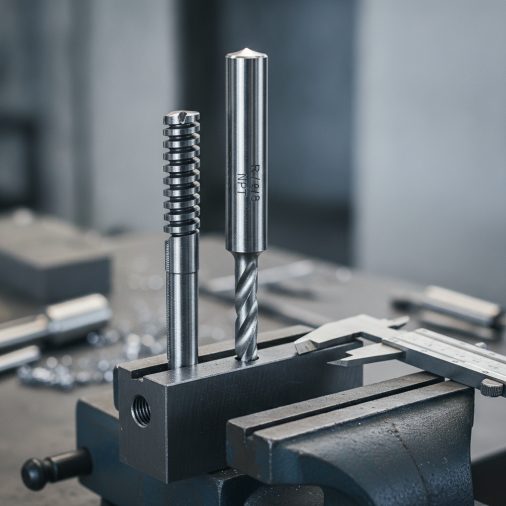
Grabbing the wrong drill bit before cutting 1/8 NPT threads is one of the most common shop mistakes. The hole ends up either too tight to tap cleanly or too loose to hold pressure, and neither outcome is acceptable on a threaded fitting.
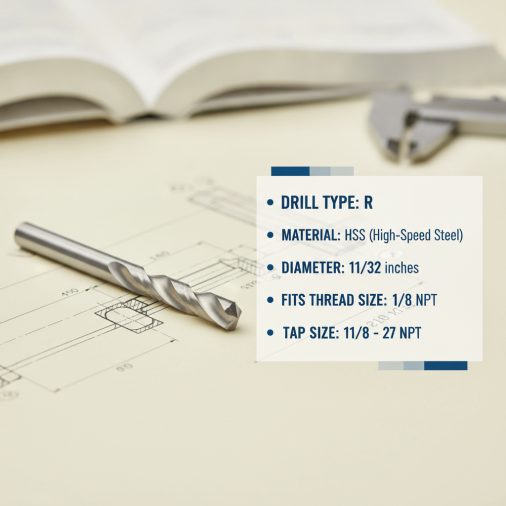
The correct drill size for 1/8 NPT is an R drill bit, which measures 0.339 inches (8.61 mm) in diameter. This is the standard tap drill size for 1/8-27 NPT threads and produces a hole that allows the tap to cut approximately 75% thread engagement — enough for a strong, leak-resistant joint without overloading the tap.
What 1/8 NPT Actually Means
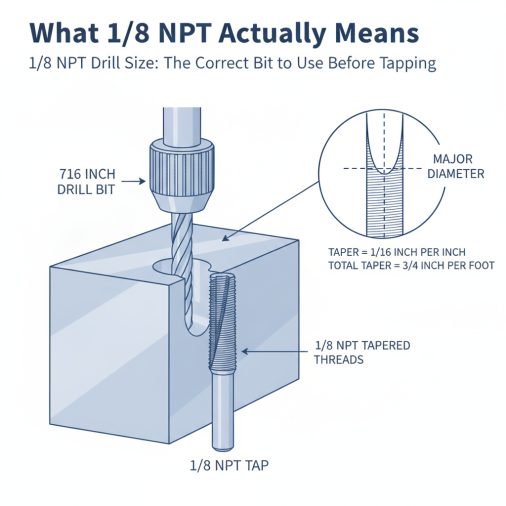
NPT stands for National Pipe Taper. The 1/8 refers to the nominal pipe size, not the actual thread diameter — a common point of confusion for beginners.
A 1/8 NPT thread actually measures about 0.405 inches at its major diameter. The “27” in 1/8-27 NPT refers to 27 threads per inch. Because NPT threads are tapered at 1° 47′ per side, the fitting tightens as it threads in, which creates the seal.
This taper is what makes NPT different from straight threads like UNC or UNF. The fitting doesn’t rely on a gasket alone — the wedging action of the tapered threads does most of the sealing work, especially when combined with thread sealant or PTFE tape.
The R Drill Bit: Specifications at a Glance
| Specification | Value |
|---|---|
| Thread Size | 1/8-27 NPT |
| Recommended Tap Drill | R (letter drill) |
| Drill Diameter (inches) | 0.339 in |
| Drill Diameter (mm) | 8.61 mm |
| Threads Per Inch | 27 |
| Tap Taper | 1° 47′ per side |
| Thread Engagement | ~75% |
The R drill bit is a letter-size drill, part of the standard set that runs from A (0.234 in) to Z (0.413 in). It’s not a fractional drill, so it won’t appear on a standard fractional chart. A good-quality jobber-length drill set — such as the DEWALT DW1361 Titanium Pilot Point Set — includes letter drills alongside fractional and wire gauge sizes.
Why 0.339 Inches and Not Something Close
Using a 11/32 inch drill (0.344 in) or a 21/64 inch drill (0.328 in) might seem close enough, but in NPT tapping, small deviations matter.
- Too large (11/32 / 0.344 in): The tap removes less material, thread depth is shallow, and the fitting may not hold pressure under load or vibration.
- Too small (21/64 / 0.328 in): The tap has to cut too aggressively, increasing the risk of tap breakage — especially in harder materials like stainless steel or cast iron.
- Correct size (R / 0.339 in): Clean thread engagement, reduced tap load, and a fitting that seals reliably.
In practice, a 0.344 inch hole might still work in soft aluminum with low-pressure applications, but for anything in steel, brass, or cast iron carrying hydraulic, pneumatic, or fuel pressure, the R drill is the right choice.
Material Makes a Difference
The drill bit itself isn’t the only variable. The material you’re drilling into affects how the threads turn out.
Aluminum and brass are forgiving. The R drill cuts cleanly, and tapping is relatively straightforward. Spiral flute taps work well here.
Mild steel requires a sharp HSS or cobalt drill bit. Feed pressure matters — too slow and the bit rubs instead of cuts, work-hardening the hole and making the tap’s job harder.
Stainless steel is where most people run into trouble. Use a cobalt drill bit rated for stainless (such as the Irwin Tools COBALT M-35 Metal Index Drill Bit Set), apply cutting fluid generously, and use a spiral point tap to push chips forward rather than packing them in the flutes.
Cast iron is brittle and chips rather than cuts. Keep drill speed moderate and use a straight flute tap since cast iron doesn’t produce long stringy chips.
Drilling and Tapping the Hole: Practical Steps
Getting a clean 1/8 NPT thread comes down to technique as much as drill size.
- Mark and center-punch the location to prevent the drill from wandering at the start.
- Start with a pilot hole if drilling into steel — a 1/8 inch or 3/16 inch starter hole keeps the R drill tracking straight.
- Drill with steady, consistent feed pressure. Let the bit cut; don’t force it.
- Apply cutting fluid throughout — even on aluminum, it improves finish and extends bit life.
- Clear chips regularly by withdrawing the bit every half inch or so.
- Start the NPT tap straight — this is critical. A tapered tap started even slightly off-axis will produce a crooked thread that leaks.
- Tap in stages. For steel, advance half a turn, back off a quarter turn to break chips, then continue.
- Check depth. For 1/8 NPT, most fittings fully engage at 4–6 threads. Tap deep enough to reach full thread engagement without bottoming out.
Common Mistakes That Lead to Leaks
Even with the correct drill size, a few execution errors can ruin the thread:
- Skipping cutting fluid. Dry tapping tears threads and causes galling in stainless and brass.
- Starting the tap off-angle. A crooked tap creates a crooked thread — no amount of sealant fixes a structurally bad thread.
- Under-tapping the hole. If the tap only cuts partial threads near the surface, the fitting won’t reach full engagement and will rock slightly under pressure.
- Over-tightening the fitting. NPT fittings should be hand-tight plus 2–3 turns. Overtightening can crack cast iron ports and distort brass fittings.
- Skipping thread sealant. Even a perfectly tapped 1/8 NPT hole needs PTFE tape or an anaerobic thread sealant like Loctite 565 on the fitting to reliably seal against fluids and gases.
FAQ
What happens if I use a 21/64 drill instead of an R drill for 1/8 NPT?
A 21/64 inch drill (0.328 in) is 0.011 inches smaller than the recommended R drill. This creates a tighter hole that forces the tap to remove more material, increasing cutting torque and the risk of tap breakage — especially in steel and stainless. In softer materials like aluminum, it may still work, but thread quality will be lower than optimal.
Can I use a metric drill bit instead of an R drill for 1/8 NPT?
An 8.5 mm drill bit (0.335 in) is the closest metric size and can work in a pinch for low-pressure applications in softer materials. However, it’s slightly undersized compared to the R drill’s 0.339 in, so expect slightly higher tap load. An 8.7 mm bit (0.343 in) is marginally oversized but closer to acceptable. When precision matters, use the correct R letter drill.
How deep should I drill for a 1/8 NPT thread?
Drill deeper than you intend to tap. A good rule is to drill at least 1/4 inch deeper than your intended thread depth to give the tap room and prevent it from bottoming out before full thread engagement is reached. For a typical 1/8 NPT fitting, a drilled depth of 3/4 inch is generally sufficient.
What is the difference between a taper tap and a plug tap for 1/8 NPT?
A taper tap (also called a pipe tap) starts threads gradually over the first several threads, making it easier to start straight. A plug tap has less taper and is used when threading into a shallow or through-hole. For most 1/8 NPT applications, a standard pipe taper tap is the correct choice. Plug taps are used when you need to tap close to the bottom of a blind hole.
What drill size is needed for other common NPT sizes?
Here’s a quick reference for the most common NPT sizes:
| NPT Size | Tap Drill | Decimal (in) |
|---|---|---|
| 1/16-27 NPT | C | 0.242 in |
| 1/8-27 NPT | R | 0.339 in |
| 1/4-18 NPT | 7/16 | 0.438 in |
| 3/8-18 NPT | 37/64 | 0.578 in |
| 1/2-14 NPT | 23/32 | 0.719 in |
Does 1/8 NPT work with BSP fittings?
No. 1/8 NPT and 1/8 BSP (British Standard Pipe) share a similar nominal size but use different thread angles and pitch. NPT has a 60° thread form; BSP uses 55°. The threads will start to engage but will not seal correctly and are likely to cross-thread or leak. Always confirm thread standard before tapping, especially on imported equipment.
What cutting fluid should I use when tapping 1/8 NPT in steel?
For mild steel, a general-purpose cutting oil works well. For stainless steel, use a sulfur-based or chlorinated tapping fluid specifically rated for stainless — standard cutting oil is not aggressive enough and will cause galling. For aluminum, even WD-40 or kerosene works reasonably well, though a dedicated aluminum cutting fluid produces better thread finish.
Getting the drill size right is the foundation of a reliable NPT thread. An R drill at 0.339 inches gives the tap the ideal starting point — enough material for strong engagement without overloading the tool. Use the right drill, keep it straight, apply cutting fluid, and take your time with the tap. A properly cut 1/8 NPT thread holds pressure for years without needing to be touched again.


