
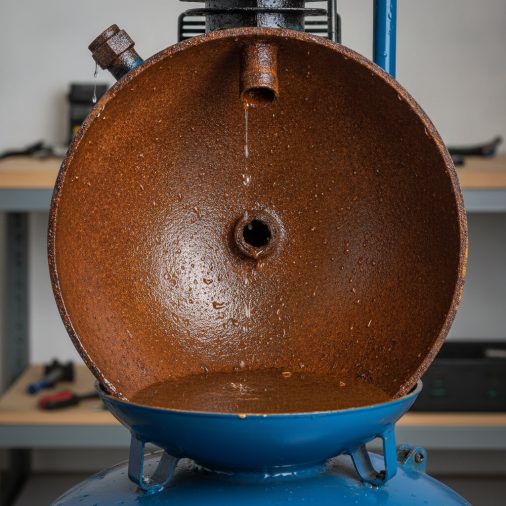
You drain the tank, and rusty water pours out. Or you notice rust flakes blowing through the air line. The inside of an air compressor tank is a wet, oxygen-rich environment, and rust is almost inevitable without some form of protection.
A rust sealer applied to the inside of an air compressor tank slows or stops active corrosion by bonding to the metal surface and creating a barrier against moisture. The right product depends on how much rust is already present, whether the tank is still serviceable, and how thoroughly you can clean and prepare the surface before coating. A tank with deep pitting, perforation, or structural wall thinning is not a candidate for sealing — it needs professional evaluation or replacement.
Understanding Why Tank Rust Is a Safety Issue
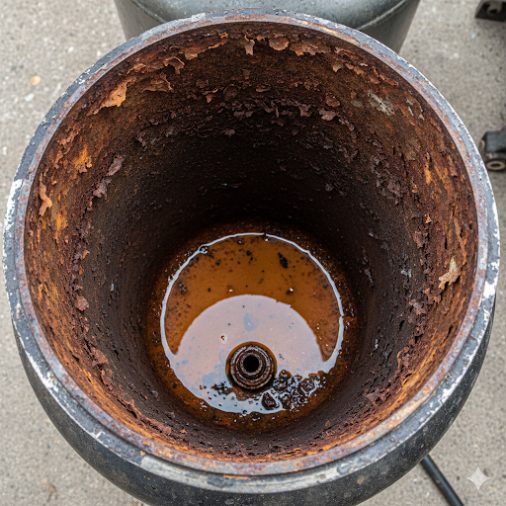
An air compressor tank is a pressure vessel. Even at typical shop pressures of 90–150 PSI, a compromised tank wall can fail suddenly and violently. Rust that has progressed beyond surface discoloration into deep pitting or wall thinning changes the structural integrity of the steel.
Rust sealer is a maintenance and prevention tool, not a structural repair. Applying sealer to a tank that has already lost significant wall thickness does not restore pressure ratings or make the vessel safe to operate.
Before applying any coating, the tank should be inspected carefully. If you have any doubt about wall integrity, consult a qualified professional or replace the tank. No coating product changes that calculation.
When Sealing the Inside Makes Sense

Internal rust sealing is a reasonable option when the rust is surface-level — light oxidation, minor discoloration, or early-stage pitting that has not significantly reduced wall thickness. In these cases, sealing can extend the tank’s service life and reduce rust particles entering the air system.
It also makes sense as a preventive measure on a tank that is still in good condition, particularly if the compressor is used in a humid environment or the tank is drained infrequently. Applying a sealer before heavy rust develops is far more effective than trying to treat a badly corroded surface.
Sealing is generally not appropriate when the rust is deep, when visible pitting has created an uneven or compromised surface, or when the tank has been leaking. Those conditions point to a tank that needs replacement rather than coating.
Types of Rust Sealer Suitable for Compressor Tanks
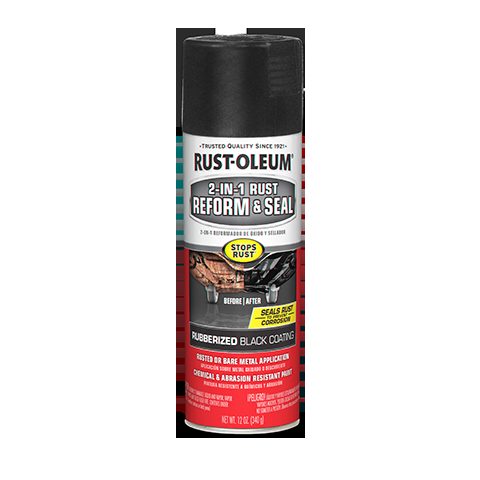
Not every rust treatment product is suitable for the inside of a pressure vessel. The product needs to cure fully, remain stable under heat and pressure cycling, and not flake or peel into the air stream. The most commonly used categories are described below.
Encapsulating Rust Converters
These products chemically react with iron oxide and convert it into a more stable compound, typically iron tannate. They then form a polymer coating over the treated area. Products like Corroseal Water-Based Rust Converter Metal Primer are designed for this purpose and are commonly used on tanks, pipes, and metal structures exposed to moisture.
Converters work best on lightly to moderately rusted surfaces. They are less effective on heavily scaled or flaking rust because the coating cannot bond well to unstable material. Any loose rust, scale, or contamination should be removed before application.
Epoxy-Based Tank Sealers
Epoxy sealers cure to a hard, chemically resistant film that blocks moisture from reaching the steel surface. They are commonly used inside fuel tanks and water tanks for the same reason they suit compressor tanks — they resist moisture, pressure, and temperature variation reasonably well.
POR-15 Fuel Tank Sealer is one product that is referenced in the context of tank sealing applications. It is designed to bond to clean metal and cured rust, resist petroleum and moisture, and form a flexible film that resists cracking under thermal cycling. It requires thorough surface preparation to adhere correctly.
Epoxy sealers generally require careful mixing, a specific application temperature range, and adequate cure time before the tank is returned to service. Always follow the manufacturer’s instructions precisely — these are not forgiving products if steps are skipped.
Rust-Inhibiting Primers and Coatings
Standard rust-inhibiting primers are better suited to external surfaces than confined internal spaces. Inside a tank, coverage is difficult to confirm, application is awkward, and many standard primers are not formulated to withstand the moisture cycling that occurs inside a compressor tank.
Purpose-built tank sealers and converter products are generally the more reliable choice for internal applications.
Surface Preparation Before Applying Any Sealer
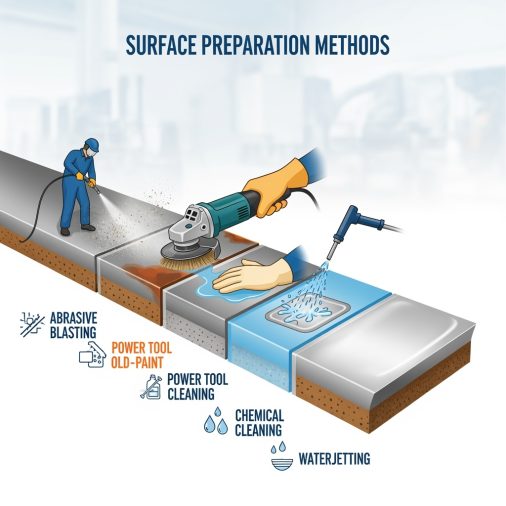
Surface preparation is the most critical factor in how well any rust sealer performs. A coating applied over loose scale, oil residue, or surface contamination will fail early regardless of product quality.
The general preparation sequence for an air compressor tank interior looks like this:
- Depressurize the tank completely and disconnect it from power.
- Drain all moisture through the drain valve and allow the interior to dry fully.
- Remove loose rust and scale using a wire brush or abrasive on a flexible extension tool, working through the tank’s access openings.
- Degrease the interior surface if any oil contamination is present, using a suitable solvent cleaner.
- Allow the surface to dry completely before applying any water-based product.
- Apply the sealer according to the manufacturer’s instructions, including coverage rate, number of coats, and curing time.
Access to the inside of a compressor tank is limited by the size of the drain port and any inspection openings. On many smaller portable tanks, thorough mechanical cleaning of the entire interior surface is genuinely difficult. Be honest about the limitations of what you can reach and clean before starting the job. You can find more detail on the full process of coating the inside of an air compressor tank, including access and drainage considerations.
Application Tips for Tank Sealers
Most tank sealers for internal use are applied as a liquid that coats the surface and cures in place. A few practical points apply to almost every product:
- Work in a ventilated space. Solvents and epoxy fumes inside an enclosed tank can be hazardous. Never work in a confined space without adequate ventilation.
- Apply at the manufacturer’s recommended temperature range. Most epoxy products require ambient temperatures above a certain threshold to cure correctly — typically somewhere in the range of 60–70°F minimum, but check the specific product data sheet.
- Do not rush the curing process. A sealer that has not fully cured can delaminate, introduce contamination into the air stream, or fail under operating pressure.
- Rotate the tank during application if the product is poured inside, so the liquid coats all interior surfaces evenly before it gels.
- Seal openings temporarily during the curing process to prevent dust contamination.
What Sealer Cannot Fix
Rust sealer addresses surface corrosion. It cannot restore wall thickness, reinforce a structurally weakened area, or fix a tank that has already been compromised. This distinction matters because a freshly coated tank can look and feel reassuringly solid while still being unsafe to pressurize.
If you find rust holes, pinhole leaks, severe pitting, or areas where the tank wall flexes or sounds thin when tapped, sealing is not the answer. The only responsible options at that point are professional inspection by someone qualified to assess pressure vessels, or replacement of the tank.
Additionally, no rust sealer is a permanent solution in isolation. Regular draining of the tank after use remains the single most effective habit for controlling internal moisture. Even a well-sealed tank benefits from consistent draining, because standing water can eventually work under any coating over time.
Safety Precautions During the Sealing Process
Working with tank sealers and rust converters involves chemical exposure risks. Wear chemical-resistant gloves, safety glasses, and wear clothing that covers your arms. Avoid breathing vapors from solvent-based products — work outdoors or with strong ventilation and a respirator appropriate for organic vapors if working indoors.
Keep the tank depressurized and disconnected from any power source throughout the entire process. Confirm the tank is fully discharged before opening any ports. Do not reconnect or pressurize the tank until the sealer has fully cured according to the manufacturer’s stated cure time.
Dispose of chemical waste, rags, and leftover product according to local regulations. Many solvent-based products are flammable before they cure — keep them away from ignition sources.
Maintenance After Sealing
A sealed tank still needs regular attention. Drain the tank after every use, or at minimum after every work session. Moisture accumulates during normal compressor operation as the air cools and water vapor condenses — this process happens regardless of the internal coating.
Check the drain valve periodically for blockages caused by rust flakes or debris, especially in the period shortly after sealing an older tank. Install an automatic tank drain valve if manual draining is easy to forget. An inline air filter and moisture separator on the outlet can also reduce the amount of rust-contaminated air reaching your tools and work.
Inspect the tank exterior regularly for new rust spots, which may indicate moisture penetrating from outside. If you notice rust flakes or discolored moisture at the drain after sealing, that is worth investigating — it may indicate that the coating did not adhere in certain areas.
Frequently Asked Questions
Can I use a rust converter on the inside of an air compressor tank?
Yes, a rust converter designed for enclosed metal surfaces can be used inside a compressor tank when surface rust is present. The product must fully cure before the tank is returned to service, and the surface must be free of loose scale and contamination beforehand. Converters are most effective on light-to-moderate rust, not heavily scaled or deeply pitted surfaces.
How do I know if my compressor tank is too rusted to seal?
If you see rust holes, pinhole leaks, weeping moisture through the tank wall, or areas with soft or paper-thin metal, the tank is beyond sealing. Severe pitting that has visibly reduced wall thickness is also a disqualifying condition. When in doubt, have the tank assessed by a qualified professional before applying any coating or returning it to service.
How long does tank sealer last inside a compressor tank?
Service life varies by product, surface preparation quality, operating conditions, and how consistently the tank is drained. No manufacturer can guarantee a specific service life for every application. A well-prepared surface with a quality epoxy sealer and good maintenance habits can provide years of protection, but the interior should be inspected periodically.
Will sealing the inside of the tank prevent rust completely?
A sealer significantly reduces moisture contact with the steel and slows corrosion, but it is not a permanent or infallible solution. Regular draining remains essential. Coatings can crack, delaminate, or thin over time, allowing moisture to reach the steel underneath. Sealing works best as part of a broader maintenance approach, not as a replacement for it.
Is it safe to use epoxy fuel tank sealer in an air compressor tank?
Some epoxy fuel tank sealers are used in compressor tank applications because they are formulated to resist moisture, pressure cycling, and temperature variation. However, you should verify that the product is rated for air-service applications and that it cures fully before pressurization. Consult the product manufacturer if you are uncertain whether their specific formulation is appropriate for your tank.
Can I weld a rusted air compressor tank to repair it instead of sealing it?
Welding repairs to a pressure vessel are a regulated activity in most jurisdictions. A compressor tank that has experienced rust-related wall loss is not a straightforward weld repair job — the remaining wall integrity must be evaluated before any heat is applied. Welding near rust-contaminated metal also introduces porosity and structural risks. For anything beyond cosmetic external repairs, consult a qualified professional and check applicable local regulations.
Keeping Your Compressor Tank Serviceable
Rust sealer is a practical tool for extending the life of a sound air compressor tank, but it works only when the tank is still structurally viable and the surface is properly prepared. Applying sealer without addressing loose rust, contamination, or access limitations will lead to early coating failure.
The most important habit remains consistent draining after use — no sealer replaces that. Combine good drainage practice with a quality sealer on a prepared surface, and most tanks in reasonable condition can remain serviceable for a considerably longer period.
If there is any question about wall integrity, get a professional opinion before sealing and before returning the tank to operating pressure. A compressor tank that fails under pressure is a serious hazard, and no coating product changes the physics of a compromised vessel.


