
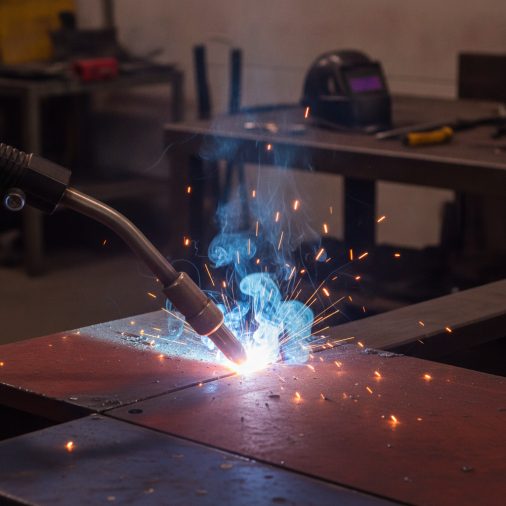
If you’re working with MIG welding — whether you’re setting up your first welder or troubleshooting burn-through on thin sheet metal — understanding the temperatures involved isn’t just academic. It directly affects your weld quality, material selection, and safety setup. The arc temperature, the weld pool temperature, and the heat-affected zone all behave differently, and confusing them leads to poor decisions. This article breaks down each temperature range clearly, explains what drives them, and helps you apply that knowledge practically.
Quick Answer
MIG welding generates an electric arc that reaches temperatures between 6,000°F and 10,000°F (3,315°C to 5,538°C). The weld pool itself is cooler, typically sitting between 2,500°F and 3,000°F (1,370°C to 1,650°C) depending on the base metal. The arc is the hottest point; the surrounding heat-affected zone is significantly lower.
Arc Temperature vs. Weld Pool Temperature — Why They’re Different
Most people assume the whole welding area is at one uniform temperature. It isn’t.
The electric arc is where the real heat is concentrated. In MIG welding (also called GMAW — Gas Metal Arc Welding), the arc forms between the consumable wire electrode and the base metal. This arc column can reach temperatures between 6,000°F and 10,000°F (3,315°C to 5,538°C), which is roughly the surface temperature of the sun’s outer atmosphere.
The weld pool, however, is a different story. Once the arc melts the base metal and filler wire, the molten pool stabilizes at a lower temperature — typically 2,500°F to 3,000°F (1,370°C to 1,650°C). For steel, this is well above the melting point of around 2,500°F (1,370°C), which is exactly what’s needed to fuse the metal.
The heat-affected zone (HAZ) — the area around the weld that gets hot but doesn’t melt — sits at even lower temperatures, often ranging from 400°F to 1,800°F (204°C to 982°C) depending on distance from the arc and material thickness.
How Material Type Changes the Equation

Different metals melt at different temperatures, which means MIG welding settings and effective heat levels vary significantly by material.
| Material | Melting Point | Typical Weld Pool Temp | Common MIG Application |
|---|---|---|---|
| Mild Steel | ~2,500°F (1,370°C) | 2,500–2,800°F | Structural, automotive, fabrication |
| Stainless Steel | ~2,550°F (1,400°C) | 2,600–2,900°F | Food equipment, exhaust systems |
| Aluminum | ~1,220°F (660°C) | 1,300–1,500°F | Automotive, marine, aerospace |
| Cast Iron | ~2,100°F (1,150°C) | 2,200–2,500°F | Engine blocks, heavy equipment |
| Copper Alloys | ~1,980°F (1,082°C) | 2,000–2,200°F | Electrical components, plumbing |
Aluminum is particularly sensitive. Because its melting point is so much lower than steel, heat input must be controlled carefully to avoid burn-through. In practice, aluminum MIG welding uses a push technique and often requires a spool gun to prevent wire feed issues caused by the softer wire.
What Controls the Heat Output in MIG Welding

The arc temperature itself is largely a function of the physics of the electrical discharge — it’s not something you dial in directly. What you do control are the variables that determine how much heat is delivered to the workpiece.
Voltage sets the arc length and directly affects heat input. Higher voltage = longer arc = more heat spread across a wider area.
Wire feed speed (amperage) controls how much filler metal is deposited and how much current flows. Higher wire feed speed increases amperage and heat concentration.
Travel speed determines how long the arc dwells over any given point. Slow travel speed concentrates heat; fast travel speed reduces heat input per inch of weld.
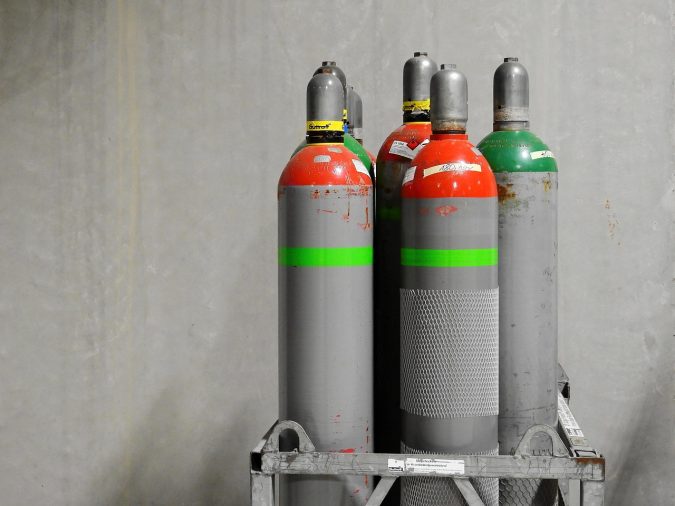
Shielding gas also plays a role. A CO₂-rich mix (like 100% CO₂) produces a hotter, more penetrating arc compared to a 75% Argon / 25% CO₂ mix, which runs cooler and produces a smoother bead with less spatter.
The combined effect of these variables is captured in the heat input formula:
> Heat Input (kJ/in) = (Amps × Volts × 60) ÷ (Travel Speed in in/min × 1,000)
This formula is used in professional welding procedures to ensure consistent, repeatable results — especially in structural and pressure vessel work governed by AWS or ASME standards.
Why These Temperatures Matter for Weld Quality
Understanding temperature isn’t just trivia. It has direct consequences for what happens to your metal.
Burn-through happens when heat input exceeds what the base metal can absorb — common on thin sheet metal under 1/8 inch. Reducing voltage, increasing travel speed, or using a smaller wire diameter (like 0.023″ instead of 0.030″) helps manage this.
Lack of fusion is the opposite problem. If the arc temperature doesn’t adequately melt the base metal — due to low amperage, fast travel, or poor technique — the filler metal sits on top rather than fusing into the joint. This creates a structurally weak weld that can look acceptable on the surface.
Distortion occurs when uneven heating and cooling cause the metal to warp. Thinner materials and longer welds are most susceptible. Controlling heat input and using tack welds or backstep welding sequences reduces distortion significantly.
Grain growth in the HAZ is a concern in structural applications. Prolonged exposure to elevated temperatures (above ~1,600°F / 870°C) causes the grain structure of steel to coarsen, reducing toughness. This is why preheat and interpass temperature limits exist in welding procedure specifications (WPS).
MIG vs. Other Welding Processes — Temperature Comparison
It helps to understand where MIG sits relative to other common welding processes.
| Process | Arc Temperature | Notes |
|---|---|---|
| MIG (GMAW) | 6,000–10,000°F (3,315–5,538°C) | Versatile, semi-automatic |
| TIG (GTAW) | 6,000–11,000°F (3,315–6,093°C) | Slightly hotter arc, more precise |
| Stick (SMAW) | 6,500–10,000°F (3,593–5,538°C) | Comparable range, less control |
| Flux-Core (FCAW) | 7,000–10,000°F (3,871–5,538°C) | Higher deposition, more heat |
| Oxy-Acetylene | ~5,500–6,300°F (3,038–3,482°C) | Lower arc temp, slower process |
MIG and TIG arc temperatures are broadly similar, but TIG gives the welder independent control over heat (via the foot pedal) and filler addition, making it better suited for precision work on thin or exotic materials. MIG trades some of that control for speed and ease of use.
Common Mistakes Tied to Misunderstanding Heat
Running too hot on thin metal is probably the most common beginner error. The instinct is to turn up the heat to get better penetration, but on 18-gauge sheet metal, that approach burns holes almost immediately. The fix is to reduce voltage, increase travel speed, and use the smallest wire diameter available.
Ignoring interpass temperature matters in multi-pass welds. Laying a second pass on metal that’s still too hot from the first pass compounds heat input and can degrade the HAZ. A contact thermometer or temperature-indicating sticks (Tempilstik) are practical tools for checking this on the job.
Assuming shielding gas doesn’t affect temperature is another oversight. Switching from a 75/25 Argon/CO₂ mix to 100% CO₂ increases arc temperature and penetration noticeably. That’s useful for thicker steel but can cause problems on thinner material or stainless.
Not accounting for preheat on thick sections leads to cracking. Steel over 1 inch thick — especially higher-carbon grades — needs preheating to 300°F–500°F (149°C–260°C) before welding to prevent hydrogen-induced cracking in the HAZ.
FAQ
What is the actual temperature of a MIG welding arc?
A MIG welding arc typically reaches between 6,000°F and 10,000°F (3,315°C to 5,538°C). The exact temperature depends on the shielding gas, wire type, and electrical parameters. This is the hottest point in the process — the weld pool and surrounding metal are significantly cooler. Most practical welding decisions are based on heat input to the workpiece rather than arc temperature directly.
Can MIG welding melt any metal?
MIG welding can melt most common metals, including mild steel, stainless steel, aluminum, and some copper alloys. However, it’s not ideal for all metals. High-carbon steels, titanium, and magnesium require specialized procedures or different processes. The arc temperature is more than sufficient to melt these materials — the challenge is controlling the heat input and shielding environment to prevent defects.
Why does my MIG welder burn through thin metal so easily?
Burn-through on thin metal happens when heat input exceeds what the material can handle. The fix involves reducing voltage, increasing travel speed, using a smaller wire diameter (0.023″ works well on thin sheet), and possibly switching to a short-circuit transfer mode. Stitch welding — short intermittent passes instead of a continuous bead — also helps manage heat buildup on thin panels.
Does shielding gas affect MIG welding temperature?
Yes, noticeably. Pure CO₂ shielding gas produces a hotter, deeper-penetrating arc compared to Argon/CO₂ blends. A 75% Argon / 25% CO₂ mix (C25) is the most common choice for mild steel because it balances penetration, bead appearance, and spatter control. For aluminum, pure Argon is used. The gas choice affects not just temperature but also arc stability and overall weld quality.
What temperature is the heat-affected zone in MIG welding?
The heat-affected zone (HAZ) typically ranges from around 400°F to 1,800°F (204°C to 982°C), depending on distance from the weld centerline and the heat input used. The area closest to the fusion line experiences the highest temperatures. In structural welding, controlling HAZ temperatures is important because excessive heat can alter the grain structure and reduce the toughness of the base metal.
How does MIG welding temperature compare to TIG welding?
Both processes generate arc temperatures in a similar range — roughly 6,000°F to 11,000°F (3,315°C to 6,093°C). TIG welding generally allows more precise heat control through a foot pedal amperage control, making it better for thin or heat-sensitive materials. MIG runs faster and is easier to learn, but offers less real-time heat adjustment during the weld pass.
What preheat temperature is needed for MIG welding thick steel?
For mild steel over 1 inch thick, preheat temperatures of 300°F to 500°F (149°C to 260°C) are typically recommended to prevent cracking. Higher-carbon or alloy steels may require higher preheat temperatures. AWS D1.1 (Structural Welding Code) and the steel manufacturer’s data sheets provide specific preheat requirements based on carbon equivalent and material thickness. Always verify requirements before welding critical structural components.
Final Thoughts
The MIG arc burns hot enough to rival the surface of the sun’s outer atmosphere — but that raw number matters less than how you manage heat delivery to the workpiece. Voltage, wire feed speed, travel speed, and shielding gas are the real controls. Match them to your material thickness and joint type, and the temperature takes care of itself. When something goes wrong — burn-through, lack of fusion, distortion — the root cause almost always traces back to heat input that’s either too high or too low for the situation.
Meta Description:
Curious how hot MIG welding gets? Learn arc temperatures, weld pool heat ranges, and how to control heat input for cleaner, stronger welds on any metal.


