
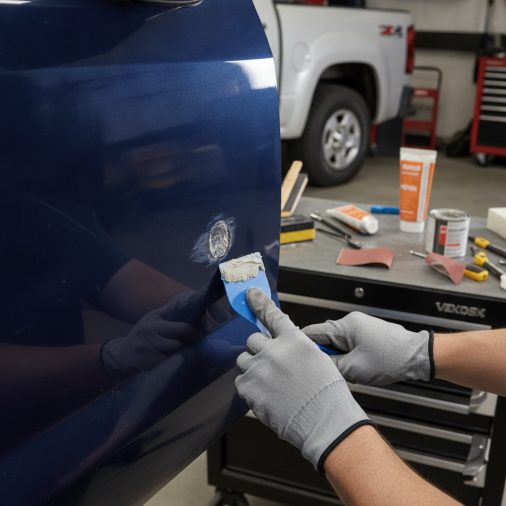
Small holes in truck doors are a common problem — whether from rust, old trim hardware, removed accessories, or minor collision damage. You don’t always need a welder to get a clean, lasting repair.
The most practical no-weld options for filling small holes in truck doors are body filler over a backing patch, metal epoxy, self-adhesive mesh with filler, or two-part panel bonding adhesive. The right choice depends on hole size, whether the repair will be painted, and how much structural integrity the panel needs to retain. For purely cosmetic repairs on small holes, body filler with a fiberglass mesh backing is usually the most accessible and budget-friendly method.
What You’re Actually Dealing With

Truck door panels are typically made from stamped mild steel, usually somewhere in the range of 18–22 gauge depending on the manufacturer and model year. That’s thin sheet metal, which is why even small holes can feel difficult to work with — there isn’t much material to anchor to.
Before choosing a repair method, it helps to know what caused the hole. Surface rust that has eaten through requires more preparation than a clean drilled hole left behind by a removed accessory. A hole with ragged, corroded edges will need more attention before any filler or adhesive will bond properly.
Preparation: The Step Most People Skip

Poor prep is the most common reason no-weld door repairs fail. Filler and adhesive both require a clean, bare-metal surface to bond correctly.
Start by removing all paint, rust, and surface contamination from at least two inches around the hole. A wire wheel on a drill or an angle grinder with a flap disc works well for this. If the edges of the hole are jagged or have rust flaking inward, use a small file, die grinder, or rotary tool to clean and smooth them.
For holes with active corrosion, treat the area with a rust converter or phosphoric acid-based rust prep product after mechanical cleaning. This chemically neutralizes any rust residue that grinding alone can’t fully remove.
If you’re working inside the wheel arch or in an area exposed to moisture, clean the interior side of the panel as well. Sealing only the exterior face of a rusty hole traps moisture and accelerates further corrosion underneath the repair. You can find a detailed breakdown of managing this in this guide on how to repair rusted metal with holes.
Method Comparison at a Glance

| Method | Best For | Hole Size Limit | Paintable | Skill Level |
|---|---|---|---|---|
| Body filler + fiberglass mesh | Small cosmetic holes | Up to ~1 inch | Yes | Beginner |
| Panel bonding adhesive | Slightly larger gaps, backing patches | Up to ~2 inches with patch | Yes | Beginner–Intermediate |
| Metal-filled epoxy putty | Very small pinholes, tight spots | Under ~0.5 inch | Yes (with primer) | Beginner |
| Aluminum repair tape | Temporary or hidden areas | Any size (temporary) | No | Beginner |
| Fiberglass repair kit | Larger holes needing more body | Up to ~3 inches | Yes | Intermediate |
Using Body Filler With a Mesh Backing
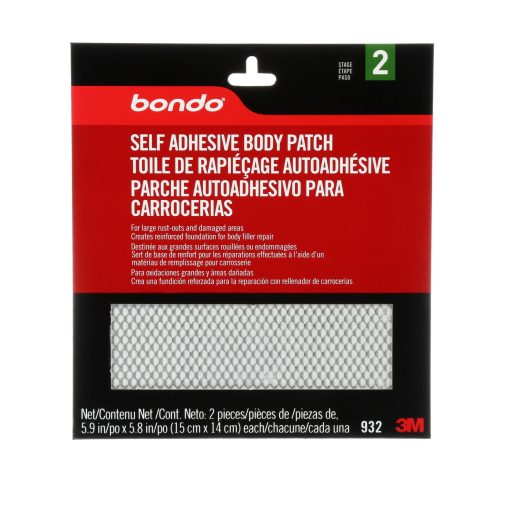
This is the most widely used no-weld approach for holes up to about one inch in diameter. It works well for old antenna holes, screw holes, and small rust perforations where the surrounding metal is still solid.
What you need:
- 80-grit and 120-grit sandpaper
- Self-adhesive fiberglass mesh patch or aluminum mesh
- Polyester body filler (such as Bondo All-Purpose Putty or a similar brand)
- Plastic spreader or body filler applicator
- Primer and paint for finishing
Cut the mesh patch to overlap the hole by at least an inch on all sides. Press it firmly onto the cleaned, bare metal surface. The mesh acts as a reinforcing substrate — body filler alone has no tensile strength and will crack or fall through without something to bond to.
Mix the body filler with hardener according to the package directions. Work quickly, as most two-part polyester fillers begin to set within a few minutes. Apply the first coat in a thin, even layer, pressing it into the mesh and slightly beyond its edges.
Allow the first coat to cure fully, then sand it flat with 80-grit paper. Build up additional thin coats as needed until the surface is level with the surrounding panel. Finish by block-sanding progressively through 120-grit and then finer grits before priming. Thick single-coat applications tend to crack more easily than several thin built-up layers.
Using Panel Bonding Adhesive With a Metal Patch
For holes larger than about an inch, or when you want more structural support than mesh and filler can provide, a metal backing patch bonded with two-part panel adhesive is a more robust solution.
Cut a patch from sheet metal, aluminum flashing, or an auto body patch panel slightly larger than the hole. Scuff both the patch and the surrounding door metal with 80-grit sandpaper to improve adhesion. Apply panel bonding adhesive — products in this category, like 3M Panel Bonding Adhesive, are formulated specifically for automotive sheet metal — to both mating surfaces.
Press the patch against the inside of the door panel so it overlaps the hole from the back. Hold it in place while the adhesive cures. Most panel bonding adhesives reach handling strength within 30–60 minutes, though full cure typically takes several hours. Check the specific product’s instructions for accurate timing.
Once cured, apply body filler over the outside face to blend the patch smoothly into the door surface. This approach is more durable than mesh and filler alone and resists vibration better over time.
Metal Epoxy Putty for Pinholes and Tiny Defects
For very small pinholes or tiny rust-through spots under about half an inch, two-part metal-filled epoxy putty is a quick option. Products like J-B Weld SteelStik or KwikWeld are commonly available and adhere well to clean steel.
Knead the two-part epoxy together until the color is fully uniform, then press it firmly into and over the hole. Overfill slightly, as most epoxy putties can be filed and sanded after curing. These products bond to bare metal but won’t bond reliably to rust, grease, or paint.
Metal epoxy works best as a semi-permanent repair on small defects in areas that aren’t highly stressed. On curved or flexing door panels, larger epoxy repairs can crack over time. Consider it a practical solution for trim holes or pinhole corrosion rather than for structural gaps.
Aluminum Repair Tape: Temporary Only
Aluminum foil tape with an aggressive adhesive backing can cover holes quickly and seal out moisture in the short term. It’s useful for protecting a repair area while you gather materials, or for sealing the inside of a door panel in a location that won’t be seen.
It is not a finished or paintable surface and won’t hold up to the flexing of a door panel over months of use. Don’t rely on it as a finished repair on a visible exterior surface.
Safety Points Worth Knowing
Body filler, panel adhesives, and epoxy products all contain chemicals that require basic precautions.
Work in a ventilated space. Most two-part fillers and adhesives release fumes during mixing and curing. Wear nitrile gloves to protect your skin, and use a respirator rated for organic vapor when sanding dried filler, as the dust is fine and persistent.
Keep solvents, aerosol primers, and adhesives away from heat sources. Avoid working near open flames. Read the safety data sheet for any product you use — mixing ratios, pot life, ventilation requirements, and curing times vary between brands and product types.
If the door area you’re repairing is near the fuel tank, fuel filler neck, or any brake or electrical lines, take care not to introduce heat or sparks even from grinding.
Getting a Paint-Ready Surface
The goal of a no-weld door repair is usually a finished, painted surface that matches the truck. Reaching that point requires patience with the sanding and priming stages.
After the filler is sanded flat and feathered smoothly into the surrounding panel, apply a two-part automotive sandable primer or a self-etching primer to the entire repaired area. Etching primer bonds to bare metal and provides a better foundation than standard spray-can primer. Sand the primed surface with fine-grit paper before applying color coat.
If color-matching matters, factory paint codes for most trucks are on a sticker inside the door jamb. Automotive paint suppliers and many auto parts retailers can mix aerosol or spray-gun paint to that code.
For a deeper look at no-weld techniques applied across different metal repair scenarios, the article on filling holes in metal without welding covers additional methods and material considerations.
When the No-Weld Route Isn’t the Right Answer
No-weld repairs are appropriate for cosmetic restoration and moisture sealing. They are not structural fixes.
If the door panel has significant rust spread across a large area, if multiple holes are converging into one larger void, or if the metal around the hole has lost rigidity and flexes easily, a no-weld repair will likely fail prematurely. In those cases, welding a patch panel — or having a body shop assess the extent of the damage — is the more reliable long-term solution.
Door panels that contribute to side-impact protection in some vehicle designs are engineered components. A large-scale no-weld repair using filler and mesh does not restore any engineered structural contribution of the original panel. For cosmetic holes under one inch with solid surrounding metal, no-weld methods are generally appropriate and widely used in automotive refinishing.
Frequently Asked Questions
Can body filler alone fill a hole in a truck door without any backing?
No. Body filler is brittle and has no tensile strength on its own. Without a mesh patch or a metal backing plate, it will crack, fall through, or pop out of the hole under normal door flex and vibration. Always use a fiberglass mesh or metal patch as a substrate before applying filler.
How long will a no-weld door repair last?
A well-prepped repair using mesh and body filler can last several years on a vehicle that is garaged and not exposed to frequent moisture or road salt. In high-moisture environments, or if preparation was incomplete, repairs can begin to fail within one to two seasons. A bonded metal patch typically outlasts mesh-only repairs.
Will epoxy putty work for holes in truck door metal?
Metal-filled epoxy putty works well for pinholes and very small defects on clean, bare metal. It’s less suitable for holes larger than about half an inch, and it can crack on curved or flexing panels over time. It’s a practical solution for small cosmetic defects but not for larger or structurally significant holes.
Do I need to seal the inside of the door after repairing a hole?
Yes, whenever practical. Sealing only the exterior face can trap moisture inside the door cavity, which accelerates rust from the inside out. Use a body seam sealer or wax-based rust inhibiting spray on the inner face of the repair after the outer repair is complete.
Is it worth repairing a truck door yourself or taking it to a body shop?
For small holes from removed trim, old antennas, or minor rust pinholes with solid surrounding metal, a DIY repair is entirely reasonable. For large rust damage, holes near structural door reinforcements, or if you want a factory-quality finish, a professional body shop assessment is a better investment.
Can these methods work on aluminum truck doors?
Some newer truck models use aluminum door skins. Aluminum-compatible body filler and epoxy products exist, but standard steel-formulated products may not bond or perform the same way. Check that any product you use is rated for aluminum, and be aware that aluminum is more prone to cracking under flex than steel.
Choosing the Right Method Before You Start
The best no-weld repair for a truck door comes down to three things: hole size, condition of the surrounding metal, and the quality of finish you need. For small holes with solid surrounding metal, body filler over a fiberglass mesh backing is practical, affordable, and paintable. For anything larger, a bonded metal patch gives better durability. Regardless of method, surface preparation is the variable that most determines whether the repair holds. Clean, bare metal and thin coats of filler will always outperform a rushed application on a rusty, painted surface.


