
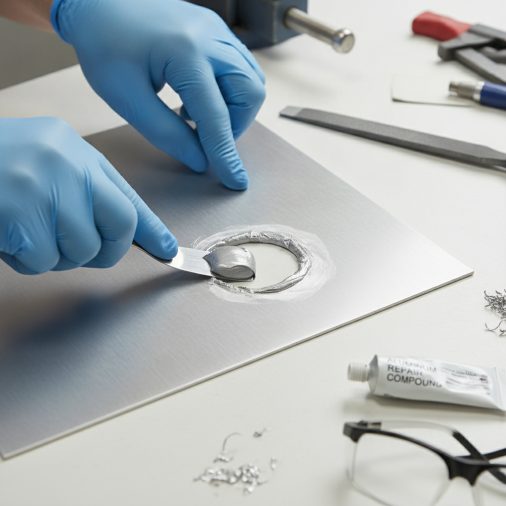
A hole in aluminum can come from corrosion, drilling errors, stripped fasteners, cracked castings, or accidental damage during fabrication. Getting a clean, solid repair depends on knowing which method suits the material, the hole size, and how the part will be used afterward.
The most reliable way to fill holes in aluminum is TIG welding, which gives you precise heat control and a strong, clean result. MIG welding with a spool gun is a practical second option for larger holes or thicker material. For minor cosmetic repairs or situations where welding isn’t an option, aluminum-rated epoxy or filler products can work, though they don’t match the strength of a welded repair.
Understanding What You’re Actually Dealing With

Aluminum is not a single material. It comes in many alloys, and some weld easily while others are prone to cracking, porosity, or hot tearing. Common weldable alloys include the 1xxx, 3xxx, 5xxx, and 6xxx series. Alloys in the 2xxx and 7xxx series are generally considered difficult or unsuitable for fusion welding without a qualified procedure.
If you don’t know the alloy, start with a small test weld on scrap. Watch how the puddle behaves. Cracking near the fusion zone or a puddle that turns crumbly can indicate a difficult-to-weld alloy.
Hole size also matters. A pinhole or small drilled hole responds differently than a ragged tear or a large punched-out area. The repair method that works well for one situation may be completely wrong for another.
Method 1: TIG Welding
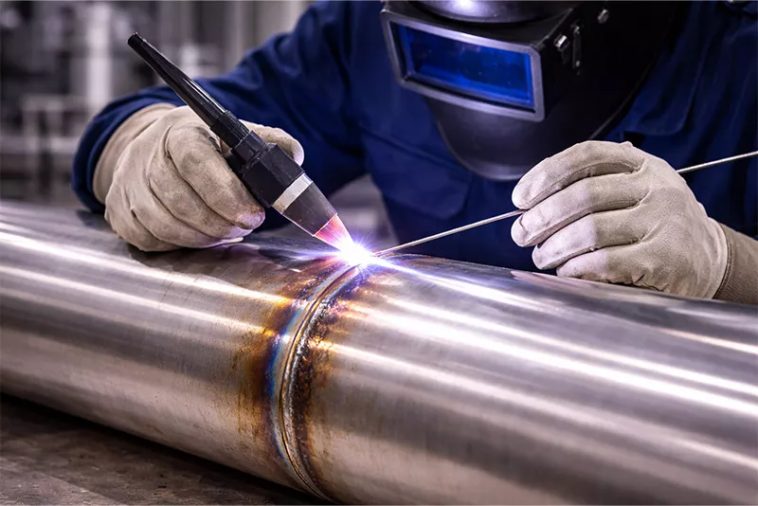
TIG welding is the preferred method for filling holes in aluminum when appearance and strength both matter. It gives the operator precise control over heat input and puddle placement, which is critical when working around a hole that can easily blow out further.
For aluminum, TIG is run on AC (alternating current) polarity. The AC arc provides the cleaning action that breaks up aluminum’s oxide layer, which melts at a much higher temperature than the base metal beneath it. Without that cleaning action, contamination and porosity are almost guaranteed.
Tungsten selection matters here. Pure tungsten or zirconiated tungsten electrodes are commonly used for AC aluminum TIG. Understanding how to ball tungsten for aluminum TIG welding correctly will help you maintain arc stability throughout the repair.
Filler Metal Selection
ER4043 and ER5356 are the two most common filler rods for aluminum TIG welding. ER4043 flows easily, is forgiving, and suits general repairs on most 6xxx series alloys. ER5356 is stronger and better suited to 5xxx series base metal, but it’s slightly more sensitive to cracking on certain alloys.
When the base alloy is unknown, ER4043 is generally the safer choice for a hole-filling repair. Always verify filler compatibility with the alloy if the part carries any structural load.
Technique for Filling a Hole
- Clean the area thoroughly with a dedicated stainless steel brush and a solvent such as acetone. Remove all oil, oxide, and surface contamination.
- For holes larger than roughly 3–5 mm, consider backing the hole temporarily with a copper or stainless steel backer to support the puddle.
- Strike the arc on the base metal near the edge of the hole, not directly into the opening.
- Build heat into the surrounding metal gradually before directing the puddle toward the hole.
- Add filler in small amounts and work in a circular or weaving motion to bridge across the gap.
- Allow the weld to cool naturally. Do not quench aluminum immediately after welding.
Keep your travel speed consistent and watch the puddle edges carefully. If the base metal begins to sag or the hole starts to grow, reduce heat immediately by increasing travel speed or pulling back slightly on the arc.
Method 2: MIG Welding with a Spool Gun
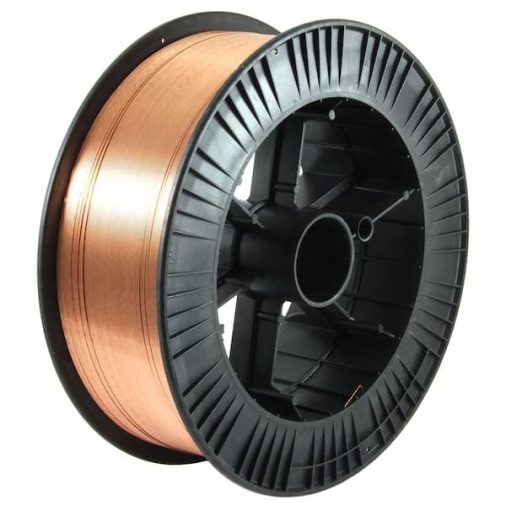
MIG welding is faster than TIG and works well for filling holes in thicker aluminum sections where ultra-fine cosmetic control is less critical. The main challenge with MIG on aluminum is wire feeding, and a spool gun largely solves that problem by keeping the soft aluminum wire as short as possible between the drive rolls and the contact tip.
If you’re planning to use a MIG setup for aluminum repairs, reviewing the process of using a MIG welder on aluminum will help you avoid the common setup mistakes that cause porosity and poor fusion.
Pure argon shielding gas is required for aluminum MIG welding. Do not use CO₂ or mixed gases containing CO₂, as they will cause excessive spatter and contamination. Flow rates typically fall in the range recommended by the equipment manufacturer and the wire diameter being used. For specific guidance on shielding gas selection, the details on what gas to use for aluminum MIG welding are worth reviewing before you set up.
Filling Larger Holes with MIG
MIG works best on holes with reasonably clean, defined edges in material that is thick enough to support the puddle. On thin aluminum sheet, the high heat input from MIG makes it easy to enlarge the hole rather than fill it.
For larger holes in thicker sections, a patch approach often works better than trying to weld across open air. Cut a small plug from matching aluminum stock, tack it into position, and then run fillet welds around the perimeter to secure and seal it.
Method 3: Brazing with Aluminum Brazing Rods
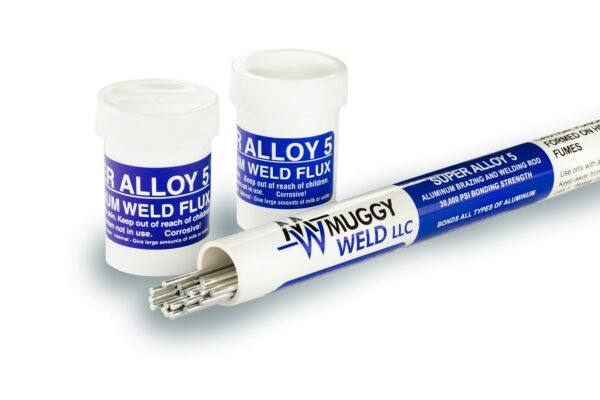
Aluminum brazing rods, sometimes marketed as low-temperature aluminum repair rods, allow you to fill small holes using a propane or MAPP torch. These rods flow at temperatures well below the melting point of most base aluminum alloys, which means the base metal doesn’t actually fuse. The result is a bond rather than a true weld.
This method can handle small holes in non-structural, non-pressure applications such as screen frames, irrigation fittings, or household aluminum parts. The joint strength is lower than a fusion weld and is sensitive to the surface preparation quality. Results vary significantly depending on the alloy and how thoroughly the oxide was removed before brazing.
Always follow the manufacturer’s instructions for flux application and torch distance with brazing products. Overheating the base metal is a common mistake that causes the surrounding area to sag or collapse.
Method 4: Epoxy and Non-Welding Options
When welding isn’t available or practical, a high-quality two-part aluminum-rated epoxy can fill small holes for cosmetic or light-duty applications. These products typically require the same surface preparation as any other bonding method: clean, dry, and oxide-free metal.
Epoxy fills are not suitable for structural repairs, high-temperature environments, or areas subject to significant vibration or cyclic loading. They are best thought of as a temporary solution or a cosmetic fix for parts under minimal stress. If you need ideas on filling holes without a welder, there are several non-welding alternatives covered in more detail in this guide on filling holes in metal without welding.
Surface Preparation: The Step Most People Rush
Aluminum develops an oxide layer almost instantly when exposed to air. That layer is chemically stable and has a much higher melting point than the aluminum beneath it. If you weld or braze over it without proper cleaning, the result will be porosity, lack of fusion, or a weak, contaminated deposit.
Clean the repair area with acetone or a similar degreasing solvent first, then use a stainless steel wire brush dedicated exclusively to aluminum. Never use a brush that has touched steel, as cross-contamination will introduce impurities into the weld. Brush in one direction rather than scrubbing back and forth.
For TIG welding, cleaning within 30 minutes before welding is a reasonable practical target in a typical shop environment. Longer delays allow the oxide to rebuild.
Method Comparison at a Glance
| Method | Strength | Best For | Equipment Needed | Skill Level |
|---|---|---|---|---|
| TIG Welding | Highest | All hole sizes, thin to thick, cosmetic or structural | AC TIG welder, argon, rods | Intermediate–Advanced |
| MIG Welding | High | Thicker sections, larger holes, faster repair | MIG welder, spool gun, argon | Intermediate |
| Aluminum Brazing | Moderate | Small holes, non-structural, light-duty parts | Propane/MAPP torch, brazing rods | Beginner–Intermediate |
| Epoxy Filler | Low | Cosmetic fixes, temporary repairs, low-stress areas | Mixing tools, sandpaper | Beginner |
When a Patch Plate Makes More Sense
For holes larger than roughly 10–15 mm, trying to bridge across open air with filler becomes difficult even for experienced welders. The puddle has no supporting material at the edges and tends to drop through or create a weak, porous deposit.
Cutting a patch from matching aluminum alloy and welding it in place is often faster, stronger, and more reliable. The patch can be butt-welded flush with the surface or lapped over the hole and fillet-welded around the perimeter, depending on the accessibility and the finished appearance required.
Matching the alloy of the patch to the base material is important. Mismatched alloys can create cracking at the fusion boundary, particularly when one material has high magnesium content and the other does not.
Heat Control and Burn-Through Prevention
Aluminum conducts heat rapidly and has no visible color change before it reaches melting temperature. It goes from solid to liquid with almost no visual warning, which is why burn-through and hole enlargement are among the most common problems during aluminum repair welding.
Start with lower heat than you think you need. You can always add more, but you cannot put metal back once the hole is bigger. Moving the arc in a circular or oscillating motion distributes heat more evenly and reduces the risk of concentrating too much energy at one point.
For thin aluminum sheet repairs, pulse TIG is a significant advantage. The pulse cycle reduces average heat input while maintaining arc stability. The practical benefits of pulsed TIG welding for aluminum are particularly useful when working around existing holes in thin material.
Safety Considerations
Aluminum welding fumes contain aluminum oxide particles and, depending on the alloy, potentially manganese or other elements. Work in a well-ventilated area or use local fume extraction positioned near the arc, not behind you.
Use appropriate PPE throughout: a welding helmet with the correct shade lens for the process being used, leather welding gloves, a flame-resistant jacket, and closed-toe boots. Acetone and other cleaning solvents are flammable — keep them away from the welding area and allow surfaces to dry fully before striking an arc.
If the aluminum part was previously coated, anodized, or painted, check whether the coating contains chromates or other hazardous compounds. Grinding or welding through unknown coatings can release toxic fumes. Remove coatings from the repair area before welding and ensure ventilation is adequate.
Finishing the Repair
After welding, allow the repair to cool to ambient temperature without forced quenching. A completed weld bead will typically be slightly raised above the base surface. Grinding or filing the weld flush is straightforward but requires care — removing too much material can thin the repair deposit significantly.
Use a dedicated aluminum grinding disc or flap disc rated for non-ferrous metals. Standard steel grinding wheels can load up with aluminum and create a fire risk. Finish with a file and wet-or-dry sandpaper if a smooth, polished surface is required.
Inspect the finished repair for porosity, cracks, undercut at the fusion line, and any remaining voids. For structural, pressure-containing, or safety-critical parts, visual inspection alone is not sufficient. Dye penetrant testing or other non-destructive examination methods should be used, and the work should be performed to an approved welding procedure by a qualified welder.
Frequently Asked Questions
Can you fill a hole in aluminum without a welder?
Yes, for non-structural and cosmetic applications. Low-temperature aluminum brazing rods used with a propane or MAPP torch can fill small holes without a welder. Two-part epoxy fillers rated for aluminum are another option. Neither approach matches the strength of a proper fusion weld, so they’re best suited to light-duty parts under minimal stress.
What filler rod should I use to TIG weld holes in aluminum?
ER4043 is the most common general-purpose choice and works well on most 6xxx series alloys. ER5356 offers higher strength and suits 5xxx series base metal. When the alloy is unknown, ER4043 is typically the more forgiving option. Always confirm filler compatibility with the specific alloy if the repair is load-bearing or safety-critical.
Why does my aluminum weld keep blowing holes instead of filling them?
The most likely cause is too much heat concentrated in one area for too long. Aluminum reaches its melting point quickly and gives almost no visual warning. Reduce amperage, increase travel speed, use a pulsed arc if available, and consider using a copper or stainless backing strip behind the hole to support the puddle during filling.
Is it safe to weld holes in aluminum castings?
Aluminum castings can be welded, but they present challenges. Casting alloys often contain silicon or copper, and some are prone to hot cracking or porosity from absorbed gases in the casting. Preheating, proper alloy identification, and the right filler selection are all important. For any casting that is structural or pressure-rated, consult a qualified professional before attempting a repair.
Do I need special equipment to MIG weld aluminum?
A standard MIG setup needs modifications for aluminum. You’ll need a spool gun or a push-pull gun to handle the soft aluminum wire without bird-nesting, a pure argon shielding gas supply, a U-groove drive roll rather than a V-groove, and a clean Teflon-lined or aluminum-rated liner in the torch. Standard steel-rated equipment will cause feeding problems and contamination.
How large a hole can you fill by welding without using a patch?
There’s no fixed maximum, but most welders find that holes beyond approximately 10–15 mm become difficult to bridge reliably without a backing strip or patch. Larger openings give the puddle no solid edge to fuse against, increasing the risk of burn-through, poor fusion, and porosity. A small aluminum patch plate is often the stronger and faster solution for larger openings.
Choosing the Right Approach for a Lasting Repair
The method that gives you the best result depends on the hole size, the alloy, the part’s purpose, and the equipment you have available. TIG welding consistently delivers the most controlled and highest-quality repair across the widest range of situations. For anything structural, pressure-bearing, or safety-critical, a proper fusion weld performed to a qualified procedure is the only responsible option — appearance alone cannot confirm a repair is sound.
Surface preparation is not optional. Clean, oxide-free metal is the foundation of every successful aluminum repair, regardless of the method. Rushing that step causes more failed repairs than any mistake made during welding itself.
When welding isn’t practical, brazing or epoxy can address cosmetic and light-duty needs, but set realistic expectations for what those methods can and cannot withstand. Matching the repair method to the actual demands of the part is always the right starting point.


