
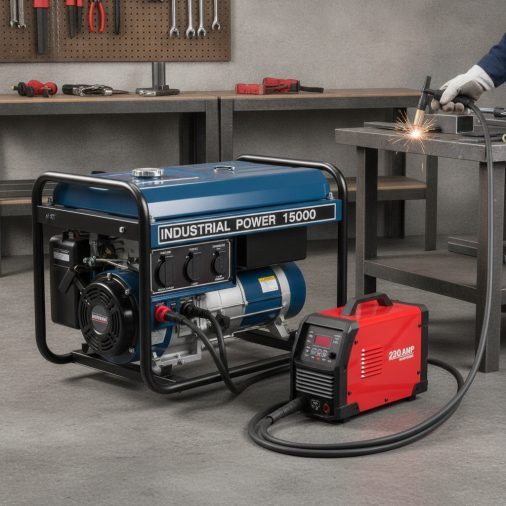
You need to run a 230 amp welder away from shore power — on a job site, in a rural location, or during an outage — and you want to know what size generator will actually handle the load without tripping, stalling, or damaging your machine.
A generator suitable for a 230 amp welder typically needs to produce at least 7,000 to 10,000 running watts, depending on the welding process, duty cycle, and whether the welder uses an older transformer design or a modern inverter. Inverter-based welders draw power more efficiently and place a lower, more consistent demand on a generator. Transformer-based machines draw heavier surge currents that require more headroom. Always check your specific welder’s input power requirements — listed in watts or volt-amperes on the nameplate or in the owner’s manual — and size the generator above that figure, not equal to it.
Why Welder Output Amps Don’t Directly Equal Generator Size
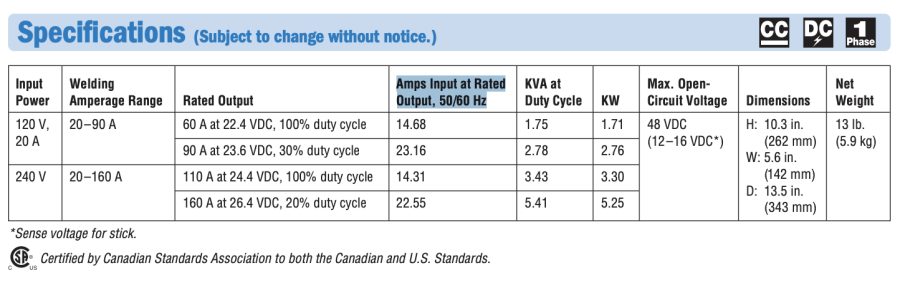
The 230 amp figure on a welder refers to its welding output current — the amperage delivered to the arc. It does not describe how much electrical power the machine draws from the generator’s outlet.
What actually matters for generator sizing is the welder’s input power consumption, expressed in watts (W) or volt-amperes (VA). A 230 amp MIG welder running at full output might draw anywhere from roughly 5,500 watts to over 8,000 watts from the supply, depending on its design, efficiency rating, and operating voltage. Always read the input power figure from the welder’s nameplate, not the output amperage rating.
Understanding Input Power on the Welder’s Nameplate
The nameplate is usually on the rear or side panel of the machine. Look for:
- Input voltage: typically 230V or 240V single-phase for a machine in this class
- Input amperage: the current the welder draws at rated output (often 30–50A or more)
- Input KVA or watts: the most direct figure for generator sizing
- Power factor: listed on some machines, particularly inverters
Multiply input voltage by input amperage to get approximate volt-amperes. For example, a welder drawing 35A at 230V represents about 8,050 VA. That is your baseline before adding a safety margin.
Transformer Welders vs. Inverter Welders: Why It Matters for Generator Load
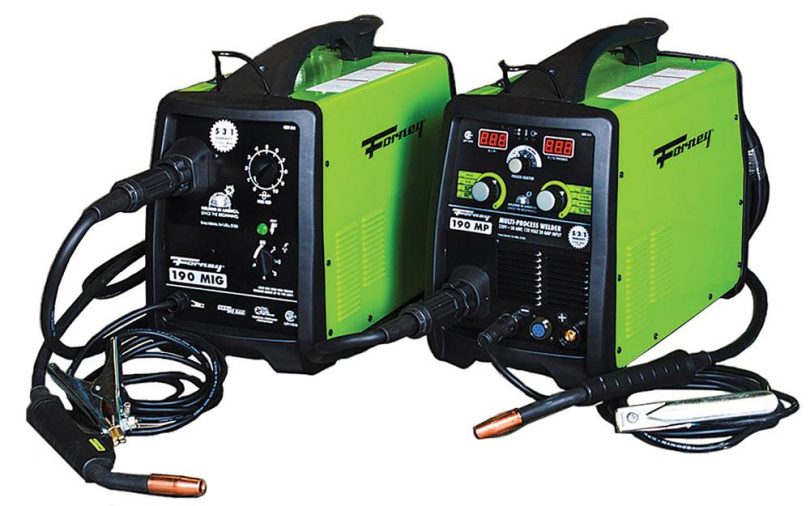
Older transformer-based welders and engine-driven Lincoln Electric or Miller Electric style conventional machines draw a large inrush or surge current when the arc strikes. This spike can momentarily exceed the steady-state draw by a significant margin, which can overload a generator running at its rated limit.
Modern inverter-based MIG, stick, and TIG welders — such as the Miller Multimatic 215 or comparable machines in this amperage range — use power electronics to regulate the draw more smoothly. They are generally more generator-friendly because the surge on arc start is smaller and the efficiency is higher. If portability and generator compatibility matter to you, an inverter welder is usually the better pairing.
For machines that support matching welder input to your power supply, check whether the machine’s power factor is listed. A power factor below 1.0 means the generator must supply more apparent power than the watt rating alone suggests.
Recommended Generator Size: Practical Guidance
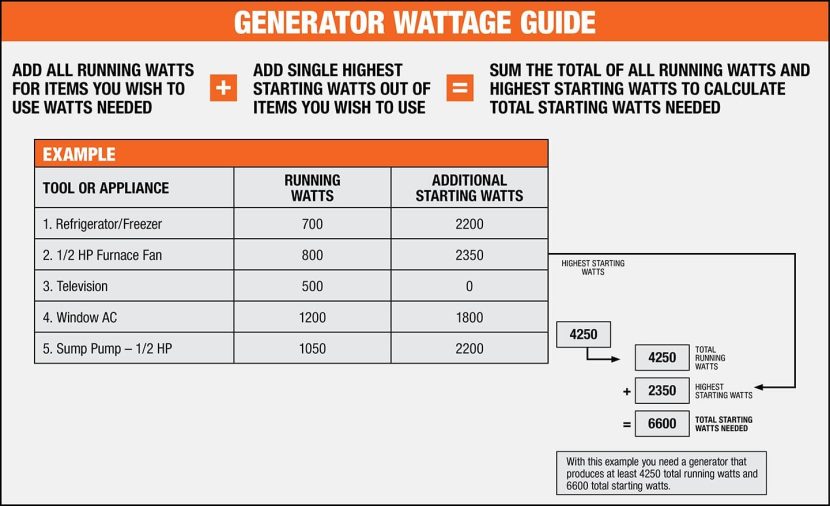
There is no single wattage that works for every 230 amp welder, because input draw varies by machine design, the actual amperage you are welding at, and duty cycle. The figures below are general practical guidance, not guaranteed specifications.
| Welder Type | Typical Input Draw at Near-Full Output | Suggested Minimum Generator Size |
|---|---|---|
| Transformer MIG (230A class) | 7,000–9,000 VA | 10,000–12,000 running watts |
| Inverter MIG or multi-process (230A class) | 4,500–7,000 W (varies by power factor) | 7,000–9,000 running watts |
| Stick (SMAW) inverter (230A class) | 4,000–6,500 W typical | 7,000–8,500 running watts |
| Transformer stick (230A class) | 6,500–9,000 VA | 10,000–12,000 running watts |
These ranges assume you are welding at or near the machine’s rated output. If you routinely weld at lower amperage settings — say, 130–160A for thinner material — the generator demand will be proportionally lower. Running headroom is still important because welders rarely operate at a perfectly steady load.
Running Watts vs. Starting Watts: Don’t Confuse the Two
Generator specifications list both a peak or starting wattage and a continuous running wattage. The running wattage is the only figure that matters for sustained welder operation. Never size a generator based on its peak figure alone.
A generator advertised as “10,000 watts” may deliver only 8,500 running watts continuously. Match your welder’s input power requirement against the generator’s continuous rating with at least 20–25% headroom built in. That buffer keeps the generator from running at its thermal limit, extends engine life, and handles arc-start surges without voltage sags that could harm inverter electronics.
Open-Frame vs. Inverter Generator: Which Handles Welder Loads Better
Open-Frame Conventional Generators
Traditional open-frame generators run at a fixed engine speed — typically 3,600 RPM — to maintain 60 Hz frequency. They are generally robust, capable of handling the surge demand of transformer welders, and available in high wattage ratings at relatively lower cost. Brands such as Champion and Westinghouse offer open-frame units in the 9,000–12,000 watt range that are commonly used on job sites alongside welders.
The trade-offs are weight, fuel consumption, and noise. These generators also produce voltage and frequency fluctuations under varying load, which some sensitive inverter welders may respond to negatively.
Inverter Generators
Inverter generators produce cleaner, more stable power through an electronic inverter stage. They are quieter, more fuel-efficient at partial load, and generally safer for sensitive electronics. However, most consumer-grade inverter generators top out at 3,500–7,000 running watts. That may not be sufficient headroom for a full 230 amp transformer welder at high output.
Larger dual-fuel or high-output inverter generators do reach 7,000–10,000 watts but are significantly more expensive. If your inverter welder’s input draw falls within that range and you confirm compatibility, an inverter generator can be a good pairing.
Voltage Stability and Welder Sensitivity
Inverter welders are generally more sensitive to voltage sag and frequency variation than transformer machines. When a generator is undersized or heavily loaded, its output voltage can drop under the arc-start surge. This can cause the welder’s protection circuit to trip, produce an unstable arc, or in some cases generate fault codes.
If you experience arc instability, unexpected shutdowns, or nuisance tripping when welding on a generator, the first thing to check is whether the generator is sustaining its rated output voltage under load. A simple clamp meter or generator load test can confirm this. When setting up welding equipment with generator power, proper electrical setup and circuit awareness still apply, even outdoors.
Duty Cycle and Its Effect on Generator Demand
Most 230 amp welders in this class are rated at a duty cycle of 30–60% at maximum output. A 60% duty cycle means the machine can weld for 6 minutes out of every 10-minute period at that amperage before needing to cool.
In practice, most welding jobs involve start-stop work. The average power demand over time is lower than the peak draw. This is why a generator that would theoretically struggle at 100% continuous load can often handle a welder in normal shop use — as long as the generator can sustain the peak draw for the duration of each welding pass without voltage collapse.
Fuel Type, Runtime, and Site Practicality
Generators for welding use commonly run on gasoline, propane, or dual fuel. Diesel generators are also used on larger job sites for their fuel efficiency and runtime at sustained heavy loads.
For extended site work with a 230 amp welder, runtime per tank matters. A 9,000–12,000 watt gasoline generator at full load may consume 1–1.5 gallons of fuel per hour or more. Plan fuel storage accordingly and follow all local safety requirements for storing and handling fuel around welding operations.
Safety Considerations When Running a Welder on a Generator
Never operate a generator indoors, in a garage, or in any enclosed or partially enclosed space. Carbon monoxide from generator exhaust is odourless and rapidly lethal. Always position the generator outdoors with exhaust directed away from any opening, window, or doorway.
Use properly rated extension leads or welding cables. Undersized cables between the generator and welder cause voltage drop that compounds generator-related instability. Keep all connections dry and protected from the work environment.
Confirm that the generator outlet voltage and receptacle type match the welder’s power requirements before connecting. A 230V welder must be connected to the correct outlet — never to a 120V outlet using an improvised adapter. If the welder requires a specific plug configuration, use a certified adapter or have a qualified electrician verify the connection.
Follow all personal protective equipment requirements as you would with any welding setup: appropriate shade welding helmet, flame-resistant clothing, welding gloves, and adequate ventilation or fume extraction at the welding point.
Frequently Asked Questions
What size generator do I need for a 230 amp MIG welder?
For a transformer-based 230 amp MIG welder running near full output, a generator producing at least 10,000 continuous running watts is a common practical recommendation. An inverter MIG welder of the same output rating typically requires less — often 7,000 to 9,000 running watts — due to higher efficiency and lower inrush current. Always verify the input power figures on your specific machine’s nameplate before sizing.
Can I run a 230 amp welder on a 7,000 watt generator?
It depends on the welder design and your actual welding amperage. A 7,000 watt generator may run a high-efficiency inverter welder at moderate output settings, but it is likely insufficient for a transformer-based 230 amp machine at anywhere near rated output. Check the welder’s input watt or VA rating. If that figure plus a 20–25% safety margin exceeds 7,000 watts, the generator is undersized for that machine at full load.
Will a generator damage my inverter welder?
An undersized or poorly regulated generator can produce voltage sags and frequency instability that cause inverter welders to trip protection circuits, produce erratic arcs, or display fault codes. A generator that is correctly sized and maintains stable output voltage under load should not damage a modern inverter welder. Check the welder manufacturer’s guidance on generator compatibility, as some specify minimum generator requirements or recommend inverter-type generators for stable operation.
Does welding process affect how big a generator I need?
Yes. Stick welding (SMAW) and TIG welding generally produce a more predictable and sometimes lower average input draw compared to MIG welding at the same output amperage, because wire feeding in MIG adds a small motor load. Flux-core welding behaves similarly to MIG. The process does not change the fundamental sizing rule — match input power demand plus headroom to generator continuous output — but it can shift where on that scale your actual demand falls.
Can a generator run both a welder and other tools at the same time?
Only if the generator’s continuous running wattage comfortably covers the combined load of all equipment running simultaneously. Adding a grinder, lighting, or compressor while welding significantly increases total demand. Add up the input wattage of everything that could run at once and confirm the generator’s continuous rating exceeds that total with reasonable headroom. Running a generator at or above its rated continuous output shortens engine life and increases the risk of output voltage instability.
Is it better to weld at lower amperage when using a generator?
Welding at lower amperage does reduce the welder’s input power demand and is easier on a smaller generator. However, the correct amperage setting depends on material thickness, electrode or wire size, and joint requirements — not on what the generator prefers. Reducing amperage below what the joint requires produces cold, poorly fused welds. Use the correct amperage for the job and size the generator to handle that demand, rather than compromising weld quality to suit an undersized generator.
Matching the Generator to the Job
The key decision is always the welder’s actual input power draw at your working amperage, not the output amperage label alone. Inverter welders give you more flexibility with smaller generators; transformer machines demand more headroom. Build in at least a 20–25% buffer above the welder’s peak input demand when selecting a generator’s continuous wattage rating. For serious site work where a 230 amp machine will run regularly at or near full output, a generator in the 10,000–12,000 running watt class is the more reliable and practical choice than one sized exactly at the limit.


