
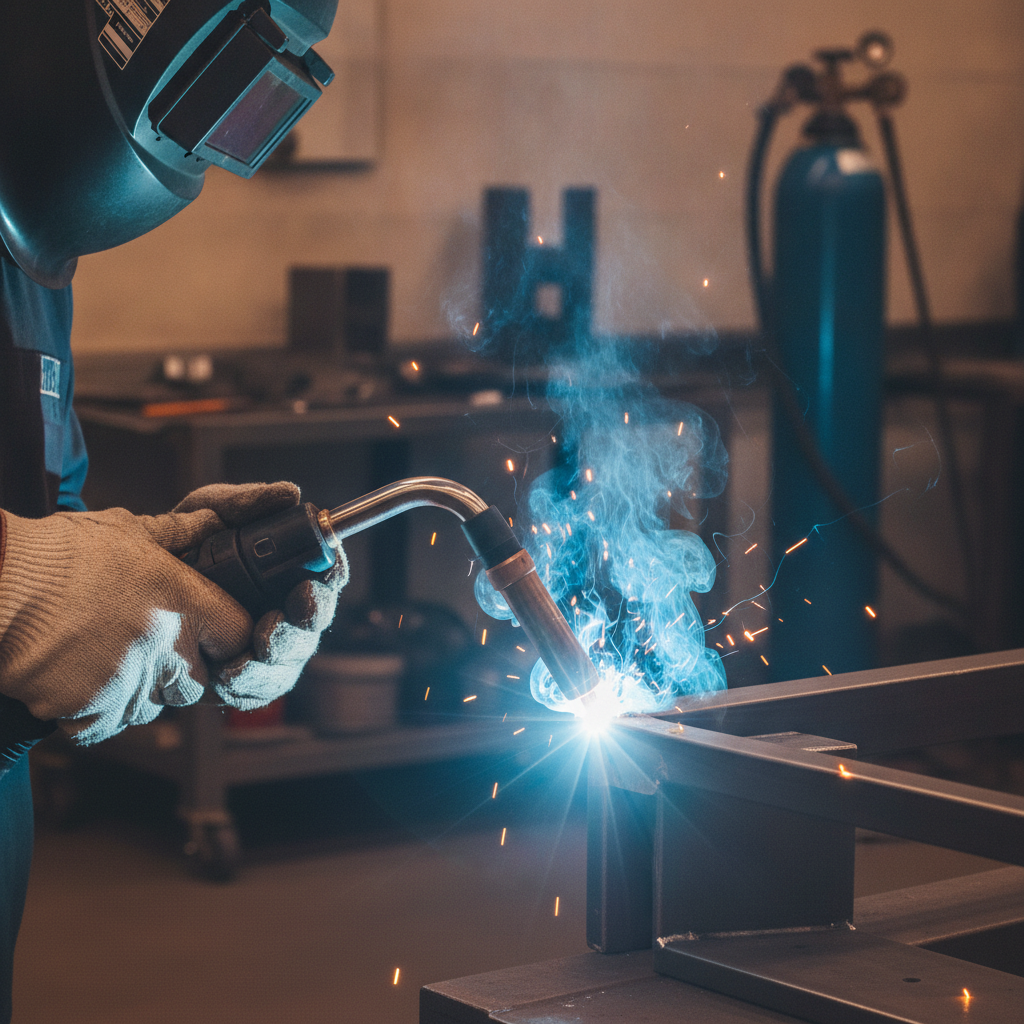
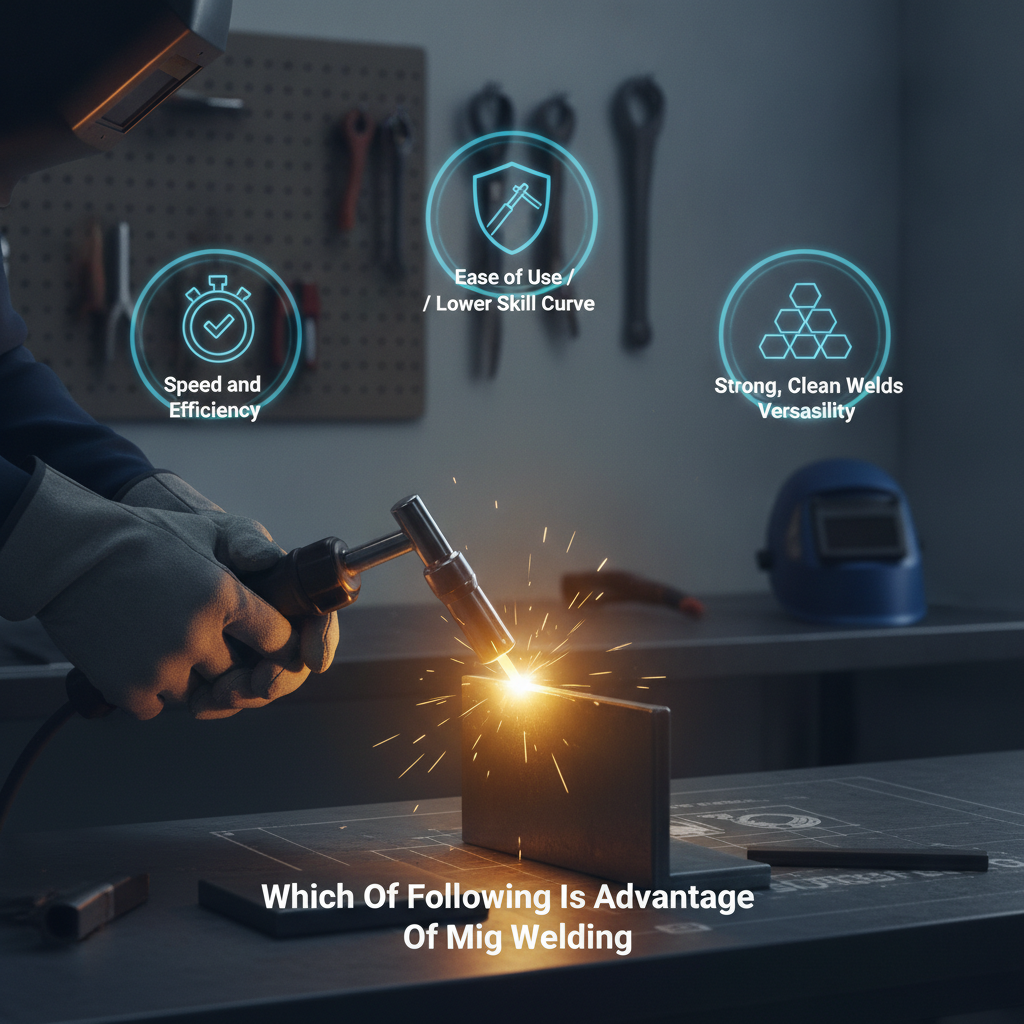
The primary advantages of MIG welding include high welding speed, ease of learning, continuous wire feed that reduces downtime, clean welds with minimal slag, versatility across metal types and thicknesses, and suitability for both manual and automated applications. It is one of the most productive and accessible welding processes available.
MIG welding shows up everywhere — auto body shops, fabrication yards, home garages, and industrial production lines. If you’re trying to understand why it’s so widely used, or you’re answering a specific question about its advantages, this article breaks it down clearly. You’ll learn what MIG welding actually does well, where it outperforms other processes, and what limitations to keep in mind so you can make an informed decision.
What MIG Welding Actually Does Differently
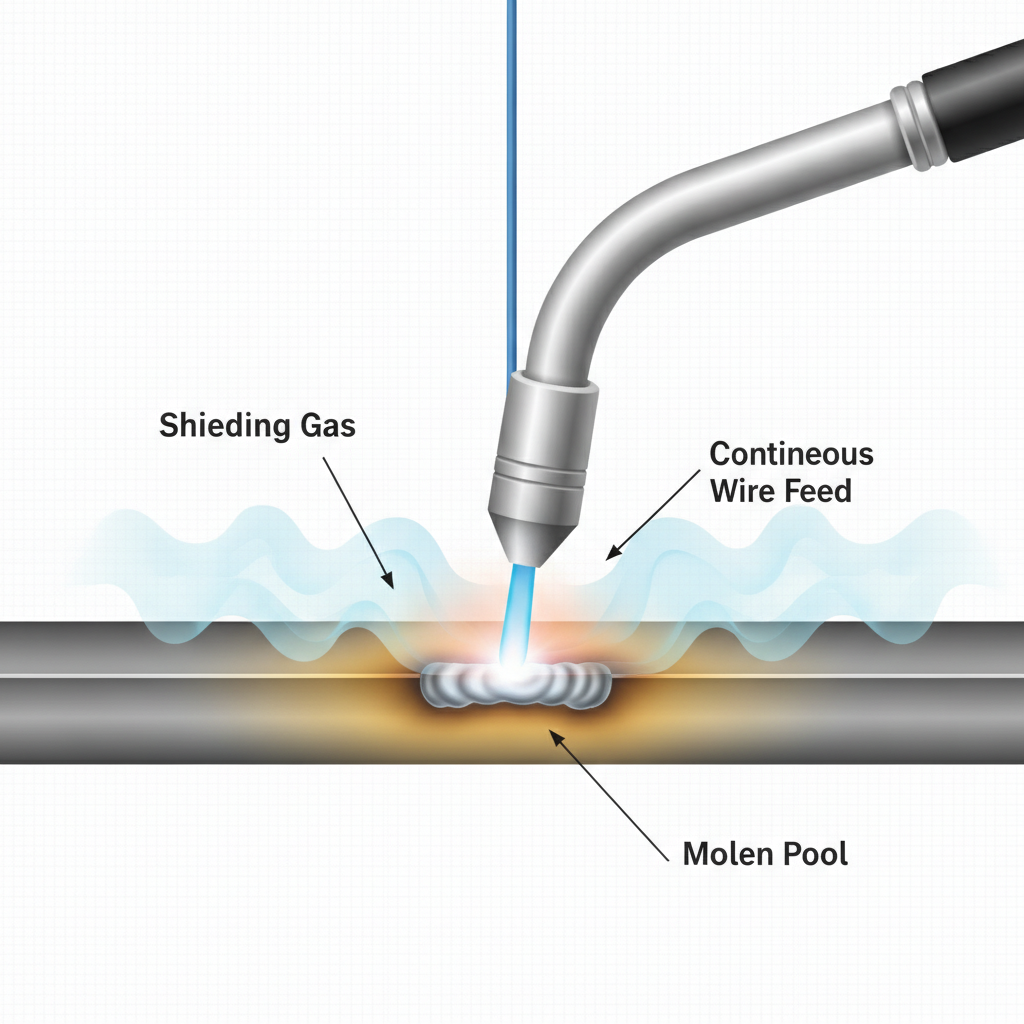
MIG welding — Metal Inert Gas welding, formally known as Gas Metal Arc Welding (GMAW) — uses a continuously fed consumable wire electrode and a shielding gas to protect the weld pool from atmospheric contamination.
Unlike stick welding (SMAW), there’s no flux coating to chip away. Unlike TIG welding (GTAW), you don’t need to manually feed filler rod while simultaneously managing a torch and foot pedal. The wire feeds automatically, the arc stays consistent, and the welder can focus on gun angle, travel speed, and positioning.
That simplicity is the foundation of most of MIG’s advantages.
The Core Advantages of MIG Welding
1. High Deposition Rate and Welding Speed
MIG welding deposits filler metal faster than most other common processes. The continuous wire feed means there’s no stopping to replace electrodes or rods mid-weld.
In production environments, this translates directly to output. A skilled MIG welder can lay down significantly more weld metal per hour compared to stick or TIG welding on similar joints. For fabrication shops running high volumes, that speed difference compounds quickly across a workday.
2. Easier to Learn Than TIG or Stick
MIG welding has one of the lowest skill entry points among arc welding processes. A beginner can produce acceptable welds within a few hours of practice — not perfect welds, but functional ones.
The gun trigger controls both the wire feed and arc simultaneously, which removes one variable from the learning curve. Shielding gas flow, voltage, and wire feed speed are typically preset, letting new welders focus on technique rather than juggling multiple controls at once.
This doesn’t mean MIG welding is effortless. Producing consistently high-quality welds still requires practice. But the gap between a beginner and a competent MIG welder is narrower than with TIG.
3. Continuous Wire Feed Reduces Downtime
With stick welding, you stop every time an electrode burns down — sometimes every 30 to 60 seconds on a long weld. With MIG, the wire spool can hold hundreds of feet of electrode, allowing long, uninterrupted weld runs.
This matters most on long seam welds, structural fabrication, and production work where stopping and restarting introduces inconsistency and wastes time. Fewer stops also means fewer potential restart defects in the weld bead.
4. Minimal Post-Weld Cleanup
MIG welding produces very little slag. With the right shielding gas and parameters, the finished weld bead is clean and ready for inspection or finishing with minimal grinding or brushing.
Compare this to flux-core welding or stick welding, where slag must be chipped and brushed away before the weld can be inspected or painted. In automotive bodywork or any application where surface finish matters, that cleanup time adds up fast.
Spatter is the main cleanup concern with MIG, and it can be minimized by dialing in voltage and wire speed correctly, using anti-spatter spray on surrounding areas, and choosing the right shielding gas mixture.
5. Works on a Wide Range of Metals and Thicknesses
MIG welding handles mild steel, stainless steel, aluminum, and various alloys. By changing the wire type and shielding gas, the same machine can be adapted for different materials.
It also covers a broad thickness range. With the right machine settings, MIG can weld thin sheet metal (around 24 gauge) without burning through, and it scales up to handle thicker structural sections as well. TIG is generally preferred for very thin or precision work, but MIG covers the practical middle ground that most fabricators encounter daily.
6. All-Position Welding Capability
MIG welding can be performed in flat, horizontal, vertical, and overhead positions. Vertical and overhead welding require adjusted parameters — typically lower voltage and wire speed to control the molten pool — but the process is capable in all positions.
This flexibility is important for structural work, pipe welding in fixed positions, and repair jobs where you can’t always reposition the workpiece.
7. Well-Suited for Automation and Robotic Welding
The consistent wire feed and arc characteristics of MIG welding make it the dominant choice for robotic welding systems. Automotive manufacturing lines, appliance production, and heavy equipment fabrication all rely heavily on automated MIG welding.
The process parameters are repeatable and programmable, which is harder to achieve with manual-dependent processes. If a production environment needs to scale, MIG integrates into automation more naturally than most alternatives.
MIG Welding vs. Other Common Processes
| Feature | MIG (GMAW) | Stick (SMAW) | TIG (GTAW) | Flux-Core (FCAW) |
|---|---|---|---|---|
| Learning curve | Low | Moderate | High | Low–Moderate |
| Welding speed | Fast | Moderate | Slow | Very fast |
| Post-weld cleanup | Minimal | High (slag) | Minimal | Moderate (slag) |
| Outdoor use | Limited | Good | Poor | Good |
| Thin metal capability | Good | Limited | Excellent | Limited |
| Automation potential | Excellent | Poor | Moderate | Good |
| Equipment cost | Moderate | Low | High | Moderate |
This comparison shows why MIG dominates indoor fabrication and production work, while other processes fill specific niches where MIG falls short.
Where MIG Welding Has Real Limitations
Honest evaluation means acknowledging where MIG isn’t the best choice.
– Wind sensitivity: Shielding gas gets disrupted by wind, making outdoor MIG welding unreliable without windbreaks. Stick or flux-core welding handles outdoor conditions better.
– Surface preparation: MIG is more sensitive to rust, mill scale, and contamination than stick welding. The base metal needs to be reasonably clean for good results.
– Equipment portability: MIG setups include a wire feeder, gas cylinder, and power source. That’s more gear to move compared to a stick welder and a pack of electrodes.
– Aluminum welding complexity: MIG can weld aluminum, but it requires a spool gun or push-pull system, different shielding gas (typically 100% argon), and more careful parameter management. It’s doable but less forgiving than with steel.
Understanding these limitations helps you choose MIG when it’s the right tool and recognize when a different process will serve you better.
Common Mistakes That Undercut MIG’s Advantages
Even with its ease of use, MIG welding has failure modes that beginners and intermediate welders encounter regularly.
Wrong shielding gas: Using 100% CO₂ instead of a 75/25 argon-CO₂ mix on mild steel increases spatter and produces a rougher bead. The right gas mix makes a noticeable difference in weld quality and cleanup time.
Incorrect wire stick-out: Too much wire extending beyond the contact tip increases resistance, causes arc instability, and produces poor penetration. Most MIG applications call for roughly 3/8 to 1/2 inch of stick-out.
Skipping surface prep: MIG’s sensitivity to contamination means welding over rust, paint, or oil produces porosity and weak welds. A quick pass with a grinder or wire brush before welding pays off in weld quality.
Wrong polarity: MIG welding uses DCEP (Direct Current Electrode Positive) for solid wire. Running the wrong polarity produces poor fusion and excessive spatter.
FAQ
What is the biggest advantage of MIG welding over stick welding?
The biggest practical advantage is speed combined with cleanliness. MIG welding deposits metal faster, requires no electrode changes mid-weld, and leaves almost no slag to clean up. For indoor fabrication and production work, this combination makes MIG significantly more efficient than stick welding on most joint types.
Is MIG welding strong enough for structural applications?
Yes, when performed correctly with proper parameters and joint preparation, MIG welds meet structural strength requirements. AWS D1.1 (Structural Welding Code – Steel) covers GMAW as an approved process. Weld quality depends on technique, parameters, and base metal preparation rather than the process itself being inherently weak.
Can a complete beginner learn MIG welding quickly?
Most beginners can produce functional welds within a few hours of hands-on practice. The process is forgiving enough that basic technique — gun angle, travel speed, distance — can be developed quickly. Producing consistently high-quality welds across different positions and joint types takes longer, typically weeks to months of regular practice.
What shielding gas is best for MIG welding mild steel?
A 75% argon / 25% CO₂ blend (commonly called C25) is the standard choice for mild steel MIG welding. It produces less spatter than pure CO₂, gives better arc stability, and results in a cleaner bead profile. Pure CO₂ is cheaper and provides deeper penetration but increases spatter significantly.
Why is MIG welding preferred for automotive bodywork?
Thin sheet metal requires precise heat control to avoid warping and burn-through. MIG welding at lower settings handles thin gauge steel effectively, produces clean welds with minimal cleanup, and allows spot and stitch welding techniques that minimize heat input. The clean bead also requires less grinding before body filler or paint application.
Does MIG welding work on aluminum?
MIG welding does work on aluminum, but it requires specific setup: a spool gun or push-pull feeder to prevent wire feeding problems, ER4043 or ER5356 aluminum wire, and 100% argon shielding gas. Aluminum’s thermal conductivity and oxide layer make it more challenging than steel, but MIG remains a practical choice for aluminum fabrication when TIG isn’t required.
What wire size should a beginner use for general MIG welding?
For general-purpose welding on mild steel in the 1/8 to 3/16 inch range, 0.030-inch (0.8mm) wire is a practical starting point. Thinner material benefits from 0.023-inch wire, while heavier sections may call for 0.035-inch or larger. Most entry-level MIG machines are optimized for 0.030-inch wire on common steel thicknesses.
Final Thoughts
MIG welding’s advantages — speed, accessibility, clean welds, and automation potential — explain why it dominates so many welding applications. It’s not the right process for every situation, but for indoor fabrication, production work, automotive repair, and general metalworking, it consistently delivers results that are hard to match with other processes. Knowing both its strengths and its real limitations helps you use it where it excels and reach for a different process when the job calls for it.


