
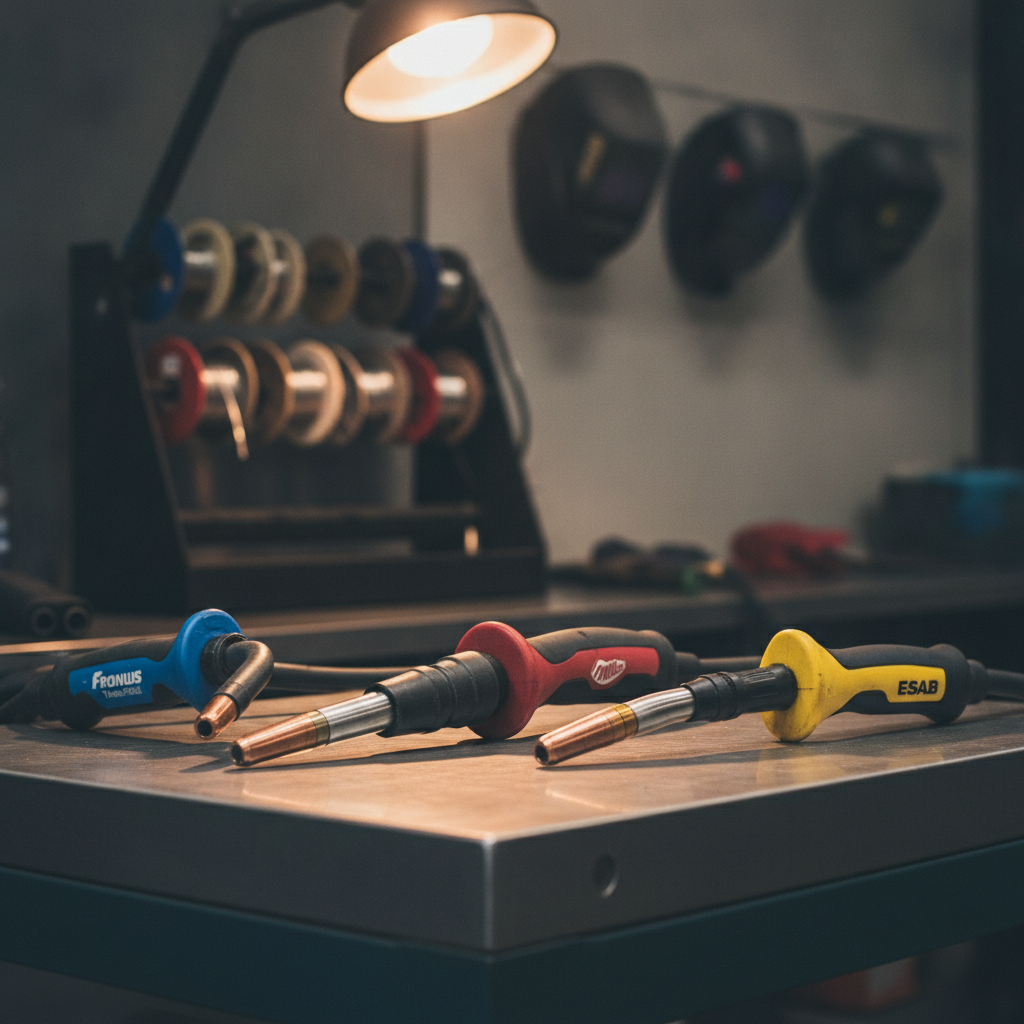
Miller Electric, Lincoln Electric, and ESAB are widely considered the top MIG welder manufacturers for professional and serious hobbyist use. For budget-conscious buyers, Hobart and Forney offer strong value. Everlast and YesWelder have carved out a credible mid-tier space. The “best” brand depends on your application, duty cycle requirements, and budget.
Choosing a MIG welder means sorting through dozens of brands making similar-sounding promises. Whether you’re setting up a home shop, running a fabrication business, or upgrading aging equipment, the brand you choose directly affects weld quality, machine longevity, and how much frustration you deal with over time. This article breaks down which manufacturers consistently produce the best MIG welders, what separates them, and how to match the right brand to your actual needs — not just the marketing copy.
The Top-Tier Brands and What Makes Them Stand Out
Miller Electric
Miller Electric, owned by Illinois Tool Works (ITW), consistently ranks at or near the top of professional welder surveys. Their machines are built in Appleton, Wisconsin, and carry a reputation for reliability that holds up in demanding shop environments.
The Millermatic series — particularly the Millermatic 211 and 255 — are popular across auto body shops, fabrication floors, and serious home shops. Miller’s Auto-Set feature adjusts voltage and wire feed speed automatically based on material thickness, which reduces setup time significantly.
What sets Miller apart technically is their inverter technology and arc stability. Their machines tend to produce a smooth, consistent arc that’s forgiving on thinner materials. The downside is price — Miller welders sit at the premium end of the market, and their consumables and parts can be expensive.
Best for: Professional fabricators, automotive shops, industrial maintenance, serious hobbyists willing to invest.
Lincoln Electric
Lincoln Electric, headquartered in Cleveland, Ohio, is one of the oldest and most respected names in welding. Founded in 1895, the company has decades of engineering refinement behind its products.
The Lincoln Power MIG series is their flagship MIG lineup, with models like the Power MIG 210 MP and Power MIG 260 being widely used in professional settings. Lincoln machines are known for their durability and straightforward controls — they tend to be less feature-heavy than Miller but extremely reliable over long service lives.
Lincoln also produces the Lincoln 140 and 180 for the home and light shop market, which are among the most recommended entry-to-mid-level MIG welders available. Their wire feed consistency is a frequently cited strength.
Best for: Industrial environments, contractors, welders who prioritize durability and long-term reliability over advanced features.
ESAB
ESAB (Electric Swedish Arc Welding) is a global manufacturer with strong roots in industrial and heavy fabrication welding. Their Rebel series — particularly the Rebel EMP 215ic — has earned strong reviews for multi-process capability and portability.
ESAB machines are particularly well-regarded in pipeline, shipbuilding, and structural fabrication environments. Their sMIG (Smart MIG) technology adjusts parameters in real time to compensate for inconsistent technique, which is useful for less experienced operators working on critical welds.
ESAB tends to be more common in industrial and commercial settings than in home shops, partly due to price and partly due to the professional-grade feature sets their machines carry.
Best for: Industrial fabrication, multi-process shops, operators who need adaptive arc technology.
Mid-Range Brands Worth Serious Consideration
Hobart Welding Products
Hobart is owned by Illinois Tool Works — the same parent company as Miller — but positioned at a lower price point. The Hobart Handler series (Handler 140, Handler 190, Handler 210 MVP) are among the best-selling MIG welders in the U.S. for good reason.
Hobart machines are built with solid construction, reliable wire feed systems, and straightforward controls. They don’t carry the same advanced features as Miller, but for most home shop and light fabrication work, they perform extremely well. The Handler 210 MVP is particularly versatile, accepting both 120V and 240V input.
Best for: Home shops, hobbyists, light fabrication, farmers, and small contractors who want quality without the premium price.
Forney Industries
Forney has been manufacturing welding equipment since 1932 and offers a range of MIG welders that punch above their price point. The Forney 261 and 324 are popular choices for intermediate users who need 240V capability without spending Miller or Lincoln money.
Forney machines are generally reliable and well-supported, though they don’t have the same brand recognition or dealer network as Miller or Lincoln. Parts availability can occasionally be slower depending on location.
Best for: Budget-conscious intermediate users, small shops, hobbyists upgrading from entry-level machines.
The Budget and Import Tier: Honest Assessment
Everlast Power Equipment
Everlast imports machines from China but has built a credible reputation through consistent quality control and responsive customer service. Their PowerMIG series offers inverter-based MIG welders at prices well below the top-tier brands.
In practice, Everlast machines perform well for the price, particularly for hobbyists and light fabricators. Duty cycles are generally lower than equivalent Miller or Lincoln machines, and long-term reliability data is thinner. But for occasional use or budget-limited buyers, they represent a legitimate option.
YesWelder
YesWelder has gained traction in the hobbyist community, particularly through online reviews and social media. Their machines offer multi-process capability at aggressive price points.
The honest assessment: YesWelder machines are adequate for light, occasional use. Arc quality and build consistency vary more than established brands. For a beginner learning to weld, they’re a reasonable starting point. For production or regular shop use, the limitations become apparent quickly.
Brand Comparison at a Glance
| Brand | Best Use Case | Price Range | Duty Cycle | Build Quality |
|---|---|---|---|---|
| Miller Electric | Professional / Industrial | $$$$ | High | Excellent |
| Lincoln Electric | Industrial / Commercial | $$$–$$$$ | High | Excellent |
| ESAB | Industrial / Heavy Fab | $$$–$$$$ | High | Excellent |
| Hobart | Home Shop / Light Fab | $$–$$$ | Medium | Very Good |
| Forney | Hobbyist / Small Shop | $$–$$$ | Medium | Good |
| Everlast | Hobbyist / Budget | $–$$ | Medium-Low | Good |
| YesWelder | Beginner / Occasional | $ | Low-Medium | Fair |
What Actually Separates a Good MIG Welder from a Great One
Brand reputation matters, but specific machine characteristics determine real-world performance.
Duty cycle is one of the most important specs to check. A welder rated at 30% duty cycle at 200A means it can weld for 3 minutes out of every 10 before needing to cool. Professional machines typically offer 60% or higher at rated amperage.
Wire feed consistency directly affects weld quality. Inconsistent wire feed causes spatter, porosity, and weak welds. Top-tier brands invest heavily in their drive roll systems and tension mechanisms.
Transformer vs. inverter design matters for portability and power efficiency. Inverter-based machines are lighter, more energy-efficient, and generally more responsive to arc adjustments. Transformer-based machines are heavier but often more robust in harsh environments.
Voltage and amperage range determines what materials and thicknesses you can weld. A 140-amp machine handles up to about 3/16-inch steel. Serious fabrication work on 1/4-inch or thicker material requires 200+ amps.
Common Mistakes When Choosing a MIG Welder Brand
Most people overbuy or underbuy based on the wrong criteria.
– Buying on price alone leads to machines that can’t handle the actual workload, resulting in overheating, inconsistent welds, and early failure.
– Ignoring duty cycle is a frequent mistake. A machine rated at 200A with a 20% duty cycle will frustrate anyone doing extended welding sessions.
– Overlooking parts and service availability matters more than most buyers realize. If a drive roll or liner fails, how quickly can you get a replacement? Miller and Lincoln have extensive dealer networks. Smaller brands may require longer waits.
– Choosing multi-process machines for cost savings sometimes backfires. A dedicated MIG welder often outperforms a budget multi-process unit at MIG specifically.
FAQ
Is Miller or Lincoln the better MIG welder brand?
Both are excellent, and the honest answer is that it depends on application. Miller tends to have more user-friendly features and a smoother arc for thin materials. Lincoln is often preferred in heavy industrial environments for its raw durability. In practice, both will outlast most of the work you throw at them if properly maintained. Many professional shops use both brands without issue.
What is the best MIG welder for a home shop or garage?
The Hobart Handler 210 MVP and Lincoln 180 are consistently recommended for home shop use. Both handle up to 3/8-inch steel, accept 120V or 240V input (Handler 210 MVP), and offer reliable wire feed at a reasonable price. Miller’s Millermatic 211 is also excellent in this category but costs noticeably more.
Are cheap Chinese MIG welders worth buying?
For occasional hobby use and learning, budget brands like YesWelder or Everlast can be adequate. They won’t match the arc quality, duty cycle, or longevity of Miller or Lincoln machines. If you’re welding regularly or doing structural work, the cost savings rarely justify the performance and reliability trade-offs over a 3–5 year period.
What MIG welder do professional fabricators use most?
Field surveys and industry data consistently show Miller Electric and Lincoln Electric dominating professional fabrication shops in North America. ESAB is more common in European and heavy industrial environments. Hobart appears frequently in smaller professional shops and agricultural settings where budget matters but quality can’t be compromised.
How much should I spend on a quality MIG welder?
For a capable home shop machine, expect to spend $500–$900 for a Hobart or entry Lincoln. A professional-grade Miller or Lincoln runs $900–$2,000+ depending on amperage and features. Spending less than $400 typically means accepting significant compromises in duty cycle, wire feed consistency, or build quality.
Does the country of manufacture affect MIG welder quality?
Miller and Lincoln manufacture their professional lines in the United States, which contributes to their quality consistency. Some budget lines from major brands are manufactured overseas. Country of manufacture alone doesn’t determine quality, but it often correlates with quality control standards, materials used, and warranty support infrastructure.
What’s the most reliable MIG welder for long-term use?
Lincoln Electric machines have a strong reputation for longevity, with many shops running Lincoln welders for 15–20 years with basic maintenance. Miller machines are similarly durable. The key factors for long-term reliability are proper duty cycle management, regular liner and drive roll maintenance, and keeping the machine clean and dry.
Final Thoughts
Miller Electric and Lincoln Electric earn their top-tier reputation through consistent arc performance, durable construction, and strong support networks — not just marketing. For most professional and serious hobbyist applications, either brand is a safe long-term investment. Hobart fills the mid-range gap better than most alternatives at its price point. If budget is the primary constraint, Everlast offers a reasonable compromise for light use. Match the machine to your actual workload, check the duty cycle carefully, and prioritize parts availability in your area. A welder you can service quickly is worth more than one with features you’ll never use.


