
What Causes Exhaust Pipe Buildup
Baking Soda and Vinegar for Rust and Tarnish
Penetrating Oil for Stubborn Rust and Scale
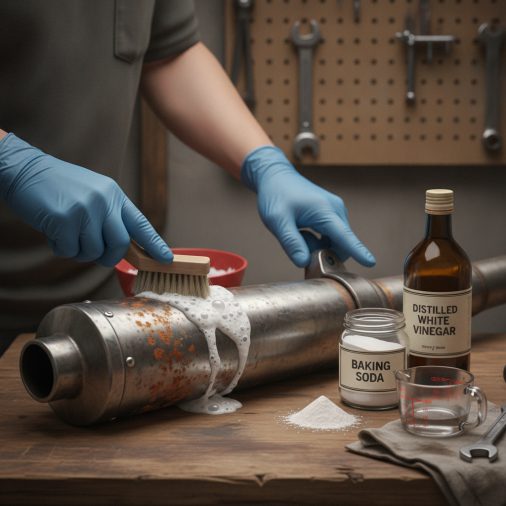
When surface rust has had time to harden into flaking scale, baking soda paste alone won’t cut through it. This is where penetrating oil earns its place. WD-40 works well for this, though it’s technically a water displacer and light lubricant rather than a heavy-duty rust remover. For thicker scale, a product like Kroil Penetrating Oil soaks into the rust layer more deeply and makes scraping much easier. The process is straightforward: 1. Spray or apply a generous coat of penetrating oil over the rusted area. 2. Let it soak for at least 20–30 minutes. Overnight works even better for severe buildup. 3. Use a stiff wire brush, steel wool (0000 grade for polished surfaces), or coarse sandpaper to scrub away the loosened scale. 4. Wipe clean with a dry rag and reapply a light coat of oil to slow re-oxidation. One thing to keep in mind — penetrating oil burns off when the exhaust heats up, and it will produce some smoke the first time you start the engine after treatment. This is normal and clears within a few minutes.Removing Carbon Soot from Exhaust Tips
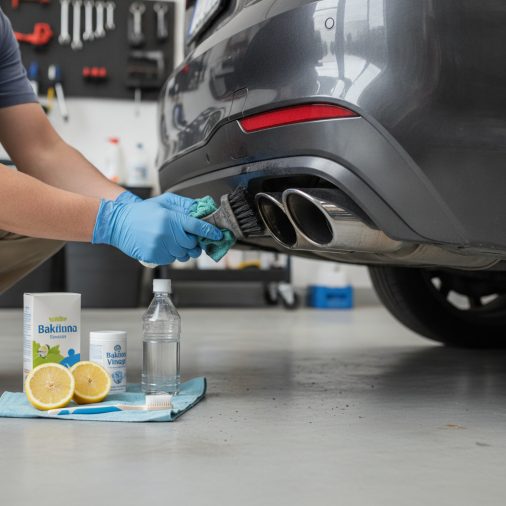
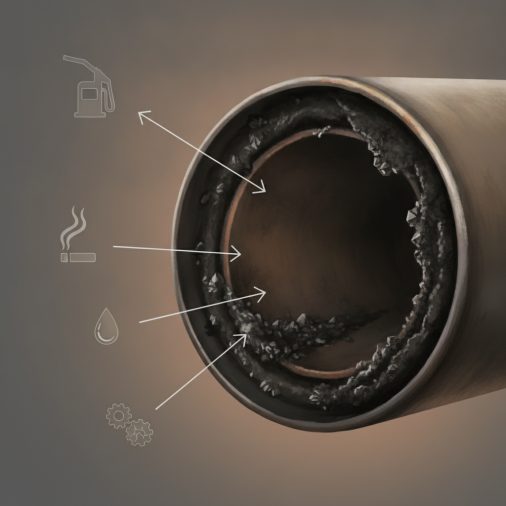
Carbon buildup inside exhaust tips is one of the more common complaints, especially on vehicles that do a lot of short-trip driving where the exhaust never fully heats up. A dry paper towel will smear soot around without actually removing it. You need something with light solvent action. What works best: – Dish soap and warm water with a stiff brush is effective for fresh, soft soot deposits. – Isopropyl alcohol (91% or higher) breaks down carbon film better than water-based cleaners. – Acetone (nail polish remover) handles heavily baked carbon on metal tips, but should not be used near painted surfaces. Apply your chosen cleaner, let it sit briefly, then scrub with a soft wire brush or a ball of 0000 steel wool. For polished stainless tips, follow up with Mothers Mag & Aluminum Polish to restore the shine and leave a protective coating that makes future cleaning easier.Fine Sandpaper and Steel Wool for Mechanical Cleaning
Sometimes chemistry alone isn’t enough, and you need to physically abrade the surface. This is especially true for rust that has progressed past the surface layer. Use sandpaper in progressive grits:| Grit | Best Use |
|---|---|
| 80–120 | Heavy rust scale, pitting |
| 220 | Medium oxidation, smoothing after coarse work |
| 400–600 | Final smoothing before polishing |
| 0000 steel wool | Final pass on chrome or polished stainless |
Salt and Lime Juice as an Alternative to Vinegar
If you’re out of vinegar, salt combined with lime or lemon juice creates a similar mild acid cleaning effect. The citric acid in lime juice is slightly stronger than acetic acid in vinegar, making it useful for moderate tarnish on chrome exhaust tips. Coat the surface generously, rub with a cut lemon half, and let it sit for 10 minutes before rinsing. This is mostly useful for cosmetic cleaning of tips rather than functional rust removal from structural pipe sections.Preventing Buildup from Coming Back
Cleaning is only half the job. Without some basic protection, exhaust buildup returns quickly — especially in wet climates or during winter road-salt season. Practical prevention steps: – High-temperature spray wax applied to chrome tips after cleaning repels water and slows carbon adhesion. Turtle Wax makes a dedicated wheel and tire shine that works reasonably well on exhaust tips. – Ceramic coating applied to exhaust tips is a more durable option and has become popular among detailing enthusiasts. It resists heat well and dramatically reduces soot sticking. – Regular short wipe-downs after the exhaust cools remove fresh soot before it bakes on. A weekly wipe with a slightly oily rag takes less than a minute. – Fixing oil leaks near the exhaust eliminates the root cause of oil-baked grime buildup. If your exhaust system has corrosion so severe that cleaning reveals pinholes or cracked sections, cleaning becomes secondary to repair. Surface rust remedies won’t fix structural damage, and that’s when welding the exhaust pipe becomes the right next step rather than cleaning it.Common Mistakes When Cleaning Exhaust Pipes
A few habits make the job harder or create new problems. Cleaning while hot. Exhaust pipes and tips retain heat for longer than most people expect. Cleaning products, especially solvents, can flash or produce fumes on a warm surface. Always wait until the system is completely cool. Using harsh abrasives on chrome. Coarse sandpaper or a stiff metal brush will permanently scratch chrome plating. It can’t be buffed out once it’s there. Stick to 0000 steel wool or a soft brass brush on any polished surface. Rinsing without drying. Leaving water on bare steel after cleaning accelerates rust. Always follow up with a dry rag and apply some form of protective coating before the pipe gets wet again. Ignoring the inside of the pipe. External cleaning is straightforward, but internal carbon buildup affects exhaust flow. An engine that runs rich consistently coats the inside of pipes with thick soot. The most effective remedy for internal buildup is engine-side — fixing the air/fuel mixture through a tune-up rather than trying to physically clean inside the pipe.FAQ
Can I use oven cleaner on exhaust pipes? Oven cleaner contains sodium hydroxide, which is aggressive enough to strip baked-on carbon and grease from exhaust surfaces. It works, but it’s caustic and requires careful rinsing. Avoid using it on chrome-plated surfaces or near painted bodywork since it will damage both. Wear gloves and work in a ventilated area if you try this method. Why does my exhaust tip turn black so quickly after cleaning? Rapid soot return usually indicates the engine is running rich — burning more fuel than it can combust cleanly. It can also happen with a faulty oxygen sensor, dirty fuel injectors, or a clogged air filter. Cleaning the tip addresses the symptom, but the root cause needs to be diagnosed separately to solve it long-term. Is WD-40 safe to use on exhaust pipes? WD-40 is safe to apply to cool exhaust pipes for rust loosening and light protection. It will smoke and burn off when the exhaust heats up, which is normal. Don’t use it as a long-term coating since it doesn’t hold up to sustained heat. High-temperature metal protectants or exhaust-rated coatings are better for lasting protection. How do I clean rust from inside an exhaust pipe? Internal rust in exhaust pipes is largely inaccessible through physical cleaning. Phosphoric acid-based rust converters can be poured into sections and left to react, but this is only practical for removed sections. In most cases, significant internal rust means the pipe needs replacement. Surface rust at the tip opening can be reached with a wire brush on a drill attachment. Does white vinegar damage polished stainless exhaust tips? Diluted white vinegar is safe for stainless steel and won’t cause pitting or staining in short contact times of 10–20 minutes. Prolonged exposure or stronger acid concentrations could affect finish over time. Always rinse thoroughly and follow with a metal polish to restore shine. Stainless steel is more forgiving than chrome plating when it comes to mild acid cleaning. Can heat-cycling alone burn off carbon deposits? Sustained high-heat driving — highway speeds for an extended period — can burn off some light carbon deposits from exhaust internals. This is sometimes called a “carbon blast” and mildly helps engines that do mostly short trips. It won’t clear heavy baked-on carbon or external buildup, but it’s a reasonable maintenance habit for keeping deposits from accumulating in the first place. What’s the best home remedy for chrome exhaust tips specifically? For chrome tips, the safest and most effective home remedy is a paste of baking soda and water for general cleaning, followed by 0000 steel wool for minor tarnish, and a good aluminum/chrome polish like Mothers Mag & Aluminum Polish for final shine. Avoid anything acidic left on chrome for extended periods, and never use coarse abrasives.Exhaust pipe buildup is manageable with common household materials when you match the remedy to the type of deposit. Rust responds to penetrating oil and mechanical abrasion, carbon soot clears with solvents and scrubbing, and mineral deposits dissolve with mild acid pastes. The bigger payoff comes from prevention — a few minutes of maintenance after each cleaning session can extend the time between deep cleans considerably.


