
So, you're looking to MIG weld some aluminum. Awesome! It's a fantastic material, but it can be a bit finicky, especially when you're dealing with gas. Don't worry though, it's not rocket science, and with a little guidance, you'll be laying down clean beads in no time.
The thing about aluminum MIG welding is that there isn't just one "magic" gas that works for every single situation. The best choice really depends on what you're doing. That's why I like to think of it like a little decision-making flowchart.
Quick Answer: Your Go-To MIG Gas for Aluminum
For the vast majority of aluminum MIG welding tasks, 100% Argon is your most reliable and recommended shielding gas. It provides a stable arc, good penetration, and excellent puddle control, which are critical for successfully welding aluminum. While argon-helium mixtures offer benefits for thicker materials, pure argon is the foundational choice for thin to medium thicknesses and for welders seeking consistent, clean results without added complexity.
Why Gas Choice Matters for Aluminum MIG
Shielding gas in MIG welding is non-negotiable, but for aluminum, its role is even more pronounced. Aluminum oxidizes extremely rapidly when exposed to air, even at room temperature. When you're welding, that molten puddle is incredibly sensitive. The shielding gas creates a protective envelope that displaces the surrounding atmosphere, preventing oxygen and nitrogen from entering the weld pool and causing defects like porosity or embrittlement.
Manufacturer specifications often highlight the importance of inert shielding gases like argon for non-ferrous metals. The type of gas, or gas blend, directly influences arc stability, puddle fluidity, penetration, and the overall appearance of your weld. Incorrect gas choice can lead to a host of problems, turning a potentially straightforward weld into a frustrating challenge.
Image source: Bing (Web (fair-use with source credit))
The Core Gases: Pure Argon vs. Argon-Helium Mixes
When it comes to MIG welding aluminum, your choices generally simmer down to two primary categories of shielding gas: pure argon and various argon-helium mixtures. Each has its strengths and is best suited for different scenarios.
Pure Argon: The Reliable Standard
Pure argon is the workhorse for aluminum MIG welding, and for good reason. It's a readily available inert gas that provides a desirable arc characteristic for aluminum.
- Arc Characteristics: Pure argon delivers a smooth, stable arc. This is invaluable when welding aluminum, a metal that has a low melting point and can quickly become overly fluid. A stable arc means you have better control over the weld puddle, reducing the risk of blow-through on thinner materials or creating uncontrolled drips on thicker ones.
- Puddle Control: The electrical characteristics of argon create a focused arc, leading to a well-defined and manageable weld puddle. This allows for precise manipulation and helps in achieving good fusion.
- Cleanliness: Argon is excellent at preventing atmospheric contamination, which is critical for aluminum. It helps minimize weld defects like porosity (small holes in the weld) and oxide inclusions, leading to stronger, cleaner welds.
- Versatility: It's suitable for a wide range of aluminum alloys and thicknesses, making it the default choice for many fabricators and DIYers.
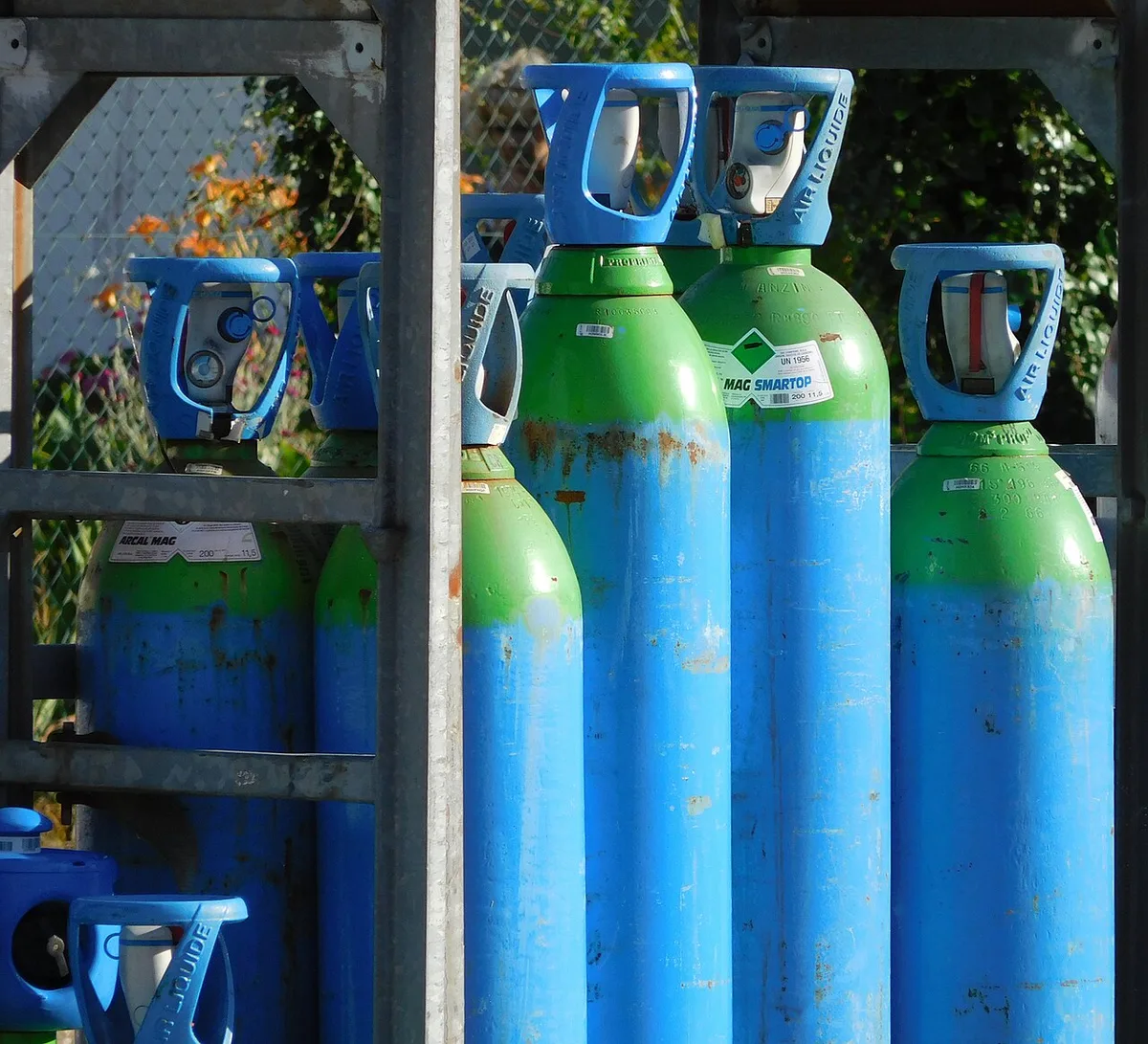
Image source: Wikimedia Commons / Cjp24 (CC BY-SA)
Argon/Helium Mixtures: When to Step It Up
Adding helium to argon creates a "hotter" welding gas. This increased heat input offers distinct advantages, particularly for specific applications.
- Increased Heat Transfer: Helium has a lower ionization potential than argon, meaning it requires less energy to become conductive. This allows more heat to transfer into the weld puddle.
- Enhanced Penetration: This extra heat can result in deeper weld penetration, which is particularly beneficial when welding thicker aluminum sections that might be difficult to fuse adequately with pure argon alone.
- Faster Travel Speeds: The increased heat input can sometimes allow for faster travel speeds, potentially increasing productivity on longer joints if managed correctly.
- Smoother Bead Profile: Some welders find that argon-helium mixes produce a flatter, smoother bead appearance on aluminum.
However, these benefits come with considerations. Argon/helium mixtures are more expensive than pure argon, and the added heat requires more precise control, especially on thinner materials, to avoid overheating and burn-through.
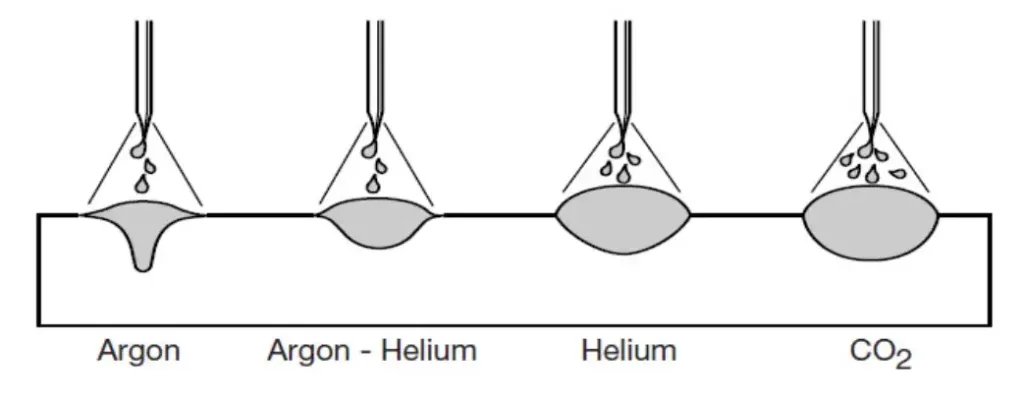
Image source: Bing (Web (fair-use with source credit))
How Material Thickness Dictates Your Gas Choice
The thickness of the aluminum you're welding is perhaps the biggest factor influencing your shielding gas selection. This is because material thickness directly relates to the amount of heat input required to achieve proper fusion without damaging the base metal.
Thin Aluminum: Control is Key
When you're working with thinner aluminum sheets, typically up to about 1/8 inch (3.175 mm) thick, your primary goal is precise control. Aluminum's low melting point means it can quickly turn into a molten puddle, and excessive heat input can easily lead to burn-through or warped material.
- Why Pure Argon is Best: 100% Argon provides a stable, focused arc with just the right amount of heat. This allows you to precisely control the weld puddle, making it easier to avoid melting through thin sections. You can manipulate the puddle more effectively, preventing it from getting too large or collapsing.
- Argon/Helium Caution: Using argon-helium mixtures on thin aluminum is generally not recommended. The added heat from helium can exacerbate the risk of burn-through and make it significantly harder to manage the weld pool, even with careful technique.
Medium Aluminum: Balancing Act
For aluminum pieces ranging from about 1/8 inch up to around 1/4 inch (6.35 mm) thick, you enter a zone where pure argon is still a strong contender, but argon-helium mixtures may start to show their advantages.
- Pure Argon: You can absolutely achieve excellent welds on this thickness range with 100% argon. It still offers great control and the necessary penetration for many applications. If you're comfortable with your technique and achieving good fusion, sticking with argon is perfectly fine and often the most cost-effective solution.
- Argon/Helium Considerations: A lighter argon-helium mix, perhaps with around 10-25% helium, can offer a slight boost in heat. This might help if you find yourself struggling to get enough fusion with pure argon at reasonable settings, or if you want to increase your travel speed slightly. However, you still need to be mindful of not overheating the material.
Thick Aluminum: Unleashing the Heat
When you start welding aluminum thicker than 1/4 inch, the need for greater heat input becomes significant. Achieving full penetration and a strong fusion zone on these thicker sections can be challenging with pure argon alone, as you may need to run your machine at very high settings, which can sometimes lead to other issues.
- Why Helium Shines: This is where argon-helium mixtures truly prove their worth. A higher percentage of helium (often 25% to 50% or even more) contributes substantial heat to the arc. This increased thermal energy makes it much easier to melt through thick aluminum, ensuring proper fusion without having to push your machine to its absolute limits.
- Preventing Defects: The extra heat from helium can help prevent common defects on thicker aluminum, such as lack of fusion or incomplete penetration, which can compromise the structural integrity of the weld. It helps the puddle wet out properly and fuse with the base metal more effectively.
Argon/Helium Mixes: Understanding the Blends
When we talk about argon-helium mixes for MIG welding aluminum, it's not just one-size-fits-all. These blends typically come with varying percentages of helium, and that percentage directly correlates to the amount of heat you can expect to transfer.
Lower Helium Percentages (e.g., 10-25% Helium): These mixtures offer a moderate increase in heat over pure argon. They are good for situations where you need a little more "oomph" than pure argon provides, perhaps on medium-thick materials or when you want to slightly increase your welding speed. They still offer a decent balance of heat and control.
Higher Helium Percentages (e.g., 25-50%+ Helium): These are the "hotter" gases designed for applications demanding significant heat input. They are ideal for welding thicker aluminum sections where achieving full penetration is critical. The higher the helium content, the more heat you'll get, but also the more challenging it can become to control the weld puddle on thinner materials or in awkward positions.
Think of it like this:
- 100% Argon: Your standard, well-controlled oven. Great for most everyday cooking.
- Argon/Helium (low %): A slightly hotter oven setting. Good for browning or getting a quicker cook on certain dishes.
- Argon/Helium (high %): A searing hot broiler. Essential for specific tasks that require intense, rapid heat, but can easily burn things if misused.
The exact blend you choose will depend on your specific machine, the thickness of the aluminum, your welding position, and your personal technique. Manufacturer recommendations and trial-and-error on scrap material are your best guides.
Essential Setup: Gas Flow and Torch Angle
Getting your shielding gas selection right is half the battle; the other half is setting it up correctly. This involves two critical parameters: gas flow rate and torch angle. Both play a massive role in ensuring that protective gas envelope actually does its job.
Gas Flow Rate: Finding the Sweet Spot
The gas flow rate determines how much shielding gas is being delivered from your cylinder, through the regulator, and out of your welding torch. Too little, and your weld will be exposed to the air, leading to porosity and contamination. Too much, and you can cause turbulence that actually draws surrounding air into the weld zone, which is counterproductive.
- Typical Range: For MIG welding aluminum, a common starting point for gas flow rate is between 20 and 30 cubic feet per hour (CFH). However, this is just a baseline.
- Factors Influencing Flow Rate:
- Torch Size: Larger torches with bigger diffusers generally require higher flow rates.
- Welding Location: If you're welding outdoors or in a drafty area, you might need to increase the flow rate to compensate for wind or air movement, though it's always best to shield the area from drafts as much as possible.
- Gas Type: While argon and argon mixes are typical for aluminum, if you were using something heavier or lighter, flow rates might adjust.
- How to Tell if it's Right: Pay attention to your weld. If you see small, pinhole-like bubbles (porosity) in your bead after welding, your gas flow might be too low, or your torch angle is off. If the arc seems to be sputtering erratically or the shielding gas is creating a lot of turbulence, your flow rate might be too high.
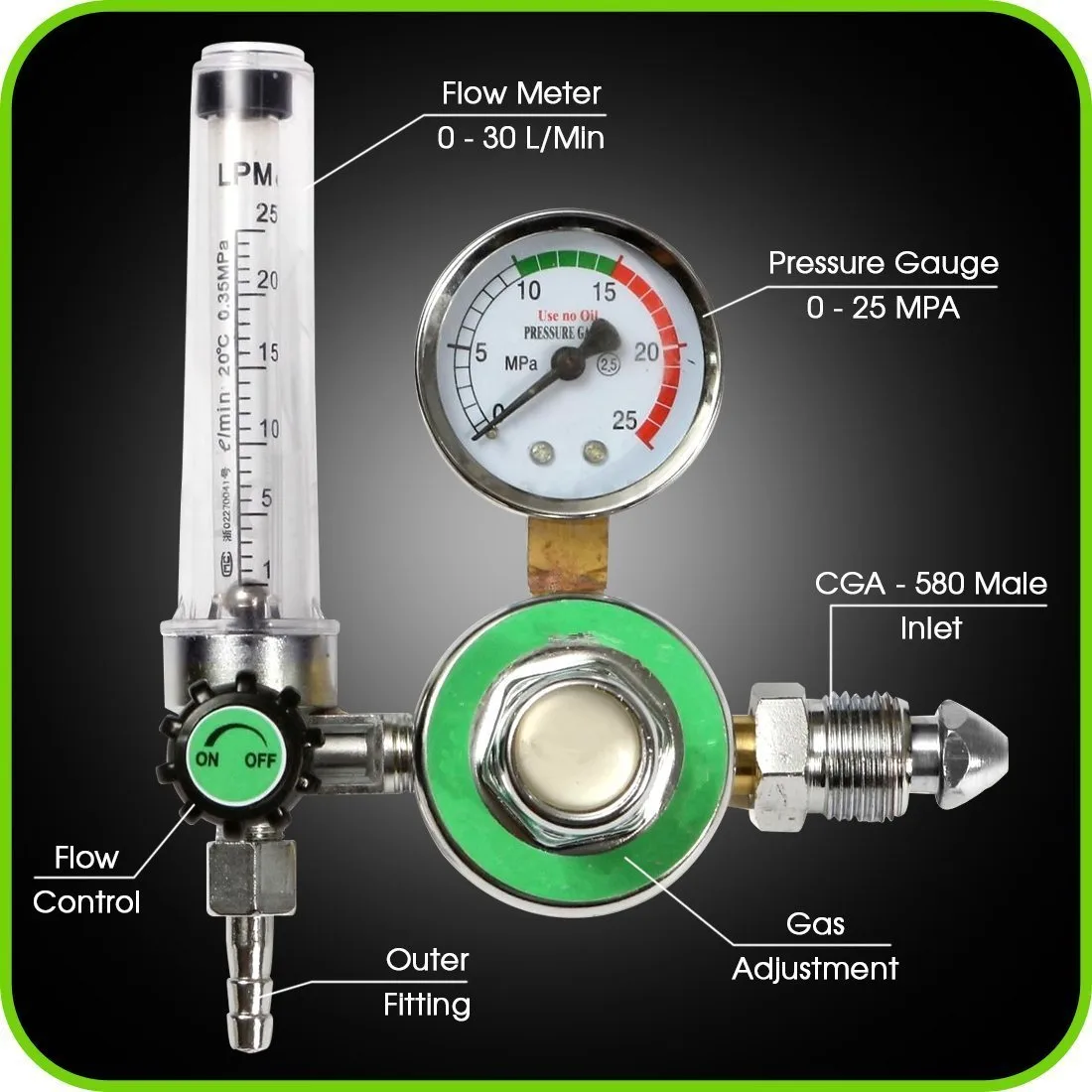
Image source: Bing (Web (fair-use with source credit))
Torch Angle: The Push vs. Drag Debate
For MIG welding aluminum, the general recommendation is to use a push technique rather than a drag technique (which is common for steel). This means you're pushing the welding gun in front of the wire, away from the weld puddle.
- Why Push for Aluminum: Pushing the torch helps to direct the shielding gas more effectively over the molten puddle and also helps to keep the arc "on top" of the molten metal rather than digging into it. This typically results in a flatter bead profile and reduces the risk of the arc snagging and causing issues. It also helps to prevent a condition known as "sugaring" on the backside of the weld.
- Angle Matters: Aim for a torch angle of roughly 10-15 degrees, pushing the direction of travel. The distance from the tip to the workpiece (stick-out) is also important; a common recommendation is about 1/2 to 3/4 inch (12.7, 19.05 mm). Too little stick-out can lead to excessive heat build-up in the contact tip and premature wear, while too much stick-out can reduce the effectiveness of your gas shielding.
Getting these two setup elements dialed in is crucial for maximizing the benefits of your chosen shielding gas, whether it's pure argon or an argon-helium blend.
Common Mistakes When Choosing MIG Gas for Aluminum
Even with the right equipment and a good understanding of the basics, it’s easy to stumble when selecting the shielding gas for aluminum MIG welding. A common pitfall is assuming one gas works for all scenarios. For instance, sticking with pure argon for very thick aluminum might mean you can't achieve adequate penetration, leading to weak, unreliable welds.
Conversely, reaching for a high-helium mix on thin aluminum, say 1/16 inch thick, is almost guaranteed to result in burn-through and a messy puddle. Another frequent error is not accounting for environmental conditions; welding in a breezy garage without attempting to shield the weld area can negate the protective effect of even the correct gas, leading to porosity.
Finally, forgetting that different aluminum alloys can behave slightly differently is also a mistake. While the gas principles often hold true, very specific alloys might perform best with a slightly tweaked gas blend or machine settings.
When Is Pure Argon Not Enough?
Pure argon is fantastic, but there are definite situations where it might fall short. If you're consistently struggling to achieve full penetration on aluminum sections that are 1/4 inch thick or more, pure argon is likely the limiting factor. You'll find yourself running your machine at its maximum settings, which can sometimes lead to other issues like increased spatter or difficulty controlling the arc.
Furthermore, for certain high-speed production applications where maximizing efficiency is key, the slightly slower travel speeds you might get with pure argon could be a bottleneck. In these cases, where increased heat input is essential for both penetration and speed, an argon-helium mixture becomes a superior choice. However, it’s always a trade-off, as higher helium content also increases gas cost and can complicate puddle control on less experienced hands.
How to Dial In Your Gas Settings: Beyond Just Picking a Mix
Selecting the right gas blend is only part of the equation; ensuring that gas actually works for your weld is equally important. This means paying attention to your machine’s settings and how they interact with your chosen shielding gas.
- Wire Feed Speed (WFS): Your WFS directly correlates with the amperage for your particular machine and wire diameter. For aluminum, you'll generally need higher WFS, and thus higher amperage, compared to steel because aluminum conducts heat more readily, requiring more energy to melt. The gas choice influences how effectively this heat is transferred. You can find general guidance on many welding chart mig wire resources or your welder's manual.
- Voltage: Voltage controls the arc length. A higher voltage with pure argon typically yields a wider, flatter arc and more heat. With helium mixes, the arc is inherently hotter, so you might need to adjust voltage down to maintain a similar bead profile to avoid over-melting.
- Stick-Out Length: As mentioned, your contact tip to workpiece distance matters. A longer stick-out can slightly reduce gas coverage efficiency, especially with pure argon. For thicker work with helium, a slightly longer stick-out might be manageable, but it’s always a balancing act to maintain optimal gas shielding.
Why Cleanliness Is Non-Negotiable for Aluminum
You absolutely cannot overstate the importance of cleanliness when welding aluminum, and it ties directly into your shielding gas strategy. Aluminum surfaces are covered in a tough, naturally occurring oxide layer that has a much higher melting point than the aluminum itself. If this oxide isn't removed, it can get trapped in the weld, causing porosity, inclusions, and weak points.
- Mechanical Cleaning: Always use a dedicated stainless steel wire brush (never use one that has touched steel) for cleaning aluminum. Scrub the area to be welded thoroughly, then immediately wipe it down with a clean, lint-free cloth.
- Chemical Cleaning: Many professionals use a solvent like acetone or a specialized aluminum cleaner on a clean cloth to remove any oils, grease, or contaminants from the surface. It's crucial that the solvent evaporates completely before you start welding.
- Gas Shielding's Role: Even with perfect cleaning, your shielding gas is the final barrier. If your gas coverage is compromised (due to low flow, wrong angle, or drafts), atmospheric contaminants can still find their way into your weld pool, undermining all your cleaning efforts.
This meticulous cleaning, combined with effective gas shielding, is what allows for strong, visually appealing aluminum welds.
Understanding the Different Aluminum MIG Wire Types
While your shielding gas is crucial, the filler metal itself also plays a role in the overall weld outcome. Aluminum MIG wires come in different alloys, and each has specific characteristics that affect weldability and performance.
Common aluminum MIG wire alloys include:
- 1100 (99% Aluminum): Very soft and ductile, good for corrosion resistance, but low in strength. Often used for its formability.
- 4043: One of the most popular choices for general-purpose aluminum welding. It's a silicon-containing alloy that flows very well, offering excellent puddle control and resistance to cracking. It's often recommended for welding 3003 and 6061 aluminum.
- 5356: A magnesium-containing alloy that offers higher tensile strength and better toughness than 4043. It's often used for welding 5xxx series alloys and can provide a brighter finished weld appearance. However, it can be more prone to cracking on certain base metals if not welded carefully.
Your choice of wire alloy will influence how your weld behaves under heat and how it interacts with your chosen shielding gas. For example, using a 4043 wire with pure argon is a very common and reliable combination for many everyday aluminum fabrication tasks. If you're unsure about specific alloy recommendations, checking with the wire manufacturer's data is always a smart move.


