

The arc flared, the metal sagged, and suddenly there was a hole where a clean bead was supposed to be. Thin sheet metal is unforgiving like that — one second too long on the trigger or a little too much heat, and you’re patching instead of welding. I’ve burned through more sheet metal than I care to admit before figuring out what actually works.
Welding sheet metal without burn-through isn’t about having fancy gear — it’s about heat control, timing, and restraint. I learned through trial and error that slower isn’t always better, hotter is usually worse, and patience saves both metal and money.
When you get it right, the weld lays flat, the panel stays straight, and you don’t spend half the day fixing mistakes.
If you’re tired of blowing holes in thin steel and want clean, controlled welds that hold up, keep reading. I’ll walk you through the exact techniques that make thin sheet metal behave, step by step, the way it should.
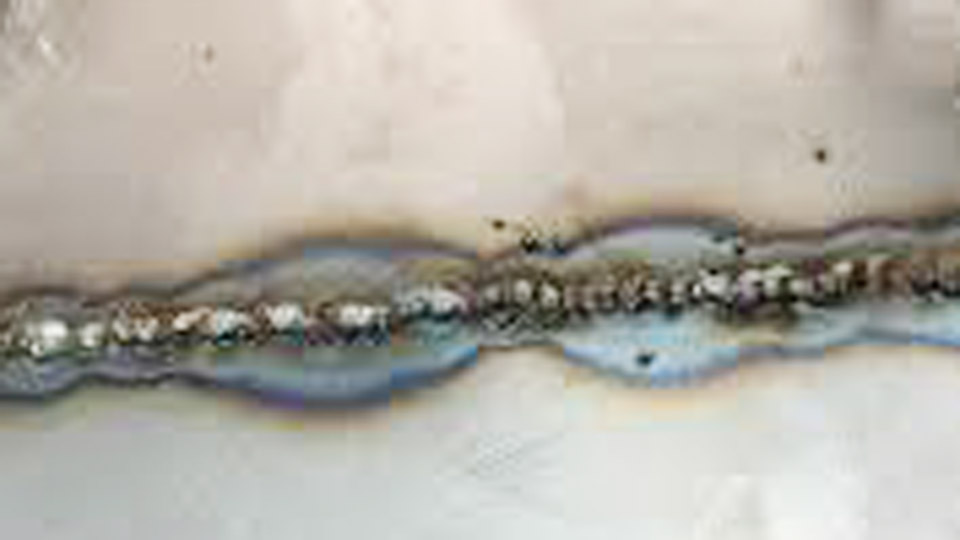
Photo by metal.fabrication.tips
Understanding Burn-Through in Sheet Metal Welding
Burn-through happens when your welding heat melts through the thin base metal, creating unwanted holes or weak spots. It’s basically over-penetration gone wrong, where the arc’s energy overwhelms the material’s thickness.
Sheet metal, typically 18-gauge or thinner (around 0.047 inches or less), doesn’t have much mass to absorb that heat, so it heats up fast and cools unevenly.
In practice, this occurs because of mismatched settings—like too high amperage—or poor technique, such as lingering too long in one spot. I’ve seen it ruin entire panels on automotive restorations, leading to warping that requires hours of grinding and filling.
Why does it matter? Beyond the obvious rework time, burn-through compromises structural integrity, invites corrosion in those holes, and can even pose safety risks if you’re working on load-bearing parts.
To spot it early, watch for excessive spatter, a hissing sound that’s too aggressive, or the metal glowing brighter than it should. Prevention starts with recognizing your material’s limits; for example, mild steel sheet holds heat differently than aluminum, which conducts it away faster.
Choosing the Right Welding Process for Thin Metals
Not every welding method suits sheet metal. Stick welding (SMAW) can work in a pinch for thicker gauges, but it’s prone to burn-through on anything under 16-gauge due to its high heat input. I reserve it for outdoor repairs where portability matters, but for precision, I steer clear.
MIG welding shines here with its controllable wire feed and gas shielding. It uses a continuous electrode wire, melted by an electric arc, with shielding gas protecting the weld pool. For sheet metal, short-circuit transfer mode keeps heat low, transferring metal in quick bursts.
I’ve used it on everything from HVAC ducts to custom furniture, appreciating how it lets me dial in low amps for clean starts.
TIG welding offers even more control, using a non-consumable tungsten electrode and separate filler rod. The arc is precise, with a foot pedal for amperage adjustment on the fly. It’s ideal for aluminum sheet or when appearance counts, like in aerospace mockups I’ve done. But it requires more skill—steady hands to avoid contaminating the tungsten.
When should you pick one over the other? MIG for speed on steel projects, TIG for exotic metals or when you need zero spatter. Pros: MIG is forgiving for beginners; TIG gives superior bead aesthetics. Cons: MIG can warp if you’re not careful; TIG is slower, eating up shop time.
Here’s a quick comparison:
| Process | Best For | Heat Input | Skill Level Needed | Typical Amperage Range for 18-Gauge Steel |
|---|---|---|---|---|
| MIG | Steel, fast production | Medium | Beginner to Intermediate | 70-90 amps |
| TIG | Aluminum, precision work | Low | Intermediate to Advanced | 50-70 amps |
| SMAW | Thicker gauges, outdoors | High | Beginner | 80-100 amps (avoid for thin sheet) |
Stick to processes you’re comfortable with, but experiment on scrap first.
Preparing Your Sheet Metal for Welding
Joint prep is where half the battle against burn-through is won. Cleanliness is non-negotiable—rust, paint, or oil acts as a barrier, causing erratic arcs and hot spots. I always start by degreasing with acetone, then wire brushing or grinding to bare metal. For edges, a slight bevel on thicker sheets helps penetration without excess heat.
Fit-up matters too. Butt joints on sheet metal need near-perfect alignment; any gap wider than your wire diameter invites burn-through as heat bridges across. I clamp pieces tightly, using copper backing bars to dissipate heat if possible. For lap joints, overlap by at least 1/2 inch to distribute stress.
Material compatibility is key. Matching filler to base metal prevents cracking—use ER70S-6 wire for mild steel MIG. Thickness variations? Tack weld first to hold position, then fill.
In my shop, I’ve learned the hard way that skipping prep leads to porous welds; one rushed job on a trailer fender ended with me grinding out holes and starting over.
Practical tip: Preheat aluminum sheet slightly (around 200°F) to reduce thermal shock, but never overdo it on steel or you’ll warp it.
Setting Up Your Welder Correctly
Getting your machine dialed in is crucial. For MIG on sheet metal, start with voltage around 16-18 volts and wire speed at 150-200 inches per minute, adjusting based on sound—a steady “frying bacon” crackle means you’re good. Amperage? For 18-gauge steel, 70-90 amps prevents burn-through while ensuring fusion.
Electrode diameter: Go small, like 0.023-inch wire for thin stuff—it melts faster at lower amps. I’ve switched to 0.030-inch on slightly thicker gauges for better control. Gas flow? 15-20 CFH of 75/25 argon/CO2 mix shields without blowing the pool around.
For TIG, sharpen your tungsten to a fine point for a focused arc. Amperage ranges from 50-70 for steel, pulsing if your machine allows to control heat input. Filler rods: 1/16-inch diameter keeps additions minimal.
Test on scrap matching your project. I always run a bead, let it cool, and bend it—if it cracks, amp down. Common US machines like Lincoln or Miller have presets, but trust your eyes over dials.
Techniques to Avoid Burning Through
The real magic is in your technique. Use a push angle for MIG—about 10-15 degrees—to direct heat forward and reduce penetration. Travel speed: Move quick, around 10-15 inches per minute, to spread heat without pooling.
Stitch welding is a lifesaver: Short bursts of 1-2 inches, skipping ahead to let sections cool. I’ve used this on exhaust systems to minimize distortion. For TIG, dab the filler precisely, using back-and-forth weaves only if needed.
Backstepping helps on long seams: Start in the middle, weld backward a bit, then forward, overlapping to even out heat. Why? It prevents cumulative buildup that warps panels.
Shop tip: Chill blocks or wet rags nearby absorb excess heat. On a hot day fixing a boat hull, I rotated clamps as heat sinks—saved the thin aluminum from melting.
Step-by-step for MIG on sheet:
- Clamp and tack every 4-6 inches.
- Set amps low, test bead.
- Weld in short segments, pausing to cool.
- Inspect for gaps; fill if needed.
- Grind smooth for finish.
Common Mistakes and How to Fix Them
Even seasoned welders slip up. One biggie: Too much amperage out of habit from thicker work. It burns through instantly—fix by dropping 10-20 amps and practicing pulse starts.
Poor ground connection causes erratic heat; always clamp directly to the workpiece. I’ve chased “cold welds” only to find a rusty ground.
Over-welding a spot? It sags and holes form. Solution: Move faster or use skip welding. For fixes, grind out the hole, back it with copper, and patch with low heat.
Beginners often ignore distortion—heat expands metal unevenly. Counter it with sequential tacking. Pros might forget material thickness changes; measure every time.
In my early days, I burned through a custom gate panel by rushing—had to cut and reweld. Lesson: Patience pays.
Safety Considerations When Welding Sheet Metal
Thin metal heats up fast, so burns are a risk—wear leather gloves and long sleeves. Fumes from galvanized sheet? Deadly zinc oxide—grind off coatings first and ventilate.
Eye protection: Auto-darkening helmets with shade 9-11 for MIG/TIG. Fire hazards? Keep extinguishers handy; sparks fly far on light gauges.
Electrical safety: US welders run on 110V or 220V—ensure grounded outlets. I’ve seen shocks from wet floors; stay dry.
Always tie back hair, avoid loose clothes. In shop training, I stress: Safety isn’t optional; one burn-through could mean a hospital trip if metal flies.
Tools and Accessories That Make a Difference
Beyond basics, a good auto-darkening helmet lets you see your puddle clearly, reducing errors. Pulsed MIG machines control heat better—worth the investment for frequent thin work.
Chillers for TIG keep tungsten cool. Backing bars? Simple copper strips prevent sagging.
I swear by anti-spatter spray for clean-up. For pros, laser levels ensure straight seams.
Pros/cons of upgrades:
| Accessory | Pros | Cons |
|---|---|---|
| Pulsed Welder | Precise heat, less distortion | Expensive |
| Backing Bar | Supports thin metal | Adds setup time |
| Auto Helmet | Better visibility | Battery-dependent |
Choose based on your volume.
Advanced Tips for Specific Materials
Steel sheet: Easy fusion, but rusts—clean thoroughly. Amps 60-80 for 20-gauge.
Aluminum: High conductivity needs higher amps initially, then taper. Use pure argon gas.
Stainless: Prone to warping—pulse TIG at 40-60 amps.
On a bike frame repair, aluminum’s heat sink effect fooled me; I preheated and it welded like butter.
Troubleshooting Weak Welds After Avoiding Burn-Through
No burn-through but poor strength? Check penetration—cold laps happen at low amps. Bend test reveals.
Porosity from dirty metal—reclean. Cracks? Wrong filler; match alloys.
I once had weak beads on a toolbox; upped wire speed, problem solved.
Wrapping Up
Now, it’s clear that welding sheet metal without burning through boils down to balance—heat, speed, and prep working together. You’ve got the tools now to approach your next project with confidence, whether it’s a hobby fix or a pro fabrication. You’ll spot issues early, adjust on the fly, and produce welds that last, saving time and frustration in the shop.
Always cool your work slowly with air, not water, to avoid cracking—it’s the subtle things that separate good welds from great ones.
Can I weld sheet metal with a stick welder?
Yes, but it’s challenging on thin gauges. Use small electrodes like 1/16-inch 6013 rods at 50-70 amps, with quick tacks and skips. Test on scrap—burn-through is common, so MIG or TIG is better for consistency.
What wire size is best for MIG welding thin sheet metal?
Opt for 0.023-inch ER70S-6 wire. It feeds smoothly at low amps (70-90) without excess buildup. Avoid thicker wires; they require more heat and increase burn-through risk.
How do I prevent warping when welding sheet metal?
Use stitch welding in short bursts, allowing cooling between. Clamp to a heavy table for heat sinking, and backstep on long seams. For aluminum, preheat evenly to minimize shock.
What’s the ideal gas for MIG on sheet metal?
A 75/25 argon/CO2 mix at 15-20 CFH. It provides good arc stability and penetration without too much spatter. Pure CO2 is cheaper but hotter—stick to the mix for thin work.
How can I fix a burn-through hole in sheet metal?
Grind the edges clean, back with copper, and fill with low-amp TIG or MIG patches. If small, use a filler plug. Always blend smoothly to avoid stress points.


