
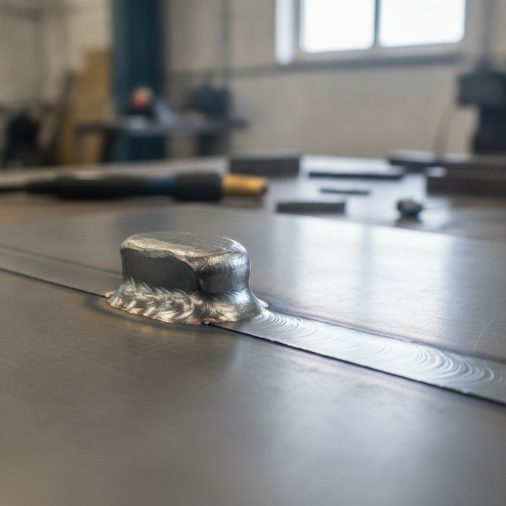
A tall, raised MIG weld bead is one of the most common complaints from welders at every skill level. It looks wrong, it often is wrong, and it can compromise joint strength even when the weld appears solid on the surface. This article breaks down exactly why MIG welds come out too high, what each cause looks like in practice, and how to correct it — whether you’re troubleshooting a single pass or dialing in a machine for production work.
Quick Answer
MIG welds are too high primarily because of insufficient heat input — caused by voltage that’s too low, wire feed speed that’s too high, or travel speed that’s too fast. The molten metal piles up instead of flowing flat and fusing properly into the base metal. Adjusting voltage upward or reducing wire feed speed typically flattens the bead profile.
What a “High” Weld Bead Actually Means
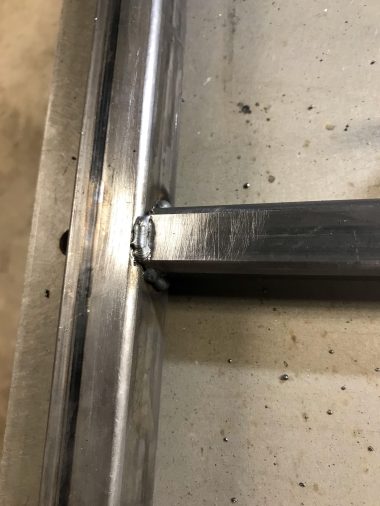
Bead height — sometimes called reinforcement — refers to how much the weld metal rises above the surface of the base material. A properly sized MIG weld bead should have a slight, smooth crown, typically no more than 1/8 inch (3mm) above the joint surface for most structural applications.
When a weld is described as “too high,” it usually means:
– The bead is tall and narrow rather than wide and flat
– The toes of the weld (where it meets the base metal) are steep or undercut
– The bead looks like a rope sitting on top of the metal rather than fused into it
– Slag or spatter is excessive around the bead edges
A high bead isn’t just cosmetic. It creates stress concentration points at the toes, reduces fatigue resistance, and in some cases indicates poor fusion at the root of the joint.
The Main Reasons MIG Welds Come Out Too High
1. Voltage Is Too Low
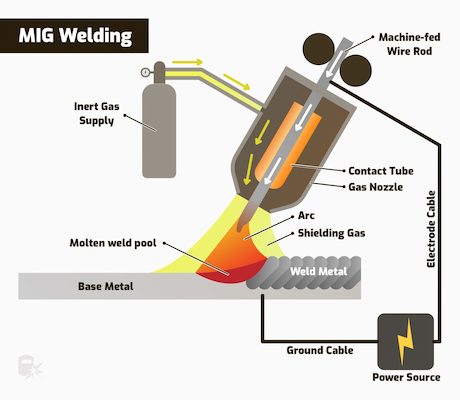
Voltage controls the arc length and the amount of heat delivered to the weld pool. This also connects naturally with tig weld spitting fix arc. When voltage is set too low, the arc is short and stiff. The wire melts but doesn’t spread — it stacks up in a narrow, tall pile.
This is the single most common cause of high MIG beads. The fix is straightforward: increase voltage in small increments (0.5–1V at a time) until the bead flattens and the toes blend smoothly into the base metal.
2. Wire Feed Speed Is Too High Relative to Voltage
Wire feed speed (WFS) controls how much filler metal is deposited per unit of time. If WFS is too high for the voltage setting, you’re pushing more metal into the weld pool than the heat can melt and spread properly.
The result is a tall, convex bead — often with a rough, irregular surface. The relationship between voltage and WFS must stay balanced. Increasing voltage, reducing WFS, or doing both simultaneously will correct this.
3. Travel Speed Is Too Fast
Moving the gun along the joint too quickly reduces heat input per inch of weld. Less heat means less melting and spreading of the base metal, so the filler metal piles up rather than flowing into the joint.
Slowing your travel speed gives the weld pool more time to wet out and flatten. This is especially relevant for beginners who tend to rush the gun to “keep up” with the arc.
4. Contact Tip-to-Work Distance (CTWD) Is Too Long
CTWD — the distance from the end of the contact tip to the workpiece — directly affects arc voltage and heat. A longer CTWD increases electrical resistance in the wire extension (stickout), which effectively reduces the heat reaching the weld pool.
Most MIG processes work best with 3/8 to 5/8 inch (10–16mm) of stickout. Excessive stickout produces a weak, cold arc that deposits a tall, poorly fused bead.
5. Wrong Shielding Gas or Flow Rate Issues
Shielding gas composition affects arc characteristics and bead shape. Pure CO₂ produces a stiffer, more penetrating arc with a rougher, more convex bead profile. Mixed gases (typically 75% Argon / 25% CO₂, known as C25) produce a smoother arc with better bead wetting and a flatter profile.
If you’re using straight CO₂ and seeing consistently high beads, switching to a mixed gas can make a noticeable difference. Low gas flow can also cause porosity and irregular bead shape, though this is less directly tied to bead height.
6. Gun Angle Is Off
Dragging the gun at too steep a work angle or using an excessive push angle can redirect the arc and affect how the weld pool flows. A steep drag angle tends to pile metal up rather than spread it.
For flat and horizontal MIG welding, a work angle of 90° to the joint and a travel angle of 10–15° (push or drag depending on position) gives the most consistent bead profile.
7. Base Metal Is Cold or Contaminated
Welding on cold metal — especially thick plate in a cold shop — requires more heat to achieve proper fusion. If the base metal is acting as a large heat sink, the weld pool chills quickly and the bead stays high.
Contamination (mill scale, rust, paint, oil) also disrupts wetting and can cause the bead to sit up rather than flow into the joint.
How to Diagnose the Problem Quickly

| Symptom | Most Likely Cause | First Fix |
|---|---|---|
| Tall, narrow bead, smooth surface | Voltage too low | Increase voltage 1–2V |
| Tall bead, rough/irregular surface | WFS too high | Reduce wire feed speed |
| Tall bead, fast travel marks visible | Travel speed too fast | Slow down gun movement |
| Tall bead with poor fusion at toes | Long stickout + low voltage | Shorten CTWD, increase voltage |
| Convex bead on CO₂ gas | Gas composition | Switch to 75/25 Ar/CO₂ |
| Inconsistent height along bead | Inconsistent travel speed or gun angle | Practice steady hand technique |
Practical Settings to Start From
If you’re dialing in a machine from scratch, these are reasonable starting points for common wire and material combinations:
0.030″ (0.8mm) ER70S-6 wire on mild steel:
– 18–20V for 1/8″ material
– WFS: 200–280 IPM
– Gas: 75/25 Ar/CO₂ at 20–25 CFH
– CTWD: 3/8–1/2 inch
0.035″ (0.9mm) ER70S-6 wire on mild steel:
– 19–22V for 3/16″ material
– WFS: 180–250 IPM
– Gas: 75/25 Ar/CO₂ at 20–25 CFH
– CTWD: 3/8–5/8 inch
These are starting points, not absolutes. Material thickness, joint type, position, and machine calibration all affect the ideal settings. Always run a test bead on scrap before welding the actual part.
When a High Bead Signals a Deeper Problem
Sometimes a high bead isn’t just a settings issue — it’s a symptom of a mechanical or equipment problem worth investigating.
Check these if adjusting settings doesn’t help:
– Liner wear or kinking — A worn or kinked liner causes inconsistent wire feeding, which creates an erratic arc and uneven bead height
– Contact tip wear — An oversized or worn contact tip causes poor electrical contact and an unstable arc
– Drive roll tension — Too much tension crushes the wire; too little causes slipping and inconsistent feed
– Wire spool drag — Excessive spool resistance causes the wire to hesitate, creating surge-and-starve feeding patterns
– Machine calibration — Older machines can drift from their labeled settings; voltage and WFS may not match the dial
In production environments, a sudden change in bead profile on a previously dialed-in machine almost always points to a consumable or feeding issue rather than a settings problem.
FAQ
Why does my MIG weld look like a rope sitting on top of the metal?
This is the classic sign of a cold, convex bead caused by low voltage or excessive wire feed speed. The metal isn’t getting enough heat to wet out and fuse into the base material. Increase voltage by 1–2V and check that your wire feed speed is proportional. Running a test bead on scrap after each adjustment makes it easier to isolate the variable causing the problem.
Can travel speed alone cause a high MIG weld?
Yes. Moving the gun too fast reduces heat input per inch of weld, which prevents the pool from spreading properly. The bead ends up tall and narrow even if voltage and wire speed are correctly balanced. Slowing your travel speed — even slightly — often produces a noticeably flatter, wider bead with better toe fusion and a smoother overall profile.
Does shielding gas affect bead height?
Gas composition has a real effect on bead shape. Pure CO₂ produces a stiffer arc with more penetration but a rougher, more convex bead. Argon-rich mixes (like 75/25 Ar/CO₂) create a smoother arc that wets out better and produces a flatter bead profile. If you’re consistently getting high beads and using straight CO₂, switching to a mixed gas is worth trying before making other changes.
Is a high MIG weld always a defect?
Not always — some codes and standards allow a certain amount of weld reinforcement. However, excessive height (generally more than 3mm or 1/8″ above the base metal surface) is considered a defect in most structural and pressure vessel applications because it creates stress concentration at the weld toes. A weld that looks tall and ropy should always be investigated, even if it passes a visual inspection.
Why does my MIG weld look good at the start but get higher toward the end of the pass?
This usually means the base metal is heating up as you weld, changing the effective heat input. The beginning of the weld runs cold (high bead), then flattens as the metal warms up — or the reverse if you’re slowing down. It can also indicate inconsistent travel speed or a gun angle that drifts during the pass. Practicing on longer scrap pieces helps develop a consistent rhythm.
What’s the correct stickout length for MIG welding?
For short-circuit and spray transfer MIG welding with solid wire, 3/8 to 5/8 inch (10–16mm) is the standard range. Flux-core wire typically uses 3/4 to 1 inch (19–25mm). Longer stickout increases resistance in the wire extension, reducing effective heat at the arc. This is one of the most overlooked variables when troubleshooting high or poorly fused beads.
How do I know if my MIG machine’s voltage setting is accurate?
Use a handheld clamp meter or a dedicated welding monitor to measure actual arc voltage during welding. Many older machines — and some budget models — have dials that don’t accurately reflect true output. If your machine consistently produces high beads even at settings that should be correct for the material, measuring actual output is a worthwhile diagnostic step before assuming technique is the problem.
Final Thoughts
A high MIG bead almost always comes down to heat — specifically, not enough of it reaching the weld pool. Start by checking voltage and wire feed speed balance, then look at travel speed and stickout before assuming the machine has a fault. Most bead profile problems are correctable with two or three small adjustments and a few test passes on scrap. If the bead stays high after correcting settings, check the liner, contact tip, and drive rolls — mechanical feeding problems are the most common hidden cause that welders overlook.
Meta Description: Struggling with MIG welds that are too high and convex? Learn the exact causes — from low voltage to wrong stickout — and how to fix them fast.


