
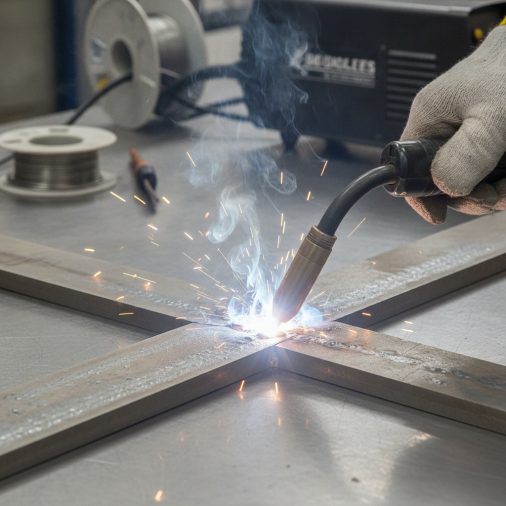
Why Aluminum Needs Shielding Gas More Than Steel Does
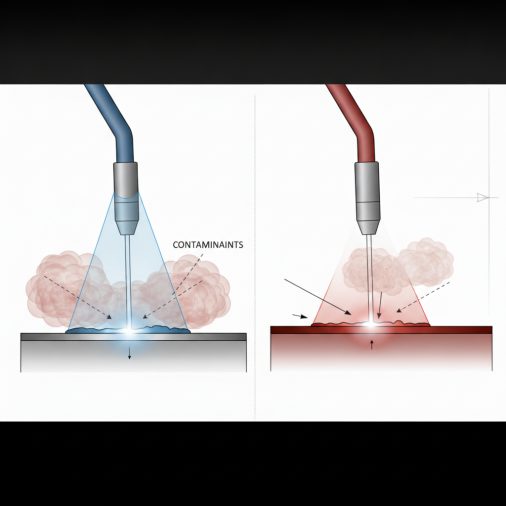
The Flux-Core Aluminum Wire Question
What Gas Is Actually Required
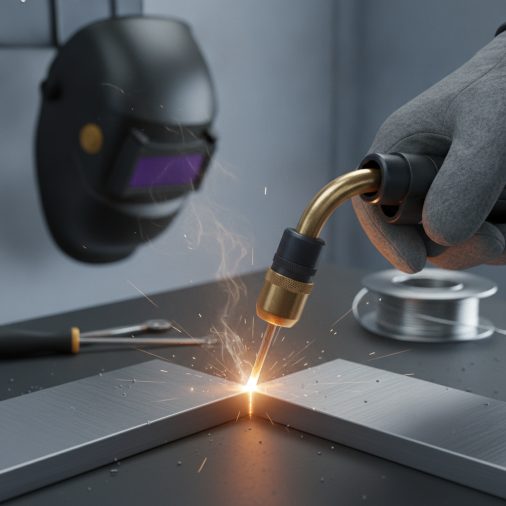
For MIG welding aluminum, the correct shielding gas is 100% pure argon. This applies to virtually all aluminum alloys and thicknesses you’d encounter in typical fabrication or repair work. Argon provides the right arc characteristics for aluminum, supports cathodic cleaning, and produces a smooth, stable bead. You can read more about choosing the right gas for MIG welding aluminum if you want a deeper breakdown of flow rates and argon purity requirements. Helium is sometimes blended with argon (typically 25–75% helium) for thicker aluminum sections requiring deeper penetration, but this is more common in professional fabrication shops than in general use. For most welders, straight argon at 15–25 CFH is the standard starting point.Can You Use Any Other Welding Process Without Gas?
If you genuinely need to weld aluminum and don’t have access to a shielding gas supply, MIG is not the right tool. But other options exist depending on what you’re trying to accomplish. TIG welding still requires argon shielding gas, so it doesn’t solve the gas problem — but it’s worth knowing that TIG gives you better control on thin aluminum. Stick welding with aluminum electrodes is technically possible, though results are typically rough and inconsistent. Stick rods like the Blue Demon E4043 are available, but this method is generally used only in field situations where no better option exists. Weld quality rarely meets the standard of gas-shielded MIG or TIG. Oxy-acetylene welding and brazing can join aluminum without a gas cylinder in the MIG sense, using a flame instead, but this requires its own gas setup (oxygen and acetylene tanks) and significant technique to avoid burning through.| Method | Requires Shielding Gas? | Aluminum-Capable? | Practical Quality |
|---|---|---|---|
| MIG with argon | Yes (argon) | Yes | Good to excellent |
| TIG with argon | Yes (argon) | Yes | Excellent |
| Flux-core MIG | No | No (not true fusion) | Not suitable |
| Stick (E4043) | No | Technically yes | Poor to moderate |
| Brazing rods | No | Braze only | Low strength |
Setting Up Correctly When You Do Have Gas
If you have your argon supply sorted and want to make sure your setup is dialed in, a few things matter beyond just having gas flowing. Aluminum MIG welding requires: – Pure argon — not the CO₂/argon mixes used for steel – Aluminum-specific wire — typically ER4043 or ER5356, matched to your base alloy – A Teflon or plastic-lined gun liner — steel liners shave aluminum wire and cause feeding problems – Push technique only — pulling creates turbulence that draws in atmospheric contamination – Clean base metal — brush with a stainless steel brush dedicated only to aluminum before welding Getting the wire to feed smoothly is often the biggest challenge. Setting up your MIG welder specifically for aluminum covers liner selection, drive roll tension, and other setup details that affect feed consistency. The Lincoln Electric Magnum PRO 100L aluminum spool gun is a practical option for welders who struggle with aluminum wire feeding through a standard gun, as it keeps the wire path short and reduces the chance of birdnesting.Common Mistakes That Suggest “Gas Isn’t Working”
Sometimes welders assume their gas isn’t helping because results still look bad — leading them to wonder if they should skip gas altogether. In practice, poor results usually come from the wrong gas, contamination, or incorrect settings rather than gas itself being useless. Watch for these signs that your shielding isn’t working properly: – Soot or black residue around the bead — often means insufficient gas flow or argon contamination – Heavy porosity — pores in the weld bead indicate atmospheric contamination – Erratic arc and excessive spatter — can signal CO₂-heavy gas mixtures meant for steel, not aluminum – Lack of cathodic cleaning (bright zone) — if there’s no clean halo around the weld bead, the arc isn’t cleaning the oxide If you’re troubleshooting these problems, checking whether you have the right shielding gas specifically for aluminum MIG welding is the first place to start.FAQ
Can you use flux-core wire to MIG weld aluminum? No. There is no commercially available flux-core aluminum wire that produces a proper fusion weld. Products marketed this way are typically brazing rods, not welding consumables. True flux-core MIG welding for aluminum isn’t feasible because aluminum’s oxide chemistry doesn’t allow flux to provide adequate shielding at fusion temperatures. What happens if you MIG weld aluminum without gas? The weld will be severely contaminated with oxide inclusions and porosity. The arc will be unstable and hard to maintain. The resulting bead will look rough, lack fusion with the base metal, and fail under mechanical stress. In structural or load-bearing applications, this is a safety concern, not just a cosmetic issue. Can you weld aluminum with a gasless MIG welder? Gasless MIG welders are designed for flux-core steel wire, not aluminum. Running aluminum wire through one without shielding gas produces an unusable result. If you need to weld aluminum without a dedicated gas supply, stick welding with an aluminum electrode or oxy-acetylene brazing are more realistic alternatives, though both have limitations. Is 100% argon the only gas option for aluminum MIG welding? For most applications, yes. Pure argon is the standard shielding gas for aluminum MIG welding. Argon-helium blends are used in professional settings for thicker sections requiring more penetration and faster travel speeds, but for general work, 100% argon at 15–25 CFH is the correct choice. CO₂ or mixed gases used for steel are not suitable. Why does aluminum need more shielding than steel? Aluminum forms a dense, high-melting-point oxide layer almost instantly when exposed to air. At welding temperatures, this oxide creates a barrier between the arc and the base metal. Argon shielding gas prevents new oxide from forming while the arc’s cathodic action breaks down the existing layer. Steel is far less reactive at welding temperatures, which is why flux-core processes work for steel but not aluminum. Can you braze aluminum without shielding gas? Yes. Low-temperature aluminum brazing using an oxy-acetylene torch and an aluminum brazing rod (like Bernzomatic AL3 or similar) doesn’t require a shielding gas bottle. However, this is brazing, not welding. Joint strength is significantly lower than a true fusion weld, and it’s not appropriate for structural repairs or high-stress connections. What’s the minimum setup needed to MIG weld aluminum properly? At minimum you need: a MIG welder capable of DCEP output, an argon cylinder with regulator and flow meter, aluminum-compatible wire (ER4043 or ER5356), a Teflon-lined gun liner or spool gun, and clean base metal. Without every one of these elements, weld quality drops significantly. Understanding what a MIG welder needs to handle aluminum helps you avoid investing in the wrong equipment.Shielding gas isn’t an optional extra for aluminum MIG welding — it’s a fundamental part of how the process works. Without argon, you don’t have a weaker weld; you essentially have no reliable weld at all. If you’re working without gas access, the honest answer is to choose a different process for aluminum, not to attempt MIG without it.


