
Choosing the correct shielding gas for your aluminum MIG welding project isn't just a detail; it's one of the biggest factors in getting a clean, strong weld. If you've ever wondered "what gas to use for aluminum mig welding," you're in a common spot. Getting this right means better fusion, less cleanup, and welds that look as good as they perform.
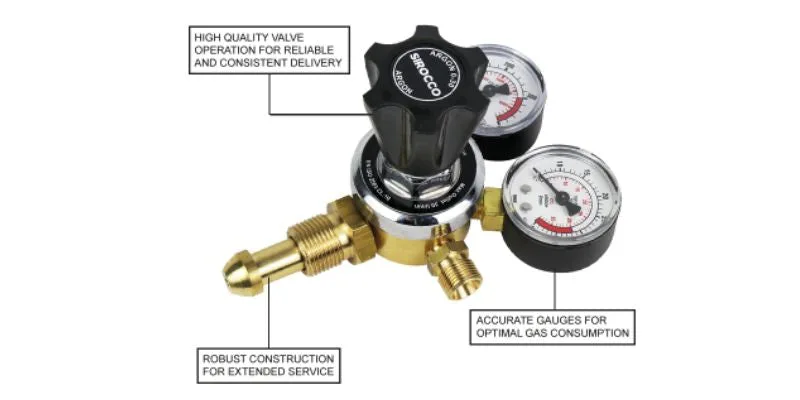
Image source: Bing (Web (fair-use with source credit))
The wrong gas choice can lead to all sorts of headaches: porosity, weak joints, and a frustrating welding experience. Manufacturer specifications for popular MIG welders often detail gas requirements for specific materials and applications, and adherence is key. As of 2026, standard recommendations still heavily favor Argon and Helium mixes for aluminum.
Shielding Gas's Big Role in Aluminum MIG
The shielding gas you use in MIG welding aluminum acts like a protective barrier. Its main job is to push away the surrounding air, which contains oxygen and nitrogen that can seriously damage your weld pool. When oxygen reacts with molten aluminum, it forms aluminum oxide. This oxide layer not only looks bad, but it can also get trapped in the weld, making it brittle and prone to cracking.
The gas flow and type also play a huge role in controlling the welding arc itself. It influences how the metal transfers from the wire to your workpiece, affecting everything from arc stability to spatter. Think of it as carefully orchestrating the environment for your weld to form properly.
Why Gas Choice Matters for Aluminum
Our research shows that aluminum is particularly sensitive to atmospheric contamination during welding. Unlike steel, its oxide layer has a much higher melting point than the base metal. This means that even a thin oxide layer on aluminum can interfere with fusion and create defects. Pure Argon provides a stable arc and good puddle control, which is ideal for many aluminum applications, especially thinner materials.
However, some aluminum alloys, particularly thicker sections, benefit from the added heat and penetration that Helium offers. Getting the gas mix right means you can control weld bead profile, reduce the risk of inclusions, and work more efficiently. This is why understanding the nuances of different shielding gases is so critical to successful aluminum MIG welding.
Your Aluminum MIG Welding Gas Decision Tree
Figuring out the best gas isn't a one-size-fits-all deal. Your decision hinges on a few key variables, and knowing them helps prevent common welding problems. If you've ever asked yourself "what gas to use for aluminum mig welding" without success, this is where you'll find clarity.
The process is designed to guide you based on your specific Aluminum MIG Welding project needs. It’s about matching the right gas to the job to ensure optimal results and avoid rework.
What Are You Welding? Material Thickness and Type
This is the most critical starting point. The thickness of the aluminum you're joining directly dictates how much heat you need to achieve proper fusion without blowing through. Different aluminum alloys also have slightly different welding characteristics, though the primary concern for gas selection is thickness.
Thin Aluminum (#4043, #5356, etc. < 1/8")
When you're working with thin aluminum, say less than 1/8 inch (roughly 3mm), the biggest challenge is usually avoiding burn-through. You need a gas that provides a stable arc with less intense heat. Pure Argon is almost always the go-to here because it offers excellent puddle control and a fine spray transfer, minimizing excessive heat input. Using anything with too much Helium at this stage could lead to costly mistakes.
Medium to Thick Aluminum (#4043, #5356, etc. 1/8" – 1/4")
As you move into thicker aluminum, from about 1/8 inch up to 1/4 inch (around 3mm to 6mm), you start needing more heat. Pure Argon can still work, but you might find yourself pushing your machine’s parameters to get adequate penetration. This is where Argon/Helium blends start to show their value. An Argon/Helium mix can offer a hotter arc, allowing for faster travel speeds and better fusion without working the machine too hard.
Very Thick Aluminum (> 1/4")
For aluminum pieces that are 1/4 inch (6mm) thick or more, achieving sufficient penetration is paramount. Pure Argon often struggles to deliver enough heat to fully fuse these substantial sections. This is where blends with a higher percentage of Helium become essential. Helium conducts heat more efficiently than Argon, allowing for deeper penetration and a wider bead.
A 50/50 Argon/Helium mix, or even higher Helium concentrations, are often specified in industrial settings for welding very thick aluminum structures.
What Kind of Weld Finish Do You Need?
Beyond just structural integrity, the appearance of your aluminum welds can be crucial, especially in visible applications. The shielding gas influences the arc's spray pattern and the cooling rate of the weld pool, which directly affects bead profile and surface finish.
Pure Argon typically produces a finer spray transfer, resulting in a cleaner, often brighter weld bead with minimal spatter. This is generally preferred when aesthetics are important. Argon/Helium blends, however, tend to create a more aggressive arc and a wider spray, which can lead to a wider bead and a slightly rougher texture if not managed correctly. While Helium blends can offer faster welding speeds, achieving a pristine, smooth finish might require more fine-tuning of your machine settings.
What's Your MIG Setup and Budget?
Your existing equipment and how you source your shielding gases will also play a role in your decision. Pure Argon cylinders are widely available and generally the least expensive option, making them a practical choice for hobbyists and smaller shops.
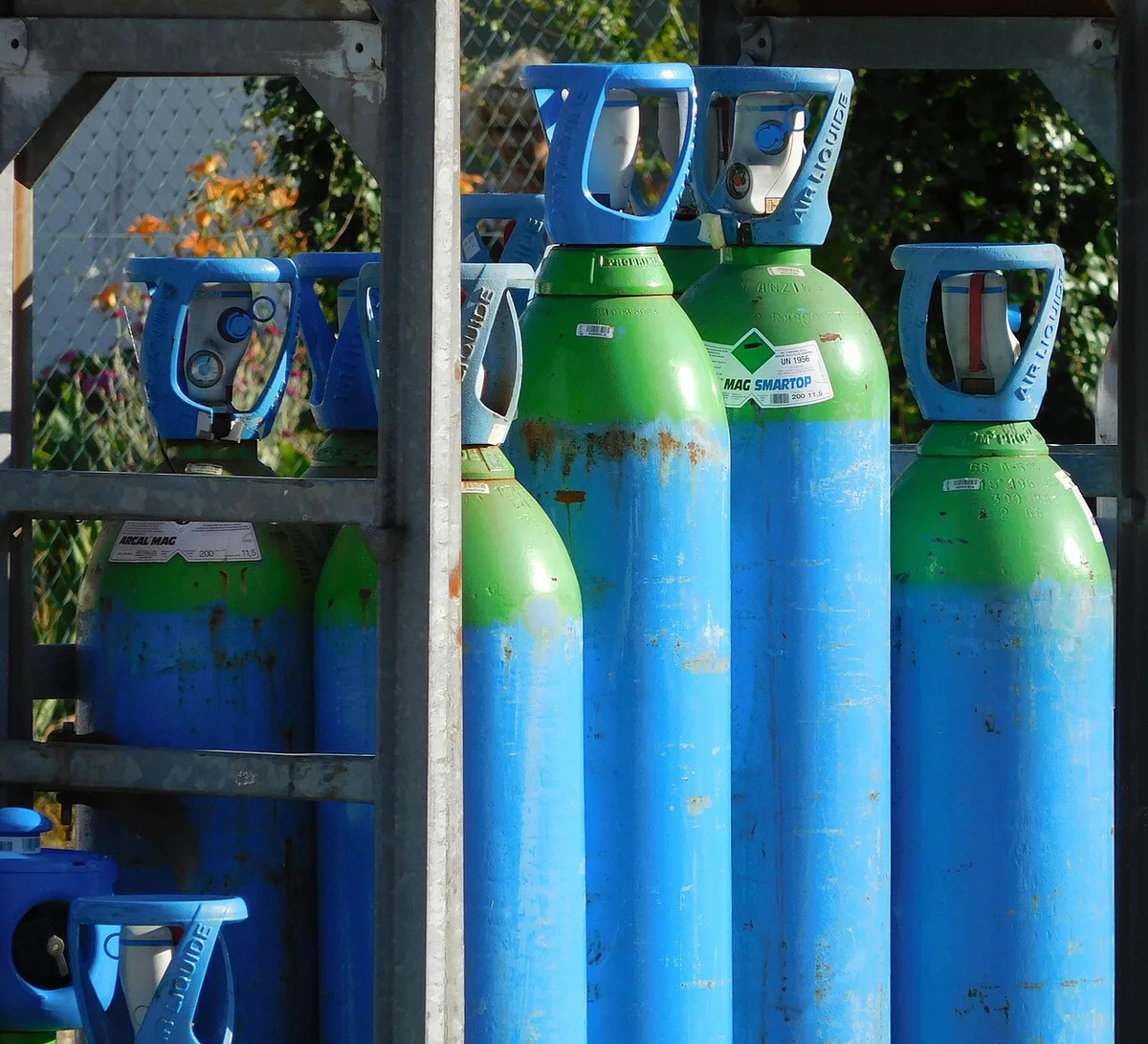
Image source: Bing (Web (fair-use with source credit))
Argon/Helium blends are typically more costly due to Helium's price and availability. However, if you’re welding a lot of thicker aluminum where speed and penetration are key, the increased efficiency and fewer rework instances with a blend might justify the higher gas cost. You’ll also need to ensure your MIG welder and its gas regulator are capable of handling the specific gas mixtures if you opt for a blend, as some older setups might be designed for a single gas. If you're looking for a best gas regulator for home, ensuring it’s compatible with common welding gases is a smart move.
Gas Options for Aluminum MIG: What's Available
When you look at shielding gases for aluminum MIG welding, two main players, Argon and Helium, and their combinations dominate the conversation. Understanding their individual properties helps you see why they're used, either alone or mixed. These gases are carefully chosen for how they interact with the molten aluminum and the electrical arc.
The gases have different densities and thermal conductivity, which are the fundamental properties that dictate their performance in the weld zone. It’s a science that directly impacts the quality of your finished weld.
Pure Argon: Your Everyday Hero
Pure Argon (Ar) is the most common and often the best choice for a wide range of aluminum MIG welding tasks. It's a heavy, inert gas, meaning it doesn't react chemically with the molten metal. This excellent inertness is crucial for preventing oxidation and other atmospheric contaminants from weakening your aluminum welds.
Pure Argon provides a stable, well-controlled arc, often resulting in a clean spray transfer with relatively low spatter. This makes it particularly well-suited for welding thinner aluminum sheets where precise heat control is needed to prevent burn-through. For many everyday aluminum projects, pure Argon is your reliable, cost-effective workhorse. Its availability and lower cost make it a practical choice for most welders.
Argon/Helium Blends: When Extra Heat is Key
While pure Argon is fantastic, sometimes you need more arc energy. That's where Helium (He) comes in. Helium is a much lighter gas than Argon and has higher thermal conductivity, meaning it transfers heat more readily into the weld pool. This increased heat input is incredibly beneficial when welding thicker aluminum sections or when you need to increase your welding speed.
The primary advantage of using Helium, usually in blends with Argon, is the hotter arc it produces. This hotter arc penetrates deeper, allows for faster travel speeds, and can help prevent cold lap or lack of fusion on thicker materials. However, more Helium means more cost and potentially a wider, less focused bead if not managed correctly.
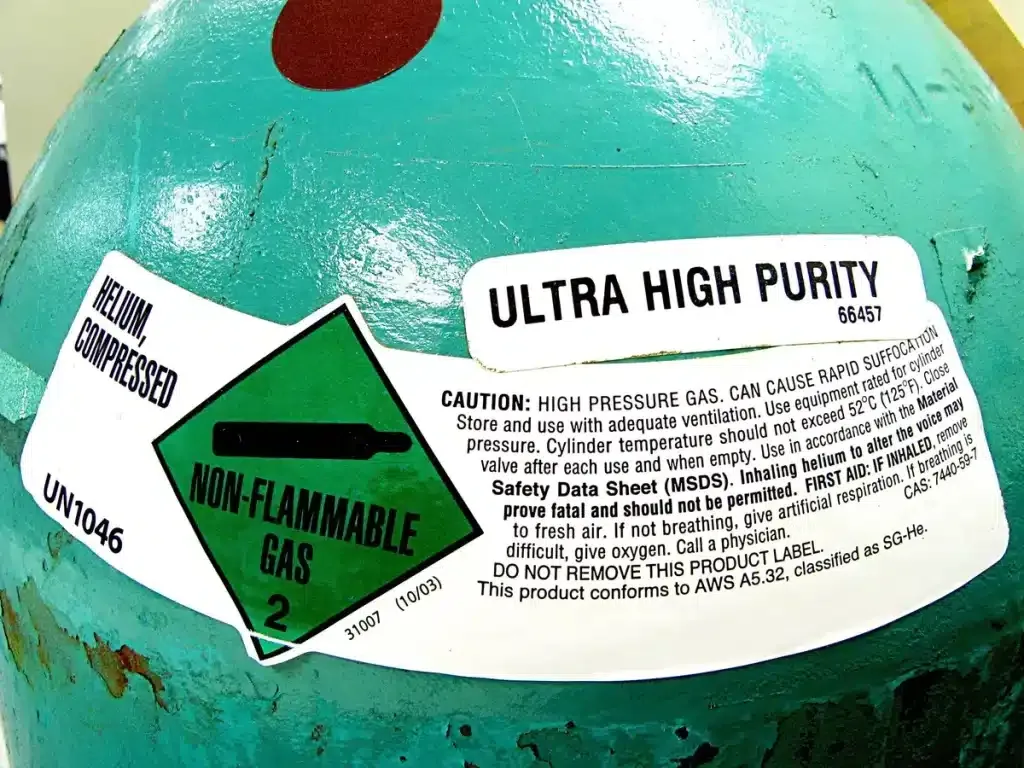
Image source: Bing (Web (fair-use with source credit))
90% Argon / 10% Helium: The Versatile Choice
A mix of 90% Argon and 10% Helium is a really popular and versatile blend for aluminum MIG welding. It strikes a great balance between the stability and cleanliness of Argon and the added heat and penetration of Helium.
This blend is often recommended for medium to thicker aluminum, typically from about 1/8 inch up to 1/4 inch. It provides enough heat to achieve good fusion without the extreme heat that might be generated by higher Helium concentrations. You'll often see this mix used in fabrication shops where efficiency is key, as it allows for faster travel speeds compared to pure Argon while still maintaining excellent weld quality and a good bead profile. If your projects frequently involve aluminum in this thickness range, this blend is worth considering.
Higher Helium Blends (e.g., 75/25, 50/50)
When you're dealing with really thick aluminum, or if you're aiming for extremely fast welding speeds on medium sections, you'll look at blends with an even higher percentage of Helium. A 75% Argon / 25% Helium blend, or even a 50/50 mix, offers significantly more heat input than the 90/10 blend.
These mixes are essential for applications where deep penetration is critical, such as structural welds on hefty aluminum components. The high heat transfer from Helium allows the weld to fuse deeply into the base metal. However, it's crucial to be aware that these blends can be more prone to spatter and may require more precise control of your welding parameters to avoid creating a wide, flat bead or even overheating the material. For anyone working with thick aluminum, understanding how to dial in settings for these high-Helium mixes is a key skill.
Making the Gas Choice: Putting It All Together
Deciding which gas to use for your aluminum MIG welding ultimately comes down to a practical assessment of your specific needs. It's a workflow that considers the material at hand, the desired outcome, and your available resources. Getting this right means your welds will be stronger, cleaner, and require less finishing work.
Manufacturer specifications for MIG welders, such as those found for Lincoln welders, often provide guidance on recommended gas types for different applications. For instance, a Lincoln Mig Welder Settings Chart might suggest pure Argon for thin sheets and a specific blend for thicker plates. The goal is to avoid common problems and achieve the best possible weld quality.
Common Mistakes When Picking Your Gas
One of the most frequent errors welders make is using pure Argon for thicker aluminum sections. They might struggle to achieve full penetration, leading to weak joints and potential failures. This is often because not enough heat is being delivered to the weld pool, a problem that adding Helium to the gas mix can solve.
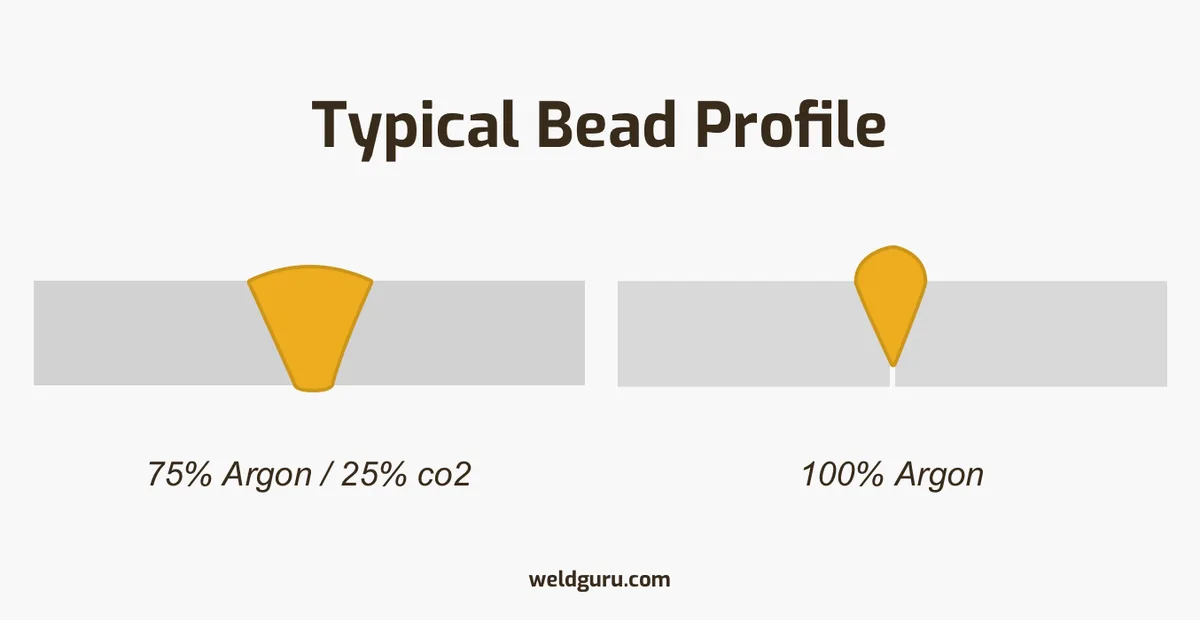
Image source: Bing (Web (fair-use with source credit))
Conversely, using a high Helium blend on thin aluminum is another common pitfall. The intense heat can easily burn through delicate material, creating holes and requiring extensive rework or even scrapping the piece. The goal is always to match the gas to the material's needs.
Another mistake is not setting the correct gas flow rate. Too little gas won’t provide adequate shielding, leading to contamination and porosity. Too much gas can create turbulence in the weld puddle and actually draw in atmospheric contaminants, essentially defeating its purpose without improving shielding. Most manufacturers recommend a flow rate between 20-25 cubic feet per hour (CFH), but this can vary slightly based on your setup and environmental conditions.
Expert Tips for Optimal Gas Usage
To get the best results from your chosen shielding gas, a few key practices can make a big difference. It’s about maximizing the protective bubble and ensuring it’s doing its job effectively. If you've ever looked at a great weld and wondered how they achieved that finish, gas management is often part of the secret.
Setting the Right Flow Rate
Getting your gas flow rate right is crucial for effective shielding. As a general rule, start around 20-25 CFH for most aluminum MIG welding applications. However, this isn't a hard and fast rule set in stone. In drafty conditions, you might need to increase the flow rate slightly to compensate for air movement, but avoid going excessively high, as this can create turbulence and pull in air.
Conversely, in a very still environment, you might be able to get away with a slightly lower flow. It’s good practice to test your flow rate and observe your weld puddle and arc stability. If you notice porosity or a weak weld, adjusting your flow rate is one of the first things to check.
Checking Gas Coverage
Before you start welding, always purge your gas line and MIG gun for a few seconds. This pushes out any residual air or moisture that might have built up. When you strike an arc, the shielding gas should form a consistent, cone-like bubble around your weld pool. If you see excessive spatter or the weld looks dull or porous right from the start, it can indicate poor gas coverage.
This might be due to a low flow rate, a draft, or even a partially clogged gas nozzle. Regularly cleaning your MIG gun nozzle and checking for damage to the gas diffuser can prevent these issues.
Understanding the Gases: Key Properties
When you're choosing a shielding gas, understanding its core properties helps explain why certain gases work better for specific applications. The key factors are density, thermal conductivity, and ionization potential, all of which influence the arc characteristics and weld pool behavior.
Argon is denser than air, which is beneficial for forming a protective blanket over the weld pool. Helium, being lighter, conducts heat much more effectively. These fundamental differences are what drive performance in aluminum MIG welding.
Argon's Characteristics for Welding
Pure Argon is an inert gas that’s about 1.4 times denser than air. This density helps it effectively displace the surrounding atmosphere, creating a robust shield. Its ionization potential means it requires a moderate voltage to sustain an arc, leading to a stable welding arc with a fine spray transfer.
This stability and control make Argon the preferred choice for thinner materials where heat management is critical. It provides good puddle fluidity without being overly aggressive. As a common industrial gas, it's also generally more accessible and cost-effective than Helium, making it a practical choice for many users.
Helium's Contribution to the Arc
Helium is significantly lighter than Argon and has a much higher thermal conductivity. Its lighter density means it doesn't offer as much natural shielding as Argon; it tends to dissipate more quickly. However, its superior heat transfer is where its real value lies in welding.
When added to Argon, Helium boosts the arc's temperature and energy. This hotter arc offers deeper penetration and allows for faster travel speeds, which can significantly increase productivity on thicker aluminum. It essentially makes the arc "hotter" and more energetic, which is crucial for fusing substantial metal sections.
Common Gas Misconceptions in Aluminum MIG
It's easy to fall into common traps when selecting shielding gases for aluminum MIG welding. Many welders might stick with pure Argon out of habit, or conversely, jump to high Helium blends without fully understanding the consequences. Dispelling these myths can save you a lot of time and material.
One persistent misconception is that pure Argon is always sufficient for aluminum. While it's excellent for many tasks, its limitations become apparent on thicker materials, where achieving full fusion can be a struggle without the additional heat Helium provides.
The Myth of Pure Argon for All Aluminum
While pure Argon delivers a great weld on thinner aluminum, believing it's the only gas you'll ever need is a mistake. For aluminum thicker than around 1/8 inch (3mm), its heat output can be insufficient. This can lead to incomplete fusion, or "cold lap," where the weld doesn't fully bond to the base metal.
Verified buyer feedback reports often highlight this struggle. Welders find themselves needing to increase voltage and wire speed significantly with pure Argon on thicker sections, often resulting in poor arc stability and excessive spatter. This is a sign that a hotter gas, like an Argon/Helium blend, would likely provide a more robust and efficient solution.
Overestimating Helium's Need
On the flip side, thinking you always need a high Helium blend for aluminum can be just as problematic. Helium is more expensive than Argon, so using it unnecessarily drives up costs. Beyond economics, excessive Helium can lead to a very wide, flat, and sometimes washed-out weld bead.
It can also make it harder to control the arc, especially on thinner materials, where burn-through becomes a major risk. Manufacturer specifications for MIG welders usually offer clear guidance: use blends only when the increased heat is genuinely required for material penetration and speed. For most common aluminum welding jobs on thinner materials, pure Argon remains the most practical and effective choice.


