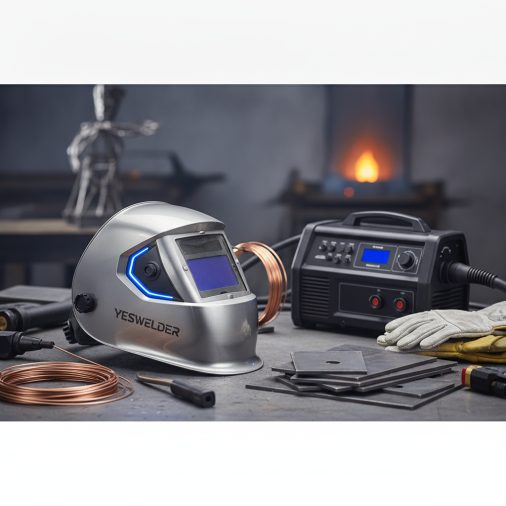
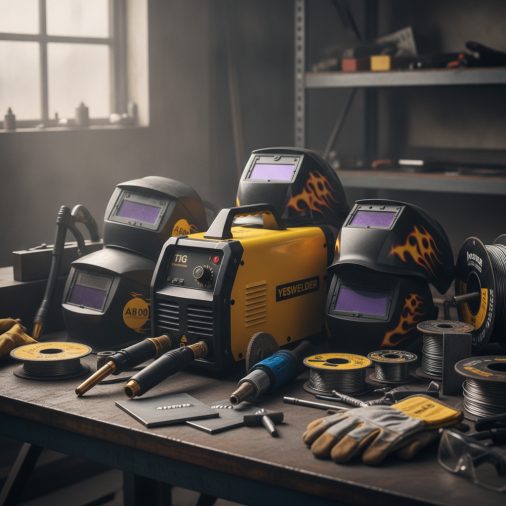
Shopping for a welder on a tight budget almost always leads you to YESWELDER. The brand shows up everywhere — Amazon, welding forums, YouTube reviews — and opinions tend to run strong in both directions.
YESWELDER is a Chinese welding equipment brand that produces affordable MIG, TIG, stick, flux core, and multi-process welders primarily aimed at hobbyists, DIYers, and light fabrication shops. Their machines typically cost between $100 and $400, making them significantly cheaper than established brands like Lincoln Electric or Miller Electric. Quality is generally adequate for occasional home use, though serious production work or code-critical welding is better served by professional-grade equipment.
What YESWELDER Actually Makes
YESWELDER’s product lineup is broader than most people expect. They don’t just sell one type of machine.
Their core categories include:
– Flux core welders — gasless machines ideal for outdoor use and beginners
– MIG welders — gas-shielded machines for cleaner welds on steel, aluminum, and stainless
– Multi-process welders — units that handle MIG, TIG, and stick from a single machine
– TIG welders — for precision work on thin metal and specialty alloys
– Stick welders — for heavy-duty outdoor and structural welding
– Plasma cutters — for cutting sheet metal and plate
– Auto-darkening welding helmets — a surprisingly popular part of their catalog
The YESWELDER Flux-135 is probably their most widely recognized model. It’s a 3-in-1 machine capable of flux core, MIG, and stick welding, which makes it appealing for beginners who want flexibility without buying multiple machines. Many beginners find the YESWELDER Flux-135 practical enough for everyday home projects without a steep learning curve.
Who YESWELDER Is Designed For
YESWELDER machines aren’t built for a pipeline welder or a structural fabrication shop. That’s not a criticism — it’s just a realistic assessment of where they fit.
They make the most sense for:
– Hobbyists and DIYers doing occasional repairs, small builds, or creative metalwork
– Beginners learning the fundamentals without committing to a $600+ machine
– Homeowners who need a welder for seasonal use and basic fixes
– Light fabricators running low-volume, non-critical projects
If your welding is frequent, structural, or subject to code inspections, investing in a machine from Lincoln Electric, Hobart, or Miller is the smarter long-term choice. You can compare how budget-friendly options stack up against premium brands in this brand-by-brand breakdown of MIG welder manufacturers.
How YESWELDER Machines Perform in Practice
Across user reviews and field feedback, a few consistent patterns emerge.
What works well:
– Arc starts are generally smooth on lower-amperage applications
– Duty cycles are acceptable for short welding sessions
– Flux core performance on mild steel is often praised, especially on thinner material
– The auto-darkening helmets get strong reviews relative to their price point
– Machines arrive mostly ready to use, with minimal setup friction
Where limitations show up:
– Wire feed consistency can be variable, especially under continuous use
– Internal components (drive rolls, liners, torch connections) are not always built to tight tolerances
– Amperage output may fall slightly short of advertised specs on thicker material
– Customer support and warranty service can be slow or inconsistent
– Longevity under heavy use is a known concern
A common issue users encounter is erratic wire feeding on longer welds, which is often caused by lower-quality drive roll tension or a soft liner. Wire feed problems in MIG welders aren’t unique to budget brands, but they tend to appear more frequently in lower-cost machines.
Setting Up a YESWELDER for the First Time
Most YESWELDER machines are designed for straightforward setup, but a few steps are worth getting right from the start.
1. Check your power supply. Most YESWELDER entry-level machines run on 110V. Confirm the outlet amperage matches your machine’s draw requirements before plugging in.
2. Install the wire spool correctly. Align the wire with the drive roll groove and thread it through the liner with light tension on the spool hub.
3. Set drive roll tension carefully. Too tight causes wire deformation; too loose causes slippage and irregular feed.
4. Select the correct polarity. Flux core welding typically requires DCEN (electrode negative). Gas-shielded MIG uses DCEP (electrode positive). Swapping polarity is a common beginner mistake.
5. Dial in voltage and wire speed. Start with the chart inside the machine’s door panel and adjust from there based on your test bead.
For a deeper look at tuning your settings properly, the process of adjusting a MIG welder for different material thicknesses applies directly to YESWELDER machines.
YESWELDER vs. Competing Budget Brands
YESWELDER isn’t the only budget welder brand competing in this space. Forney, Hobart, and Lincoln Electric all have entry-level options, though they generally sit at higher price points.
Brand
Price Range
Build Quality
Support Quality
Best For
YESWELDER
$
Basic
Variable
Beginners, occasional use
Forney
$–$$
Good
Solid
Light hobbyists, home use
Hobart
$$–$$$
Very Good
Reliable
Intermediate users
Lincoln Electric
$$–$$$$
Excellent
Strong
All skill levels
Miller Electric
$$$–$$$$
Excellent
Strong
Professional use
The honest trade-off is straightforward. YESWELDER machines cost less upfront but come with more risk around long-term reliability and support. If budget is the main constraint, they’re a workable starting point. If you can stretch to a Hobart Handler 140, the jump in build quality and warranty support is meaningful.
Materials You Can Weld With a YESWELDER Machine
Most YESWELDER MIG and multi-process machines handle mild steel without issue. Performance on other materials depends on the specific machine.
– Mild steel — handled well across their lineup
– Stainless steel — possible on gas-shielded MIG models with the right wire and gas blend; welding stainless with a MIG welder requires precise setup
– Aluminum — only on machines with a spool gun port or aluminum-rated torch; requires a proper gas setup
– Cast iron — possible with stick models, though welding cast iron with a MIG welder carries crack risk without careful preheat and filler selection
– Flux core on thicker steel — works adequately on material up to about 3/16 inch depending on amperage output
One important limitation: YESWELDER’s lower-amperage machines are not well-suited to material thicker than 1/4 inch. Welding 1/4-inch steel reliably requires adequate amperage output and a stable arc that lower-powered machines can struggle to maintain.
FAQ
Is YESWELDER a reliable brand for beginners?
YESWELDER is a reasonable starting point for beginners doing light, occasional welding. The machines are affordable, straightforward to set up, and capable enough for basic mild steel work. Beginners should understand that the build quality and component tolerances are lower than professional brands, but for learning the fundamentals and completing small home projects, they’re functional and accessible.
Where are YESWELDER machines manufactured?
YESWELDER machines are manufactured in China. The brand operates primarily as an online direct-to-consumer business, selling through Amazon and their own website. Many of their machines share internal components with other budget brands, which is typical in the budget welding equipment market. This doesn’t necessarily make them bad products, but it does explain why build consistency can vary between units.
Can a YESWELDER handle 1/8-inch steel easily?
Most YESWELDER MIG and flux core machines handle 1/8-inch mild steel adequately at appropriate settings. Performance improves when you take the time to dial in wire speed and voltage rather than relying on default chart settings. On thicker material approaching 3/16 inch or 1/4 inch, output limitations may become noticeable, especially during longer weld passes.
How long does a YESWELDER machine typically last?
Lifespan depends heavily on how frequently the machine is used and how well it’s maintained. For light hobby use — a few hours a month — many users report several years of reliable service. Under heavier or continuous use, internal components like the wire feeder, torch liner, and control board are more likely to fail than on professional-grade machines. Keeping the machine clean and storing it properly extends its useful life.
Does YESWELDER offer a warranty?
YESWELDER typically offers a one-year manufacturer warranty, though warranty service experiences vary. Some users report smooth exchanges, while others describe slow or difficult support interactions. Before purchasing, it’s worth checking the current warranty terms directly on their website or Amazon listing, as terms can change between product generations.
What’s the difference between the YESWELDER Flux-135 and a standard MIG welder?
The YESWELDER Flux-135 is a multi-process machine that supports flux core, gas-shielded MIG, and stick welding. A standard single-process MIG welder only supports gas-shielded wire welding. The Flux-135’s versatility makes it appealing for users who want to experiment with different processes, though dedicated single-process machines often deliver better performance within their specific process.
Can you use a YESWELDER machine in a garage workshop?
Yes, and most YESWELDER entry-level models are specifically designed for home garage use. They typically run on standard 110V household current, which makes them plug-and-play for most garage setups. If you’re setting up a dedicated welding area, reviewing how to safely set up a welder in a garage is a useful step before your first session.
The Bottom Line on YESWELDER
YESWELDER machines occupy a specific, honest niche: affordable welders for light-duty use. They’re not premium equipment, and treating them as such leads to frustration. Used within their limits — occasional projects, mild steel, moderate material thickness — they perform well enough to justify the price.
The auto-darkening helmets, in particular, consistently over-deliver for their cost and are worth considering even for welders who own a higher-end machine. For anyone just starting out or building skills before investing in professional gear, YESWELDER is a workable entry point rather than a long-term solution.