

So, you're wondering if you can MIG weld titanium. It's a question that comes up when you start looking at some of the most impressive metalworking projects, where lightness and strength are absolutely critical. The short answer is: yes, but it's not like welding steel or aluminum, and it's definitely not for the average setup.
Titanium's unique properties make it fantastic for aerospace, medical implants, and high-performance automotive parts. However, those same properties create massive challenges when you try to join it using Gas Metal Arc Welding (GMAW), commonly known as MIG welding. In fact, according to standards like AWS D1.9, titanium welding requires extremely strict controls to prevent contamination.

Image source: Wikimedia Commons / Jason Hollinger (CC BY)
Quick Answer: It's Complicated, Not Recommended for Most.
If you've seen impressive titanium fabrications, you might wonder about the welding methods. While often associated with TIG welding, MIG welding titanium is technically possible. However, attempting it with standard equipment is like trying to outrun a race car on a tricycle, you're not going to get the results you need, and you're likely to end up with a lot of frustration. The core issue is titanium's extreme susceptibility to contamination.
When hot, it readily absorbs gases like oxygen and nitrogen from the surrounding air. These aren't just minor imperfections; they fundamentally alter the metal's properties, making the weld brittle, weak, and prone to cracking.
Why Titanium Welding is So Tricky
The Problem: Titanium's Extreme Reactivity
Titanium's biggest asset, its incredible strength and corrosion resistance, is also its Achilles' heel when it comes to welding. As soon as titanium reaches welding temperatures, typically above 1000°F (538°C), it begins to aggressively absorb atmospheric gases. This absorption isn't just a surface issue; it penetrates deep into the newly formed weld metal.
- Oxygen: Turns the weld brittle and hard, significantly reducing its ductility.
- Nitrogen: Causes porosity (tiny holes) and embrittlement, making the weld weak.
- Hydrogen: The absolute worst offender, leading to extreme brittleness that can cause immediate weld failure.
This sensitivity means that even a brief exposure to air during the welding cooling process can ruin the weld's integrity. It's why specialized procedures are non-negotiable; anything less than perfect shielding guarantees a compromised joint.
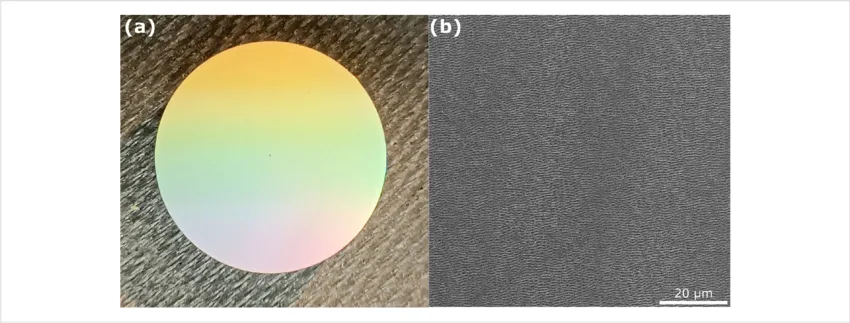
Image source: Bing (Web (fair-use with source credit))
What You Absolutely Need: Full Inert Gas Shielding
To successfully weld titanium using MIG, you need to create a completely inert atmosphere around the weld puddle, from the moment the arc starts until the metal has cooled sufficiently. This goes far beyond the standard gas cup on a typical MIG gun. You're looking at a multi-faceted shielding strategy.
- Primary Shielding: A continuous flow of high-purity argon from the MIG gun's nozzle, just like you'd use for other metals. However, the flow rate and coverage need to be meticulously controlled.
- Trailing Shields: These are specialized attachments that follow the MIG torch, providing an additional blanket of argon to protect the cooling weld bead from atmospheric contamination.
- Back Purging: Crucially, the backside of the weld joint must also be flooded with pure argon. This prevents any gases from entering the molten puddle from underneath. Without a proper back purge, the weld will inevitably be contaminated.
This comprehensive shielding is not optional; it's the foundation of any successful titanium weld, whether MIG or TIG.
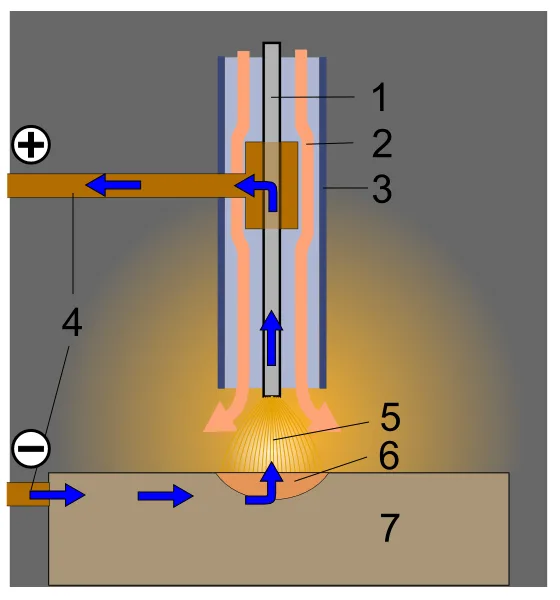
Image source: Wikimedia Commons / Tosaka (CC BY)
When Is MIG Welding Titanium Actually Possible?
So, if it's so fussy, under what conditions can MIG welding titanium actually work? It really boils down to having the right equipment and applying a rigorous, almost surgical approach. This isn't a quick fix or a job for a hobbyist's garage setup. It's typically seen in specialized fabrication shops or industrial settings that deal with titanium regularly, and even then, it's a subset of applications.
The High-Tech Setup Required
Forget your standard MIG welder and gas cylinder. To MIG weld titanium effectively, you need a robust system designed for extreme inert gas coverage. This often includes specialized MIG guns with larger diffusers and the ability to integrate trailing shields. You'll also need a double-regulator setup for precise control over gas flow to both the gun and the back purge.
High-purity argon (99.998% or better) is essential; any impurities in the shielding gas itself will contaminate the weld.
Critical Material and Weld Area Preparation
Even with the best gas shielding, if your base materials aren't impeccably clean, your weld will fail. Titanium is incredibly unforgiving of surface contaminants.
- Degreasing: All parts must be thoroughly degreased using appropriate solvents like acetone or specialized degreasers. Any oil, grease, or cutting fluid will vaporize and contaminate the weld.
- Mechanical Cleaning: After degreasing, you'll often need to mechanically clean the joint area. This might involve scrubbing with a stainless steel wire brush dedicated only to titanium and stainless steel work. Using a brush that has touched regular steel can transfer iron particles, leading to galvanic corrosion.
- Filler Wire: If you're using filler wire, it must also be just as clean as the base metal. It's often stored in sealed bags and handled with clean gloves.
- No Contact: Once cleaned, avoid touching the prepared joint area with bare hands. Oils from your skin can cause contamination.
This meticulous preparation is a core part of the overall welding workflow, and skipping any step is a recipe for disaster.
Why Your Standard MIG Welder Probably Won't Cut It
Let's be blunt: trying to MIG weld titanium with a standard, off-the-shelf MIG welder is almost always going to result in poor welds. Here’s why. A typical MIG setup's gas shield, while adequate for steel and some other metals, simply doesn't offer the sustained, full coverage that titanium demands. Its sensitivity means that even a slight waver in gas flow or a small gap in coverage from your nozzle will allow atmospheric gases to ingress and ruin the weld.
Your standard welder is designed for convenience and broad application. Titanium welding requires precision to a degree that most general-purpose machines can’t achieve without significant modification or specialized add-ons. Manufacturer specifications often highlight the necessity for advanced shielding solutions far beyond what's standard on most entry-level or even mid-range MIG welders. If you're looking for detailed parameters for common metals, you might refer to a Welding Chart Mig Wire as a starting point, but understand titanium sits in a category all its own.
The Alternatives: What Most People Use for Titanium
Given the extreme demands and specialized equipment needed for MIG welding titanium, most fabricators and engineers opt for a different process: Gas Tungsten Arc Welding, or TIG welding. TIG welding offers superior control over the heat input and allows for more precise manipulation of the filler material, which, combined with meticulous gas shielding, provides a more reliable outcome for titanium.
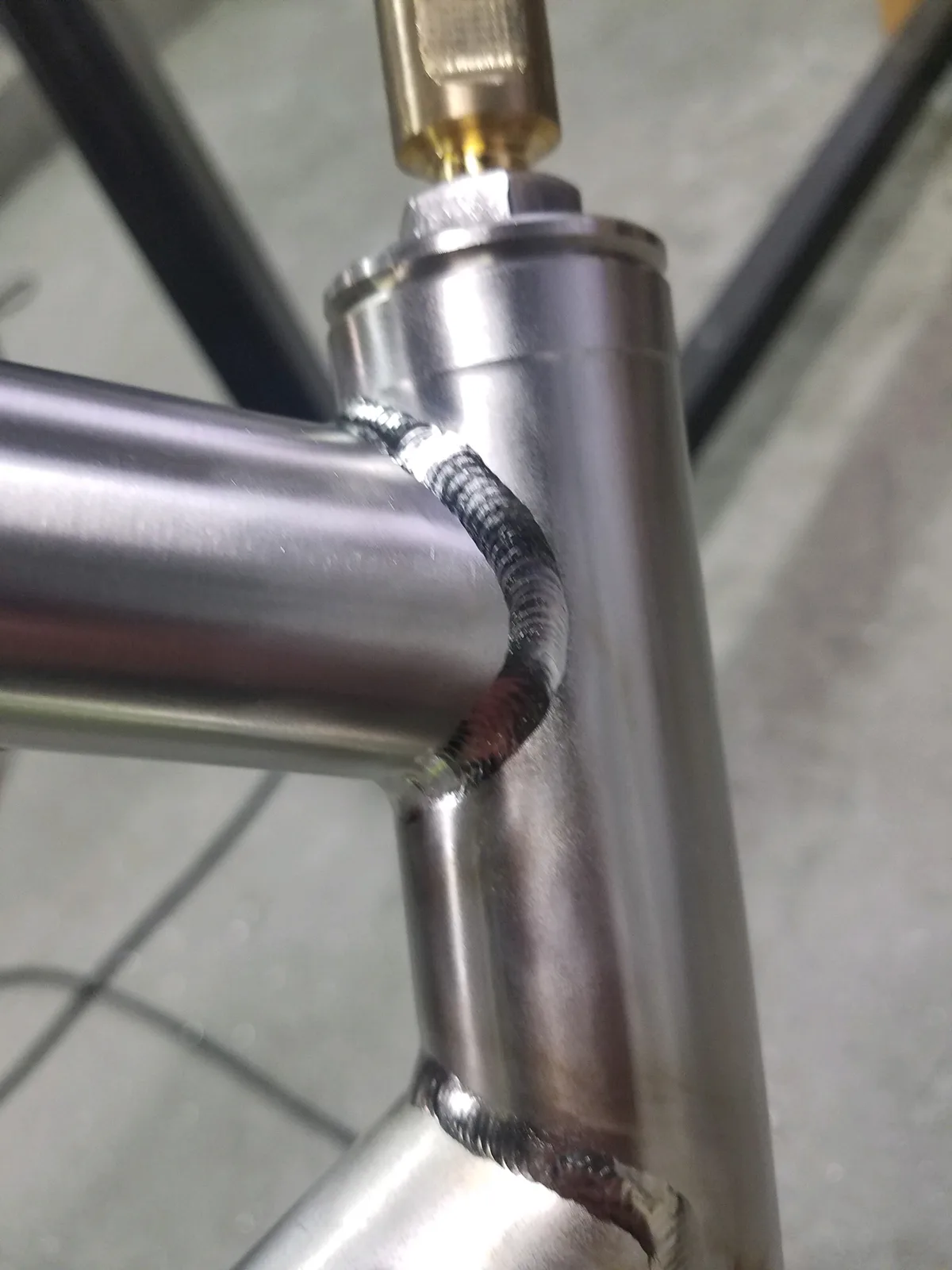
Image source: Bing (Web (fair-use with source credit))
When TIG welding titanium, the same principles of absolute cleanliness and comprehensive inert gas shielding apply. This means a well-controlled argon purge on the backside of the weld and diligent use of trailing shields. This method allows for stronger, cleaner welds that meet the demanding specifications required for critical applications. It’s the go-to for making high-integrity joints in titanium where quality and performance are paramount.
Common Mistakes When Trying to MIG Titanium
If you do decide to attempt MIG welding titanium, understanding the pitfalls is crucial. The most common mistakes all stem from that fundamental issue: contamination.
- Inadequate Gas Shielding: This is number one. Relying solely on the MIG gun's standard gas nozzle without back purging or trailing shields is a guaranteed path to contamination.
- Insufficient Cleaning: Skipping steps in degreasing or using contaminated tools (like brushes that have touched mild steel) will introduce contaminants that compromise the weld.
- Warping the Metal: Excessive heat input without proper joint design or clamping can lead to distortion. While not a contamination issue, it's a practical problem that needs managing, similar to how you might manage heat in How To Mig Weld Exhaust Pipe projects.
- Using the Wrong Gas Mix: While pure argon is generally recommended for titanium, using argon/helium mixes or other gases not specifically designed for titanium will lead to issues.
- Moving Too Quickly: Trying to rush the weld process can lead to incomplete fusion or insufficient time for the shielding gas to do its job effectively.
Avoiding these common errors requires diligent practice and a deep understanding of titanium's sensitive nature. It’s a stark contrast to welding more forgiving metals, where a momentary lapse in preparation might only result in a cosmetic flaw.
Expert Tips for Tackling Titanium Welding
If you're determined to weld titanium using the MIG process, or even just want to understand it better, a few key principles from experienced fabricators can make a huge difference. Think of these as guardrails to keep you from falling into common pitfalls. First, always prioritize the gas coverage. This means double-checking your flow rates, ensuring no leaks in your hoses, and confirming that your trailing shield (if used) is positioned correctly.
Manufacturer specifications often detail recommended flow rates, and adhering to them is critical.
Second, be absolutely ruthless with cleanliness. Even a fingerprint can introduce enough oil to seriously contaminate a titanium weld. Use dedicated, clean rags and solvents for your titanium work, and keep everything you plan to use for welding in a clean, dust-free environment until the moment you need it. This level of diligence is what separates a successful weld from a failed one.
Your Decision Guide: MIG Titanium or Not?
Deciding whether to MIG weld titanium boils down to a few key factors. If your project absolutely requires titanium’s unique properties, like in certain aerospace or medical applications where weight savings and corrosion resistance are paramount, then understanding the welding process is essential. However, for most general fabrication or repair work, the complexity and cost of properly MIG welding titanium usually outweigh the benefits.
Consider the alternatives: TIG welding titanium is a more established and generally more reliable method when done correctly with full shielding. If your needs are less critical or you're exploring structural repairs on non-critical components, other metals or even patch-up methods might be more practical. The decision often rests on balancing the material's excellent properties against the significant technical challenges of joining it.
Should You MIG Weld Titanium?
- Yes, if:
- You have access to specialized MIG equipment with advanced gas shielding capabilities (multiple gas sources, trailing shields).
- You maintain an extremely clean working environment.
- Your application absolutely demands titanium, and TIG is not feasible for some reason.
- You have previous experience with challenging metal welding processes.
- No, if:
- You're using standard MIG welding equipment.
- Your workspace is not meticulously clean and controlled.
- You're experimenting or working on non-critical parts without full understanding.
- You're looking for a cost-effective or simple solution.
Ultimately, the question isn't just can you MIG weld titanium, but should you. For applications where failure is not an option and the material's properties are non-negotiable, investing in the correct process and equipment is key. For other scenarios, exploring established alternatives like TIG is often the more pragmatic route.


