
So, you're curious about when exactly MIG welding was invented? It wasn't a single "lightbulb moment" but a gradual development. The real breakthrough that gave us the practical metal inert gas (MIG) welding process, also known formally as Gas Metal Arc Welding (GMAW), began to take shape in the late 1940s. This system allowed for a continuous wire electrode fed through a welding gun, all protected by an inert gas shield, truly changing the game.
This innovation was a huge leap from earlier welding methods like stick electrodes, which required frequent replacement. The GMAW process offered a more streamlined and efficient way to join metals. Manufacturer specifications from that era indicate a significant shift towards automation and speed in industrial welding applications.
When Did MIG Welding Actually Arrive?
The late 1940s mark the period when the foundational principles of MIG welding were truly solidified and demonstrated in a practical, usable form. While various concepts around arc welding with continuous electrodes and gas shielding had been explored earlier, it was during this post-World War II era that the technology began to coalesce into what we recognize as MIG welding today. It wasn't a single patent or invention, but rather a series of developments that converged.
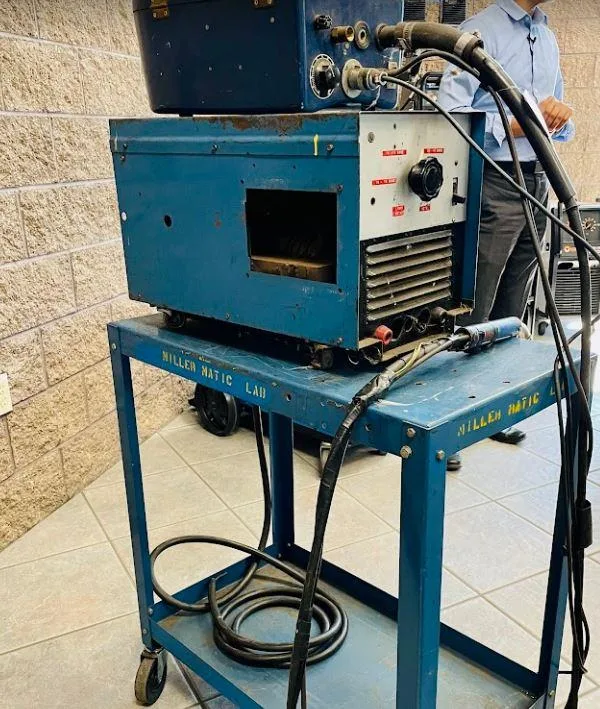
Image source: Bing (Web (fair-use with source credit))
This period saw a critical push towards more efficient welding solutions, driven by the increasing demands of various industries. The groundwork laid then allowed for the rapid adoption and refinement of MIG welding in the decades that followed.
The Core Idea: What is MIG Welding?
At its heart, MIG welding, or GMAW, is a semiautomatic or automatic welding process making it distinct from manual methods. It uses a continuous solid wire electrode that's fed through a welding gun. As the wire is fed, it's also used as the filler metal and carries the electrical current to form the arc. Simultaneously, a shielding gas, typically an inert or semi-inert mixture, flows through the welding gun's nozzle to protect the molten weld pool from atmospheric contamination.
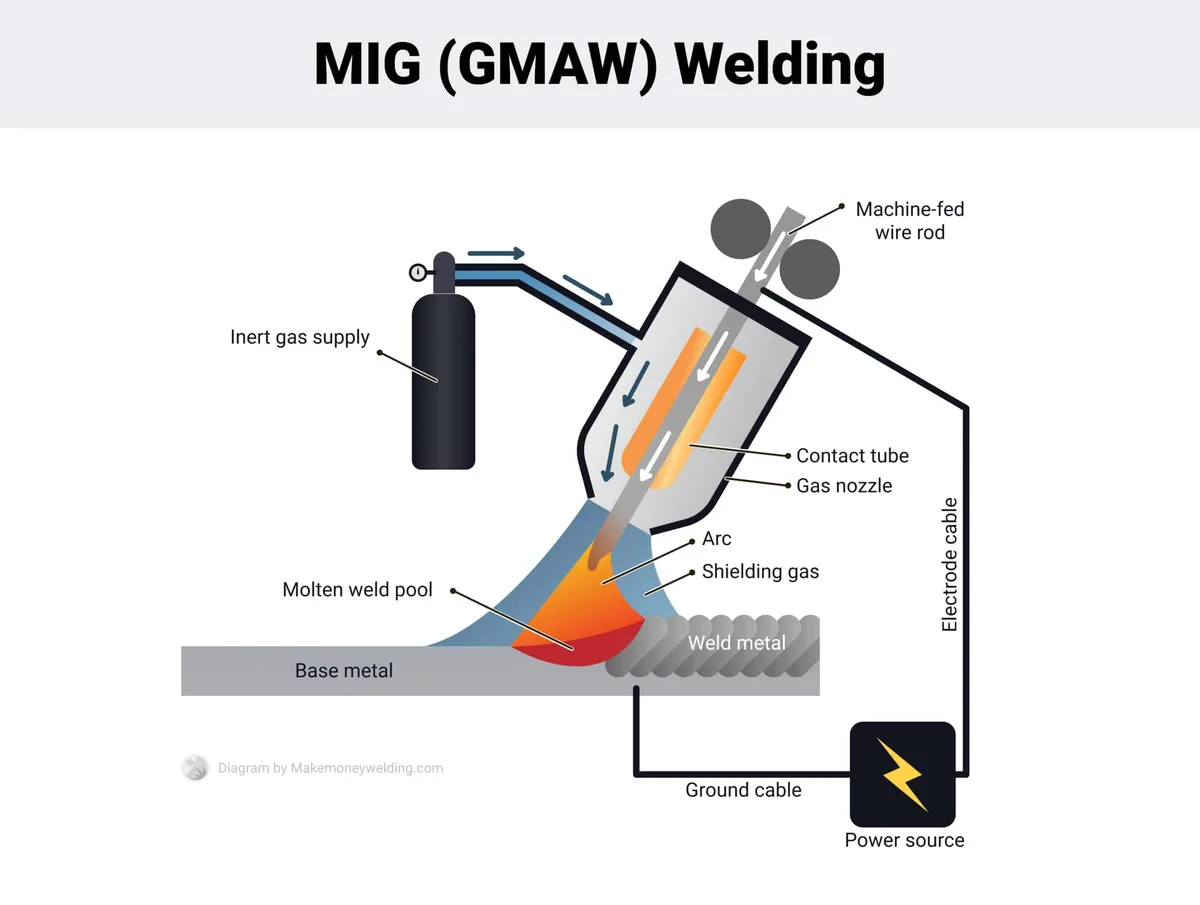
Image source: Bing (Web (fair-use with source credit))
This combination of a continuously feeding wire electrode and a shielding gas stream is what makes MIG welding so efficient and versatile. It's fundamentally different from processes like Stick welding, where you have short electrodes that must be replaced periodically.
Who Was Behind the Breakthrough?
Battelle Memorial Institute's Role
A significant part of the development that led to practical MIG welding happened at the Battelle Memorial Institute. Researchers there were instrumental in developing key aspects of the technology. Their work focused on making the concept of a continuously fed wire electrode and proper gas shielding function reliably for industrial applications.
These R&D efforts provided a crucial scientific and engineering foundation. The technical papers and patents emerging from institutions like Battelle during this time were vital for bringing the idea from theory to a tangible process.
Hobart Brothers and Commercialization
While Battelle was doing foundational research, companies like Hobart Brothers played a massive role in commercializing MIG welding. They took the promising technologies developed in research labs and engineered them into machines that welders could actually use out in the field or on the shop floor.
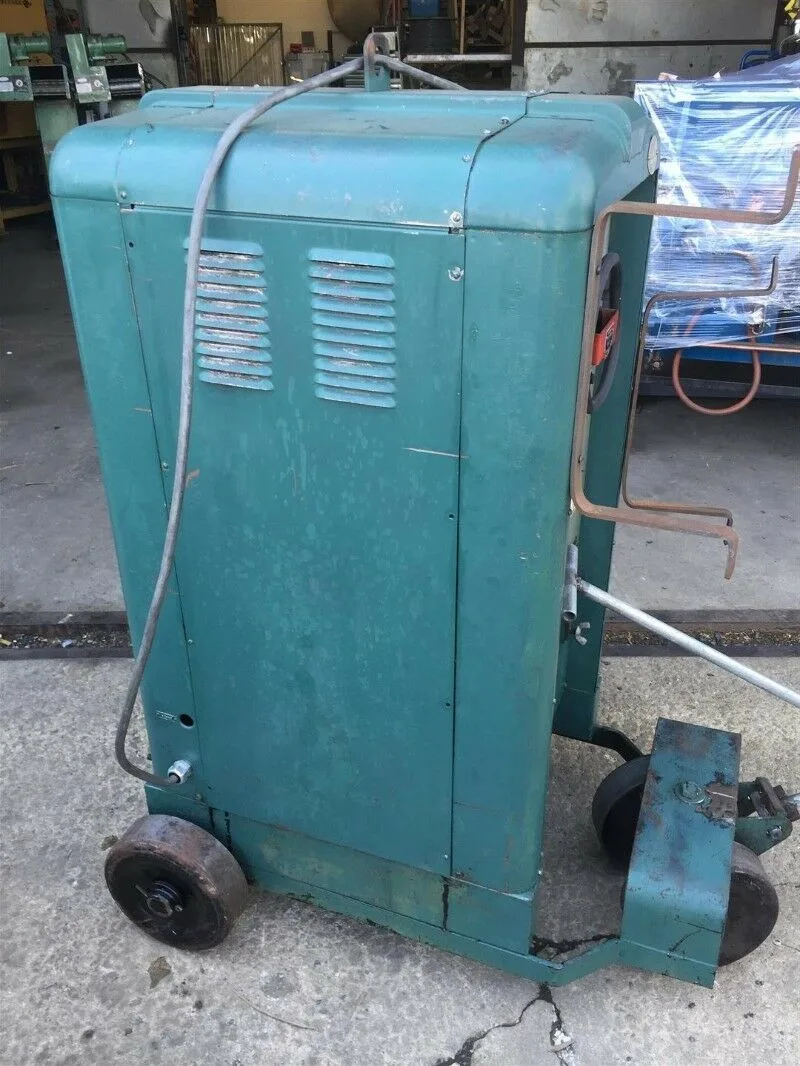
Image source: Bing (Web (fair-use with source credit))
Hobart Brothers were one of the key manufacturers who made the GMAW process accessible. Their efforts in building and marketing these new welding systems were essential for their widespread adoption. This transition from experimental technology to available equipment happened rapidly in the years following the initial breakthroughs.
How Did MIG Welding Change the Game?
MIG welding introduced a level of speed and efficiency that was revolutionary for its time. Unlike stick welding, where the electrode is consumed and must be frequently replaced, MIG uses a continuous wire feed. This meant welders could maintain a consistent arc for much longer periods, drastically reducing downtime.
The ease of use was another major factor. While it requires practice, the learning curve for basic MIG welding is generally considered less steep than for some other arc welding processes. This accessibility opened up welding to a broader range of workers across various industries.
Speed and Efficiency Gains
The continuous wire feed system is the engine behind MIG welding's speed. Operators could lay down longer weld beads without interruption, significantly speeding up fabrication and production lines. This was a game-changer for industries needing to produce parts quickly.
For example, in manufacturing settings, the ability to weld faster directly translated to higher output and lower labor costs per unit.
Improved Weld Quality
Beyond speed, MIG welding also offered improved weld quality and consistency. The shielding gas protects the molten metal from oxidation and other contaminants, leading to cleaner welds with fewer defects like porosity or inclusions. This was particularly important for structural applications where weld integrity is paramount.
The controlled nature of the wire feed and gas flow allowed for more precise control over the weld pool. This resulted in more aesthetically pleasing and structurally sound welds compared to some of the less controlled manual methods available at the time.
MIG's Impact on Industries
The introduction of MIG welding had a profound and lasting impact on numerous industries, fundamentally altering how metal fabrication was approached. Its efficiency, consistency, and relative ease of use made it an attractive alternative to existing methods.
Manufacturing's Transformation
In manufacturing, MIG welding allowed for faster assembly of products. Machines could be set up to automate large parts of the welding process, increasing throughput and reducing the need for highly specialized manual welders for every single task. This contributed to the mass production efficiencies seen in the mid-20th century and beyond.
Companies could produce more goods at a lower cost, making manufactured products more accessible. The reliability of MIG welds also improved the overall quality and durability of manufactured goods.
Automotive Advances
The automotive industry was one of the primary early adopters and beneficiaries of MIG welding. The need for rapid, consistent, and high-volume welding in car manufacturing aligned perfectly with the advantages of GMAW. Building car bodies, chassis, and components became significantly faster and more economical.
Its adaptability to different metals and thicknesses also made it ideal for the diverse materials used in vehicle construction. As automobile production ramped up, MIG welding became an indispensable tool in assembly lines worldwide.
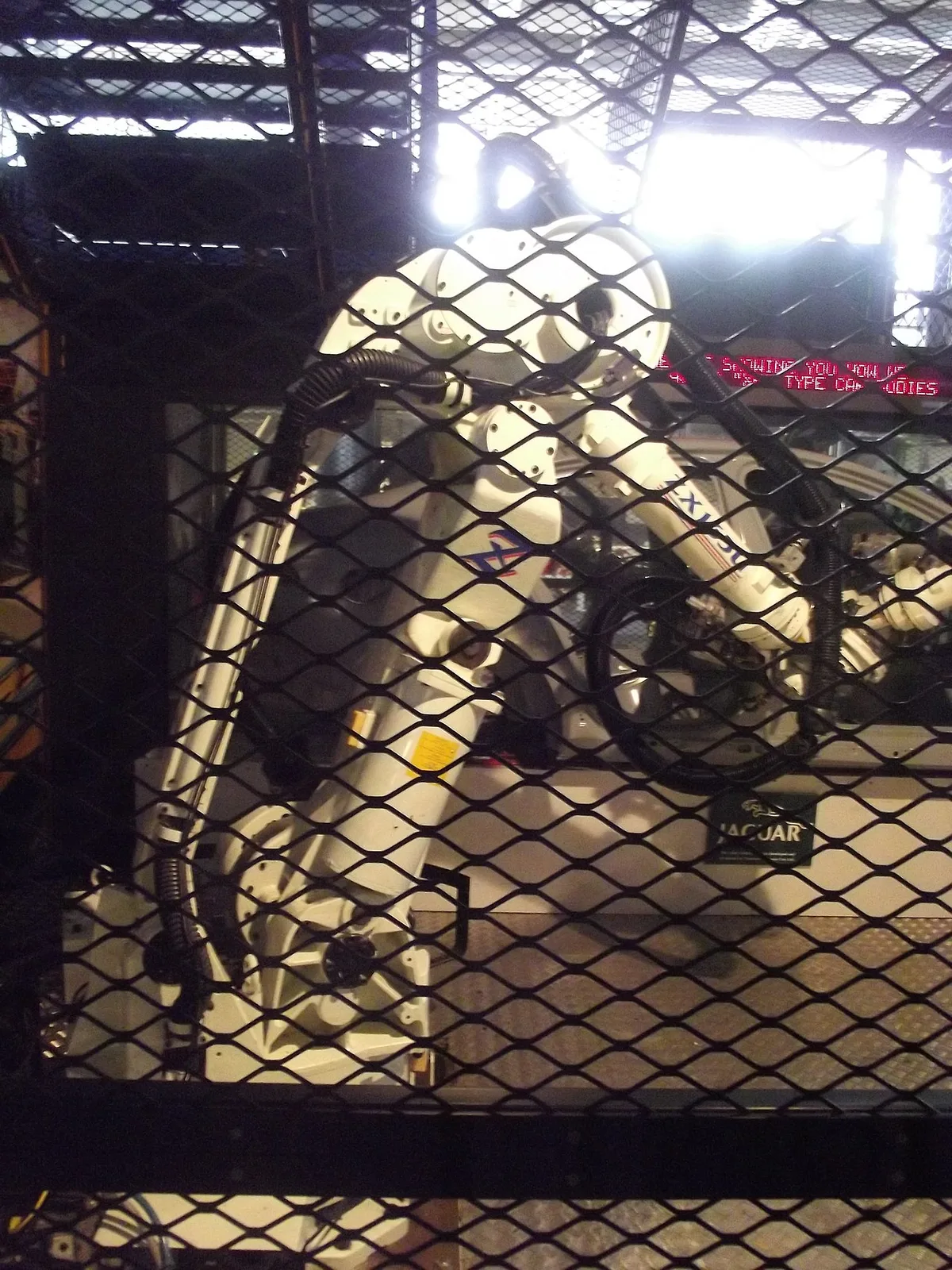
Image source: Wikimedia Commons / ell brown (CC BY-SA)
Building on the Foundation: Evolution of MIG
While the late 1940s gave us the core technology for MIG welding, it didn't just stop there. The process has seen continuous refinement and innovation since its inception. Early systems were robust but basic, and engineers have since worked to improve everything from the power sources to the wire feeders and shielding gas mixtures.
We've seen the development of pulsed MIG welding, which allows for even better control on thin materials and out-of-position welding. Different gas blends have been introduced to optimize arc stability and penetration for specific metals like steel, stainless steel, and aluminum. The very equipment itself has become more sophisticated, lighter, and more user-friendly, making MIG welding more accessible and effective than ever before.
Common Questions About MIG's Invention
When did MIG welding become widely adopted?
While the invention and early developments happened in the late 1940s, widespread adoption took a bit of time. It really started to gain significant traction through the 1950s and into the 1960s as the technology matured and manufacturers like Hobart Brothers made more reliable and affordable equipment available. Industrial sectors, particularly manufacturing and automotive, were quick to recognize its advantages and integrate it into their processes.
Were there significant precursors to MIG welding?
Yes, there were definitely precursors. Arc welding itself has a long history, dating back to the late 19th century. Processes like carbon arc welding and shielded metal arc welding (SMAW, or stick welding) were already established. The key innovation of MIG was developing a continuous wire electrode combined with inert gas shielding to create a more automated and consistent weld.
What problems did early MIG welders face?
Early MIG systems weren't perfect. One significant challenge was achieving stable arc performance, especially with different types of wire and shielding gases. Controlling the wire feed rate consistently was also crucial and required robust mechanical engineering. Additionally, the cost of inert gases like argon was a significant factor, limiting early adoption by smaller shops or individual hobbyists until more economical solutions were found.
Is MIG welding the same as GMAW?
No, MIG welding is not exactly the same as GMAW, but they are very closely related and often used interchangeably in common language. MIG stands for Metal Inert Gas, referring to the use of inert gases for shielding. GMAW is the broader, more technical term, Gas Metal Arc Welding, which encompasses both inert gas (like Argon) and an increasingly common class of semi-inert gases (like CO2 or Argon/CO2 mixes) used for shielding. So, all MIG welding is GMAW, but not all GMAW necessarily uses inert gas.
How did MIG impact welding standards?
The advent of MIG welding, and GMAW in general, led to the development of specific standards for its application. Organizations like the American Welding Society (AWS) established codes and recommended practices for GMAW to ensure safety, quality, and consistency in its use. These standards cover everything from welder qualification to procedures and material specifications, reflecting the process's growing importance in critical applications.


