
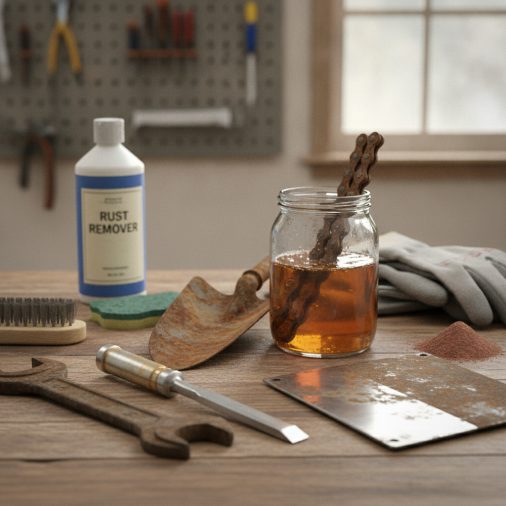
Rust shows up on gate hinges, tool surfaces, trailer frames, and welding fixtures. Sometimes it’s a light surface blush you can rub off with your thumb. Other times it’s deep, flaking, and compromising the metal underneath. Knowing which method matches the severity saves time and prevents making the problem worse.
Rust can be removed from metal using mechanical methods such as wire brushing, sanding, or grinding; chemical rust removers or converters; or electrolytic rust removal for heavily corroded parts. The right approach depends on how deep the rust is, the size of the affected area, the metal type, and what the surface needs to look like afterward — bare metal ready for welding, or a primed and painted finish.
Why Removing Rust Matters Before Welding or Painting
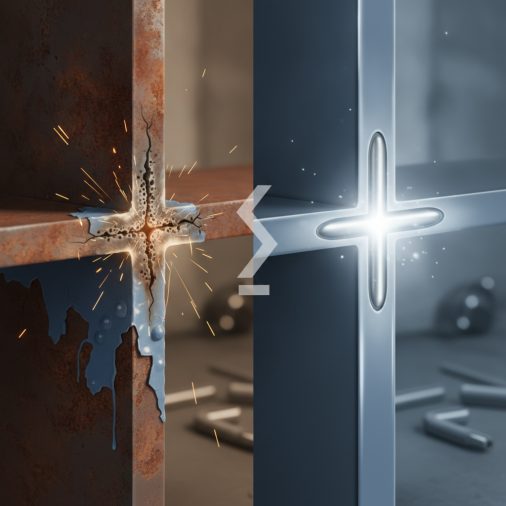
Surface rust left in place causes real problems. If you weld over corroded metal, the contamination introduces porosity, and the weld puddle pulls in oxidation that weakens the joint. If you paint over active rust without treatment, the corrosion continues spreading under the coating, causing the paint to bubble and peel within months.
For welding work, clean bare metal is not optional — it’s a basic requirement for a sound weld. Even light surface rust on mild steel should be removed within the weld zone and the surrounding heat-affected area before striking an arc.
If you’re dealing with rust holes rather than surface corrosion, the repair process is more involved. repairing rusted metal with holes requires cutting back to solid material before any weld or patch can be applied.
Assess the Rust Before Choosing a Method
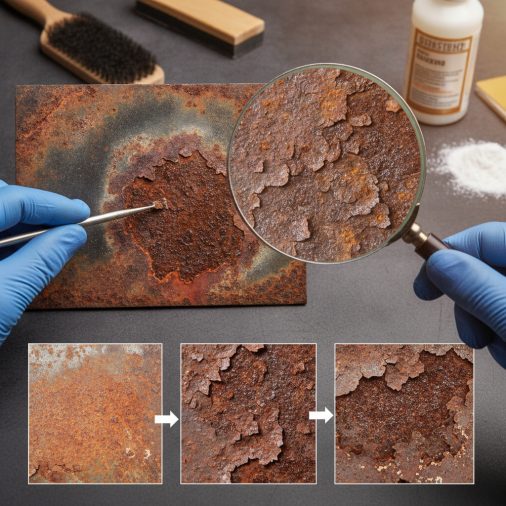
Not all rust behaves the same way. The right removal method depends on what you’re actually dealing with.
– Surface rust (Stage 1): A thin orange or reddish layer sitting on the metal surface. The metal underneath is solid. A wire brush or sandpaper handles this quickly.
– Scaling rust (Stage 2): Rust has begun to lift and flake. The surface is uneven and pitted. Mechanical grinding or chemical treatment works well here.
– Deep pitting rust (Stage 3): Rust has eaten into the metal, leaving pits and compromised material. This requires aggressive grinding, chemical converters, or in severe cases, cutting out the affected section entirely.
Pressing a flathead screwdriver or pick against the rusted area gives you a fast read on how much material remains. If it flexes or the pick punches through easily, the metal has lost significant thickness.
Mechanical Rust Removal: Wire Brushing, Sanding, and Grinding
Mechanical methods are the most straightforward approach for workshop use. They remove rust physically, leaving bare metal that’s ready for welding, priming, or coating.
Wire brushing suits light surface rust and tight corners. A handheld wire brush works on small areas, while a wire cup brush or wheel attached to an angle grinder covers larger surfaces quickly. Cup brushes are aggressive — use controlled pressure and keep the grinder moving to avoid gouging softer metals.
Sanding and flap discs give more control over material removal. A 36- or 60-grit flap disc on an angle grinder strips surface and scale rust efficiently on flat sections. For thinner metal where excessive grinding would compromise wall thickness, a 120-grit abrasive pad or sanding block keeps removal more precise.
Grinding with a grinding disc removes stubborn scaling rust and surface pitting quickly but removes more base material. On structural pieces or thicker plate, this is often the fastest route to clean metal. On thin sheet metal, take care — you can reduce the material thickness enough to create welding problems.
For anyone MIG welding sheet metal, surface contamination from rust is a common cause of porosity and inconsistent arc behavior, so mechanical prep right at the weld zone is worth the extra minutes.
Safety for mechanical removal:
– Wear a face shield or safety glasses rated for grinding — not just safety glasses alone when using a grinder.
– Use hearing protection during extended grinding work.
– Wear leather or flame-resistant gloves; wire brushes and grinding discs throw hot metal fragments.
– Secure loose clothing and keep hair back around rotating tools.
– Keep a fire extinguisher accessible; grinding sparks travel farther than expected.
Chemical Rust Removers and Converters
Chemical approaches suit awkward shapes, tight internal surfaces, and situations where grinding isn’t practical.
Rust converters work by reacting with iron oxide and chemically converting it into a more stable compound — typically iron tannate — that forms a primed surface. Products such as Rust-Oleum Rust Reformer spray directly onto surface rust and dry into a black paintable primer layer. Rust converters don’t replace thorough mechanical prep for welding joints, but they’re practical for coating structural sections that won’t be welded.
For guidance on protecting treated surfaces afterward, applying Rust-Oleum to rusted metal properly makes the difference between a coating that lasts and one that peels off within a season.
Phosphoric acid-based rust removers dissolve rust chemically rather than converting it. They’re applied as a liquid or gel, left to dwell according to the product instructions, then rinsed off. These work well on moderately corroded tools, brackets, and hardware. Always follow manufacturer instructions on dwell time and neutralization requirements.
Commercial soaking solutions suit smaller parts completely. Submerging hardware, fasteners, or hand tools in a diluted phosphoric acid or citric acid solution loosens rust thoroughly. Citric acid powder dissolved in warm water is a low-hazard option that works well for smaller workshop parts soaked overnight.
What chemical methods won’t do: they don’t remove thick, flaking rust scales well on their own, and they’re not a substitute for mechanical cleaning before welding. Any rust converter residue must be fully cured and kept well away from weld zones.
Electrolytic Rust Removal for Heavily Corroded Parts
Electrolytic rust removal is particularly effective for heavily corroded cast iron, antique tools, and complex-shaped parts where grinding would damage detail or where chemical dwell time isn’t practical.
The process uses a low-voltage DC current passed through a water and washing soda (sodium carbonate) solution to electrochemically reduce iron oxide back to iron on the rusted piece.
Basic setup:
1. Dissolve 1 tablespoon of washing soda per gallon of water in a plastic container.
2. Connect the positive lead (red) from a battery charger to a sacrificial steel plate (the anode) suspended in the solution.
3. Connect the negative lead (black) to the rusted part (the cathode), which is also submerged.
4. The parts must not touch each other.
5. Run the charger at a low amperage setting — typically 2–6 amps depending on part size.
6. After several hours, rust transfers to the sacrificial plate. The rusted part comes out coated in black magnetite, which wipes off easily.
This method is slow but thorough. It reaches recessed areas, threads, and internal cavities that a grinder never could. Always work in a ventilated space — the process generates hydrogen gas at the cathode. Never use stainless steel as the sacrificial anode, as it releases harmful chromium compounds into the solution.
Rust Removal Method Comparison
| Method | Best For | Leaves Metal Ready for Welding? | Equipment Needed | Speed |
|---|---|---|---|---|
| Wire brush / angle grinder | Surface to moderate rust, flat areas | Yes | Angle grinder, wire cup or flap disc | Fast |
| Sandpaper / abrasive pads | Light rust, thin metal | Yes | Sandpaper, sanding block | Moderate |
| Rust converter | Surface rust on non-weld areas | No — not suitable for weld zones | Spray or brush-on product | Fast application, slow cure |
| Phosphoric acid remover | Moderate rust, awkward shapes | Yes, after full rinse and dry | Chemical solution, brush, rinse | Moderate |
| Electrolytic removal | Heavy rust, complex shapes, cast iron | Yes, after wipe-down | Battery charger, tub, washing soda | Slow (hours) |
Preparing the Surface After Rust Removal
Bare metal left exposed starts re-rusting quickly, especially in humid environments. Once rust is removed, the surface should be:
– Wiped clean and dried thoroughly — any moisture accelerates re-rusting.
– Primed or welded promptly; don’t leave bare metal sitting overnight in a damp shop.
– Inspected for remaining pits or compromised areas that need addressing before fabrication or coating.
For pieces that will be welded, bare metal prep is the final step before clamping and setting up the joint. For pieces that will be painted, a self-etching primer applied to bare metal provides better adhesion than painting over converter-treated surfaces for most outdoor or structural applications.
If the base metal has green corrosion alongside rust — common on mixed metals or older assemblies — removing green corrosion from metal follows a similar logical sequence but involves different chemistry.
Frequently Asked Questions
Does WD-40 remove rust from metal?
WD-40 can loosen light surface rust and help break the bond between rust and metal, but it doesn’t chemically remove rust or convert it. It works better as a penetrating lubricant and short-term moisture barrier than as a rust remover. For anything beyond very minor surface oxidation, a dedicated rust remover, abrasive, or converter will produce more reliable results.
Can you weld over surface rust if it looks minor?
Even light surface rust in the weld zone causes porosity, arc instability, and potential inclusions in the finished weld. Rust introduces oxygen and moisture into the arc, contaminating the weld pool. Mechanical cleaning — wire brushing or flap disc grinding — of the weld zone and the immediately surrounding area is necessary before welding, regardless of how minor the rust appears visually.
What is the fastest way to remove rust at home without special tools?
For small areas, a paste made from baking soda and water or a citric acid solution applied to the surface and left to dwell for several hours, followed by scrubbing with a stiff brush, removes light to moderate rust without needing power tools. Sandpaper and a handheld wire brush extend that capability to slightly heavier rust on accessible flat surfaces.
Will vinegar remove rust from metal?
White vinegar contains acetic acid, which dissolves iron oxide and works reasonably well for soaking small, heavily rusted hardware or hand tools. Submerge the part, allow it to soak for several hours to overnight, then scrub and rinse thoroughly. Vinegar leaves a slightly etched surface that re-rusts quickly if not dried and coated promptly. It’s a practical low-cost option for smaller parts but not efficient for large surface areas.
How do you remove rust from galvanized metal?
Galvanized metal has a zinc coating that provides its corrosion resistance. Rust appearing on galvanized steel typically means the zinc layer has been breached. Aggressive mechanical grinding removes both the rust and the remaining zinc — which eliminates the corrosion protection. A phosphoric acid-based solution is a gentler approach that targets the rust while preserving more of the surrounding zinc. After treatment, the zinc layer still needs to be restored or the area sealed.
Is a rust converter good enough before painting?
Rust converters work well as a preparation step for painting on areas where surface rust is thin and mechanical removal isn’t practical. They chemically stabilize the remaining rust and provide a primed surface. However, they perform best over thin, adherent rust — not over thick scales or flaking material, which should be mechanically removed first. Converter-treated surfaces also shouldn’t be used in weld zones, as residual chemistry can cause porosity.
How do you stop rust from coming back after removing it?
Bare metal exposed after rust removal must be sealed from moisture quickly. Options include self-etching primer followed by topcoat paint, cold galvanizing compound for outdoor steel, rust-inhibiting spray, or oil-based coatings for stored tools. For shop equipment and fixtures, a light coat of machine oil or paste wax is a practical short-term barrier. Regular inspection of high-moisture areas — particularly welds on outdoor fabrications — catches surface rust before it penetrates.
Protecting the Work After Rust Removal
The method that best removes rust is only half the equation. Bare metal left unprotected returns to surface rust within hours in a humid workshop and within days outdoors.
For welding projects, weld promptly after mechanical prep, then clean and coat the finished weldment before it’s put into service. For non-welded parts, self-etching primer applied to bare metal followed by a topcoat is the reliable standard for long-term protection.
Matching the removal method to the severity and intended use of the part keeps the process efficient. Surface rust on a welding fixture calls for a quick flap disc pass. A severely corroded antique vise benefits from an overnight electrolytic soak. Choosing correctly the first time avoids rework — and puts clean, solid metal under the arc or the brush.


