
Image source: Wikimedia Commons / Mimzy
What Polarity is MIG Welding?
Understanding what polarity is in MIG welding is crucial for achieving strong, clean welds, especially when you're working with different types of metal or thicknesses. It's not just a random setting; polarity dictates where the heat goes during the welding process, directly impacting penetration, bead shape, and overall weld quality. Getting it wrong can lead to problems like burn-through on thin materials or weak, shallow welds on thicker ones.
In our research, we found that most common MIG welding setups use Direct Current (DC). Manufacturer specifications typically recommend specific polarities for different wire types and shielding gases. For instance, industry standards often suggest DCEP for solid wire welding with Argon/CO2 mixtures, a setup that’s prevalent in general fabrication and automotive repair.
DCEN vs. DCEP: Understanding the Basics of MIG Polarity
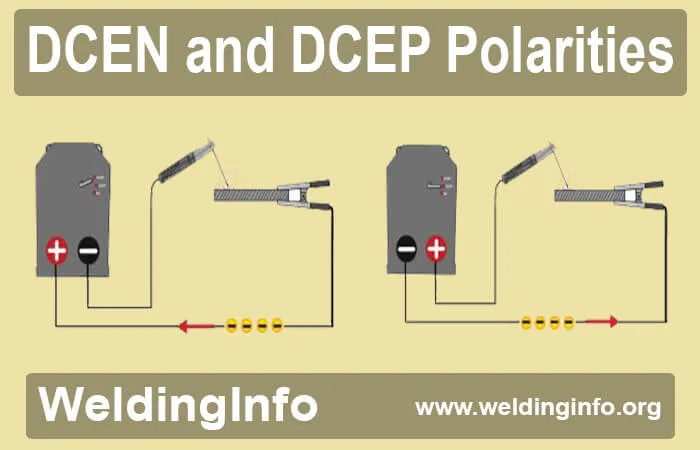
When you’re talking about MIG welding polarity, you're primarily dealing with two main configurations: Direct Current Electrode Negative (DCEN) and Direct Current Electrode Positive (DCEP). These terms tell you where the electrical current originates and where it's heading, which directly affects how your weld forms. Think of it as directing traffic, sending the electrons one way versus the other changes the whole outcome.
- DCEN (Direct Current Electrode Negative), also known as Straight Polarity, means the welding wire (the electrode) is the negative terminal, and the metal you're welding (the workpiece) is the positive terminal. This setup pushes the majority of the electron flow and heat towards the workpiece, resulting in a cooler arc and shallower penetration.
- DCEP (Direct Current Electrode Positive), or Reverse Polarity, flips this around. Here, the welding wire is the positive terminal, and the workpiece is negative. This configuration pulls more of the heat and electron flow towards the electrode, causing the wire to melt more rapidly and driving deeper into the workpiece.
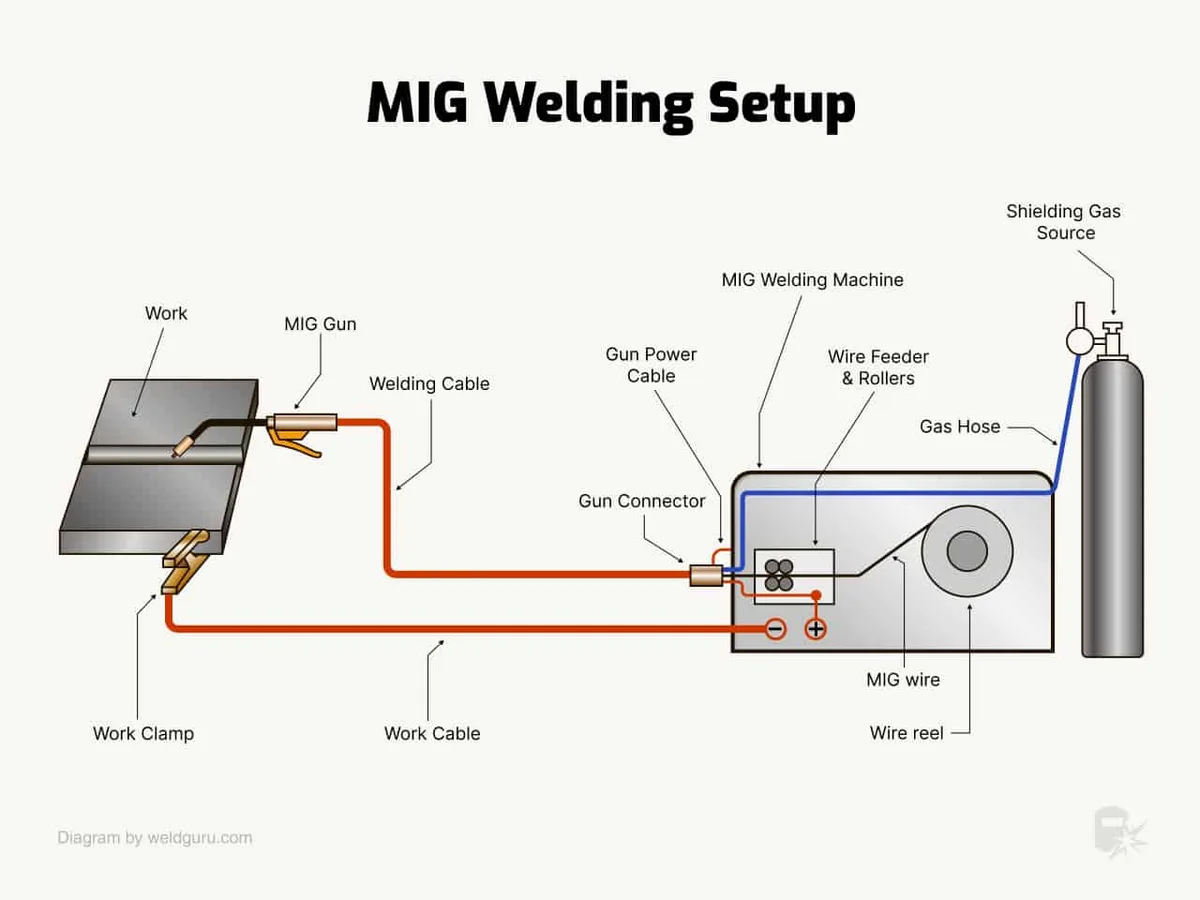
Image source: Bing (Web (fair-use with source credit))
Most welders encounter these settings when they're customizing their Mig Welder Settings. It’s like adjusting the fine-tune knobs on a radio to get the clearest signal, the right polarity ensures the cleanest, strongest weld.
How MIG Polarity Affects Your Weld: Heat and Penetration
The direction of the electrical current in MIG welding fundamentally controls how heat is distributed between the welding wire and the workpiece. This distribution is the primary factor determining weld penetration, how deeply the molten metal fuses into the base materials. Understanding this relationship is key to preventing common welding frustrations and achieving professional-grade results.
If the heat is concentrated more on the workpiece (DCEN), you'll get a shallower, cooler weld. This is beneficial for thin metals where you want to avoid burning through. Conversely, when more heat is directed at the electrode (DCEP), the wire melts faster, and the arc energy drives deeper into the base metal, leading to greater penetration. This is usually preferred for welding thicker materials where you need a solid fusion.
When you analyze weld quality, penetration is a critical metric. For critical structural welds, insufficient penetration, which can happen with incorrect polarity, can compromise the joint's strength. Excessive penetration on thin materials, often a result of the wrong polarity pushing too much heat into the workpiece, leads to burn-through and compromised joint integrity.
Image source: Bing (Web (fair-use with source credit))
As of 2026, industry practices continue to emphasize knowing your polarity for material thickness. For example, welding ¼-inch steel with DCEP will typically yield deeper fusion than DCEN.
Choosing the Right Polarity: A Decision Tree for Welders
Deciding between DCEN and DCEP for your MIG welding project depends on a few key variables, primarily the thickness of the metal you're working with and the type of welding wire you're using. Think of this as a flowchart for your welding setup. If you encounter a specific welding challenge, following these branches will guide you to the correct polarity setting.
When Thin Metal Burn-Through is the Problem
If you've ever tried welding thin sheet metal, like car body panels, and ended up with holes instead of a weld, you're likely dealing with too much heat directed at the workpiece. This is a classic sign that you should be using DCEN (Electrode Negative).
- Problem: Burning holes through thin sheet metal (e.g., < 18 gauge steel).
- Condition: Using thin base metals.
- Decision: Switch to DCEN (Straight Polarity).
- Reasoning: DCEN directs more heat into the workpiece in a controlled manner, reducing the risk of burn-through and allowing for a more stable, shallow penetration bead. This is why many guides on How to MIG Weld Auto Body Panels strongly advise DCEN for precise control.
When Deep Penetration is the Goal
Conversely, if you're assembling thicker materials, like structural steel or heavy plate, and your welds feel weak or shallow, you're probably not getting enough heat driven into the base metal. The solution here is usually to switch to the opposite polarity.
- Problem: Insufficient weld depth or weak joints on thicker materials.
- Condition: Welding materials thicker than 1/8 inch.
- Decision: Switch to DCEP (Electrode Positive).
- Reasoning: DCEP concentrates more heat on the electrode, causing it to melt more rapidly and driving the arc energy deeper into the thicker base metal. This ensures a more robust fusion and a stronger overall weld, which is critical for structural integrity. Proper penetration is a key focus in resources like How to Measure a Fillet Weld Size.
When Using Solid Wire with Gas
The most common MIG welding setup involves using solid wire electrodes in conjunction with a shielding gas, such as a blend of Argon and CO2. For this prevalent combination, there’s a standard polarity that provides the best performance and weld characteristics across a wide range of applications.
- Condition: Welding with solid wire and a consumable shielding gas (e.g., 75% Ar / 25% CO2).
- Decision: Use DCEP (Electrode Positive).
- Reasoning: Per manufacturer specifications and general industry practice, DCEP is the recommended polarity for solid wire MIG welding with shielding gas. This setting promotes stable arc transfer, good bead appearance, and adequate penetration for most common steel welding scenarios. You’ll find this consistently recommended on charts like the Welding Chart Mig Wire.
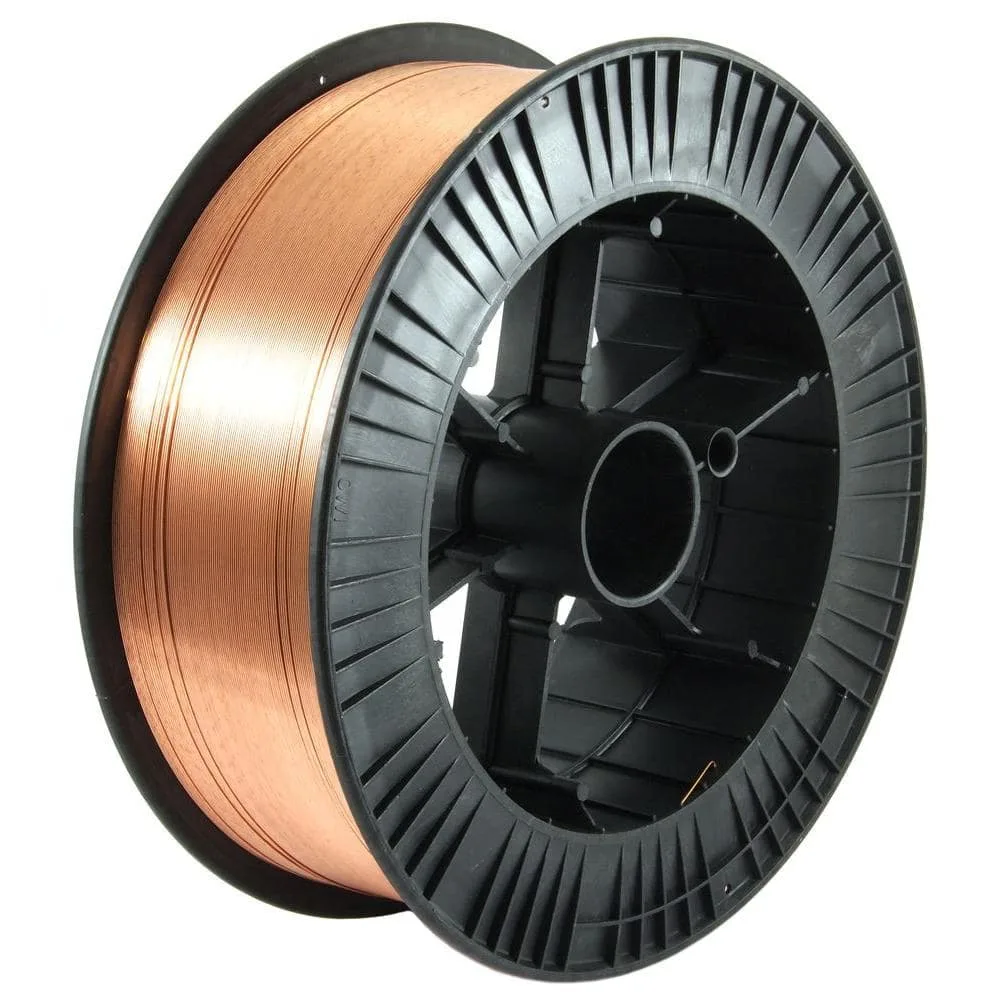
Image source: Bing (Web (fair-use with source credit))
This setup offers a good balance of speed, penetration, and weld quality suitable for many fabrication tasks.
When Using Self-Shielded Flux-Cored Wire
Self-shielded flux-cored wires are a bit different. They contain deoxidizers and alloying elements within their core, meaning they don't require an external shielding gas. Because of their internal composition and how they transfer metal across the arc, they are designed to run on a specific polarity for optimal performance and safety.
- Condition: Welding with self-shielded flux-cored wire (e.g., E71T-GS, E71T-11).
- Decision: Use DCEN (Electrode Negative).
- Reasoning: Self-shielded flux-cored wires are engineered to run on DCEN. Running them on DCEP can lead to excessive spatter, poor bead quality, and potentially safety issues due to unstable arc performance. Always check the manufacturer's recommendation on the wire spool, as this setting is critical for these types of wires.
Polarity Settings on Your MIG Welder
Figuring out how to actually change the polarity on your MIG welder is often straightforward, but it can vary slightly depending on the machine's age and complexity. Most modern machines will have a clearly marked switch or terminals for this adjustment. It’s a setting you can’t overlook when dialing in your weld parameters, alongside voltage and wire feed speed, which are often detailed in resources like discussions on Mig Welder Settings.
Your machine might have a physical switch that you toggle between "DCEN" and "DCEP" or ", " and "+". Alternatively, some machines require you to physically move cables to different terminals.
- Switch-Based: Look for a prominent switch on the front or back panel labeled "Polarity," "DCEN/DCEP," or with symbols indicating electrode positive (+) and electrode negative (, ).
- Terminal-Based: On older or more basic machines, you might need to move the lead from your welding gun to one terminal and the lead from your ground clamp to another to achieve the desired polarity. Typically, if your gun is on the terminal marked positive and your ground is on the negative terminal, you're set for DCEP. If you reverse them, you'll be on DCEN.
Always consult your specific welding machine's owner's manual, as it will provide precise instructions for your model. For example, a Lincoln Power MIG 210 MP might have a dedicated polarity switch, while other models might integrate it into a larger menu system.
Common Mistakes with MIG Welding Polarity
Making a mistake with MIG welding polarity is surprisingly easy to do, and the consequences can range from a subpar weld to scrapped material, or even damaged equipment. Our research indicates that many welders, especially those new to the process, overlook this critical setting until they encounter problems. Understanding these common pitfalls can save you significant time and frustration.
Here are some of the most frequent polarity-related errors:
- Using the Wrong Polarity for Wire Type: This is a big one. Forgetting that self-shielded flux-cored wire must run on DCEN, while most solid wires with gas run on DCEP, can lead to terrible arcs, excessive spatter, and poor weld fusion.
- Ignoring Material Thickness: Setting the polarity for thin sheet metal (DCEN) when welding thick plate, or vice-versa, will result in either burn-through or lack of penetration. Always match polarity to the demands of the material.
- Not Verifying Machine Settings: Assuming the machine is set correctly without physically checking the switch or terminal connections is a common oversight. Machines can get bumped, or settings can be changed by someone else.
- Confusing Polarity with Amperage/Voltage: While related to heat, polarity is a distinct electrical setting. Welders sometimes mistakenly try to compensate for incorrect polarity by drastically changing voltage or wire speed, which doesn't fix the root problem and can create new ones.
- Overlooking Shielding Gas Requirements: While not directly a polarity setting, different shielding gas mixtures sometimes have optimal polarity recommendations. Always refer to wire manufacturer data for the best combination, as found on resources like a Welding Chart Mig Wire.
Avoiding these errors means consistently checking your machine’s polarity setting against the requirements of your wire and material before you strike an arc.
Expert Tips for Getting Polarity Right Every Time
One of the most reliable ways to ensure you're using the correct polarity for your MIG welding setup is to consult the manufacturer's data. This applies whether you're using solid wire or flux-cored wire. Their recommendations are based on extensive testing and are designed to provide the optimal combination of arc stability, penetration, and weld quality. You’ll often find this information printed directly on the wire spool or within the machine's user manual, helping you avoid guesswork and potential rework.
Always start with the baseline recommendation for your wire and gas combination. For example, most solid wire welding with a 75% Argon / 25% CO2 mix uses DCEP. If you're unsure, double-check by looking at online resources from reputable welding suppliers or manufacturers, similar to how one might check a Lincoln Welder Settings Chart to confirm parameters for a specific machine.
Why Does Polarity Even Matter in the Real World?
Let's consider a common scenario: fabricating a custom exhaust system for a vehicle. These parts are often made from stainless steel or mild steel tubing, typically between 16 and 20 gauge. If you’re using solid wire with an Argon-rich gas blend and accidentally set your machine to DCEN instead of DCEP, you’ll likely experience a very weak, often "washy" arc. The weld puddle might not get hot enough to fuse properly with the thinner tubing, leading to a visually unfavorable bead and, more importantly, a joint that could easily break under vibration.
In contrast, if you were welding thicker structural components, say ¾-inch steel plates, and mistakenly used DCEN, you'd find your welds lacking the required depth of fusion. This could lead to a dangerously compromised joint, especially in load-bearing applications. The American Welding Society (AWS) standards, like those detailed in the Aws Welding Chart, emphasize proper penetration for structural integrity, underscoring the real-world impact of correct polarity.
When Does Polarity Matter Most in MIG Welding?
The importance of selecting the correct MIG welding polarity becomes most apparent when you're working outside of the most common scenarios or when weld integrity is paramount. While many general-purpose applications might tolerate slight deviations or have forgiving parameters, certain situations demand precise polarity settings to ensure a successful outcome. This is where a deep understanding of how DCEN and DCEP function becomes critical for preventing weld failures.
Polarity is especially critical when you're dealing with:
- Very thin materials: As discussed, using DCEN is vital to prevent burn-through on sheet metal less than 18 gauge.
- Very thick materials: For sections thicker than ½ inch, DCEP is almost always necessary to achieve the deep penetration required for strength.
- Specific alloy types: Some specialized metals or alloys might have unique requirements for heat input and arc characteristics, making the correct polarity a key factor in their weldability. For instance, many guides on Mig Welding Stainless Steel Settings will highlight polarity as a distinct consideration.
- Unusual joint configurations: Complex or out-of-position welds might require specific heat control that only the correct polarity can provide.
For a hobbyist working on a simple garden gate, polarity might be less of a concern if they stick to the recommended settings for their wire. However, for a professional welder working on an automotive chassis or a critical structural component, getting the polarity wrong is not an option.


