
You've probably heard the terms MIG and flux core welding thrown around, and maybe you're wondering if they're really that different, or if it's just a matter of fancy naming. It's a super common question for anyone getting into welding or looking to upgrade their gear. Honestly, they're related, but they're definitely not the same. Think of it like the difference between driving an automatic and a manual car, both get you there, but the experience and how you get there are pretty distinct.
Both MIG (which stands for Metal Inert Gas, though we often just call it MIG welding) and flux core welding are what we call "gas metal arc welding" (GMAW) processes. This means they both use a continuous wire electrode fed through a welding gun, and they both use a shielding gas to protect the molten weld pool from contaminants in the air. The main difference, the thing that really sets them apart, is how that protection is achieved. Per standards like AWS A5.20, the classification of flux cored wires includes specific requirements for shielding.
Flux Core Welding: How It Works
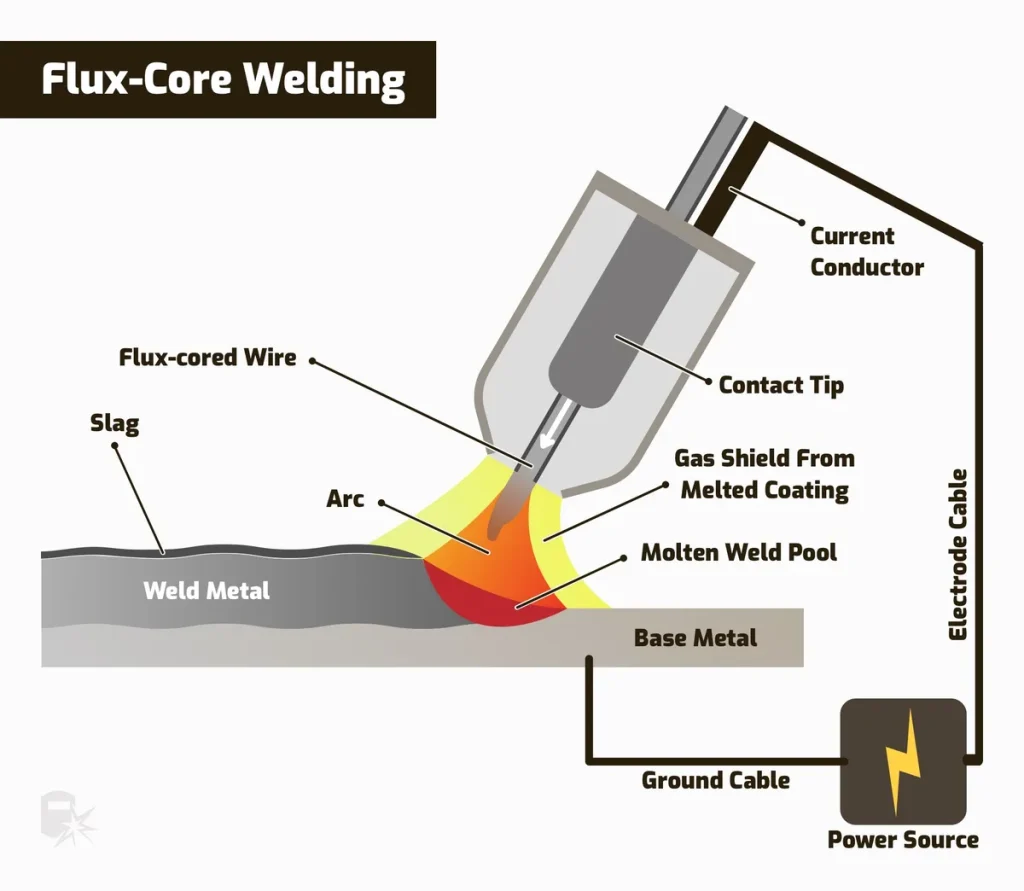
Flux core welding uses a wire electrode that's not just solid metal. Inside that wire is a powdery flux material that plays a crucial role in the welding process.
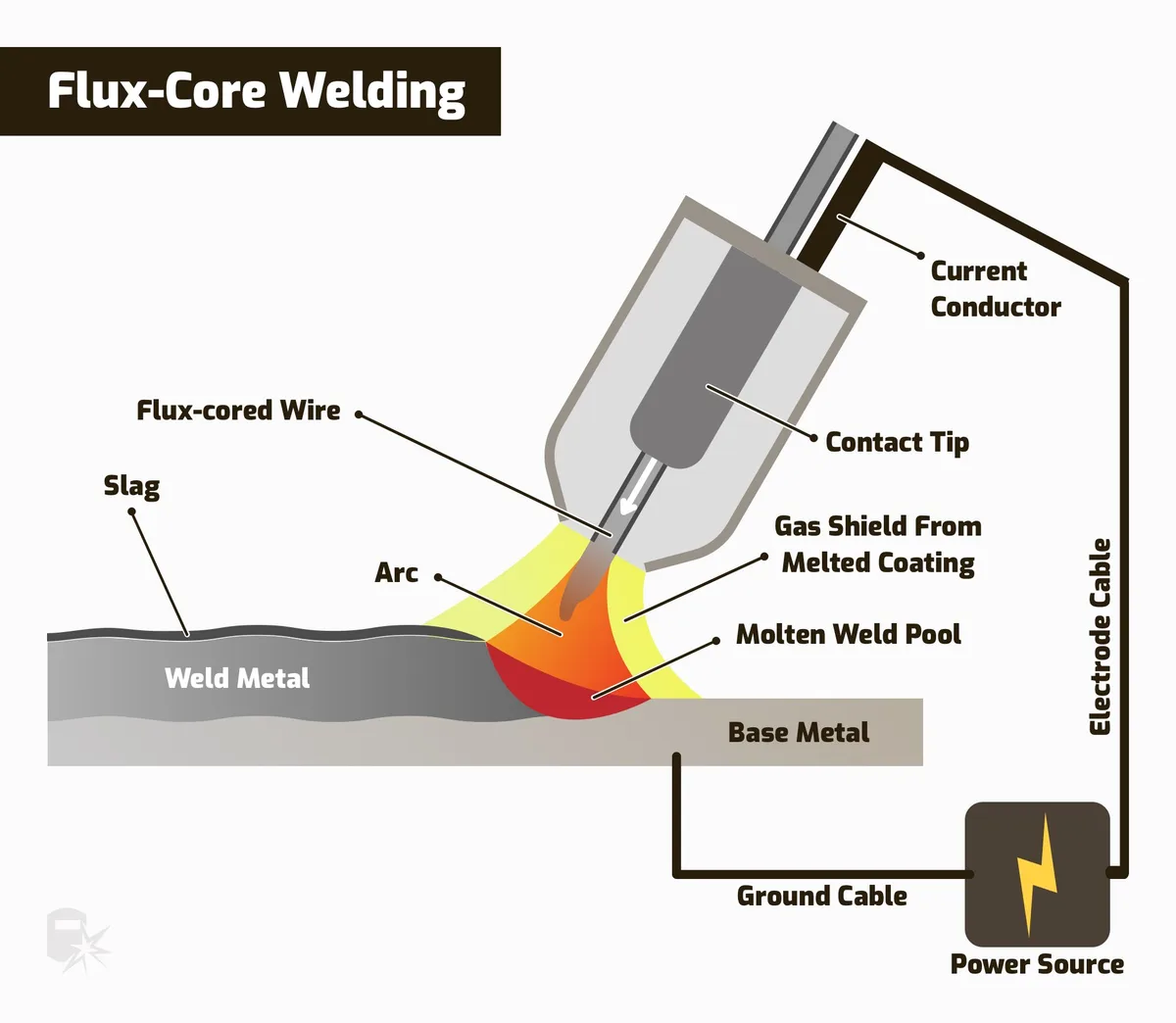
Image source: Bing (Web (fair-use with source credit))
The Flux-Cored Wire Explained
The key to flux core welding is the wire itself. Instead of being a simple solid metal strand, flux-cored wire has a hollow tube filled with flux. This flux contains various ingredients, including deoxidizers, slag-forming agents, and arc stabilizers, all designed to perform specific functions during welding. When the arc hits the workpiece, it melts the wire, and the heat also causes the flux within the wire to burn and vaporize.
This chemical reaction creates a shielding gas right at the point of the weld, protecting the molten metal from atmospheric contamination. On top of that, the flux leaves behind a slag deposit that coats the cooling weld bead, providing further protection.
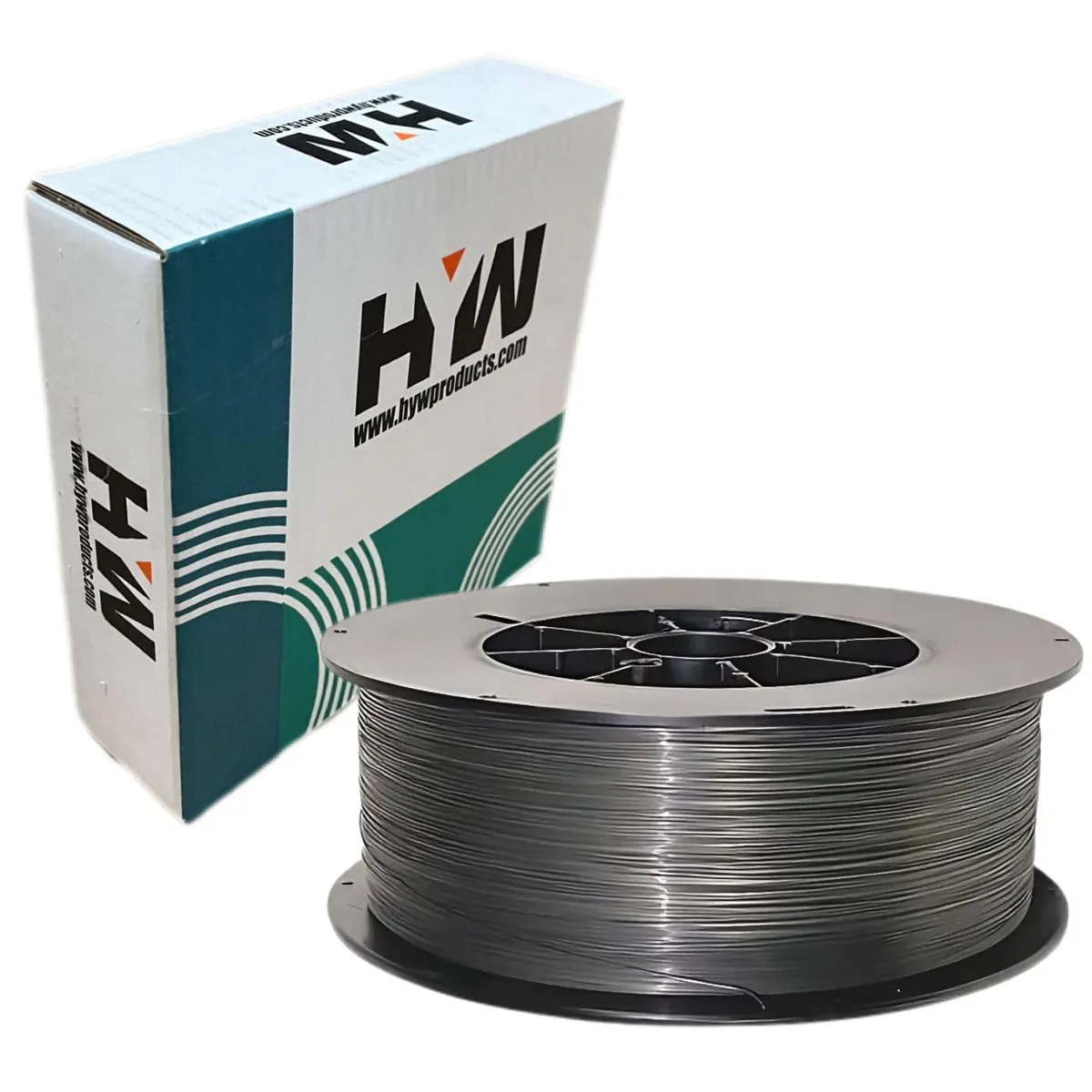
Image source: Bing (Web (fair-use with source credit))
MIG Welding: How It Works
Standard MIG welding, often referred to as Gas Metal Arc Welding (GMAW) when using solid wire, relies on an external source for its shielding.
The Solid Wire and Shielding Gas
In this process, a solid metal wire electrode is fed continuously through the welding gun. As the wire melts, an electrical arc forms between the wire and the workpiece, creating the heat needed to join the metals. Critically, a separate stream of shielding gas flows from the welding gun, enveloping the molten weld pool. This gas, typically a mixture of inert gases like argon or active gases like carbon dioxide, displaces the surrounding air, preventing oxygen and nitrogen from reacting with the molten metal and compromising the weld’s integrity.
Without this gas, the weld would be porous and weak.
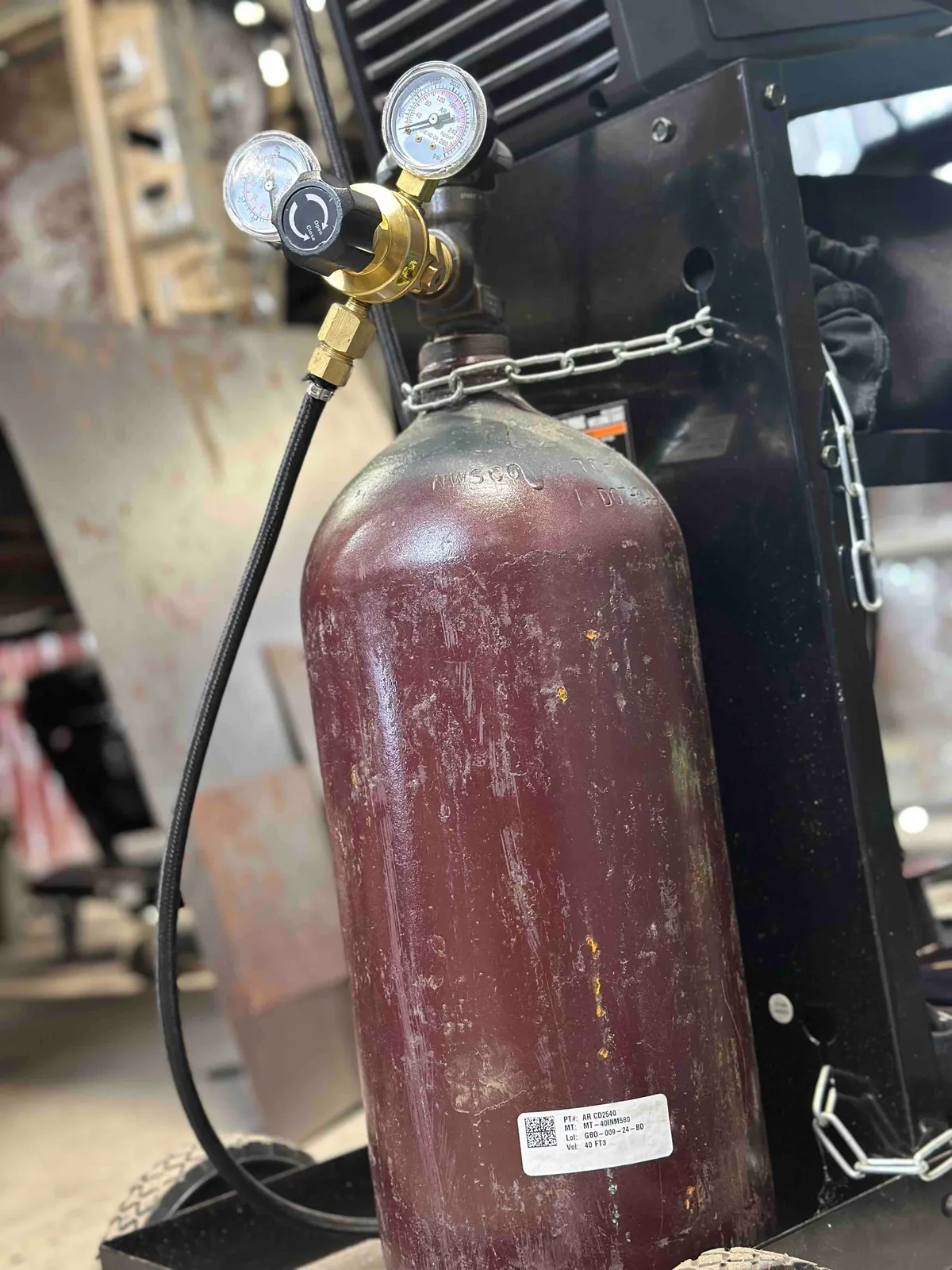
Image source: Bing (Web (fair-use with source credit))
Key Differences: Flux Core vs. MIG
The fundamental distinction between flux core and MIG welding lies in their methods of shielding the weld pool. This difference leads to a cascade of other variations in how they perform, where they're best suited, and the results you can expect. Understanding these core differences is essential for choosing the right process for your project.
Shielding Method: Internal vs. External
- Flux Core: The shielding gas and fluxing agents are inside the wire electrode. As the wire melts, these components are released to protect the weld. This means no external gas cylinder is required.
- MIG Welding (Solid Wire): A separate, external cylinder supplies a shielding gas that flows from the welding gun. This gas creates a protective atmosphere around the arc and molten puddle.
Portability and Outdoor Capability
This difference in shielding directly impacts portability. Because flux core welding doesn't require a gas cylinder, it's inherently more portable and much better suited for outdoor work. Outdoor environments, especially those with even a slight breeze, can easily blow away the shielding gas used in standard MIG welding, leading to poor weld quality. Flux core’s self-shielding nature makes it far more forgiving in these windy conditions.
Metal Preparation and Cleanliness
Flux core wires are known for their ability to cut through rust, dirt, and mill scale on metal. While thorough cleaning is always recommended for the best results, flux core processes are generally more tolerant of less-than-perfect surface preparation. MIG welding with solid wire is much more sensitive to surface contaminants. Dirt, paint, rust, or oil can cause significant spatter, porosity, and ultimately, a weaker weld.
For MIG, clean base metal is paramount.
Weld Appearance and Cleanup
As a direct result of the fluxing agents and slag formation, flux core welds typically produce more spatter and leave behind a slag coating that needs to be removed after welding. This requires an extra cleanup step using a chipping hammer or wire brush. MIG welding with solid wire, using the appropriate shielding gas, generally results in much cleaner welds with minimal spatter and no slag, leading to a more aesthetically pleasing finish with less post-weld work.
Pros and Cons of Flux Core Welding
Flux core welding has earned its place in many workshops and job sites due to its specific advantages, but it also comes with its own set of challenges.
Benefits of Flux Core
- Portability: The biggest win is the absence of a separate gas cylinder. This makes flux core machines incredibly easy to move around a job site or transport.
- Outdoor Use: It excels in windy conditions where gas shields would be blown away, making it ideal for outdoor fabrication and repairs.
- Tolerance for Dirty Metal: Flux core can often weld through rust, paint, or mill scale with less fuss than MIG, though cleaning is always best.
- Penetration: It tends to offer good penetration, which can be beneficial for joining thicker materials.
Drawbacks of Flux Core
- Slag and Spatter: Welds will have slag that needs to be chipped or brushed off, and there's usually more spatter than with MIG.
- Fumes: The flux burning off can produce more fumes than standard MIG welding, necessitating good ventilation and respiratory protection.
- Weld Appearance: The resulting welds might not be as clean or aesthetically pleasing as those from a well-executed MIG weld, especially on thin materials where appearance is a factor.
Pros and Cons of MIG Welding (with Solid Wire)
Traditional MIG welding, using solid wire and a shielding gas, is a popular choice for its clean results and ease of use, but it’s not without its limitations.
Benefits of MIG Welding
- Clean Welds: Produces smooth, spatter-free welds with minimal slag, leading to an excellent finish with less cleanup.
- Ease of Use: Many beginners find the arc control and feeding of solid wire comfortable to learn with, often requiring less fine-tuning than other processes.
- Versatility: With the right settings and gas, it’s effective on a wide range of metals and thicknesses, especially thinner materials.
- Speed: Can be a very efficient process for production work when conditions are controlled.
Drawbacks of MIG Welding
- Wind Sensitivity: The external shielding gas is easily disrupted by wind, making it difficult to use outdoors.
- Requires Clean Metal: Surface contaminants like rust, paint, or oil will cause defects and impact weld quality.
- Equipment Complexity: Requires an additional gas cylinder, regulator, and hose, adding to the overall setup and cost.
- Less Penetration: Compared to flux core on equivalent settings, solid wire MIG might offer slightly less penetration on thicker materials without specific adjustments.
Which Welding Process Is Right for You?
Deciding between flux core and MIG welding isn't about picking a winner; it's about matching the tool to the job. Your typical work environment, the material you're welding, and the desired outcome all play a big role in which process will serve you best. Think about it this way: if you're constantly on the move or working outdoors, one setup shines, while for a clean, finished look in a controlled space, another might be the smarter choice.
Best Use Cases for Flux Core
If your projects take you outside, or if you're dealing with metal that isn't perfectly prepped, flux core welding hits the sweet spot. It’s your go-to for building sturdy fabrication projects like gates, trailers, or agricultural equipment where portability and speed of setup are key. It’s also a solid performer on thicker materials where good penetration is vital, and you don't want wind messing with your shielding.
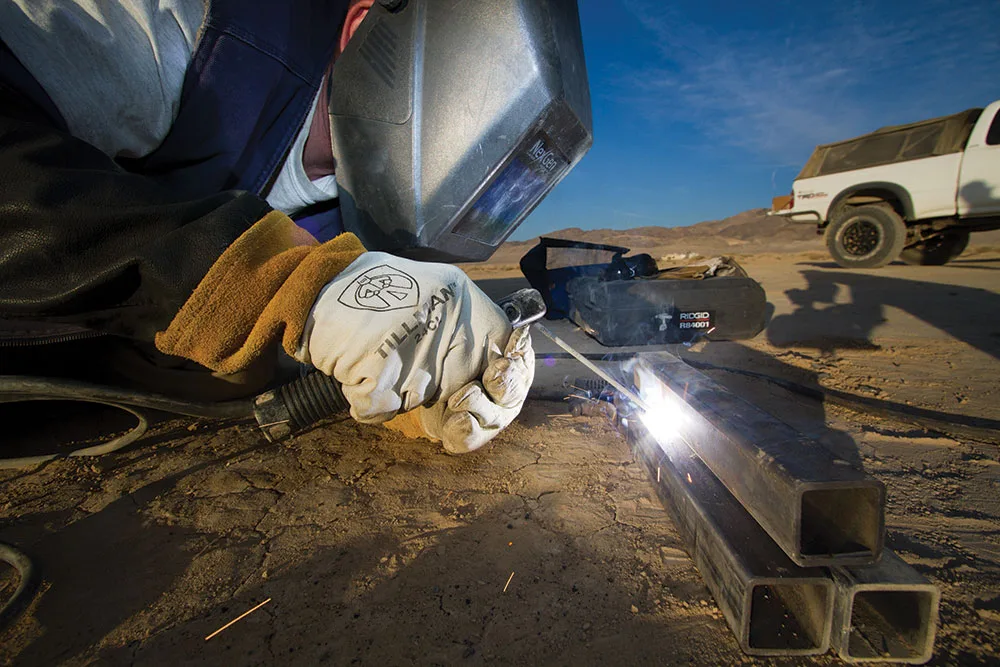
Image source: Bing (Web (fair-use with source credit))
Best Use Cases for MIG Welding
Traditional MIG welding, with its solid wire and shielding gas, truly shines when you need a clean, precise weld on less-than-heavy-duty materials. It's the preferred method for automotive body work, custom metal fabrication where aesthetics matter, and general shop repairs where that smooth, spatter-free finish is a must. If your work primarily happens indoors, on materials that you can clean to a near-mirror finish, MIG will likely give you the best results with the least cleanup. For guidance on settings, check out resources on mig welder settings.
Common Mistakes to Avoid
When you're starting out or even if you've been welding a while, certain pitfalls can lead to less-than-ideal welds. Many welding issues boil down to either incorrect setup or improper technique, and this is true for both flux core and MIG. Being aware of these common errors can save you a lot of frustration and rework.
With Flux Core
A frequent mistake with flux core, especially for beginners, is not properly managing the slag. Rushing the cleanup or not removing it all can lead to inclusions in subsequent weld passes, significantly weakening the joint. You might also run into issues with excessive spatter if your wire speed or voltage isn't dialed in correctly. Over-reliance on flux core's ability to weld dirty metal can also lead to porosity; always strive for the cleanest surface possible.
If you're working on something that needs precise finishing, consider other methods or ensure thorough post-weld cleaning.
With MIG Welding
For MIG welding, the most common errors revolve around gas shielding. If the gas flow rate is too low or if there's a breeze, you'll get porosity and a weak weld. Too much gas flow can also be a problem, causing turbulence that draws in atmospheric contaminants. Another frequent hiccup is incorrect wire feed speed or voltage.
Too fast a wire feed speed with insufficient voltage will lead to a "long arc" and poor penetration, while too slow a feed speed with too much voltage will cause excessive spatter and burn-through, particularly on thinner metals. Understanding how wire feed speed, voltage, and shielding gas interact is crucial; for more on calculating wire feed speed, refer to guides on how to calculate wire feed speed in mig welding.


