
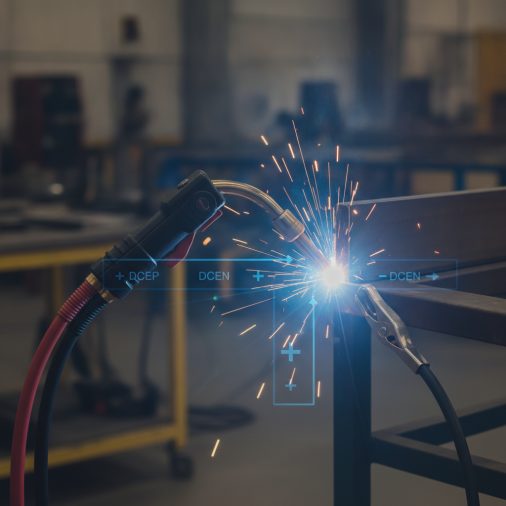
Standard MIG welding uses DCEP — Direct Current Electrode Positive, also called reverse polarity. The welding wire (electrode) connects to the positive terminal, and the workpiece connects to the negative. This setup produces deeper penetration, a stable arc, and better overall weld quality for most MIG applications.
If you’re setting up a MIG welder for the first time — or troubleshooting poor weld quality — polarity is one of the first things you need to understand. Get it wrong and you’ll deal with weak penetration, excessive spatter, or a weld bead that looks like it was laid down in the dark. This article explains exactly which polarity MIG welding uses, why it works that way, what happens if you switch it, and when the rules actually change. By the end, you’ll have a clear, practical understanding of MIG polarity that you can apply immediately.
What DCEP and DCEN Actually Mean
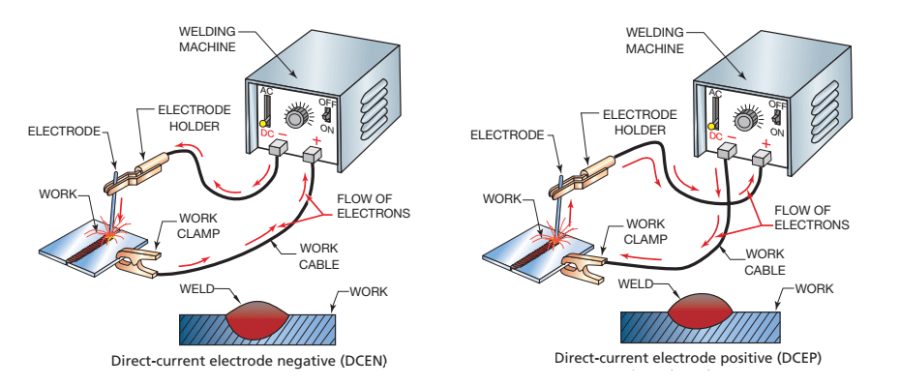
Polarity describes the direction electrical current flows through a welding circuit.
– DCEP (Direct Current Electrode Positive): Current flows from the workpiece, through the arc, and into the electrode (wire). The electrode is positive. Also called reverse polarity.
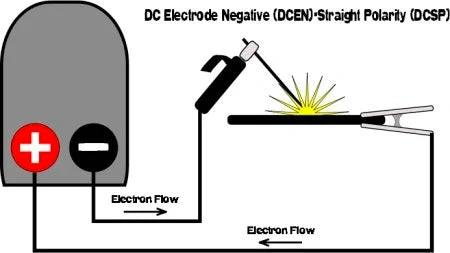
– DCEN (Direct Current Electrode Negative): Current flows from the electrode, through the arc, and into the workpiece. The electrode is negative. Also called straight polarity.
In MIG welding, the “electrode” is the continuously fed wire coming out of the gun. Polarity determines how heat distributes between the wire and the base metal — and that has a direct effect on penetration, deposition rate, and arc stability.
Why MIG Welding Runs on DCEP
The reason MIG welding defaults to DCEP comes down to physics and practical performance.
With DCEP, approximately two-thirds of the arc heat concentrates at the positive terminal — which is the workpiece. This drives deeper fusion into the base metal, producing stronger, more reliable welds. The remaining heat at the wire end helps with smooth metal transfer and consistent wire melting.
DCEP also produces a more stable arc with solid-core MIG wire (ER70S-6, ER308L, and similar classifications). You get:
– Consistent droplet transfer from wire to puddle
– Lower spatter levels
– Better cleaning action on the base metal surface
– Predictable penetration profiles
In practice, running solid MIG wire on DCEN produces an erratic arc, excessive spatter, and poor fusion. It’s not a subtle difference — the weld quality degrades noticeably.
The Exception: Flux-Core Wire Changes the Rules
This is where most beginners get confused, and it’s worth being direct about it.
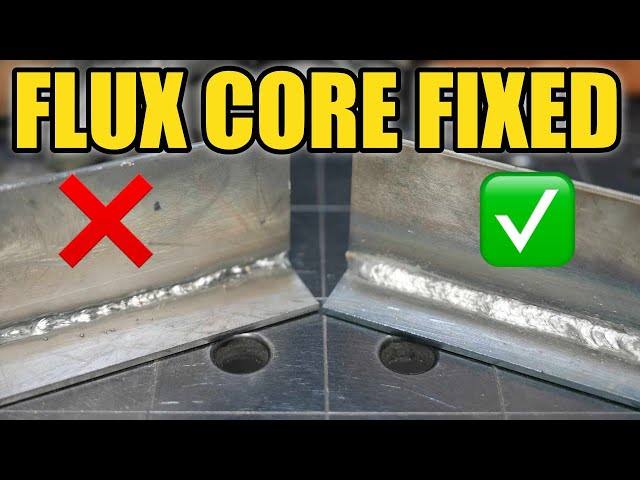
Self-shielded flux-core wire (FCAW-S) typically runs on DCEN, not DCEP. The flux chemistry inside the wire is engineered specifically for straight polarity. Running self-shielded flux-core on DCEP causes porosity, poor arc stability, and inconsistent bead profiles.
Gas-shielded flux-core wire (FCAW-G), on the other hand, generally runs on DCEP — similar to solid MIG wire.
Always check the wire manufacturer’s data sheet. The polarity requirement is printed on the wire spool label and in the product specifications. Ignoring this is one of the most common causes of unexplained weld defects when switching wire types.
| Wire Type | Typical Polarity | Shielding Method |
|---|---|---|
| Solid MIG wire (ER70S-6, etc.) | DCEP | External gas (CO₂, Ar/CO₂ mix) |
| Gas-shielded flux-core (FCAW-G) | DCEP | External gas |
| Self-shielded flux-core (FCAW-S) | DCEN | None (flux generates shield) |
How to Check and Change Polarity on Your MIG Welder
Most MIG welders have a polarity changeover panel inside the machine — typically behind the wire feed compartment door. Two cables connect to labeled terminals (+ and −). Swapping these cables changes the polarity.
Steps to verify or change polarity:
1. Turn the welder completely off and disconnect it from power.
2. Open the wire feed compartment door.
3. Locate the two heavy cables connected to the positive (+) and negative (−) terminals.
4. For DCEP: connect the gun lead to (+) and the work clamp lead to (−).
5. For DCEN: connect the gun lead to (−) and the work clamp lead to (+).
6. Close the compartment and restore power.
Some machines label the terminals clearly. Others use color coding or symbols. If you’re unsure, check your welder’s manual — the polarity diagram is almost always included in the setup section.
What Happens When Polarity Is Wrong
Running the wrong polarity isn’t always obvious at first glance, but the symptoms are consistent enough to recognize.
Signs you’re running incorrect polarity for your wire type:
– Excessive spatter that won’t improve with voltage or wire speed adjustments
– Arc that feels “harsh,” unstable, or keeps extinguishing
– Weld bead that sits on top of the metal rather than fusing into it
– Porosity or pinholes in the finished weld
– Wire that seems to “push back” against the puddle
If you’ve adjusted your settings repeatedly and still can’t get a clean arc, check polarity before anything else. It’s a quick fix that’s frequently overlooked — especially after switching from solid wire to flux-core or vice versa.
DCEP vs. DCEN: Side-by-Side Comparison
| Characteristic | DCEP (Electrode Positive) | DCEN (Electrode Negative) |
|---|---|---|
| Heat concentration | ~70% at workpiece | ~70% at electrode |
| Penetration depth | Deeper | Shallower |
| Deposition rate | Moderate | Higher |
| Arc stability (solid wire) | Excellent | Poor |
| Spatter (solid wire) | Low | High |
| Best for | Solid MIG wire, FCAW-G | Self-shielded FCAW-S |
| Cleaning action | Good | Minimal |
The higher deposition rate with DCEN is why some specialized processes use it — but for standard MIG welding with solid wire, the arc instability makes it impractical.
Does AC Polarity Apply to MIG Welding?
Alternating current (AC) is not used in standard MIG welding. MIG welding requires a stable, consistent arc to maintain proper wire transfer, and AC’s constantly reversing polarity disrupts that process. AC is used in TIG welding (specifically for aluminum) and stick welding with certain electrodes, but not in MIG.
If your power source is AC-only, it cannot run a MIG process without a rectifier converting it to DC.
FAQ
Can I run solid MIG wire on DCEN to get better deposition rates?
Technically the machine will run, but the results won’t be worth it. Solid wire on DCEN produces a harsh, unstable arc with high spatter and poor fusion. The deposition rate advantage is real in theory, but the weld quality loss makes it impractical for any structural or quality-critical application. Stick with DCEP for solid wire.
Why does my flux-core wire say DCEN but my MIG welder is set to DCEP?
This is a very common situation. Many welders are set up for solid wire (DCEP) and aren’t reconfigured when switching to self-shielded flux-core. You need to physically swap the polarity cables inside the machine. Running self-shielded flux-core on DCEP causes porosity, spatter, and arc problems that no amount of voltage or wire speed adjustment will fix.
Does polarity affect heat input and distortion?
Yes, indirectly. Because DCEP concentrates more heat at the workpiece, it increases penetration and heat input compared to DCEN at the same amperage. For thin materials where distortion is a concern, this matters. However, the primary control for heat input in MIG welding remains wire feed speed, voltage, and travel speed — polarity is a fixed setting for a given wire type.
Is DCEP the same as reverse polarity?
Yes, exactly. DCEP and reverse polarity are two names for the same configuration: electrode connected to positive, workpiece connected to negative. The term “reverse polarity” comes from older welding terminology where straight polarity (DCEN) was considered the default. Both terms are still used in the field and in manufacturer documentation.
What polarity does aluminum MIG welding use?
Aluminum MIG welding (using ER4043 or ER5356 wire with 100% argon shielding) runs on DCEP, the same as steel MIG welding. The DCEP configuration also provides a light oxide-cleaning action on the aluminum surface, which helps produce cleaner welds. No polarity change is needed when switching from steel to aluminum solid wire — only the shielding gas and wire type change.
Can wrong polarity damage my MIG welder?
Running incorrect polarity won’t typically damage the machine itself, but it will damage weld quality. The welder’s power source doesn’t “know” what polarity it’s running — it just delivers current. The consequences are poor welds, not equipment failure. That said, consistently fighting a bad arc puts unnecessary wear on consumables like contact tips and liners.
How do I know what polarity my wire requires without the data sheet?
Check the wire spool label — polarity is almost always printed there. As a general rule: solid MIG wire = DCEP, self-shielded flux-core = DCEN, gas-shielded flux-core = DCEP. When in doubt, the wire manufacturer’s website will have the full data sheet with polarity specifications listed under welding parameters.
Final Thoughts
MIG welding runs on DCEP for solid wire — that’s the standard, and it’s not arbitrary. The physics of heat distribution and arc stability make DCEP the right choice for the vast majority of MIG applications. The one meaningful exception is self-shielded flux-core wire, which requires DCEN. Knowing when to switch polarity, and how to do it correctly, separates welders who troubleshoot efficiently from those who spend hours chasing settings problems that a two-minute cable swap would have solved.


