
The Full Name: GMAW vs. MIG
Why “Inert Gas” If Active Gases Are Used?
How MIG Welding Actually Works
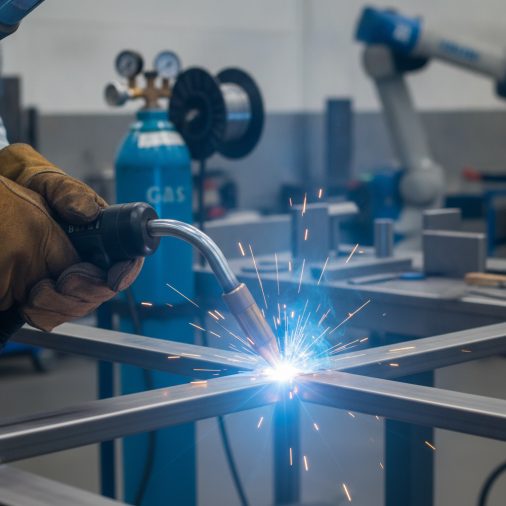
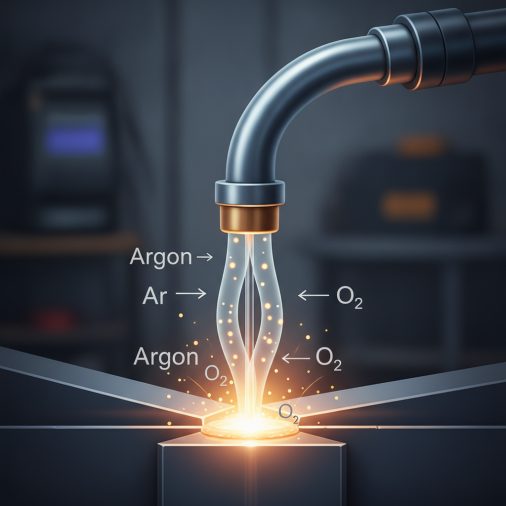
Breaking down the process makes the acronym easier to remember: 1. Metal — The wire electrode and base material are both metallic. The wire continuously feeds from a spool as you weld. 2. Inert Gas — Shielding gas flows from the nozzle to protect the molten weld pool from oxygen and nitrogen in the air. 3. Welding — An electrical arc forms between the wire tip and the workpiece, generating enough heat to melt both the wire and the parent metal together. The result is a fast, relatively clean weld that works on a wide range of metals and thicknesses. MIG welding is beginner-friendly because the wire feeds automatically — you control travel speed, angle, and distance rather than manually feeding a filler rod.What Metals Can You MIG Weld?
MIG welding isn’t limited to one material. The process handles a broad range of metals, which is a big reason it’s so widely used in manufacturing, automotive work, and fabrication. Common materials include: – Mild steel — The most common and forgiving application – Stainless steel — Requires a specific tri-mix or 98/2 argon/CO₂ shielding gas – Aluminum — Needs 100% argon and ideally a spool gun for smooth wire feeding – Chromoly — Weldable with MIG, though TIG is often preferred for precision work – Galvanized steel — Possible but requires surface prep and proper ventilation For example, welding stainless steel with a MIG welder is entirely feasible but requires the right wire grade and shielding gas to avoid corrosion or weld contamination.MIG vs. Other Common Welding Processes
Understanding what MIG stands for is easier when you compare it to the other major processes:| Process | Full Name | Abbreviation | Electrode Type | Shielding Method |
|---|---|---|---|---|
| MIG | Metal Inert Gas (GMAW) | MIG / GMAW | Continuous wire | External gas |
| TIG | Tungsten Inert Gas (GTAW) | TIG / GTAW | Non-consumable tungsten | External gas |
| Stick | Shielded Metal Arc Welding | SMAW | Consumable coated rod | Flux coating |
| Flux-Core | Flux Cored Arc Welding | FCAW | Tubular wire with flux | Flux + optional gas |
The Wire Electrode: The “Consumable” Element
One defining feature of MIG welding is the consumable wire electrode. Unlike TIG welding, where a tungsten electrode just maintains the arc and you feed filler rod separately, the MIG wire serves both purposes simultaneously. The wire feeds from a spool at a rate you control, typically measured in inches per minute (IPM). Wire diameter commonly ranges from 0.023″ to 0.045″, with thinner wire suited to sheet metal and thicker wire for heavier structural work. Machines like the Lincoln Electric Weld-Pak 140 are designed around this automatic wire feed system, making them accessible even for newer welders. If you want to understand what a good MIG weld actually looks like, the consistency of that wire feed rate is one of the biggest factors.Why MIG Welding Became So Popular
The process took off in manufacturing because of speed and ease. Compared to stick welding, MIG produces less slag cleanup and allows for longer uninterrupted welds. The learning curve is lower — beginners can produce structurally sound welds on mild steel with a few hours of practice. Automotive and fabrication shops rely heavily on MIG because it handles thin gauge sheet metal well. The Hobart Handler 140 is a commonly referenced machine in this space because it bridges the gap between home-shop usability and light professional work. There’s also the versatility factor. What you can weld with a MIG welder covers a surprisingly wide range of metals and thicknesses, which makes it a practical all-around choice for most shops.FAQ
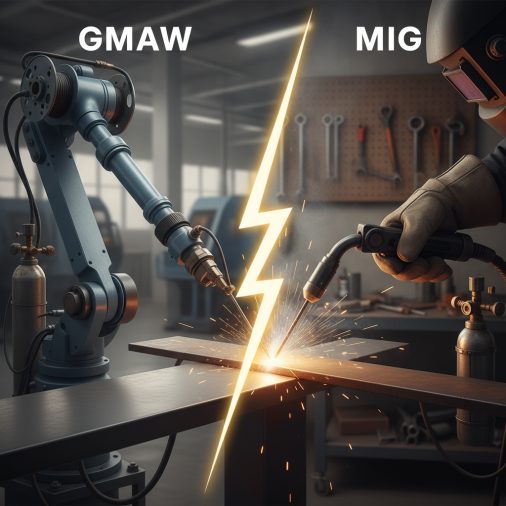
Is MIG welding the same as GMAW? Yes. MIG (Metal Inert Gas) and GMAW (Gas Metal Arc Welding) refer to the exact same process. GMAW is the official AWS designation used in technical, industrial, and certification contexts. MIG is the commonly used shop-floor term. Both describe the same wire-feed, shielding-gas arc welding process. Why is it called Metal Inert Gas if CO₂ is an active gas? The “inert” label is historical. Early MIG welding used purely inert gases like argon or helium. As the process evolved, active gases like CO₂ and mixed gas blends became common. The name MIG remained in popular use even though the shielding gas is sometimes chemically active. Technically, using active gas makes it MAG welding, though that distinction is rarely made in North America. What is the difference between MIG and flux-core welding? Both use a continuous wire electrode, but flux-core wire contains a flux compound inside a hollow tube. That flux generates its own shielding as it burns, meaning you can weld without external gas in some applications. MIG relies entirely on external shielding gas. Flux-core generally handles outdoor and windy conditions better, while MIG produces a cleaner bead indoors. Can a MIG welder be used without gas at all? A standard MIG setup requires shielding gas. However, many machines are “dual-capable” — they support both solid wire with gas and self-shielded flux-core wire without gas. If a machine is running solid MIG wire with no gas, the weld will be contaminated and porous. The gas is not optional for standard MIG wire. What does the arc actually do in MIG welding? The arc is the electrical discharge between the wire tip and the workpiece. It generates intense heat — typically in the range of thousands of degrees Fahrenheit — which melts the wire and the surface of the base metal simultaneously. The temperature of a MIG weld varies depending on amperage, wire speed, and material, but the arc itself is what fuses the metals together. What does GTAW stand for, and how does it compare to MIG? GTAW stands for Gas Tungsten Arc Welding, better known as TIG welding. Where MIG uses a consumable wire that melts into the weld, TIG uses a non-consumable tungsten electrode and separate filler rod. TIG offers more precise control and cleaner results on thin or exotic metals, but it’s significantly slower and has a steeper learning curve than MIG. Is MIG welding good for beginners? Yes, and it’s often the first process recommended for new welders. The automatic wire feed removes one manual variable, letting beginners focus on travel speed, angle, and distance. Mild steel responds predictably, and the process is forgiving enough to produce solid results relatively quickly. Most entry-level home shops start with a MIG-capable machine before exploring TIG or stick.MIG stands for Metal Inert Gas — a name rooted in the process’s origins, even if modern practice often uses mixed or active shielding gases. The formal term is GMAW, but both refer to the same arc welding process that’s become a staple in shops worldwide. Understanding what the acronym actually means gives you a clearer picture of how the process works: an arc, a consumable wire, and a gas shield working together to fuse metal reliably and efficiently.


